A Notable Highway Robbery (1839)
Crossley & Cockroft Attack
A notable Highway Robbery
In August 1839, Halifax wool-stapler Mr. Robert Crossley and his companion Mr. Thomas Cockroft were attacked on the road after dark and robbed by a small gang. The account that survives is unusually detailed: it follows the men from their journey south, through the assault itself, and on to the arrests, courtroom proceedings, and sentencing.
The setting: Why the roads felt dangerous
The account places the robbery in a hard year. Work was scarce, food was dear, and public tension was high. The writer suggests that these pressures created opportunities for crime and that travellers after dark could be vulnerable.
The journey from Halifax
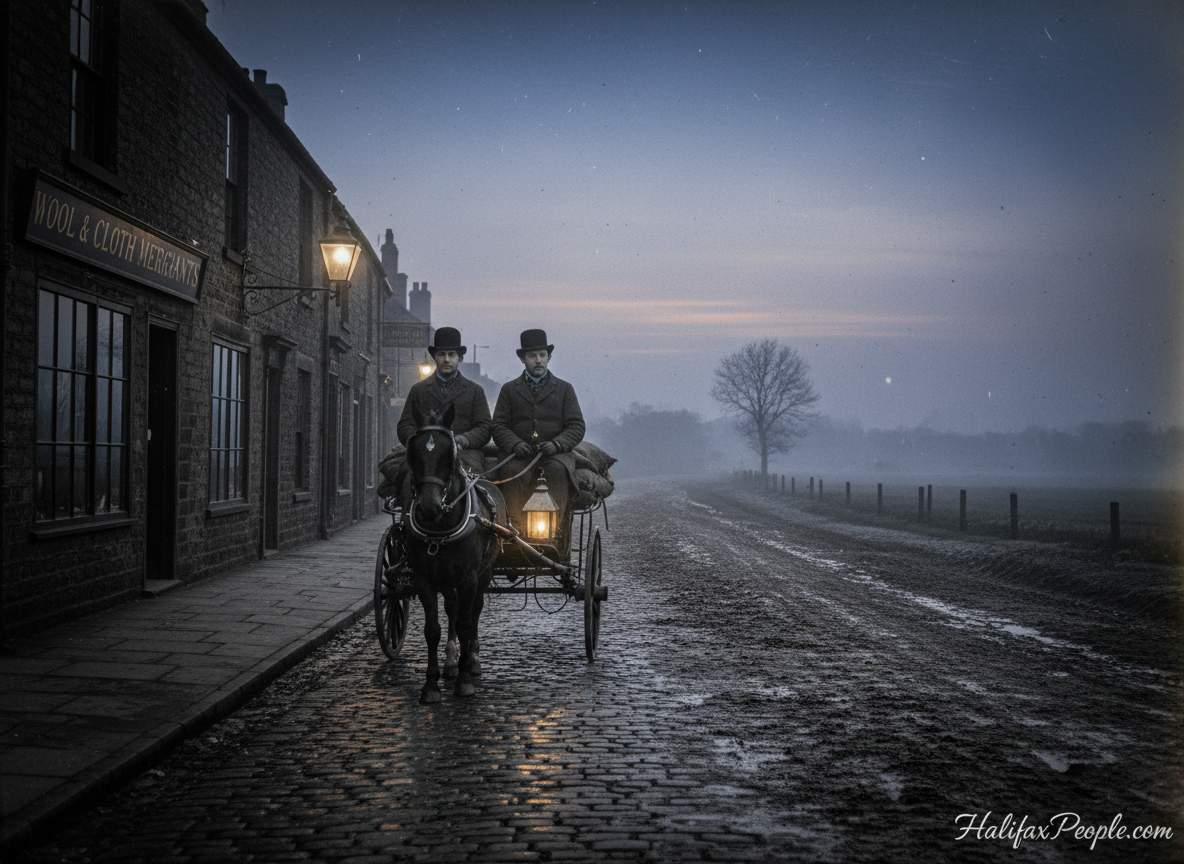
On Monday, 3 August 1839, Mr. Robert Crossley, who lived at Arden House, travelled with Mr. Thomas Cockroft, described as a Halifax wool-stapler. They set off early for the Doncaster wool market, driving the whole distance.
After completing their business, they began the return journey together in Mr. Crossley’s trap at about 4 p.m. and reached Wakefield before dark. Mr. Crossley proposed staying overnight with a relative, but Mr. Cockroft wanted to get home that night. With the evening fine, Mr. Crossley agreed to continue.
The attack near Lower Brear
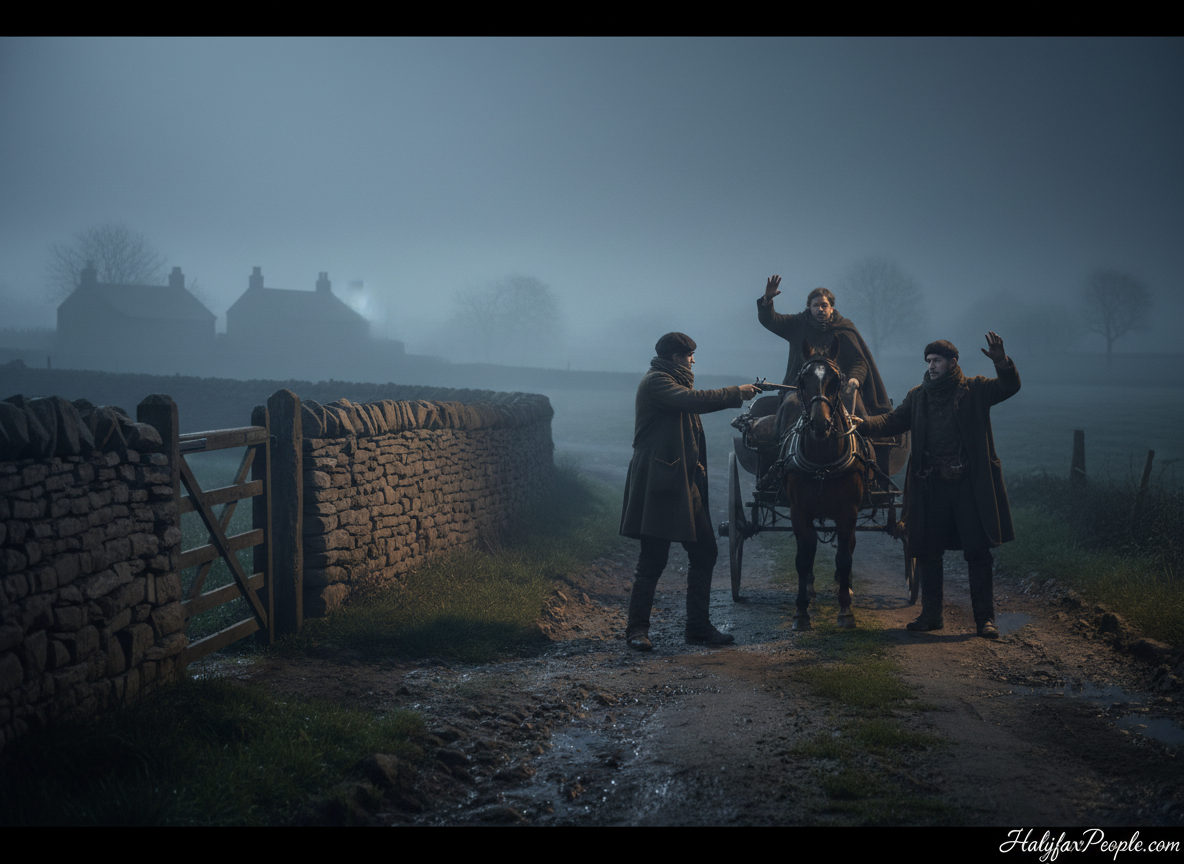
Nothing happened until they reached Lower Brear, near Stump Cross. Around midnight, they passed a man named Downs (the account notes he was later transported for highway robbery at Bradford). Downs passed without incident.
The trap had gone only about 150 yards when five men approached. One shouted, “Now, lads!” and they spread across the road. A man named Jonathan Rushworth (also called “Daunt Rushworth”) seized the horse.
Mr. Cockroft immediately jumped out, went over a wall into a field, and threw the contents of his pockets into the grass. Two of the assailants followed him.
Crossley is overpowered and robbed
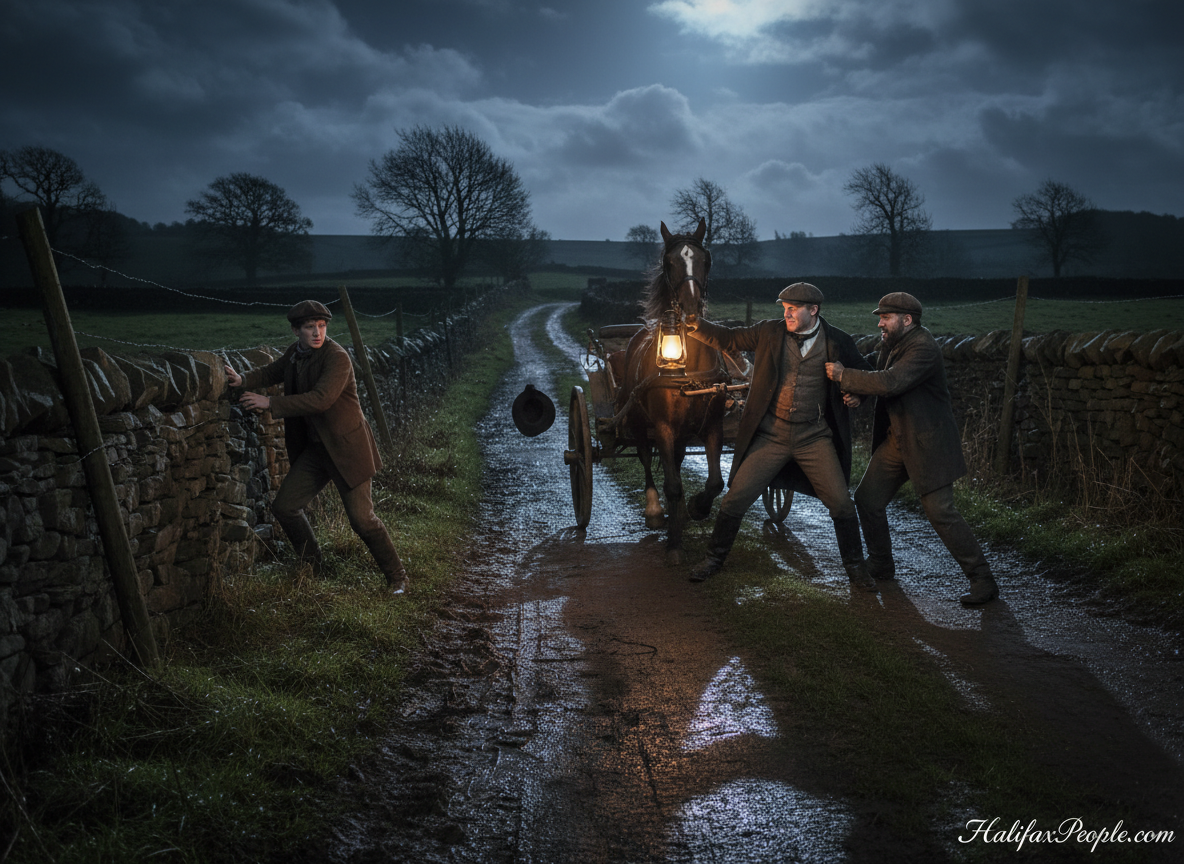
Mr. Crossley confronted Rushworth and struck him in the face with his whip. Outnumbered, he was pulled from the gig and thrown violently down. A man named Barber got across him, seized his throat, and nearly strangled him.
The robbers took Mr. Crossley’s watch and emptied his pockets. The narrative indicates that money was taken as well.
At one point, Barber, becoming more violent, declared: “Tha shall tell no tales about me.” Mr. Crossley begged for his life, saying they had already got his money, and then fainted from exhaustion.
The men were heard to confer briefly. One asked, “Has ta done the gig?” and another urged, “Let’s be off.” Barber turned back and threatened to kick Mr. Crossley to death to ensure he would “tell no tales,” but one of the gang, named Wilson, stopped him, pushing him away and repeating, “Tha shan’t.”
Barber picked up Mr. Crossley’s hat, but when he found the owner’s name inside, he threw it down, remarking that it was no use to him.
Cockroft is held at knifepoint
Mr. Cockroft had injured his knee while jumping the wall and could not run. One man, Dawson, stood over him with a knife, threatening to stab him if he moved. Another, Titterington, searched the field for the purse Mr. Cockroft had thrown away. They did not find it and left with what little property they could discover.
Mr. Cockroft then went down to a farmhouse below, while Mr. Crossley, recovering somewhat, scrambled back into his gig and drove slowly toward Halifax.
Rescued by a mob
The account says Mr. Crossley was left nervous and weak from the ordeal, with soreness in every limb. News of the robbery spread quickly.
The matter was taken up by Mr. Fraser, the Chief Constable (the text adds that he also kept the old Mitre Inn), and a detective named Rawson. About a fortnight later, Mr. Fraser went to the Burnley races, having learned that the thieves were likely to be there.
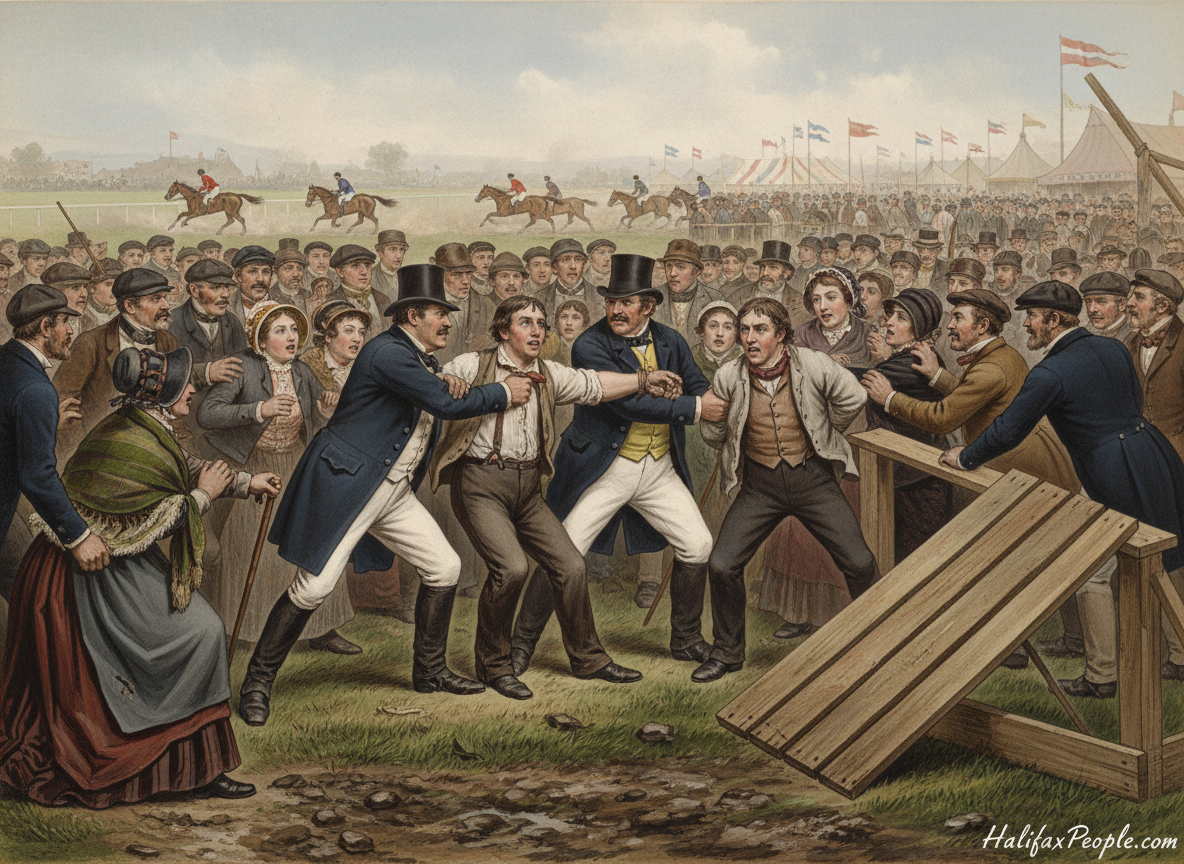
In Burnley, two betting men were arrested, including Dawson. A large crowd gathered. The report says the prisoners were rescued by a mob, who removed them despite constables’ efforts and even with soldiers called in to assist.
The narrative claims Dawson used the moment to shout: “Brother Chartists, will you see us sacrificed?” The mob then set to work and freed the prisoners, who escaped with manacles still on their wrists.
Rushworth was later apprehended in connection with another robbery (the account places it at the house of Mrs. Parker, a widow, at Burnley Wood). The widow identified Rushworth as keeping watch in the yard while others ransacked the house.
Trial and conviction
The report describes a strong public reaction when the prisoners arrived in Halifax, with a “stir” in the narrow Gaol Lane.
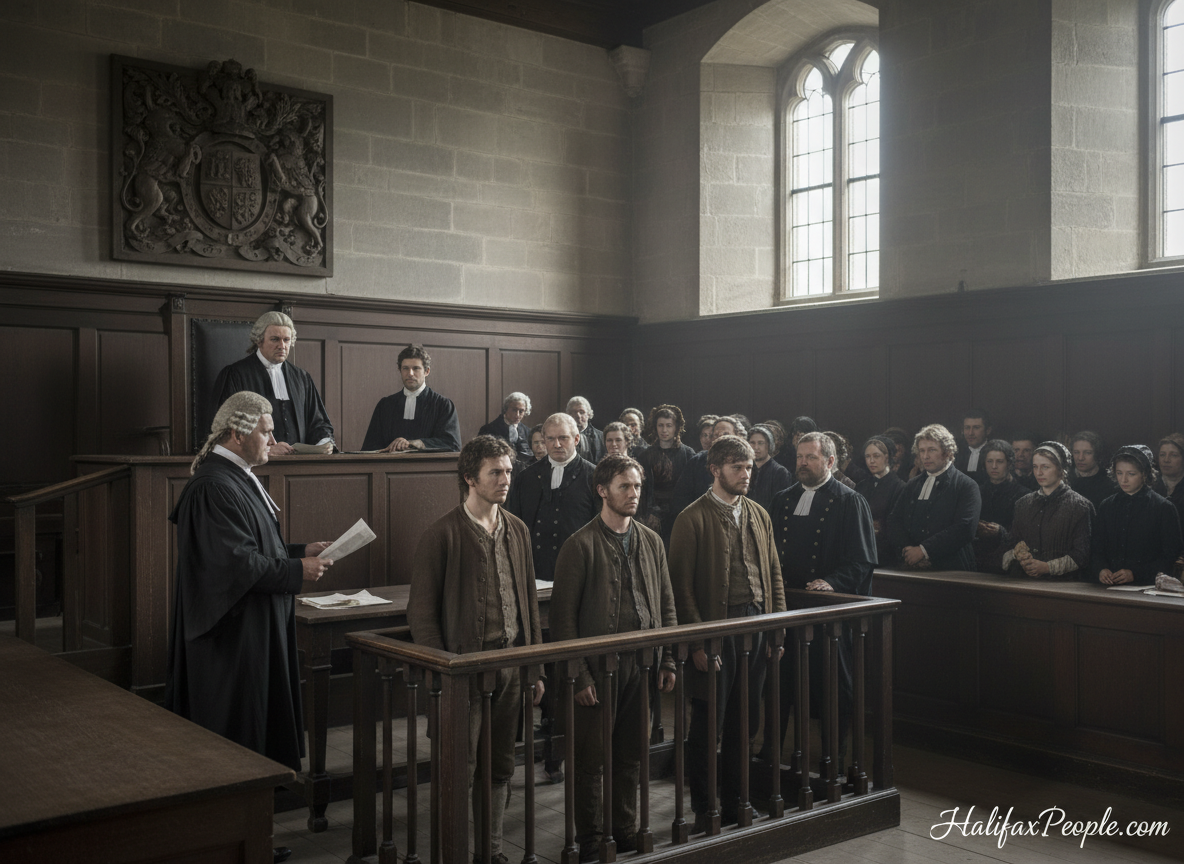
They were tried by Mr. John Waterhouse, senior (the hearing being held in the gaol rather than the courthouse), and committed to York Assizes. The account says this was some weeks after the robbery and suggests the gaol setting was used because of public excitement and because the men refused to move.
At York, in the following March, the prisoners were indicted before Mr. Justice Erskine, and a verdict of guilty was returned.
The narrative adds that Mr. Crossley drew the judge’s attention to the conduct of Wilson and Rushworth, saying he believed he would have been killed but for them, and asked for leniency within the limits of the law. The judge indicated an intention to commit the men for life, but in these cases commuted the sentence to 15 years’ hard labour.
The old gaol (local context)
The account finishes with a short description of Halifax’s old gaol and nearby landmarks. It notes the Duke of Leeds Arms (kept by Frank Scott, custodian of the gaol), and describes the building’s former courtyard and its long use as a debtors’ prison.
It also mentions the old Halifax watchmen—called “the Charlies”—who met at night with lamps lit and called out the hours and the weather.
Key facts (quick reference)
• Date of robbery: Monday, 3 August 1839 (attack around midnight)
• Victims: Mr. Robert Crossley (Arden House) and Mr. Thomas Cockroft (Halifax wool-stapler)
• Place: Near Lower Brear, close to Stump Cross (as described in the account)
• Named assailants/figures in the narrative: Jonathan “Daunt” Rushworth, Barber, Wilson, Dawson, Titterington, Downs
• Investigation: Chief Constable Mr. Fraser; detective Rawson
• Court: York Assizes; Mr. Justice Erskine
• Outcome: Guilty verdict; sentence commuted to 15 years’ hard labour (as stated)
If you have enjoyed your visit to this website, please spread the word by clicking the 'like' and 'share' buttons below. Thank you