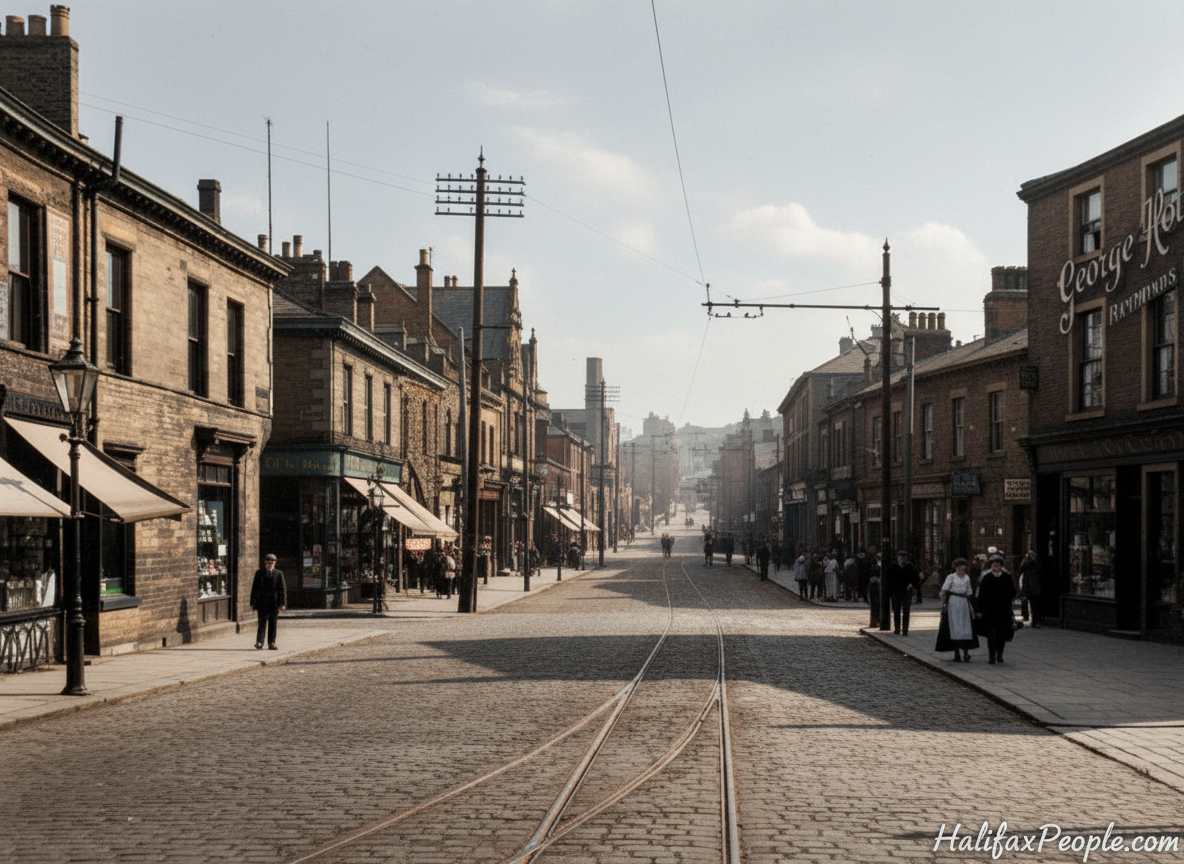
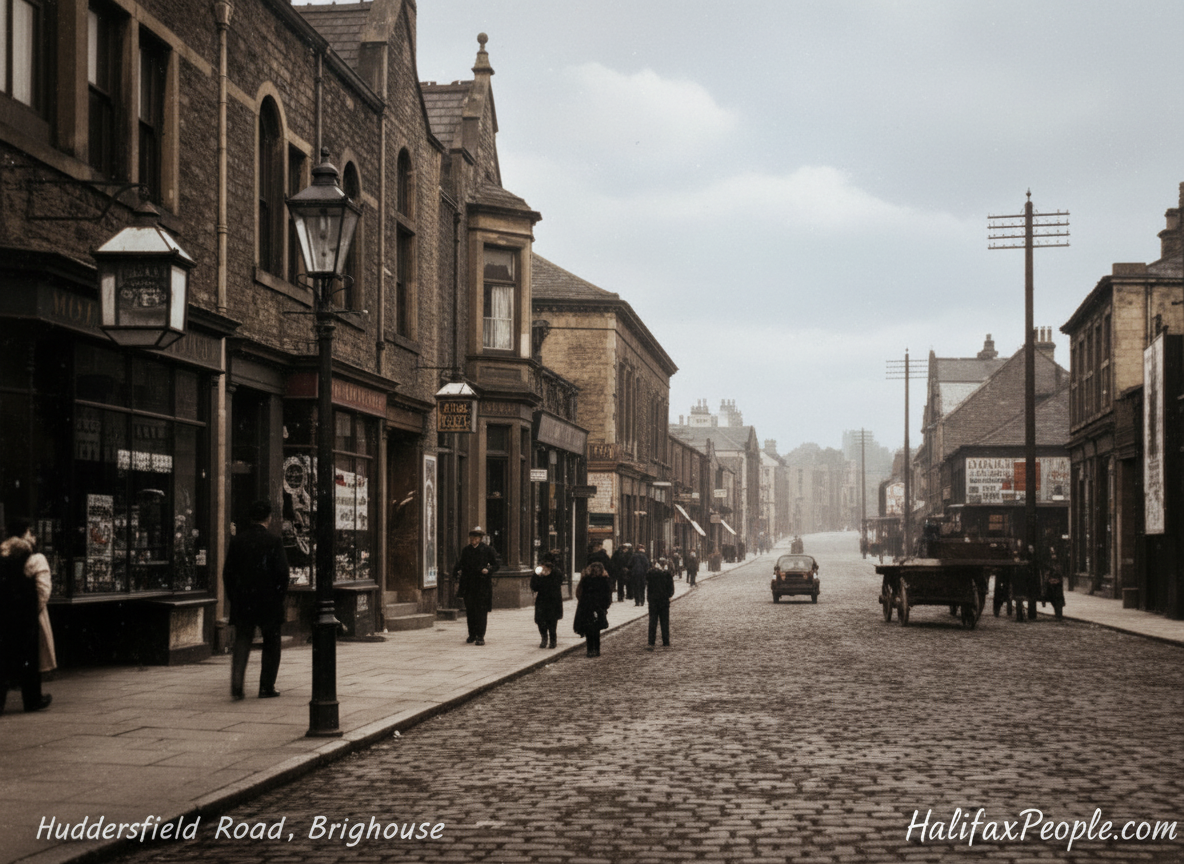
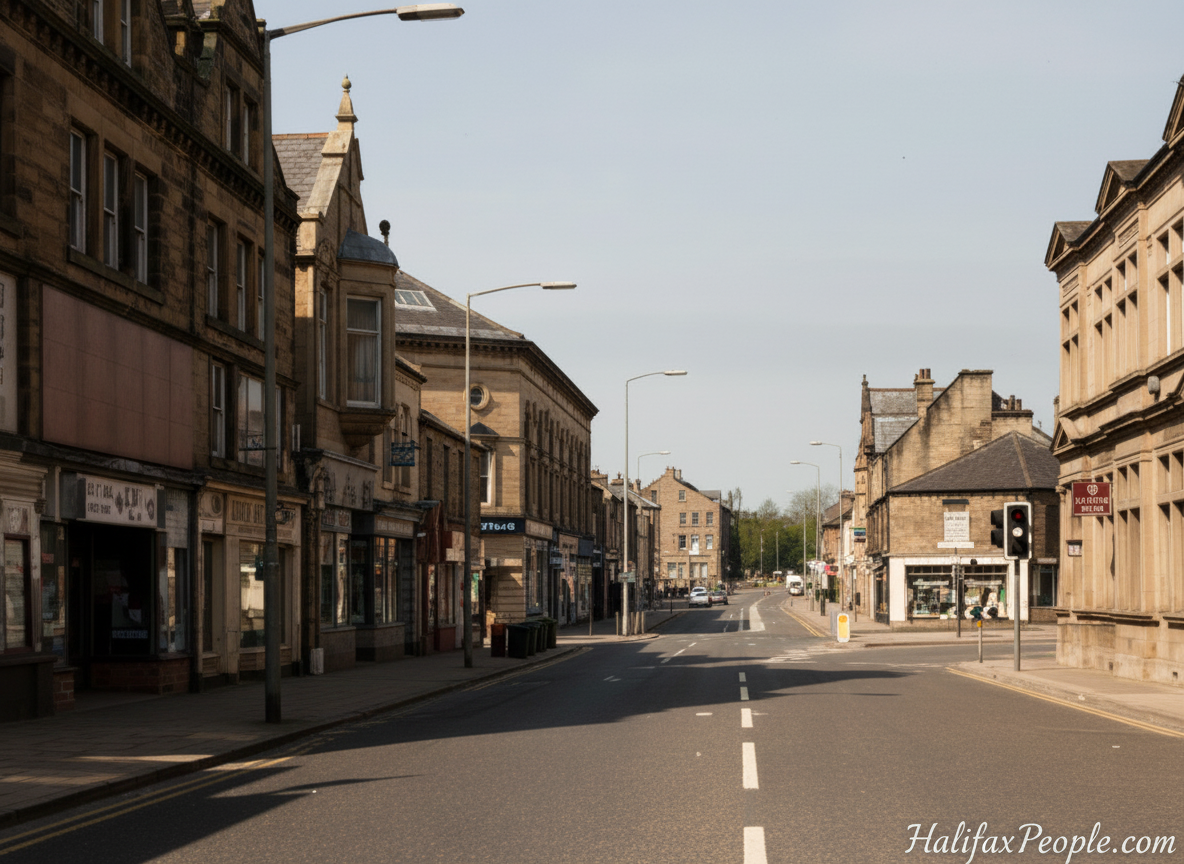
Brighouse along Huddersfield Road

enhanced


enhanced

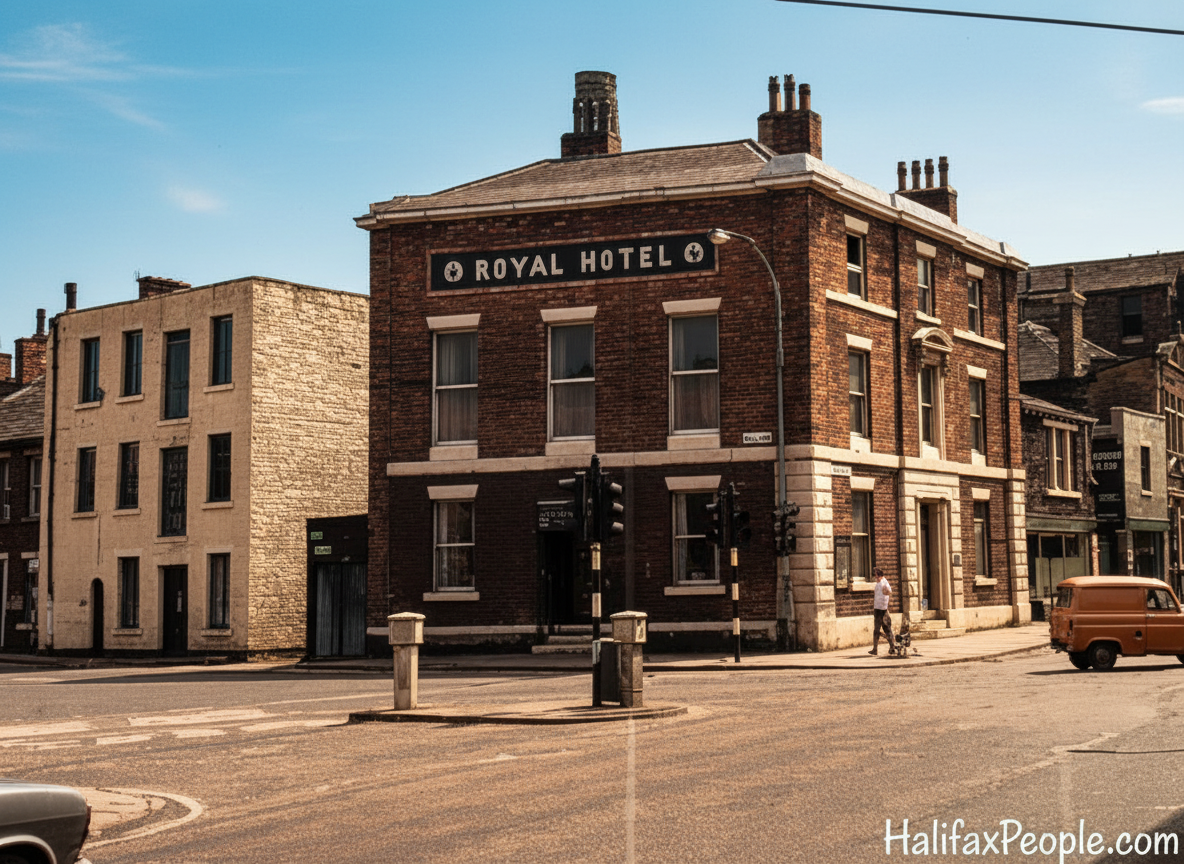
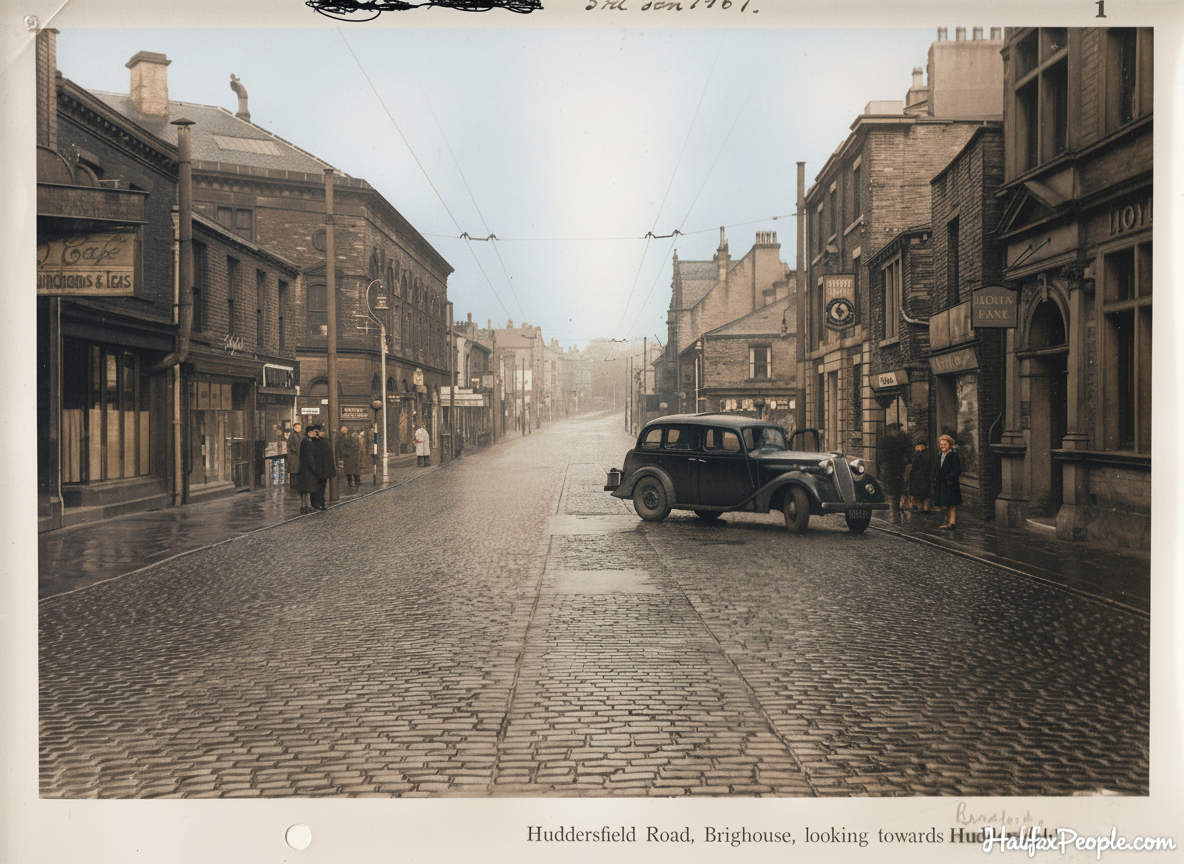
Brighouse along Huddersfield Road

enhanced

enhanced

enhanced
Victoria Mills and Baines Row
The area around Mill Lane was once dominated by the Victoria Mills complex, an important part of Brighouse's industrial past. The mills and their associated buildings occupied a substantial site beside the canal and provided employment for people from the town and surrounding districts.
The importance of Samuel Baines, whose initials and the date 1852 can still be seen on the lintel above a former passageway beside the old solicitor's office of Rice Jones and Smith. The passage led into Baines Row and the Victoria Mills square. Baines Row was a street of old terraced houses, many of them in poor condition by the time the area was cleared. The solicitor's offices, Baines Row, Victoria Mills and adjoining properties were eventually demolished to make way for the Sainsbury's development, which opened in November 1998. The surviving photographs record a whole industrial and residential neighbourhood that has disappeared.

enhanced


enhanced


Brighouse Echo 1987

enhanced


enhanced
Mill Lane
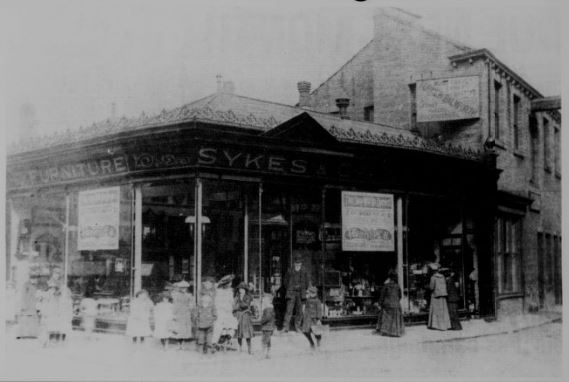

Here was Mill Lane/Huddersfield Road where Sainsburys is now and Victoria Mills was


enhanced
The Early Brighouse Fire Brigade
The large textile mills and closely packed commercial buildings made fire a serious danger in Victorian Brighouse. In 1855 Samuel Baines acquired a fire engine known as Neptune to help protect properties in the town centre, and the Victoria Mills Fire Brigade was formed.
The limitations of the early equipment became clear in 1895, when a disastrous fire destroyed Sugden's Flour Mill and the engine could not provide sufficient water pressure. Plans were subsequently made for a more powerful steam fire engine and the formation of a Borough Fire Brigade in 1897. The old Neptune eventually made its final journey to the scrapyard in 1906. Much later, Brighouse's fire service moved into its station on Lister Street, which was officially opened on 12 June 1971.


Brighouse Gasworks and the Coming of Street Lighting
Brighouse was among the towns to adopt gas lighting during the nineteenth century. Gas street lighting began in 1843, with the gas initially supplied from works at Victoria Mills, where Benjamin Firth was responsible for its production. The Brighouse Gas Company was established in 1844, and an Act of Parliament obtained in 1846 provided for the development of the town's gas-lighting system.
A new gasworks was built at Mill Lane in 1857, close to the Calder and Hebble Navigation and its canal basin. The location was practical: coal could be brought in by water and the manufactured gas distributed through mains to customers around the town. The works were enlarged in 1886 and continued producing gas until 14 April 1954. Following nationalisation of the gas industry in 1949, the undertaking became part of the North Eastern Gas Board. The old gasworks were an important part of Brighouse's industrial landscape, even though their role eventually disappeared as gas production and supply changed.
Continuing up Huddersfield Road towrads Bradley roundabout

The Albert Theatre and Opera House
The Albert Hall on Huddersfield Road was one of Brighouse's principal entertainment venues. Designed by the architects Sharp & Waller for the Albert Hall Company, it opened on 12 October 1898. The building cost approximately £4,000 and could accommodate around 1,200 people, with seating arranged on three levels. It was originally intended to be called Victoria Hall, but the name Albert Hall was adopted instead.
The venue presented theatrical performances and other entertainments. From 1906, films were also shown alongside live performances. In 1908 it became known as the New Albert Theatre, under the ownership of Walter Morton Cameron and T. Morton Powell. In 1929 much of the original theatre interior was removed when the building was converted into a cinema. It became popularly known as 'The Ranch', reflecting the popularity of Western films shown there.
The cinema closed in 1972, with Love Story reported as its final film. The building subsequently had several different uses, including bingo and social club premises. It later became known as the Barracuda and then the Calder. Its changing identity reflects more than a century of entertainment and social life in Brighouse.

enhanced


Looking up Huddersfield Road from Brighouse


enhanced


enhanced


enhanced


enhanced


enhanced

Brighouse Train Station

Norwood Green to Anchor Pitt rail line across River Calder

enhanced


enhanced


enhanced


Birds Royd


enhanced

Former Red Cross Brewery, Foundry Street, Birds Royd, Rastrick, established in 1873. This February 1984 image shows a row of cottages in Foundry Street which fronted the brewery yard, with the remains of the brewery tower behind.
Info by IHO

Former Red Cross Brewery, Foundry Street, Birds Royd, Rastrick, established in 1873. The remains of the brewery tower and the yard bordered by company houses can be seen in this view. Photo. February 1984.
Info by IHO


enhanced


enhanced

River Street - off Birds Royd Lane

Woodlands pub


Woodhouse


Shepherds Thorn Lane in 1905 shows the Walton family outside Throstle Nest Farm

The same view in 1986

enhanced

If you have enjoyed your visit to this website, please spread the word by clicking the 'like' and 'share' buttons below. Thank you