Old Cock Yard, Cheapside, Russell Street

Old Cock Yard, Halifax: Coaches, coiners and the birth of a building society
Tucked beside Southgate, Old Cock Yard preserves the atmosphere of an older Halifax — a town of coaching inns, crowded yards and narrow passages behind the main shopping streets.
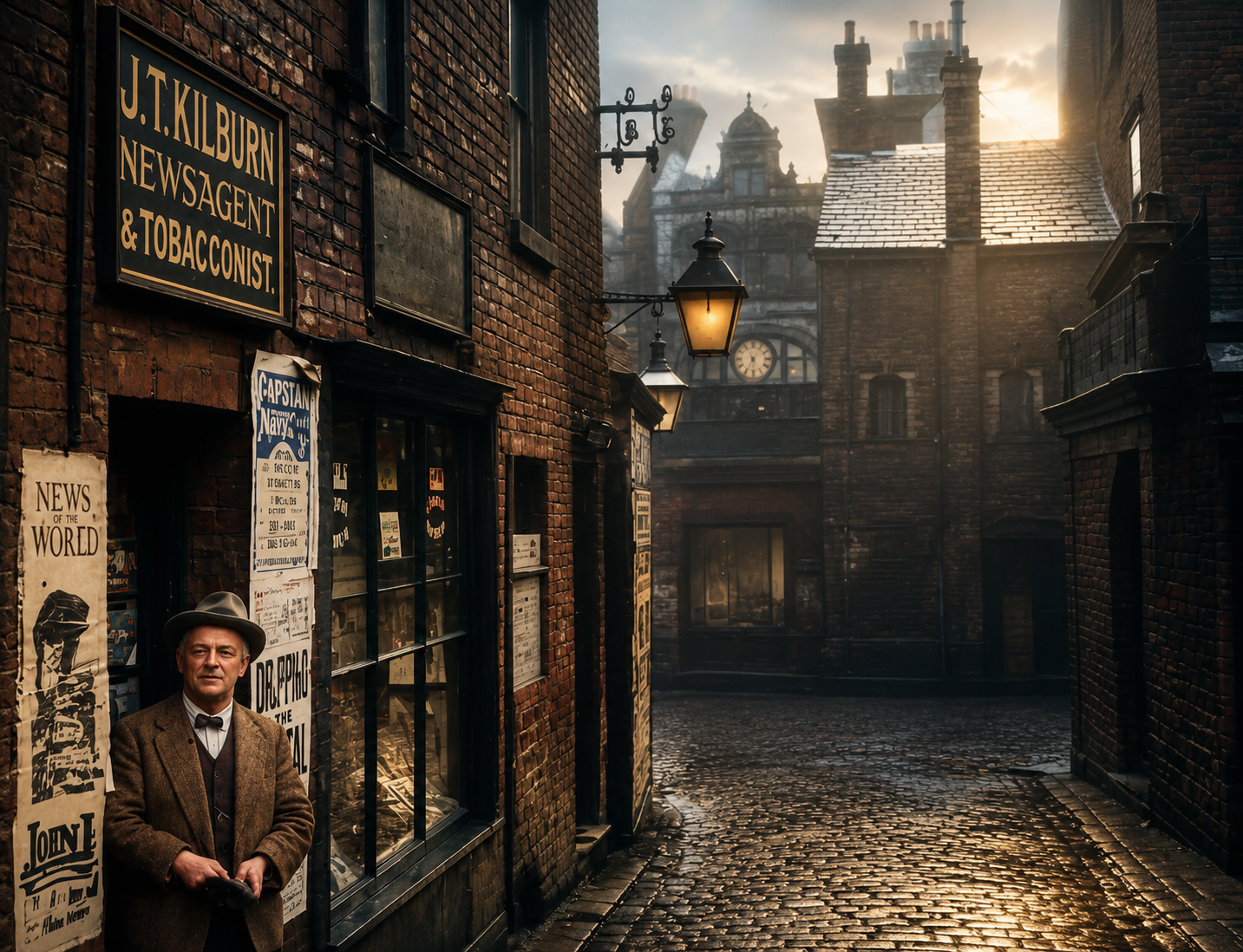
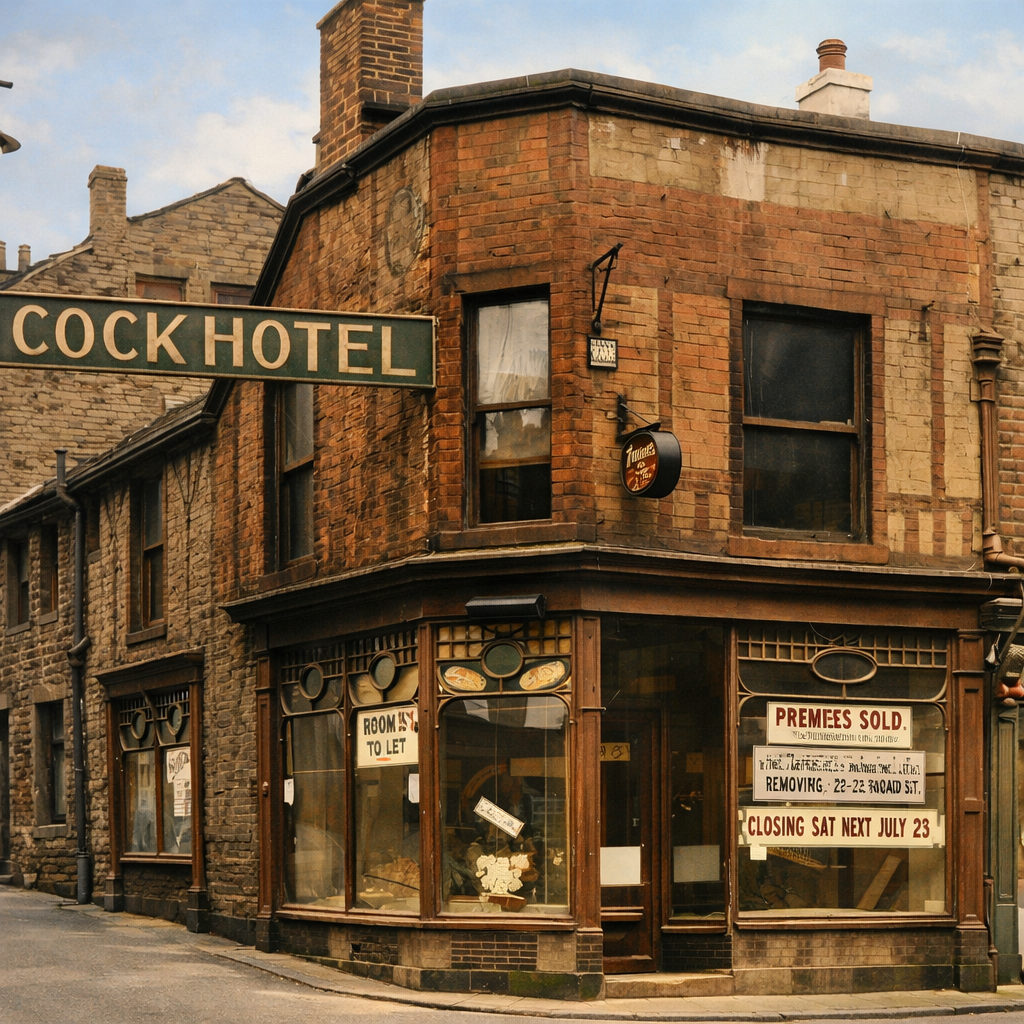
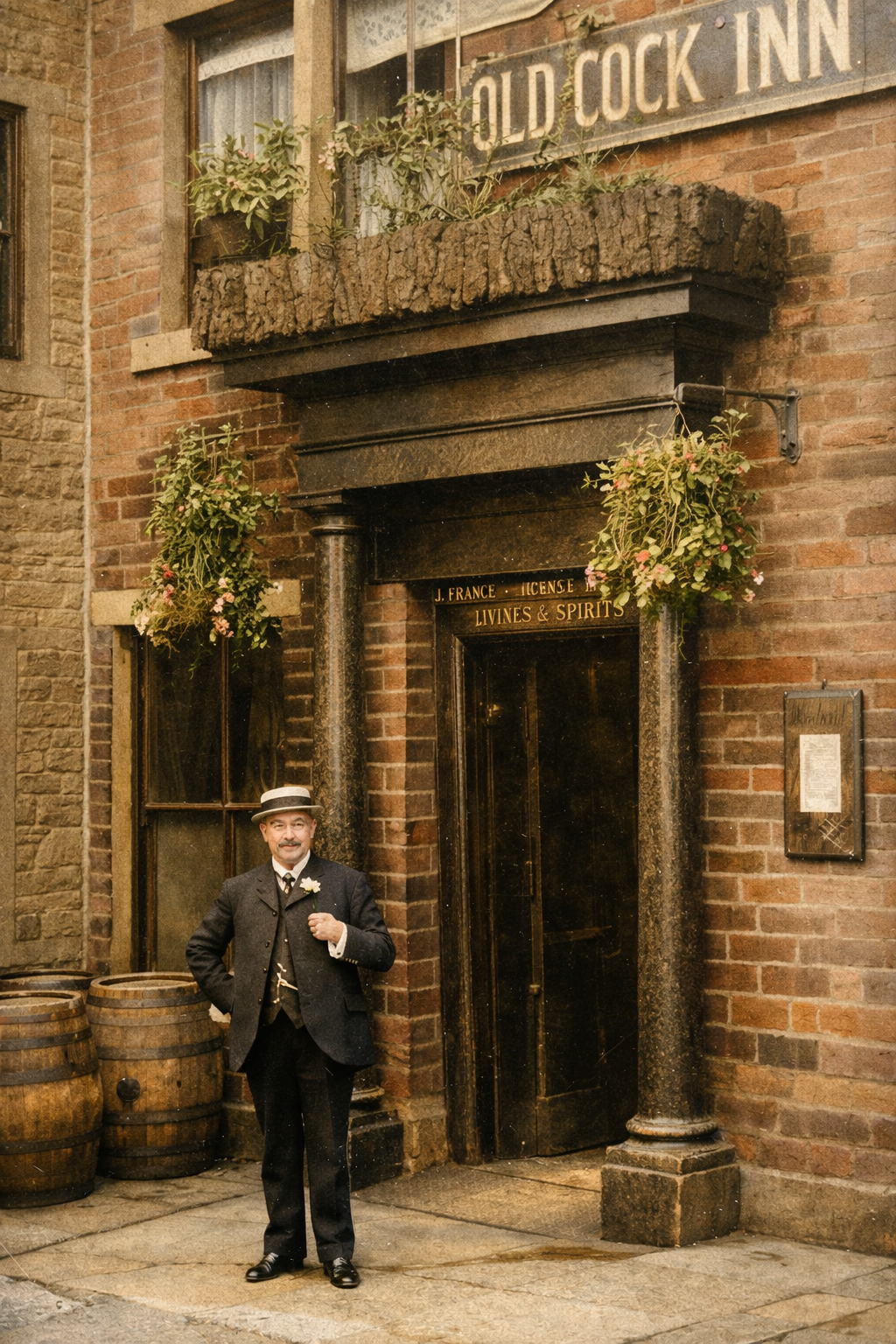
The yard takes its name from the Old Cock Inn, one of Halifax’s oldest surviving inns. Calderdale’s heritage records describe the building as originating as a townhouse in the early seventeenth century, with significant historic features still surviving inside. Malcolm Bull’s Calderdale Companion records an earlier date for its origins: a townhouse built for William Savile around 1580, which became an inn in 1668. The precise dating differs between sources, so the safest description is that it has sixteenth- and seventeenth-century origins.
Old Cock Yard was once much more than a shortcut. It was a busy coaching and carriers’ yard, where horse-drawn vehicles carried people, parcels and goods between Halifax and other towns. A Halifax directory from 1837 lists carriers operating from the yard, including services to places such as Leeds, Rochdale and other regional destinations. In the days before railways and motor transport, yards like this were vital links between the town and the wider world.
The yard also had a theatrical side: Malcolm Bull records a theatre there around 1760. Later, in 1768, Halifax’s circulating library was founded in the yard — an unexpected cultural footnote in a place better known for inns and transport. A news room and library were established there again in 1823, founded by Thomas Gledhill, with an annual subscription of one guinea.
The Cragg Vale Coiners’ notorious meeting place
The Old Cock is closely associated with the Cragg Vale Coiners, the gang that clipped and forged gold coins in the eighteenth century. Their leader, “King” David Hartley, was arrested at the inn in 1769, according to Visit Calderdale. The gang’s activities became one of the region’s most notorious criminal episodes, and their story later inspired Benjamin Myers’s novel The Gallows Pole and a BBC television adaptation.
Yet the inn’s legacy is not only criminal. A meeting held there led to the formation of the Halifax Permanent Building and Investment Society, the organisation that grew into the Halifax Building Society. It is a remarkable contrast: the same historic inn associated with a notorious gang also became part of the story of one of Britain’s best-known financial institutions.
A historic yard that still has stories to tell
The Old Cock is now a Grade II-listed building. Its surviving features include mullioned windows and an important upper-floor room with historic panelling and an elaborate fireplace. The yard remains a reminder of the network of inns and transport yards that once supported Halifax’s trade and travel.
Old Cock Yard’s story spans several centuries: a grand townhouse, an inn, a coaching hub, a place of learning, a meeting point for coiners and the beginnings of a building society. Few small corners of Halifax connect so many different strands of the town’s history.




Russell Street
Russell Street, Halifax: A Victorian street built around the market
Russell Street is a small street with an important role in the story of Halifax’s town centre. Its name is linked to Lord John Russell, the nineteenth-century Whig and Liberal politician who served twice as British prime minister. Local historian Malcolm Bull records that the street was named after him.
Before the modern street took shape, this area included Petticoat Lane, an older narrow passage dating back to the sixteenth or seventeenth century. It ran from the Woolshops area towards the junction of Back Lane and Southgate, passing between buildings on the site of today’s Old Arcade. As the town centre was redeveloped in the late nineteenth century, Russell Street absorbed part of this older layout. The exact year of the change is not firmly established in the sources I found.
The biggest transformation came with the building of Halifax Borough Market and its surrounding shopping arcades. Designed by local architects John and Joseph Leeming, the new market complex was built during the 1890s. The arcade running north from the market crossed Russell Street and continued into the Old Arcade, creating a sheltered shopping route between the market and Old Market.


Wheatsheaf (far left), Saddle (left) and Duke of York (right)
Two buildings give Russell Street much of its architectural character.
- Russell Arcade, part of the Borough Market development, leads into the covered market. Its richly decorated stone entrance and iron-and-glass shopping passage were designed as part of the wider Victorian market scheme.
- The Old Arcade, at the Old Market end, was built around 1895–96. Its entrance features shaped gables, stone dormers and small turrets, with shops arranged alongside a covered passage. It is now a Grade II-listed building.
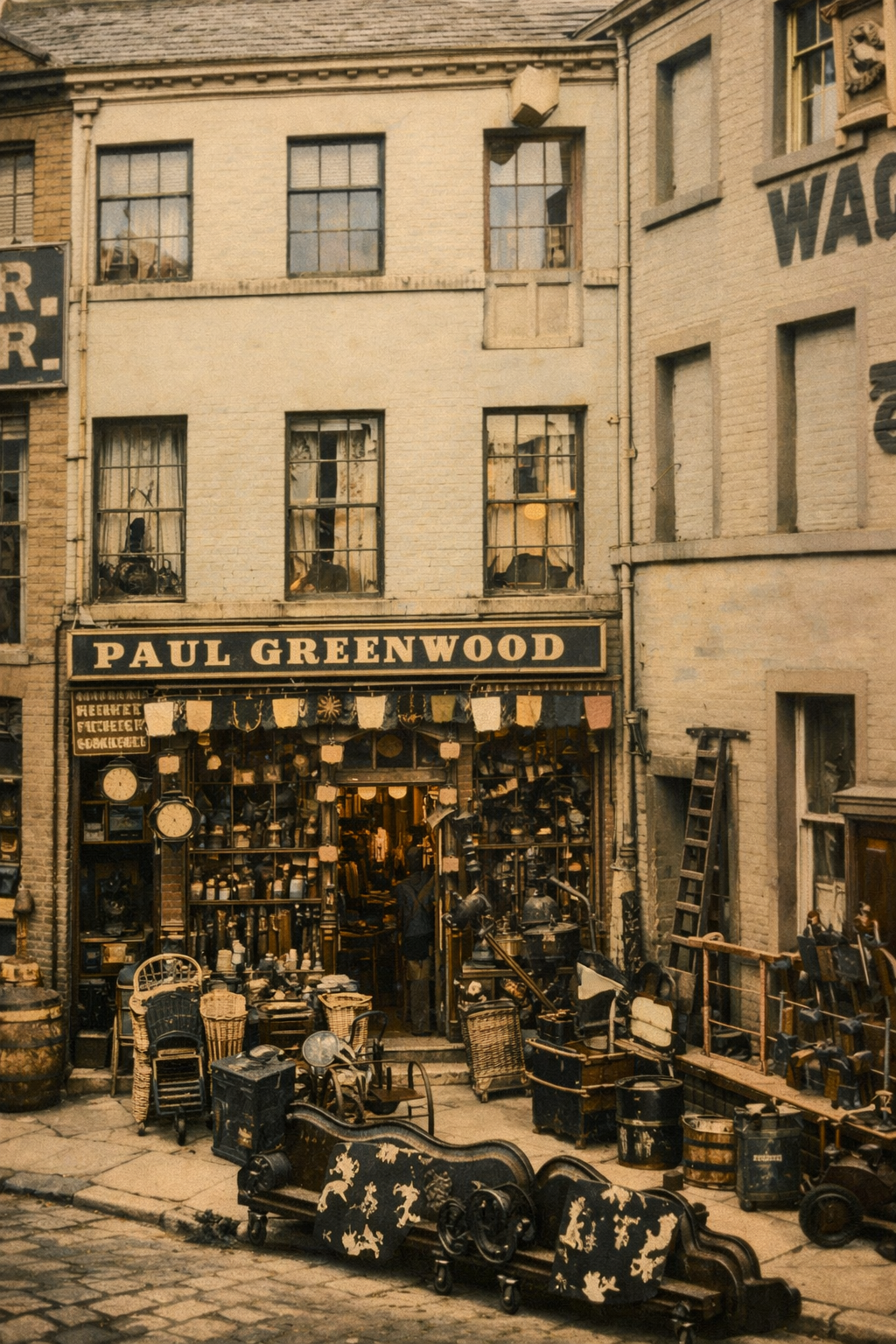
Russell Street also had its share of pubs. The Shoulder of Mutton, at the corner associated with Russell Street and Petticoat Lane, opened in 1819 and closed in 1892 as the area was changing. The pub’s history helps connect the street’s older, densely packed neighbourhood with the Victorian commercial development that followed.
Today, Russell Street is part of Halifax’s pedestrianised town centre and remains one of the access routes into Borough Market. Its story is a reminder that redevelopment rarely starts with a blank slate: beneath the Victorian arcades lies the footprint of older lanes, shops and inns.
  |
  |


Cheapside
Cheapside, Halifax: From “Back Lane” to a shopping street
Cheapside has a name that sounds as though it promises bargains. Its history is more interesting than that — and it offers a glimpse of how Halifax’s streets acquired their identities.
According to the local history account, Cheapside was shown under its present name on maps of 1759 and 1761, even though people continued to call it Back Lane into the early nineteenth century. The same account suggests the name became attractive when the lane developed into a shopping street: shopkeepers preferred a smart, town-centre address to one that sounded like a back street. That explanation is plausible, but it should be treated as a local historian’s interpretation rather than a proven naming decision.
The street runs west from Corn Market and Southgate. Its older commercial life can be traced through directories and lists of residents and businesses. In 1822, for example, Cheapside was home to Mary Farrar, a milliner and dressmaker, and A. & A. Nelson, corn and flour dealers. These trades reflect the mixture of specialist retail and food-related commerce that served a busy market town.
By 1839, Halifax’s Post Office was at No. 10 Cheapside, opposite the Golden Lion Inn. The town trustees — predecessors of the modern council — met in a room at the corner of Upper George Yard. Because this was still associated with Back Lane, their meeting place acquired the nickname “the Back Lane Parliament”: a wonderfully local label for a group involved in running the town.
A long-lived shop and a literary legend
One of Cheapside’s documented businesses was James Wilson & Son, the ironmongers at Nos. 14 and 16. James Wilson established the business in 1857, selling household hardware ranging from gas-light fittings to pots, pans and cutlery. The business passed to his son and continued trading on Cheapside into the 1960s, making it a useful example of how a family shop could endure through generations of change.
Cheapside also has a literary story attached to it. A Calderdale Council archive entry notes a claim that Daniel Defoe wrote Robinson Crusoe while lodging at the Rose and Crown pub. It is an appealing tale, but the archive phrases it as something “said” to have happened; without stronger supporting evidence, it should be presented as local tradition, not established fact.
Cheapside’s history is not defined by one grand building or dramatic event. Instead, its character emerges from maps, small businesses, a town-trustees’ meeting room and the gradual change from an old lane into a recognised shopping street.


Rose and Crown site is going to be Marks and Spencers

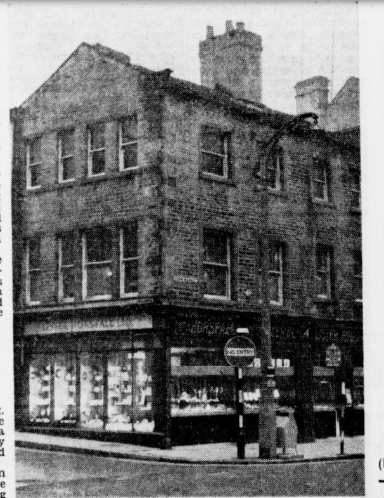

Rose and Crown pub stood at the bottom of Cheapside
 |
 |
 |
 |


The Golden Lion's nickname became it's official name of the 'Brass Cat'

 |
  |

enhanced
If you have enjoyed your visit to this website, please spread the word by clicking the 'like' and 'share' buttons below. Thank you