Clare Road

Clare Road, Halifax: From Calico Hall to the Royal Oak
Clare Road’s history reaches back beyond the Victorian houses that now give much of it its character. Its earlier name was Clare Hall Lane, and the story behind that name leads to an older house, a Quaker meeting place, a grand Georgian residence and a neighbourhood once known locally as “World’s End”.
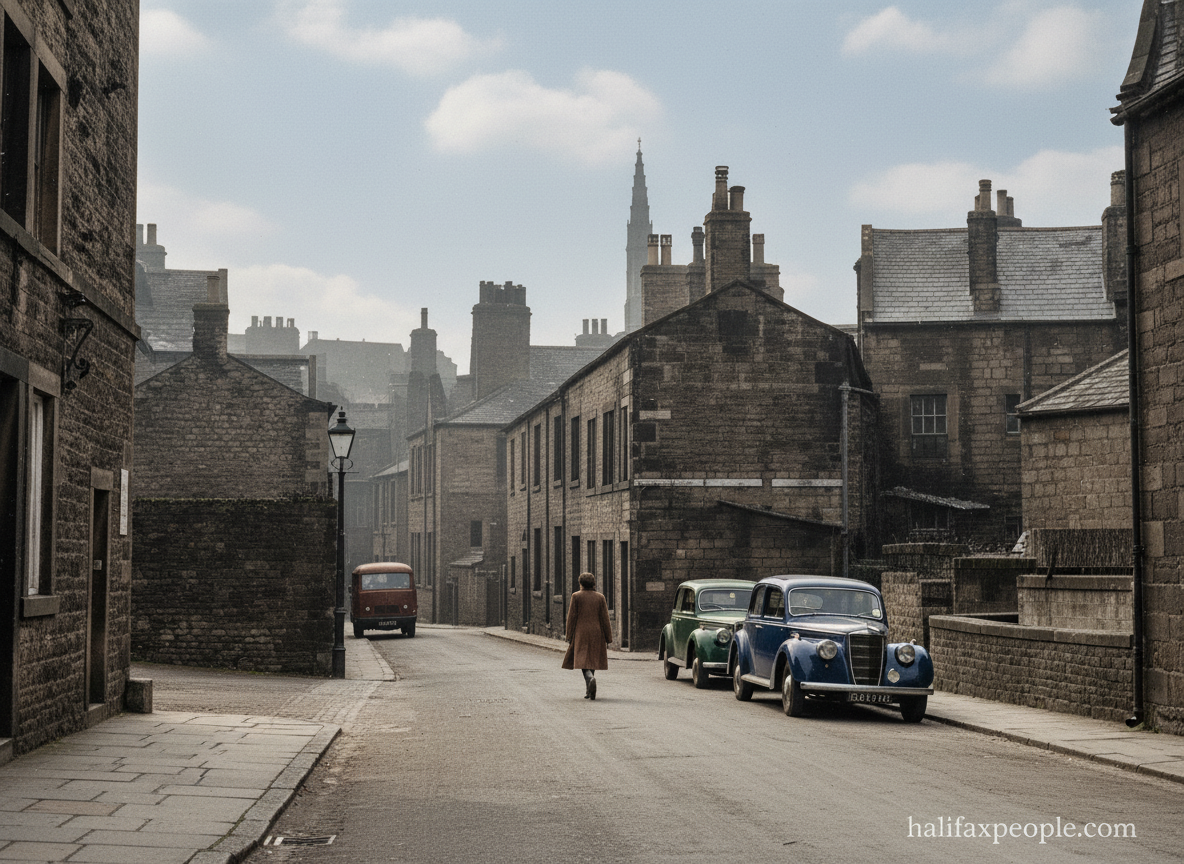
Many of the houses along the road were built between 1867 and 1870, as Halifax expanded during the industrial era. But the road’s older landmarks tell a more varied story than a simple Victorian building boom.
The hall that gave the road its name
The name Clare Hall is linked to a property originally known as Calico Hall, a name associated with the cotton trade. Malcolm Bull records that around 1810, Mrs Ann Prescott changed its name to Clare Hall. The suggestion that she chose the name after Clare College, Cambridge, appears in local history, but the motive is not conclusively established.
The hall later became a home for different occupants, including pastors associated with Square Independent Chapel. In 1919 it became the headquarters of the Halifax branch of the YMCA. Halifax Corporation purchased it in 1936, intending to build public swimming baths on the site. The hall was demolished in 1946, and Clare Hall Baths opened there in April 1966.
Hope Hall and the Georgian houses
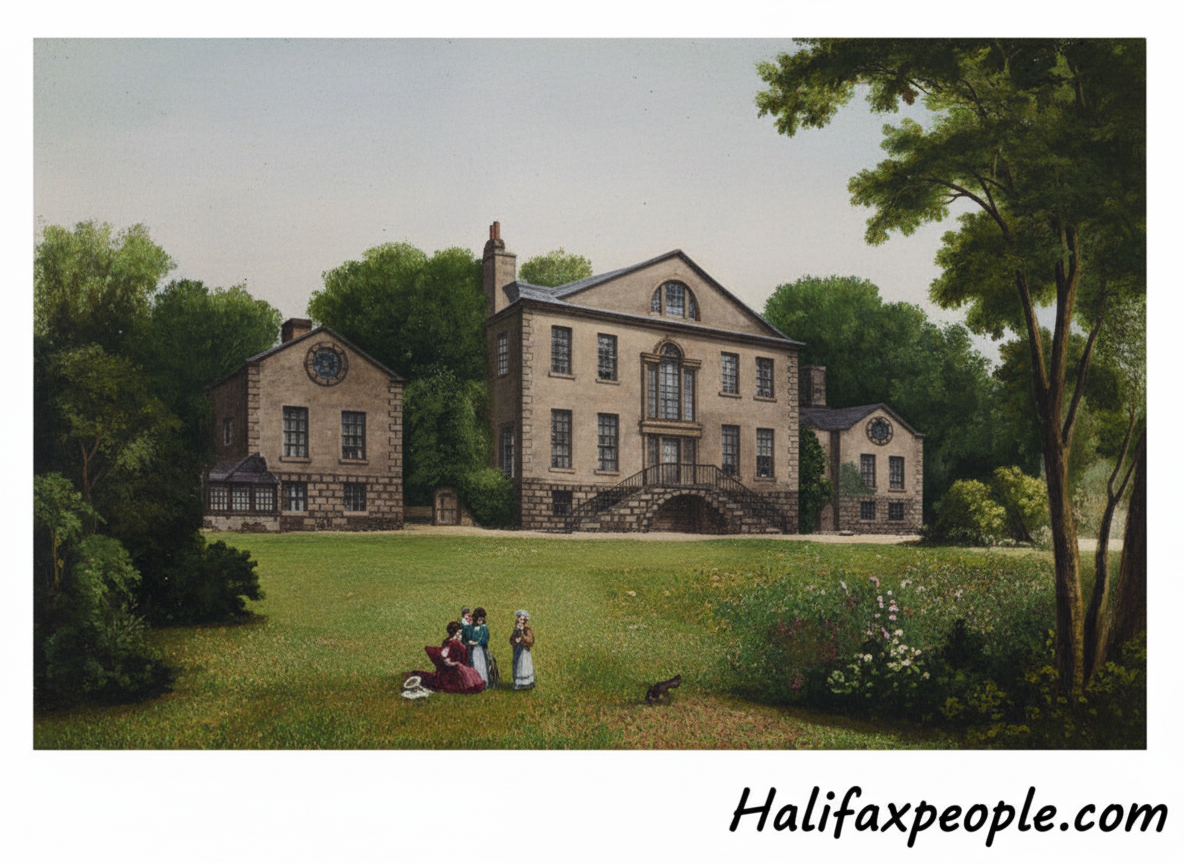
Another important landmark was Hope Hall, originally called Hope House. Local history attributes its design to James Green and dates its construction to 1745. The estate was broken up in 1882, as the expanding town changed the landscape around it.
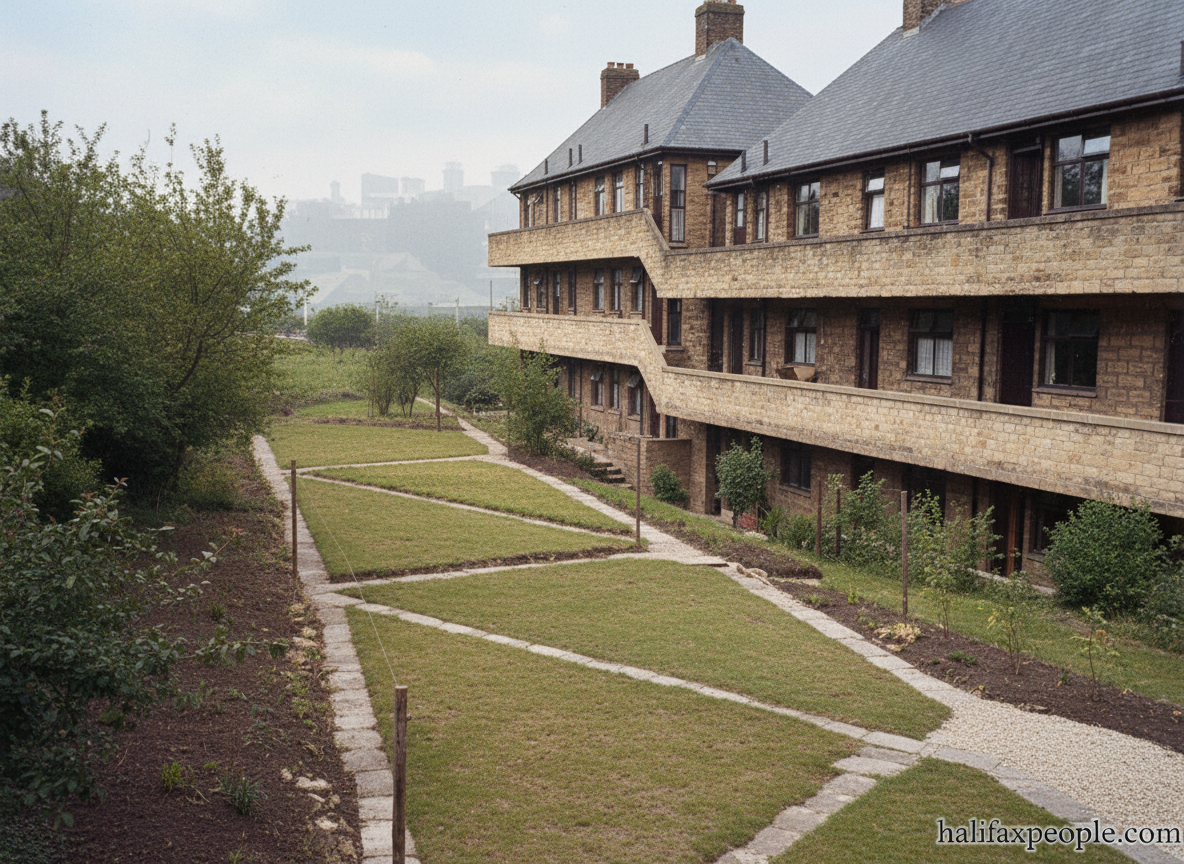
The surviving Hope Hall, at 57 Clare Road, is a different historic building from the demolished Clare Hall. It is a substantial mid-to-late eighteenth-century stone house with a four-column Doric portico, a pediment and detached wings enclosing a forecourt. It is Grade II* listed.
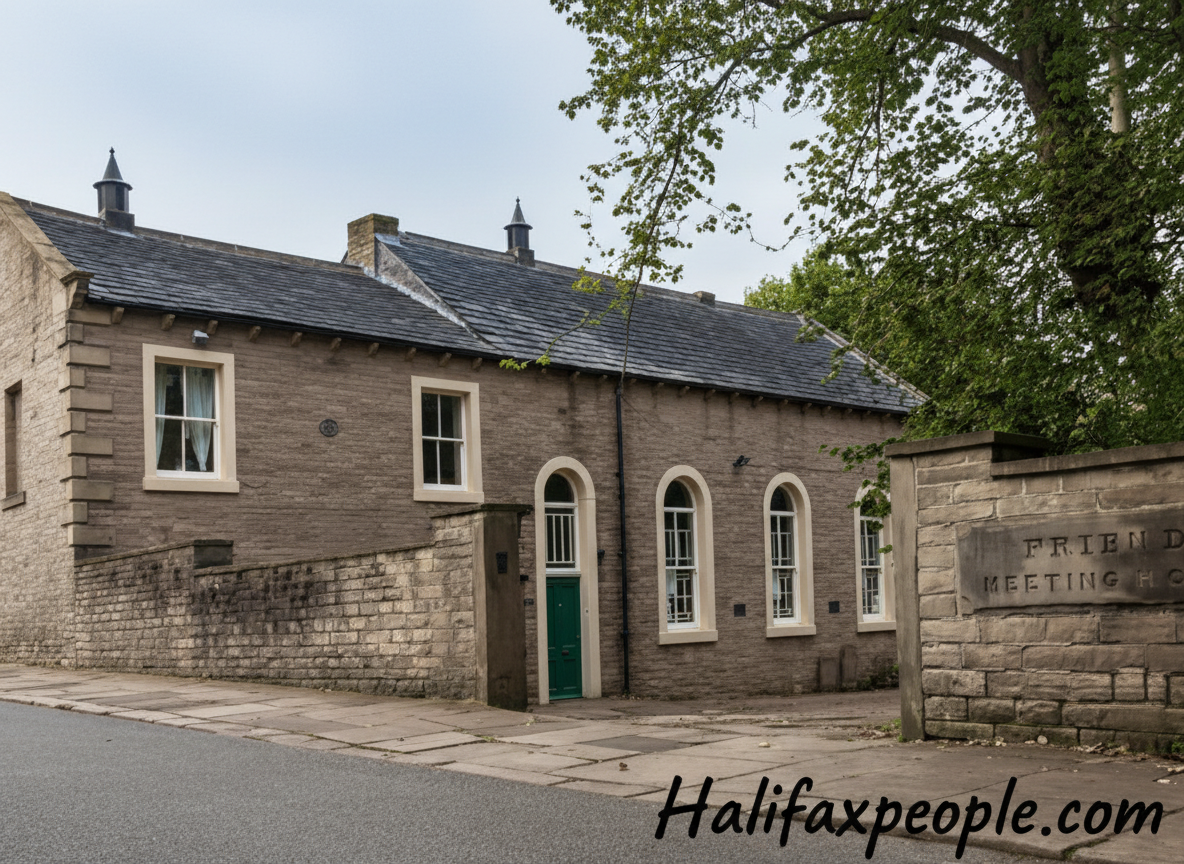
Clare Road also has a Quaker history. The Friends Meeting House at No. 5B is thought to date from 1743. Its architecture records the growth of the Quaker community in Halifax, including later alterations to the original, more modest building.
The Royal Oak and the London milestone
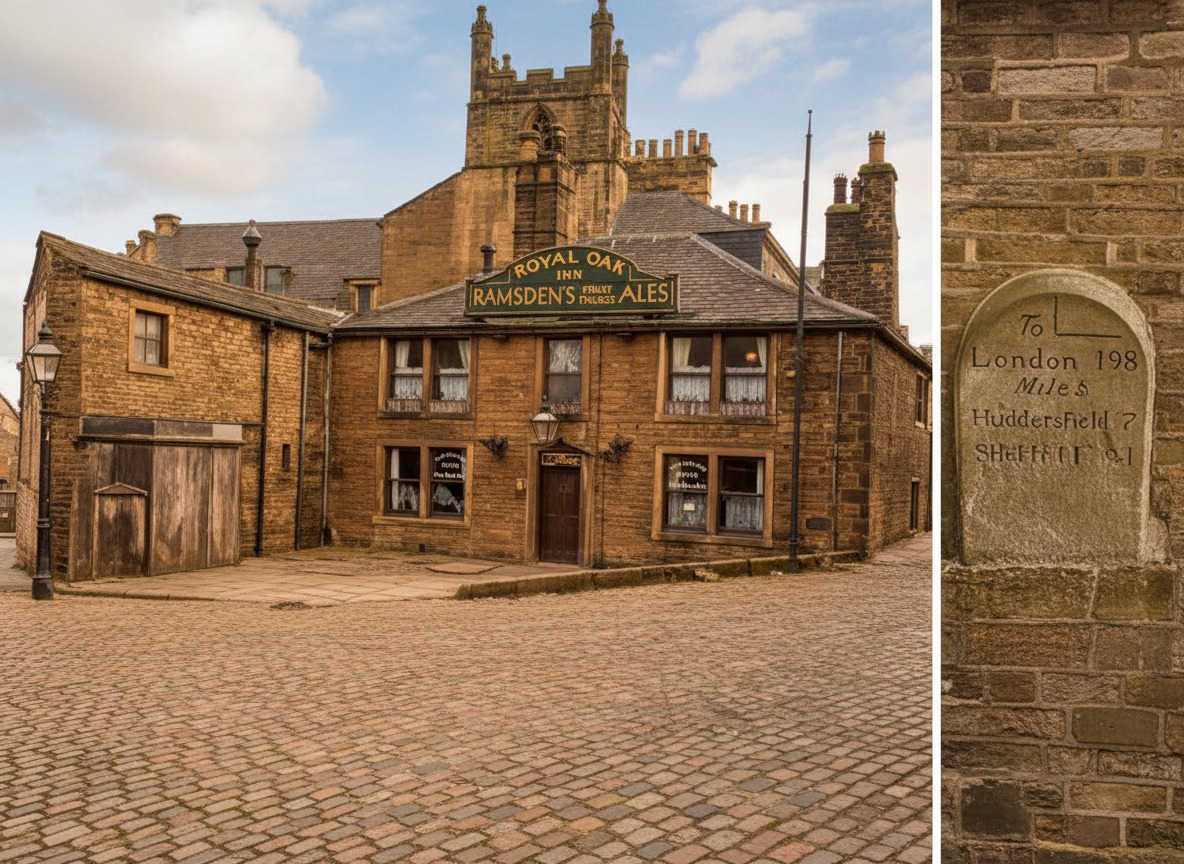
One of the road’s most distinctive buildings is the Royal Oak public house. It opened on 30 July 1931, built for Thomas Ramsden & Son Ltd to designs by Jackson & Fox of Halifax. Its unusual vernacular revival style includes carved timberwork, leaded windows and decorative details inspired by older buildings. It is Grade II listed.
Nearby, HalifaxPeople records a milestone marked “198 miles to London”. The surrounding district was known locally as “World’s End”, although the reason for that name still needs firmer documentary evidence.

enhanced

Royal Oak
St John's Road

enhanced


enhanced

Hope Hall



 |
 |

enhanced
Hope Hall Terrace


New Road, Halifax: An Old Route with a Surprising Survivor
New Road is one of those Halifax streets whose name sounds modern, but the road and its buildings have a much longer story. Malcolm Bull’s Calderdale Companion records New Road in Halifax as far back as the eighteenth century, linking its history with Thwaite Buildings and Wellington Place.
One of the most interesting survivors was the Pump Room, the public house facing New Road with a side elevation on Church Street. It began as a group of cottages in the late eighteenth century, was converted into a beerhouse in the mid-nineteenth century, and continued as a pub in the twentieth century. The earliest documentary evidence identified by the West Yorkshire Historic Environment Record is the 1790 Halifax rating valuation; the building also appears on a map of Halifax dated 1791.
That makes the Pump Room more than an old pub: it preserves a trace of the small-scale domestic buildings that stood in this part of Halifax before the modern town centre took shape.
A street caught in the changing town
New Road sits close to Church Street, South Parade and the routes around Halifax Minster. This part of the town is undergoing another major transformation through the A629 town-centre improvement scheme, including new junction layouts, improved walking and cycling routes, and changes to vehicle access.
The irony is that a street whose name reflects an earlier phase of change is once again part of a changing town. The Pump Room is a useful reminder that behind today’s roads and junctions, some buildings retain the footprint of much older Halifax.


 |
 |


Brocklyn's Yard off New Road.
The Drill Hall: soldiers on a Halifax street
The most distinctive building on Prescott Street is the former Drill Hall, built between 1868 and 1870 to serve Halifax’s Rifle Volunteers. Designed by Richard Coad, it became the headquarters of companies of the 4th Duke of Wellington’s West Riding Regiment. The building remained in military use until the late twentieth century and was subsequently converted into apartments.
The hall is a reminder that Victorian Halifax was not shaped by mills and commerce alone. Volunteer military units also needed permanent bases where men could assemble, train and organise. The building’s ornate frontage and carved military details distinguish it from the ordinary commercial and residential buildings nearby.
A chapel built with railway compensation
Prescott Street also had a substantial Methodist landmark: St John’s Wesleyan Chapel, opened on 1 October 1880. Its construction followed a dispute with the railway company, which wanted to extend its goods station onto the site of the older Methodist chapel and its graveyard at South Parade.
The trustees pursued compensation through the courts. The eventual settlement provided money to buy a new site and build the chapel on Prescott Street. Designed by William Swinden Barber, the new church was an impressive building with Aberdeen granite columns, a large rose window and a richly designed Caen stone pulpit. Its last service took place on 21 March 1965, and it was demolished that September.
Shops, police and everyday life
Prescott Street was also a working commercial street. The Halifax Industrial Society opened its number 9 branch at 10 Prescott Street in January 1862; the shop later became Scott & Varey.
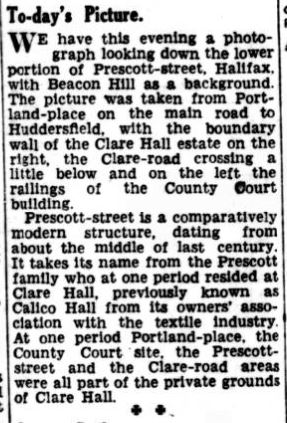
At the corner of Huddersfield Road and Prescott Street stood the West Riding Court House, dated 1889. It contained police offices, cells, two courts and the magistrates’ clerk’s office, with the superintendent’s residence facing Prescott Street. It later became Clare Hall School and was converted into apartments.
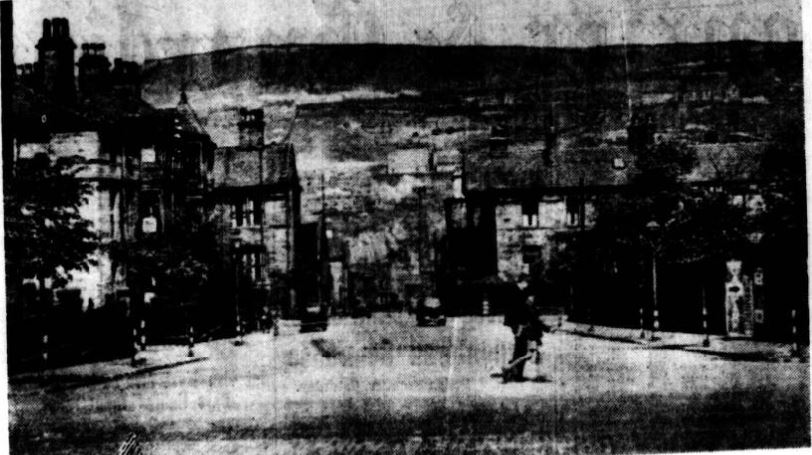
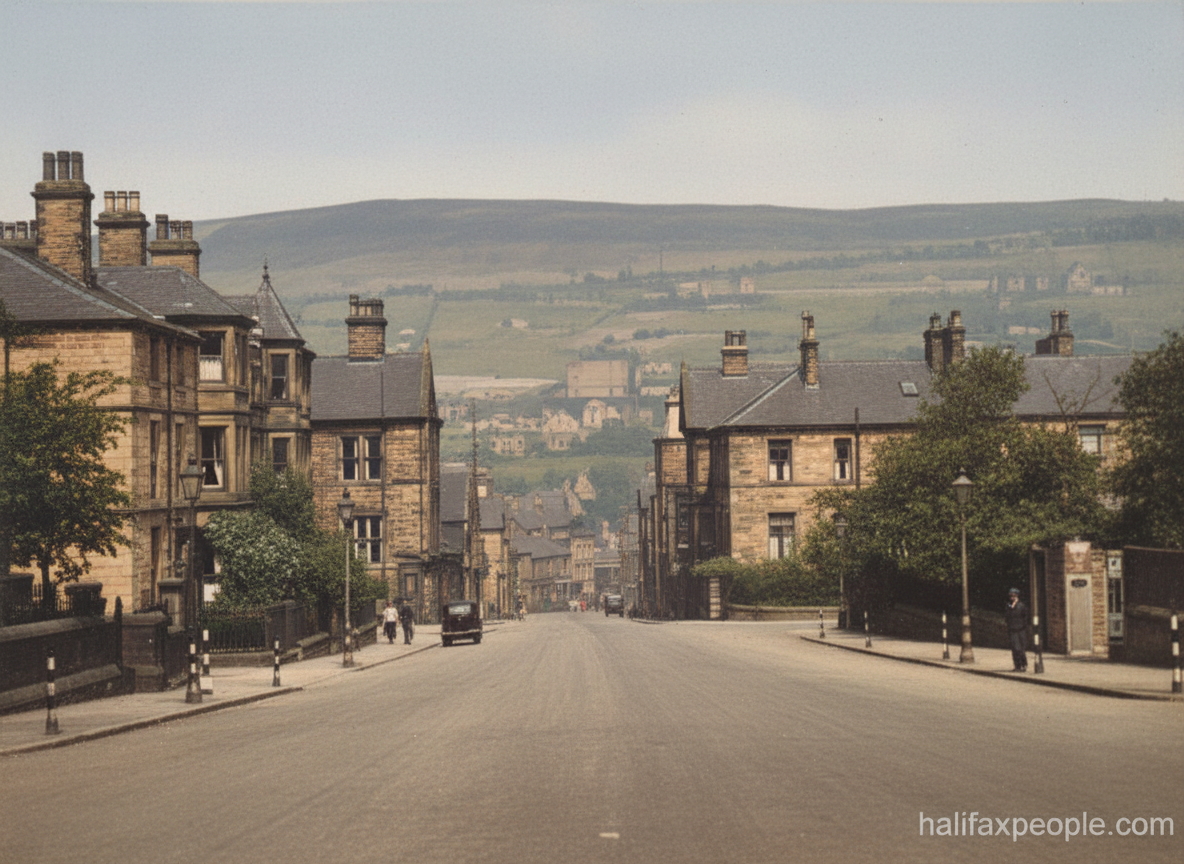
Together, these buildings show Prescott Street’s varied role in Victorian Halifax: a place for military training, worship, shopping and local justice.
  enhanced |
 |


enhanced

Inside the Drill Hall


If you have enjoyed your visit to this website, please spread the word by clicking the 'like' and 'share' buttons below. Thank you