
Godley Cutting: Halifax’s 60-Foot ‘Gulf’ on the A58 Overview
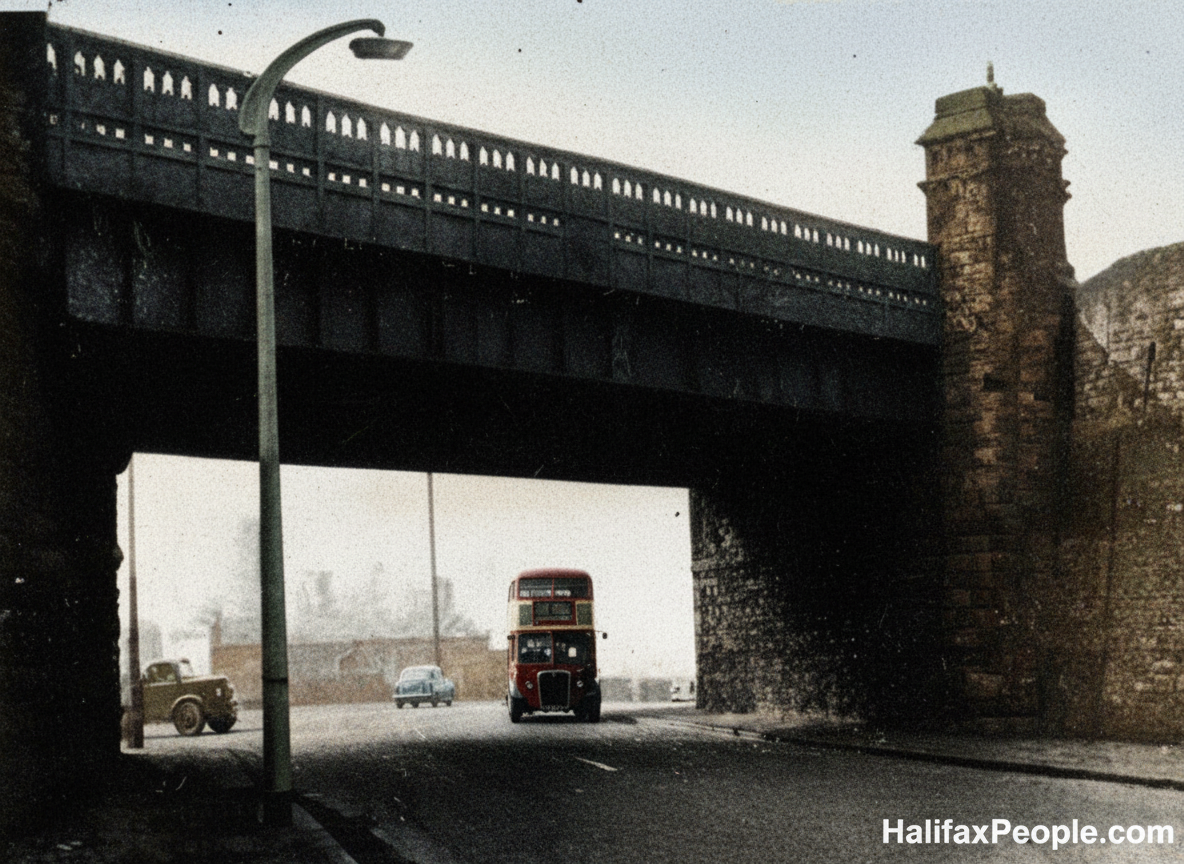
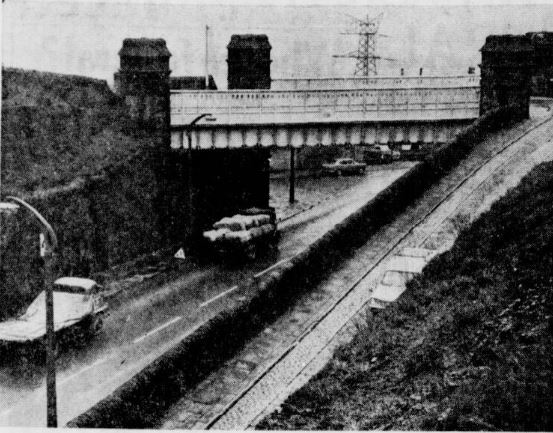
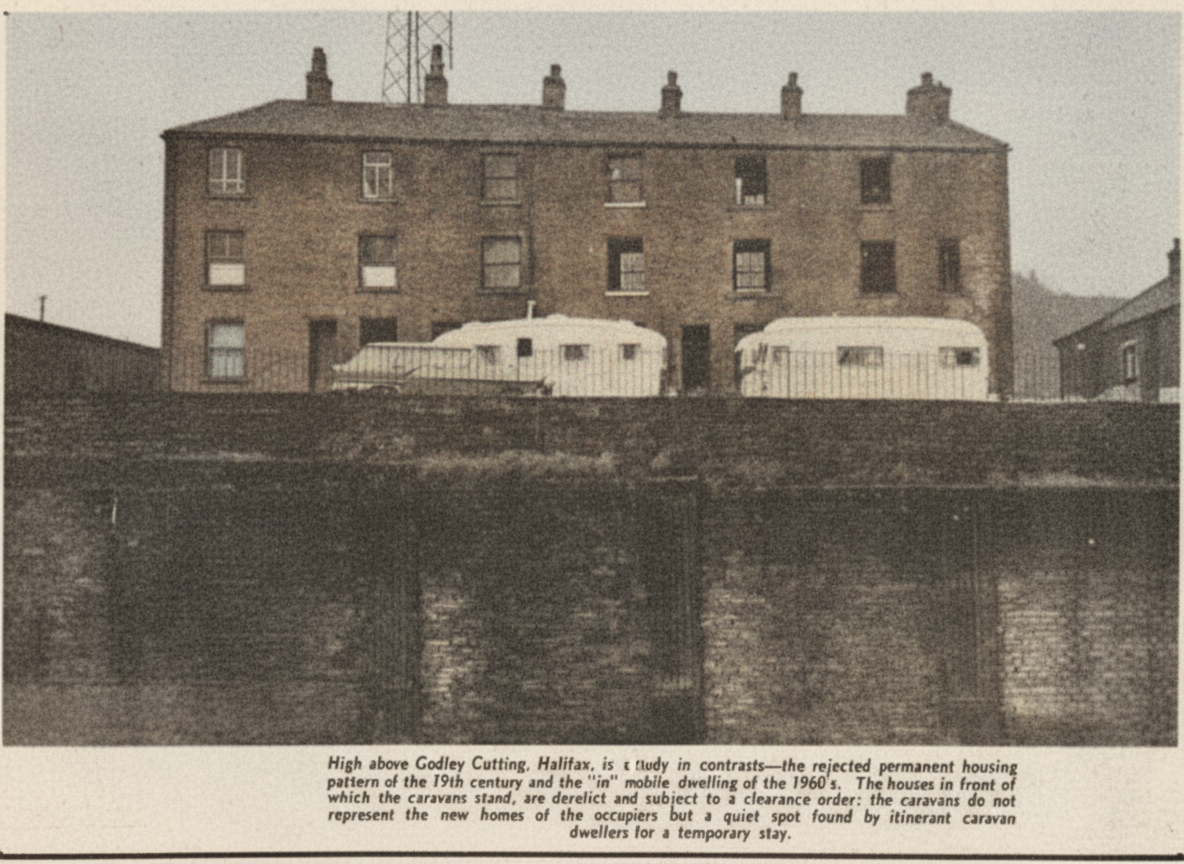
Godley Cutting is the dramatic road cutting that carries traffic from the Shibden valley up into Halifax. Built in the early 19th century, it became a new, engineered entrance to the town and replaced older approaches that had served travellers for centuries.
Today the road through the cutting forms part of the A58.Size and scale

enhanced
Contemporary descriptions and later summaries give a clear sense of its impact:
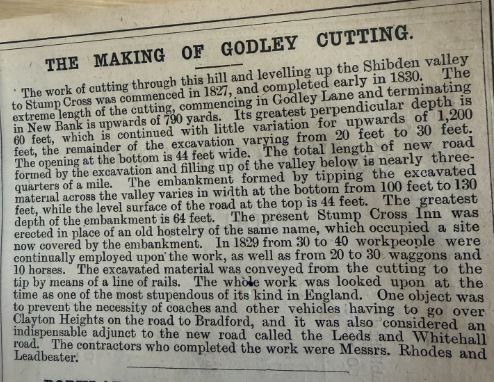
- Around 60 feet high at its deepest
- About 44 feet wide
- Roughly ¾ of a mile long
It was described at the time as “one of the most stupendous of its kind in England.”Who built it, and when?
The cutting was constructed by the Leeds and Halifax Turnpike Trust between 1824 and 1830, following the Turnpike Act.
The contractors were Rhodes & Leadbetter of Leeds, and the works were carried out on land purchased from Anne Lister.
Around 40 men were employed in the construction.What routes did it replace?
Godley Cutting didn’t just improve a road — it changed the way Halifax was approached.
It replaced:
- The mediæval Wakefield Gate route into the town
- The later Halifax Old Road / Shibden Hall Road route of the 1700s
In effect, it created a purpose-built corridor through difficult ground, designed for the transport needs of a growing industrial district.The Stump Cross Inn and the reshaped landscape
The works also altered local landmarks.
- The original Stump Cross Inn stood on the site of the embankment
- A new Stump Cross Inn opened at the present site
(See also: the Museum, Stump Cross.)
Where did all the excavated earth go?
A key detail in how the project was engineered is what happened to the spoil.
Earth dug out to create the cutting was dumped further down the valley to raise the level of the road as it dipped towards Stump Cross. So the scheme was both a cutting and a major embankment job — shifting the landscape in two directions at once.Accidents recorded by Anne Lister (1829)

enhanced
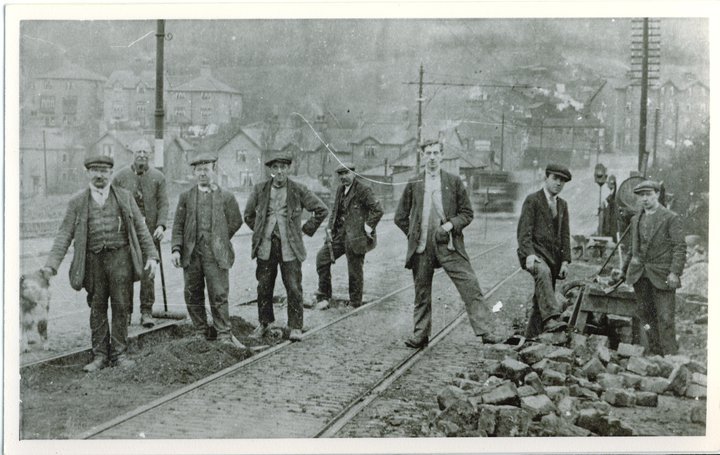
The cutting’s sheer depth made it dangerous while under construction.
In her diary for 13th April 1829, Anne Lister noted:
- “3 accidents in the new Godley road. A young men has fallen into the gulf and was almost killed [Sunday, 29th March 1829]. 2 elderly men fell in and were killed [Monday 30th March 1829]”
These lines capture how raw and hazardous the site still was — and why locals referred to it as a “gulf.”A later fatal fall (1856)
The danger did not end with completion.
In January 1856, Charles Stead (aged 66) died after falling from the top of the cutting. The 1919 landslide that stopped the trams
On 24th December 1919, a landslide caused the retaining wall to collapse, which stopped tram services through the cutting.
It’s a reminder that the engineering challenge wasn’t only in building the cutting — it was also in keeping it stable over time.
Closing note
Godley Cutting remains one of the most striking examples of early 19th-century road engineering around Halifax: a place where transport history, industrial growth, and the personal record of Anne Lister all meet in one steep-sided corridor.


enhanced


enhanced
enhanced
If you have enjoyed your visit to this website, please spread the word by clicking the 'like' and 'share' buttons below. Thank you