A Gunshot on Haley Hill
A Halifax Shooting in 1872
The Gunshot at Haley Hill
15 November 1872 — A disgruntled mill worker, a young factory director and an umbrella that may have saved a life.
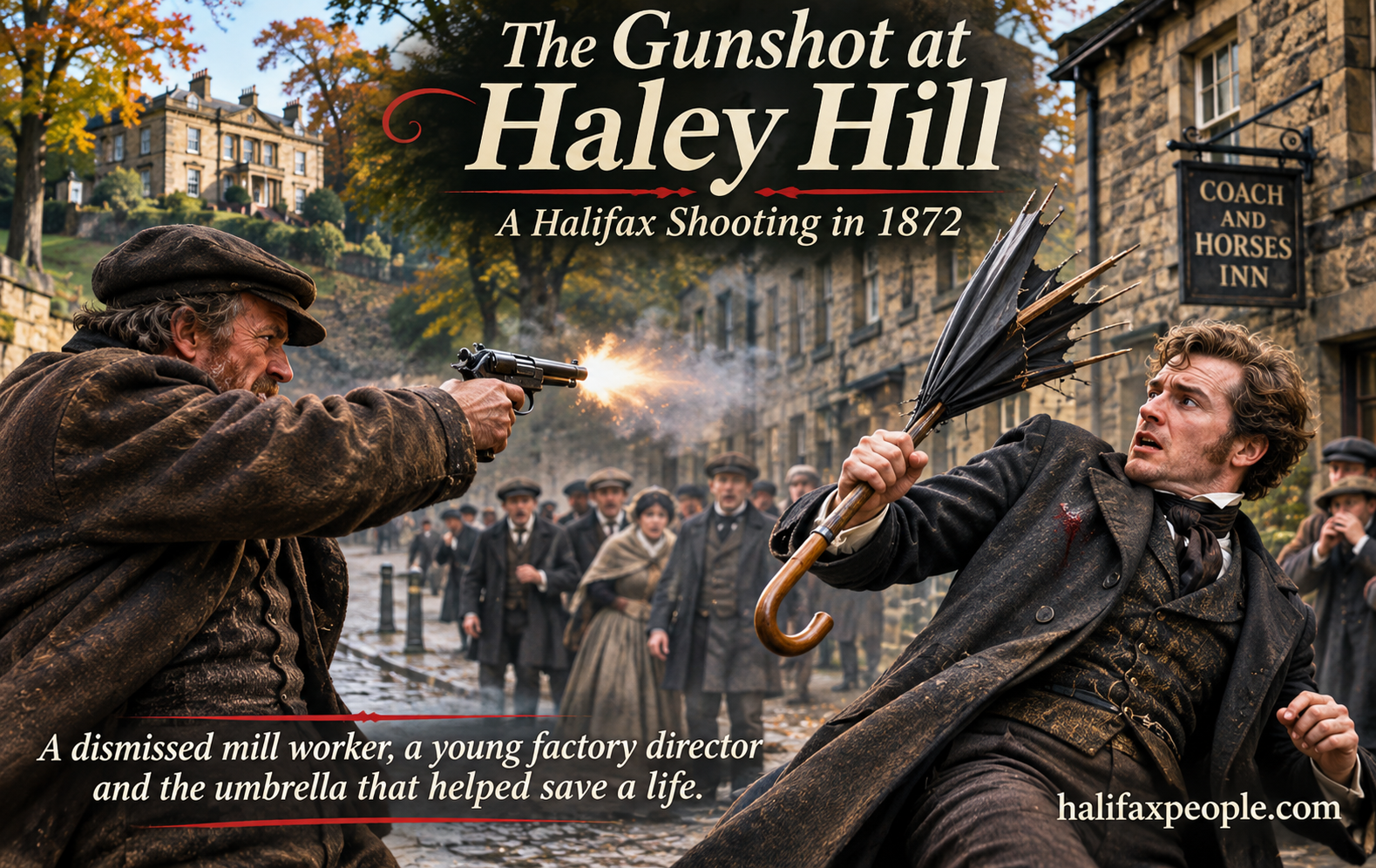
Image disclaimer:
This is an AI-generated historical reconstruction illustrating the shooting of John Edward Champney on Haley Hill in 1872.
A Young Director at Bankfield
John Edward Champney was born in 1846 and came from a family with substantial connections to the Yorkshire textile industry.
His uncle was Colonel Edward Akroyd, the Halifax industrialist, philanthropist and politician whose name remains associated with Bankfield, Akroydon and the development of the town's worsted industry.
By 1872, Champney was a director of James Akroyd & Sons Limited, a business employing thousands of workers.
The company's mills were important employers, and their management exercised considerable influence over the working lives of local families.
Champney was accustomed to visiting his uncle's home at Bankfield House for lunch. On the afternoon of 15 November, he left the house at approximately half past three and began his journey towards the company's offices at Cross Hills.
It was a familiar walk.
Unfortunately, somebody appeared to know his routine.

The Man Waiting Outside
James Whitehead had worked for Akroyd's firm for many years.
He had previously held a supervisory position as an overlooker in a weaving shed at Haley Hill, but his employment history had become troubled.
In October 1871 he was dismissed, reportedly for drunkenness. Some months later he was taken back into employment as a weaver.
That second opportunity ended on 24 October 1872, when he was dismissed again, this time reportedly for refusing instructions.
Whitehead also believed that his brother-in-law, John Gray, had been unfairly treated. Contemporary accounts indicate that Gray had resigned during an investigation into his conduct.
Whether Whitehead's grievances were justified is a separate question. What is clear is that he blamed Champney for his difficulties.
On the day of the shooting, Whitehead was seen near the entrance to Bankfield House.
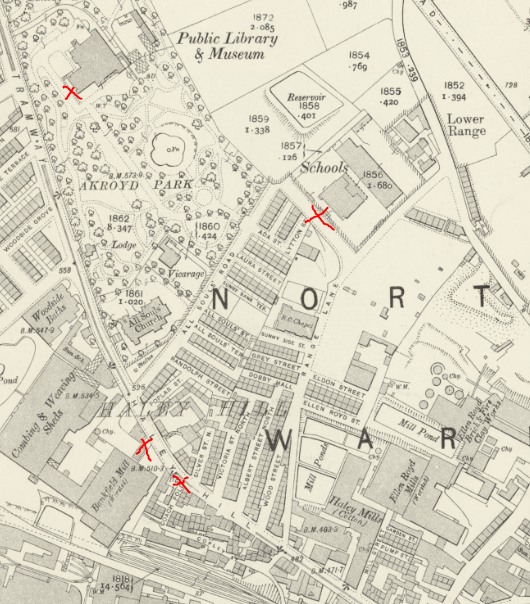
He watched Champney leave and followed him down Haley Hill.
Champney made a brief stop at a school. Whitehead waited.
Then the young director continued towards the mills.
A Shot Outside the Coach and Horses
The attack occurred near the Coach and Horses Inn, close to Bankfield Mill.
As Champney passed the public house, a firearm was discharged behind him.
He felt the impact of the shot and realised that he had been hit.
But the thick clothing he was wearing offered unexpected protection. The projectiles passed through several layers of his clothes, leaving wounds that were much less serious than they might have been.
Rather than collapsing, Champney confronted Whitehead.
He used his umbrella to strike the attacker across the shoulder and head. The umbrella broke during the encounter.
Champney then escaped to the nearby home of a Mr Stansfield, where he reported what had happened.
Whitehead was quickly taken into custody.

Coach and Horses public house
The Evidence Against Whitehead
The police investigation produced evidence suggesting that the shooting had been planned rather than being a sudden quarrel.
A girl named Harris was reported to have witnessed the attack.
Another witness, Thomas Best, a carpet weaver, told investigators that Whitehead had previously shown him a loaded pistol and spoken of his intention to shoot Champney.
Medical examination confirmed that the director had been struck by the shot. Newspaper reports described the projectiles as crude iron slugs.
Whitehead was also reported to have been intoxicated when apprehended.
One particularly revealing detail emerged from an account involving Mr Kershaw, a member of the Halifax Watch Committee.
Whitehead blamed Champney for the loss of his own job and that of his brother-in-law.
The evidence painted a picture of a man whose resentment had hardened into a determination to take revenge.
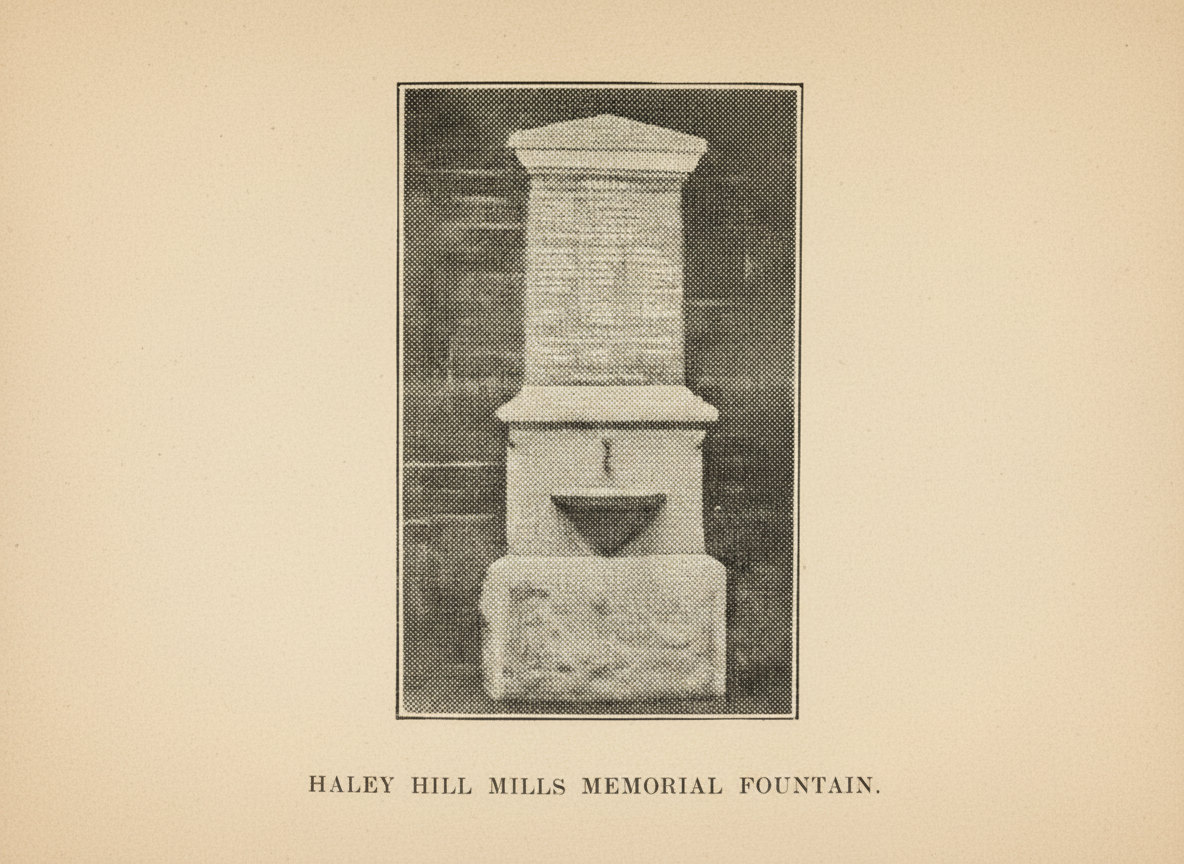
The Haley Hill Mills War Memorial which stands outside Bankfield Mill
The Trial at Leeds
In December 1872, Whitehead appeared before the Leeds Assizes.
The prosecution was conducted by Mr Waddy and Mr Wavell. Whitehead had no defending counsel.
The court heard the circumstances of the attack, the evidence of the witnesses and the history of Whitehead's employment difficulties.
The jury found him guilty.
He was sentenced to 15 years' penal servitude.
The severity of the punishment reflected the seriousness with which the court regarded an armed attack upon another person.
For Champney, the result brought a legal conclusion to an ordeal that could easily have ended in his death.
The Man Who Survived
John Edward Champney lived for another 57 years, dying in 1929.
His later life became closely associated with Beverley, where his generosity helped establish an important cultural legacy.
His gifts of books and works of art, together with his financial support, contributed to the development of the town's library and art gallery.
Today his name is remembered through the Champney Treasure House.
It is a remarkable consequence of the Haley Hill incident that a man who later became known for supporting education and culture might have lost his life on an ordinary Friday afternoon in Halifax.
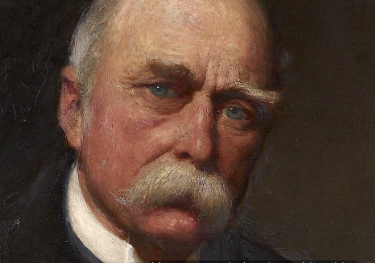
John Edward Champney
A Forgotten Drama on a Familiar Street
Bankfield House survives as Bankfield Museum, while the surrounding streets retain connections with Halifax's industrial past.
The landscape has changed since 1872, but the route taken by Champney can still be understood through historic maps.
There is something especially striking about the location of the attack.
This was not a lonely country road or an isolated stretch of moorland. It was a busy industrial neighbourhood, close to mills, houses, schools and public houses.
A disagreement that began inside a textile business ended with a pistol being fired in a Halifax street.
And a young director survived partly because of his heavy clothing, his quick reaction and an umbrella that broke as he defended himself.
For all the grand stories of Halifax's mill owners, factories and industrial fortunes, this incident offers a very different glimpse of Victorian life: the personal tensions, bitter grievances and sudden violence that could lie behind the prosperity of a great manufacturing town.
HalifaxPeople.com — Bringing forgotten local stories back to life.
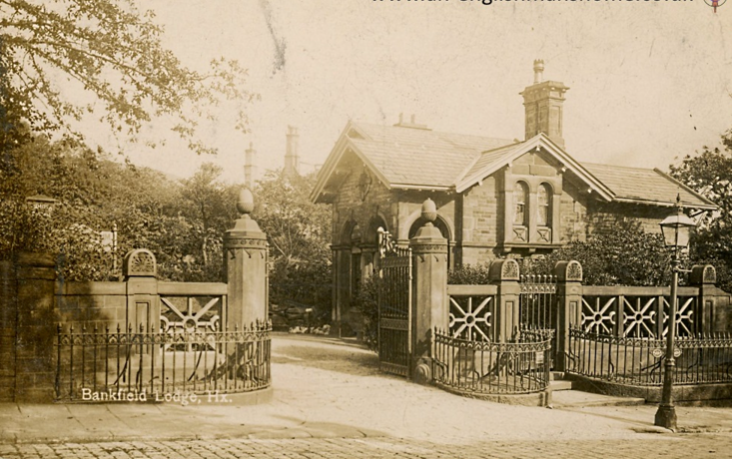
Bankfield Lodge