The Milk Round That Brought Death to Halifax
The Milk Round That Brought Death to Halifax
The Milk Round That Brought Death to Halifax
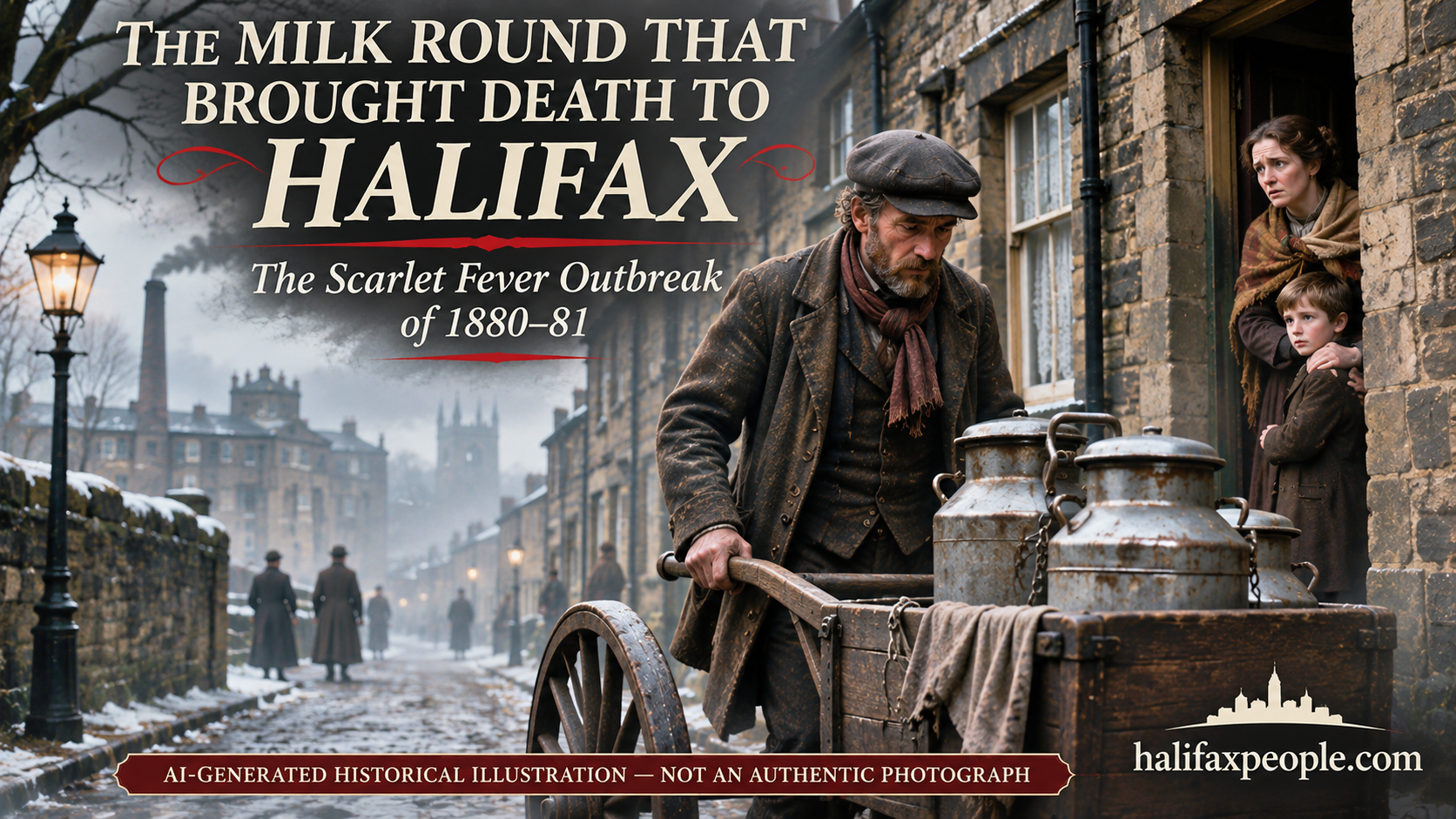
The scarlet fever epidemic of 1880–81, the farm at Royles Head and the investigation that uncovered a deadly connection.
In the winter of 1880–81, families across West Halifax faced a frightening and sometimes fatal illness.
Children developed fevers and sore throats. Scarlet fever, already a familiar danger in Victorian Britain, began appearing in households around West Halifax and the West Park district.
But there was something unusual about this outbreak.
The disease was not confined to the overcrowded streets and impoverished homes so often associated with Victorian epidemics. It was striking households in comparatively prosperous neighbourhoods.
As doctors and public health officials investigated, they began to notice a connection between affected families.
Many received their daily milk from the same source.
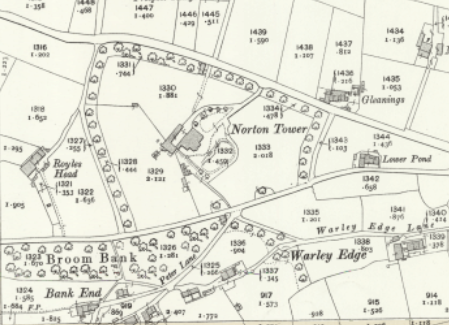
The trail led away from the town, to a farm at Royles Head in Warley.
And there, investigators found circumstances that raised disturbing questions about the way an everyday food could carry a deadly infection.
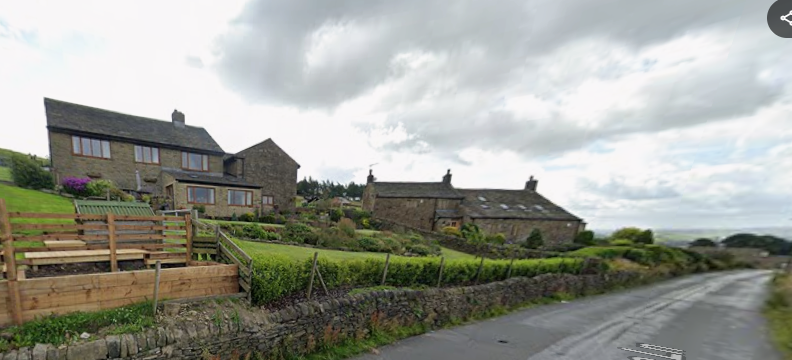
Roils Head today
A Town Already Familiar with Disease
To understand the outbreak, we must remember what life was like in industrial Halifax.
During the nineteenth century, the town expanded rapidly. Mills and factories attracted workers, while new houses spread across the hillsides and valleys.
Much of the housing was crowded, sanitation was frequently inadequate and infectious diseases were an ever-present threat.
Scarlet fever was particularly feared by parents.
Today, scarlet fever is understood to be a bacterial infection caused by certain strains of Streptococcus pyogenes. It can produce a high temperature, sore throat and a characteristic rash.
In 1880, however, doctors did not possess the antibiotics that would later transform treatment.
Serious complications could follow, and children were especially vulnerable.
When cases multiplied during the winter of 1880–81, Halifax's medical authorities faced an urgent question: why were so many families falling ill in the same part of town?
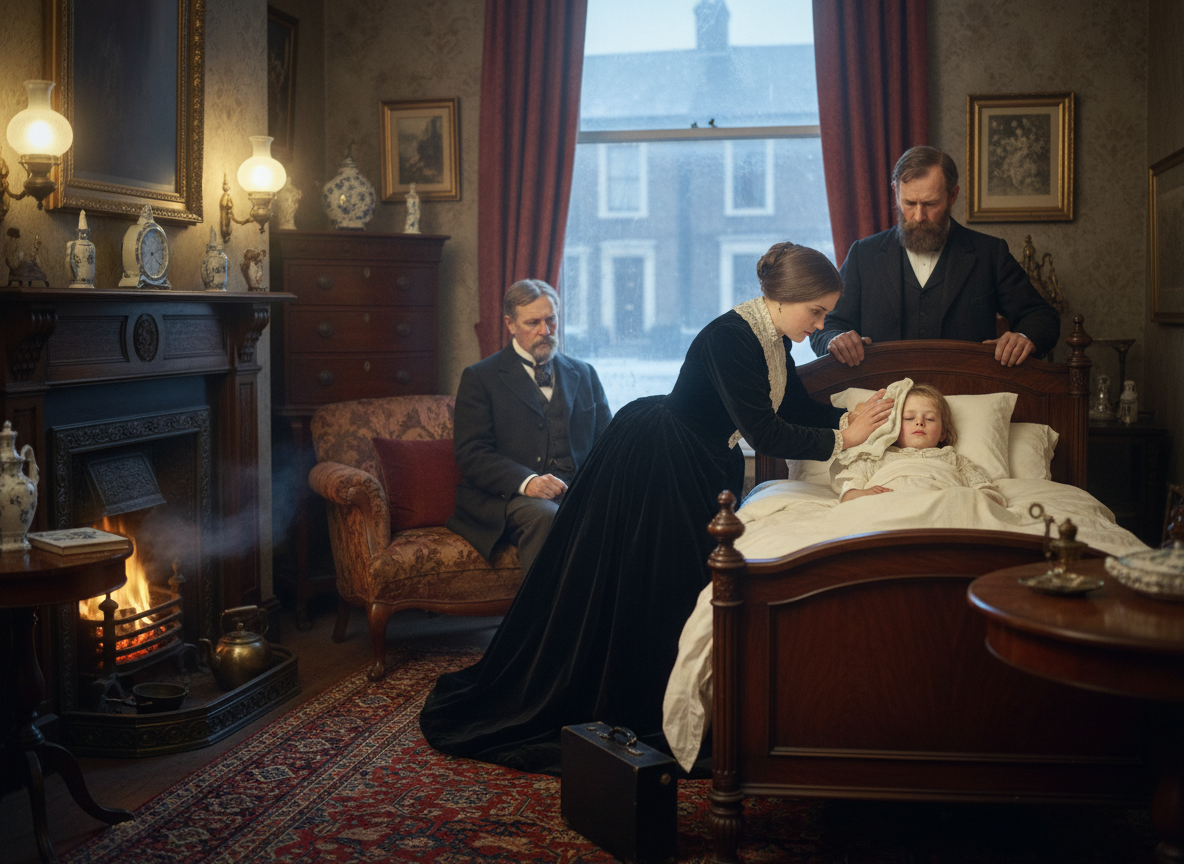
AI-Generated Historical Illustration: This image has been created using artificial intelligence to bring a historical event to life.
The Mystery of West Halifax
The outbreak attracted attention because of its geographical pattern.
The West Halifax and West Park districts included households whose living conditions were relatively comfortable by the standards of the day.
Yet the disease was spreading among them.
Local doctors and public health officers began the painstaking work of tracing cases.
There were no electronic medical records, no modern laboratory testing programme and no instant communication between health authorities.
Instead, investigators visited homes, questioned families and recorded details of illness and household circumstances.
The work was slow, but it produced a clue.
A striking number of affected families obtained their milk from the same supplier.
This suggested that the outbreak might not be explained by ordinary contact between neighbours alone.
Something delivered from house to house could be carrying the infection.

AI-Generated Historical Illustration: This image has been created using artificial intelligence to bring a historical event to life.
The Farm at Royles Head
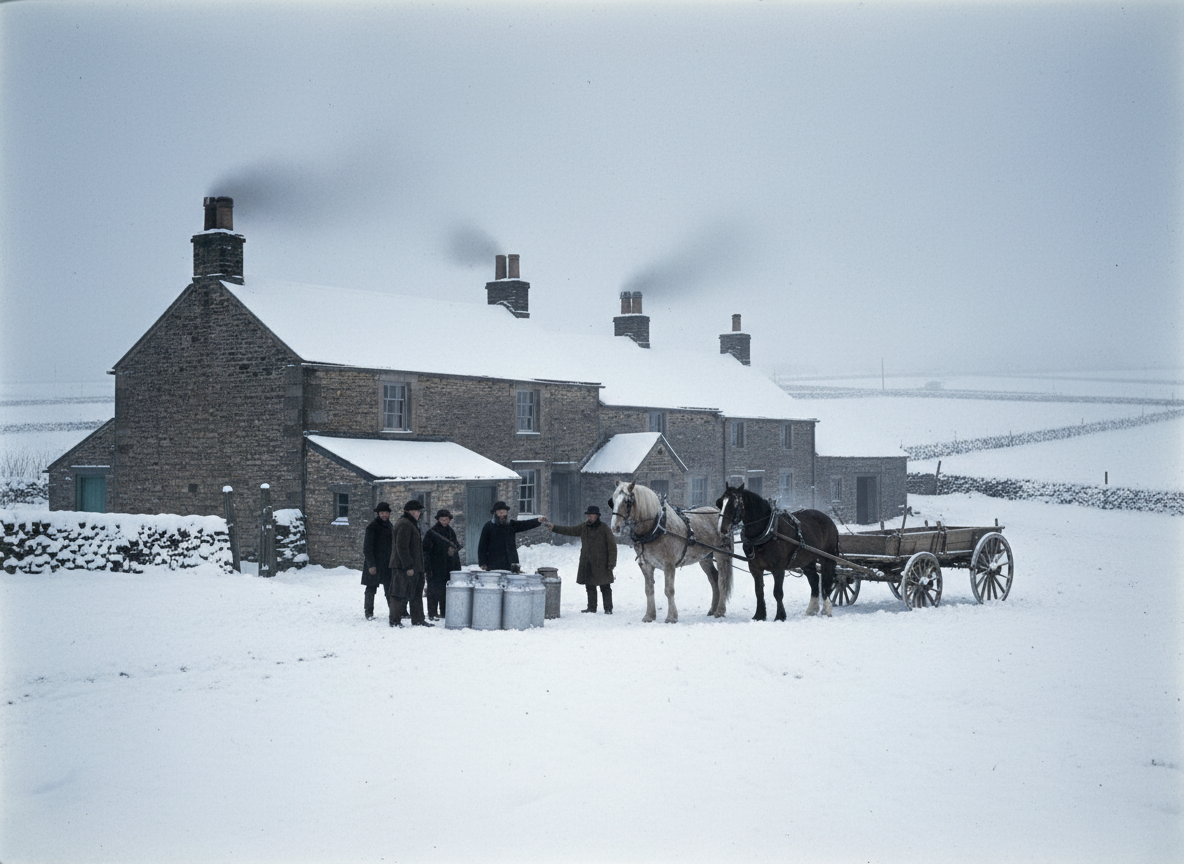
The milk supply under suspicion came from Royles Head, Warley, where farmer Robert Bell supplied customers in the Hopwood Lane area of Halifax.
In ordinary circumstances, the daily milk round would have been an unremarkable part of family life.
Fresh milk arrived at the door and was used in homes where children were among its principal consumers.
But the arrangements at the farm had changed.
According to the historical account presented by local historian John Brooke, Bell's son Thomas became ill with scarlet fever.
Thomas stopped delivering milk, and another worker, William Horsfield, took over duties connected with milking and delivery.
Horsfield's own household was also affected by the disease.
The significance of that fact was considerable.
A person exposed to infection was continuing to work in the production and distribution of milk that would be consumed by families elsewhere.
Victorian understanding of infection was incomplete, and the precautions that would now be expected around food handling and infectious illness were far less developed.
The authorities began to examine whether the milk supply provided a route by which scarlet fever was reaching otherwise unconnected homes.
AI-Generated Historical Illustration: This image has been created using artificial intelligence to bring a historical event to life.
Fifty-Three Households
The investigation produced figures that remain among the most remarkable details of the case.
John Brooke's account describes 125 households receiving milk from Bell's farm, of which 53 experienced scarlet fever.
That is more than two in every five households examined.
A later published medical table gives a slightly different total of 135 families supplied, with 53 affected households. It also distinguishes between scarlet fever and sore-throat illness.
These differences are a reminder that historical epidemic figures require care: reports did not always use the same definitions or count exactly the same group of households.
Nevertheless, the central finding was striking.
The affected families shared a milk supply.
Investigators also noted that many households which escaped the illness had no children or contained people who had previously recovered from scarlet fever.
Such observations helped the medical authorities understand why a shared exposure did not necessarily produce the same result in every home.
The investigation was an early example of the systematic methods now associated with epidemiology: identifying cases, comparing households and looking for a common source of exposure.

AI-Generated Historical Illustration: This image has been created using artificial intelligence to bring a historical event to life.
A Milkman Under Suspicion
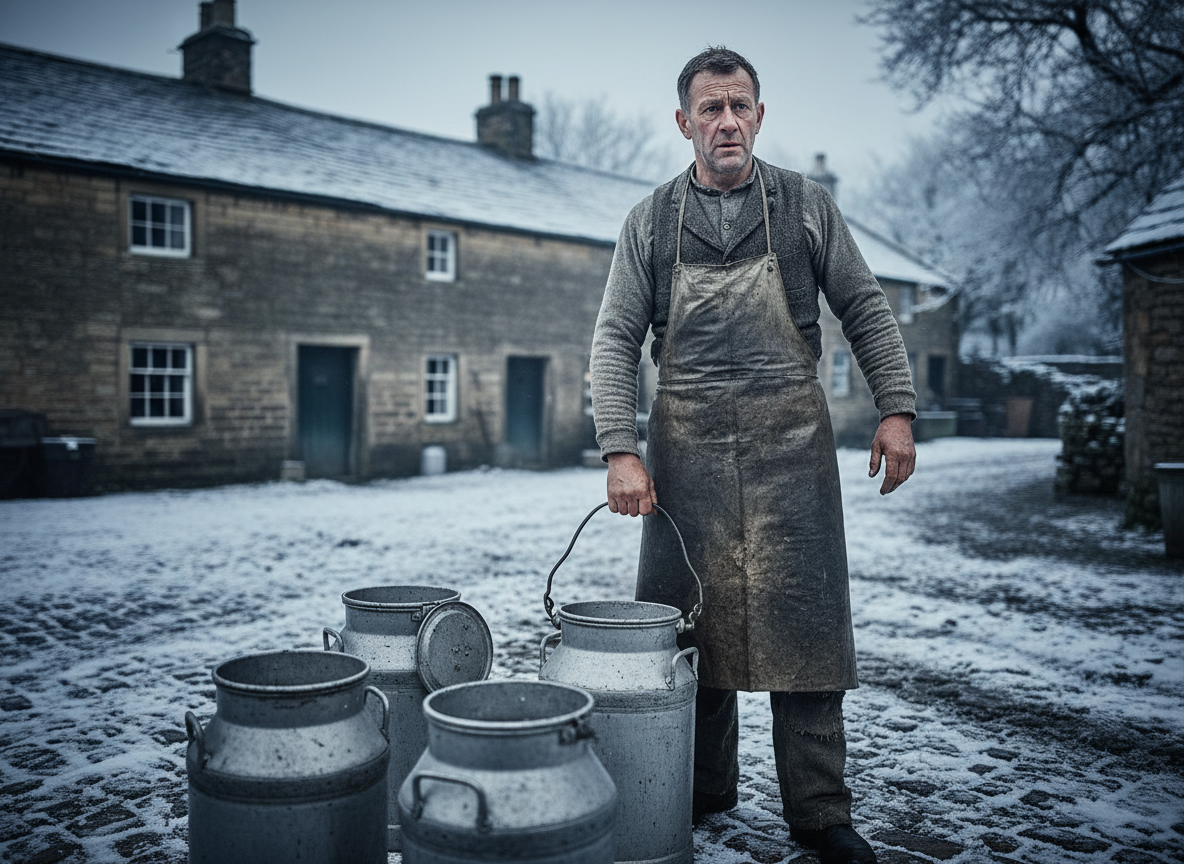
The attention directed towards William Horsfield was severe.
He had continued working despite scarlet fever being present in his family.
According to Brooke's research, contemporary criticism in the Halifax Guardian made him a particular target of blame.
But it would be too simple to tell the story as the wrongdoing of one man.
Horsfield was working in a society with limited medical knowledge, weak safeguards and considerable economic pressure on working families.
The illness was dangerous, but the exact mechanisms of transmission were still being debated.
The circumstances at Royles Head also raised broader questions about the responsibilities of employers, dairy operators and public health authorities.
A household affected by infection had become connected to a food supply serving numerous other families.
The investigation demonstrated how quickly a local problem could become a town-wide public health emergency.
AI-Generated Historical Illustration: This image has been created using artificial intelligence to bring a historical event to life.
Was the Milk Itself Infected?
This is one of the most important distinctions in the story.
There is a difference between an infected person delivering milk and the milk itself acting as a vehicle for infection.
Historical medical writers increasingly recognised that milk could transmit infectious diseases.
In Halifax, the association between the affected households and the common supply strongly suggested that milk distribution played a central role.
Later accounts have proposed several possible ways the contamination occurred, including contact with infected people and circumstances involving the cows.
However, the exact biological route of contamination in the 1880–81 Halifax outbreak cannot be established with certainty from the evidence reviewed for this article.
What the investigation did show was that the milk supply was a serious and credible link between the cases.
This was an important finding at a time when doctors were still developing the methods needed to investigate outbreaks scientifically.

AI-Generated Historical Illustration: This image has been created using artificial intelligence to bring a historical event to life.
The Children Who Died
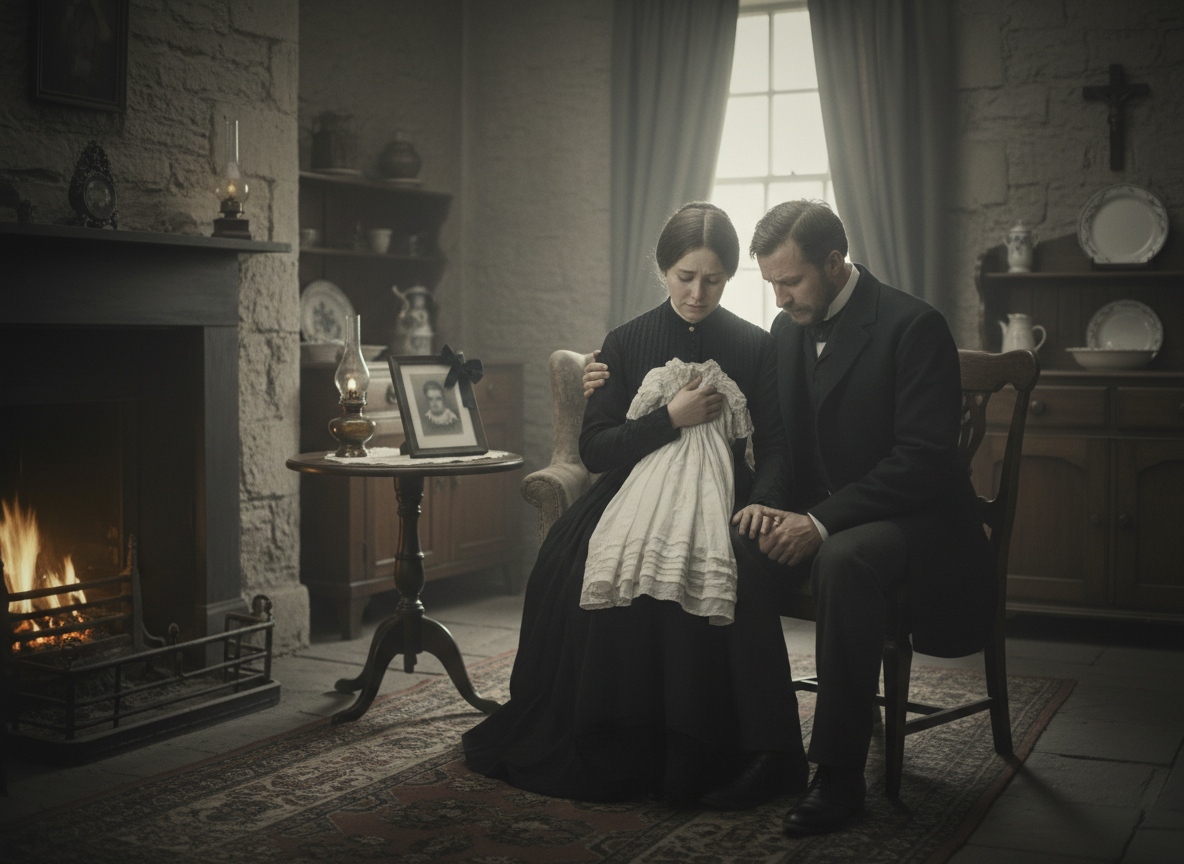
Behind the medical investigation were families enduring terrible losses.
John Brooke's research describes an outbreak in which more than a hundred people died across the wider Halifax epidemic, with children accounting for a substantial proportion.
He reports that 80 deaths occurred between January and February 1881.
Those figures describe the wider epidemic and must not be interpreted as deaths all directly attributable to Bell's milk supply.
For each household, the statistics represented an individual tragedy.
Parents watched children become ill, sometimes in circumstances where effective treatment was unavailable.
Schools closed as authorities attempted to restrict transmission.
Families were advised to keep children at home.
The ordinary routines of work, education and domestic life were disrupted by the fear of infection.
The milk investigation was therefore not simply an exercise in medical statistics.
It was an attempt to prevent further deaths.
AI-Generated Historical Illustration: This image has been created using artificial intelligence to bring a historical event to life.
The Ordinary Round That Changed Lives
There is something particularly unsettling about the Halifax outbreak.
The suspected source was not an exotic substance or an unfamiliar industrial chemical.
It was milk.
A daily delivery, intended to nourish families, became associated with a deadly winter epidemic.
The trail from homes around Hopwood Lane to a farm at Royles Head illustrates how closely connected Victorian town and countryside already were.
The people investigating the outbreak did not possess modern technology.
They had notebooks, household visits, medical observations and the determination to find a pattern.
What they discovered helped demonstrate a principle that would become fundamental to public health: when illness appears in apparently unrelated homes, the connection may lie in something they all share.
For the families who lost children in the winter of 1880–81, that knowledge came too late.
But their tragedy became part of the history of how disease was investigated, understood and prevented.
HalifaxPeople.com — Bringing forgotten local stories back to life.

AI-Generated Historical Illustration: This image has been created using artificial intelligence to bring a historical event to life.
Follow & Contact Halifax People
Stay connected with Halifax and Calderdale.
Halifaxpeople.com – Your guide to Halifax & Calderdale