Halifax Slasher
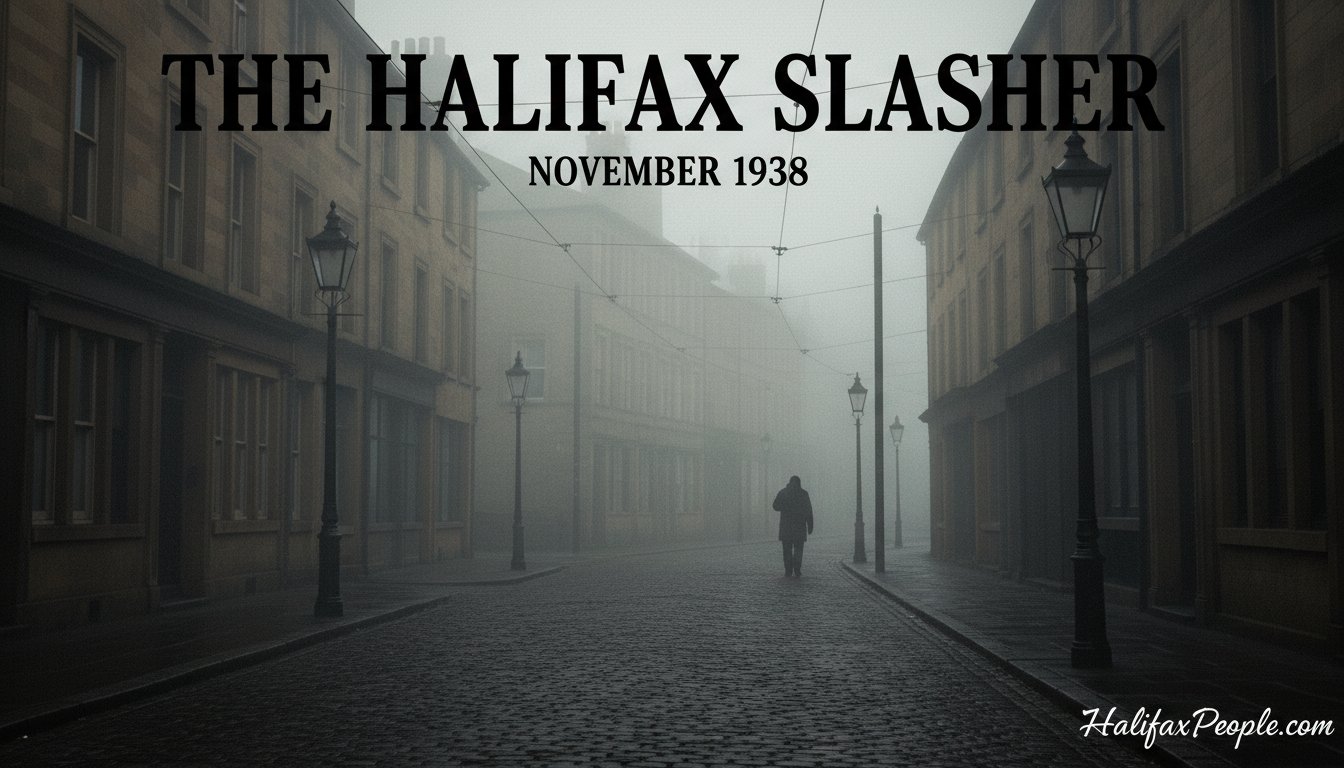
It began on a foggy November evening
On 16 November 1938, two young women, Gertrude Mary Watts and Mary Gledhill, reported being attacked while travelling towards Ripponden Technical College.
The reports described an assailant striking from behind before disappearing into the fog.
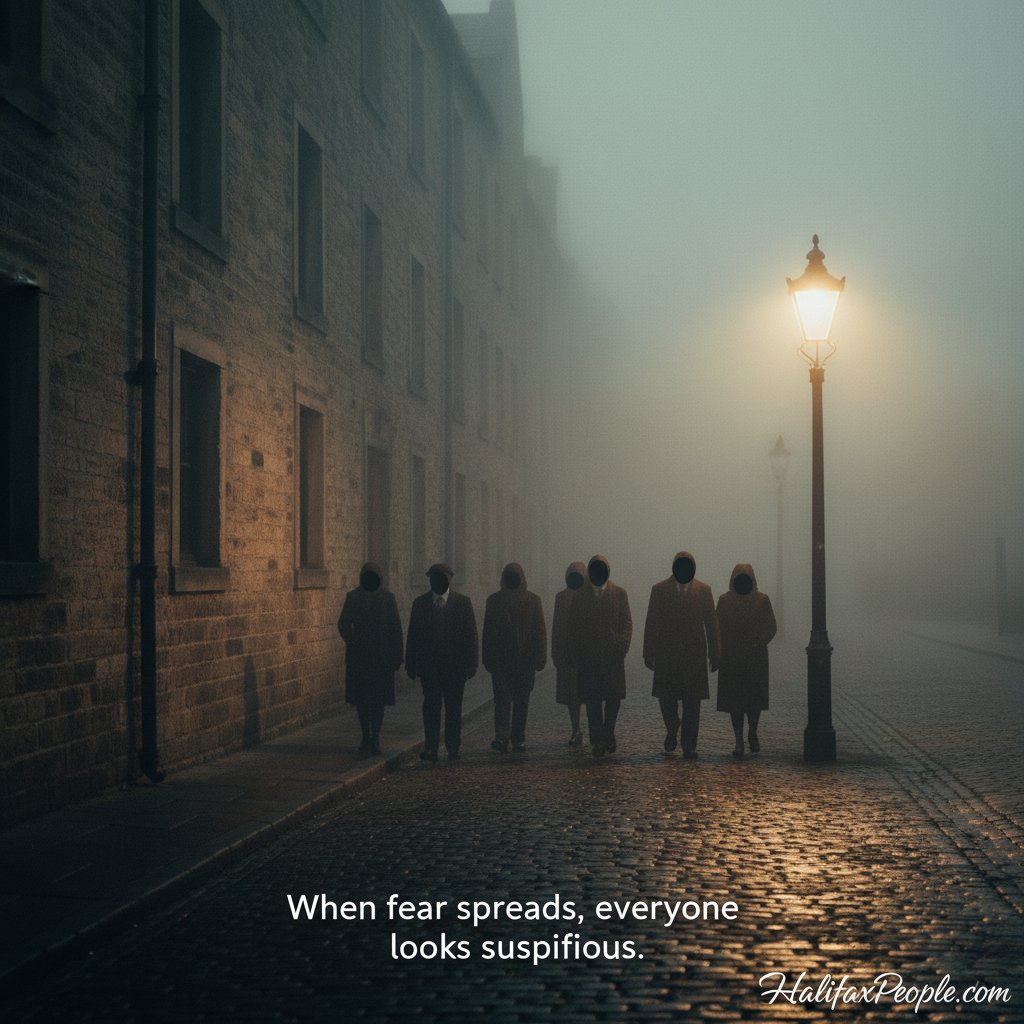
As further incidents were reported, fear began to spread. Women travelling home from work or college had reason to worry, and ordinary encounters in the street could suddenly seem threatening.
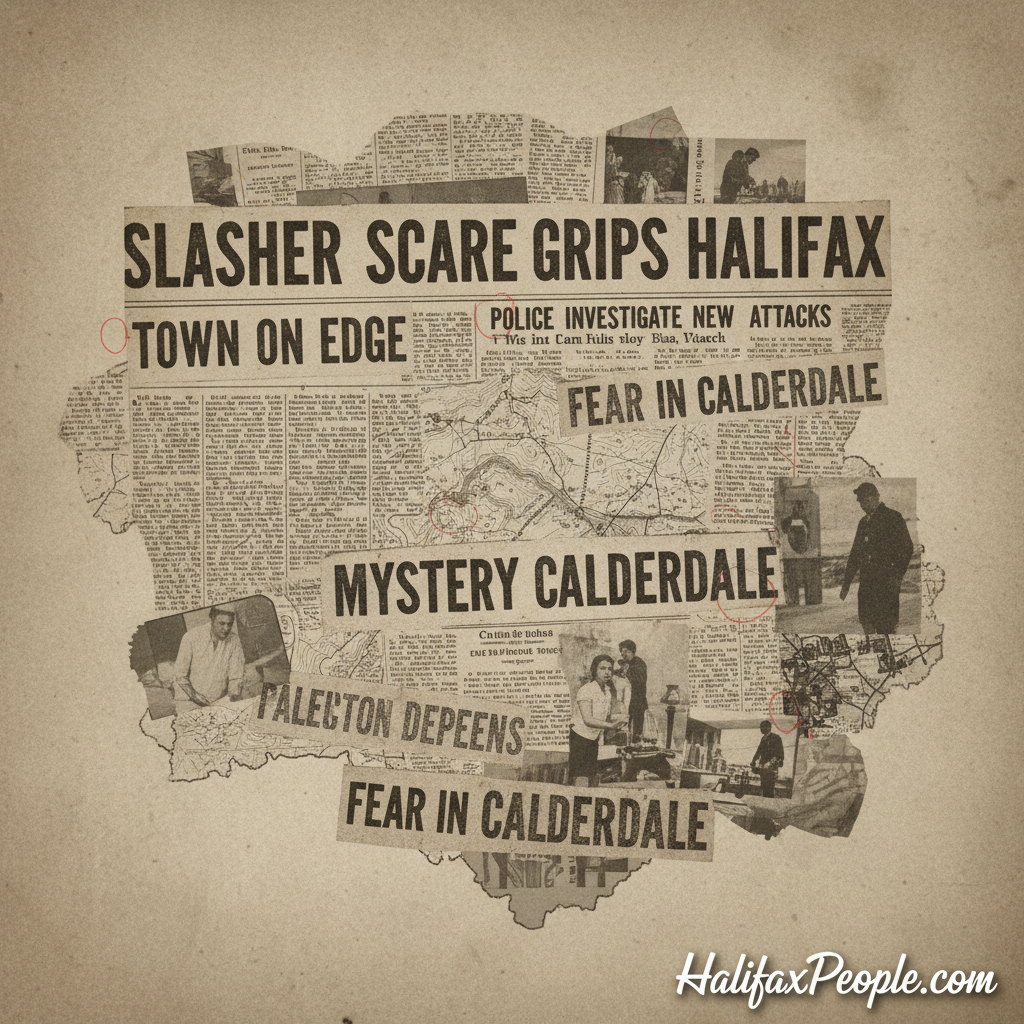
The name “Halifax Slasher” gave the supposed attacker a frightening identity. Newspapers across Britain picked up the story, turning a local mystery into a national sensation.
But there was a problem: the more reports emerged, the harder it became to establish what had actually happened.
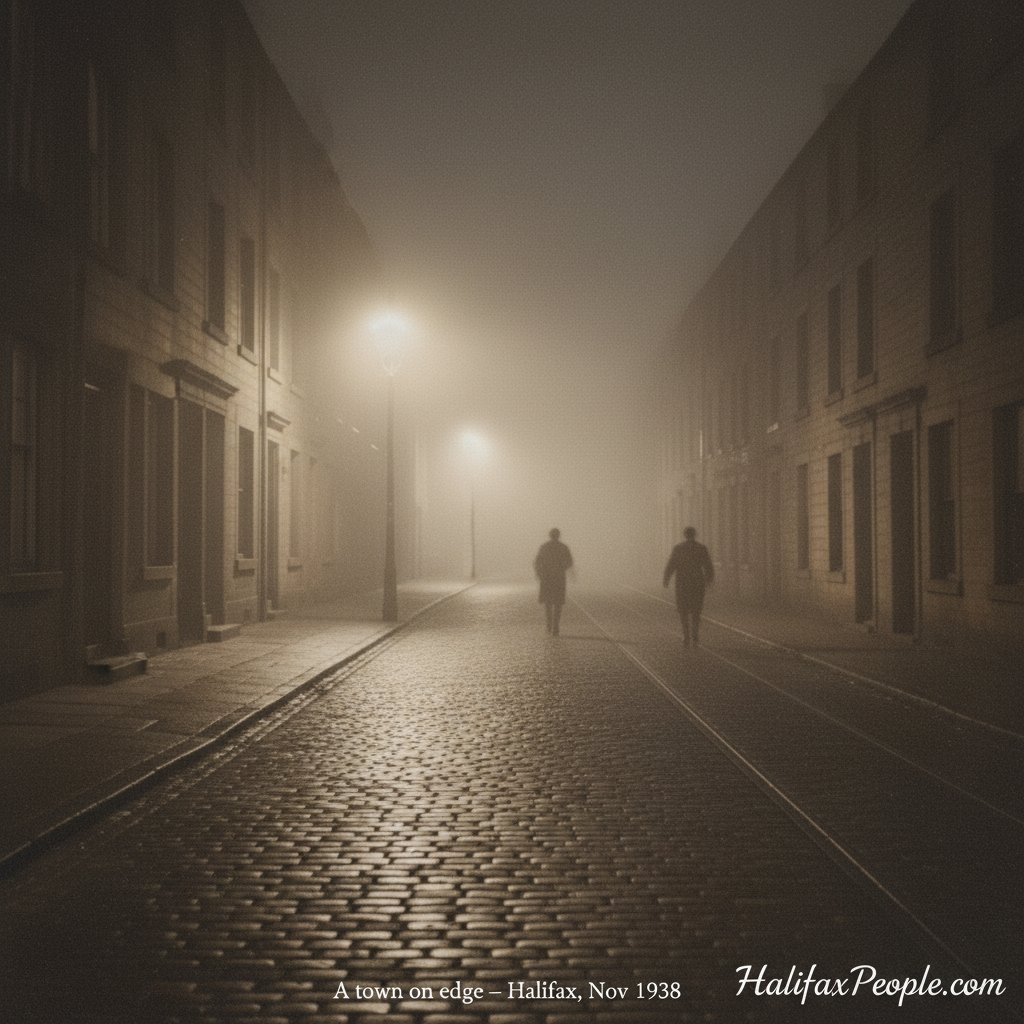
Halifax became a town on edge
The scare intensified towards the end of November.
People organised patrols, watched strangers suspiciously and searched for anyone who might fit the increasingly vague descriptions of the attacker.
Police appealed for information and offered a reward. The investigation grew sufficiently serious for detectives from Scotland Yard to become involved.
The atmosphere was dangerous. Men who happened to look suspicious could find themselves surrounded by angry crowds. One account describes a man being rescued by police from a crowd threatening violence.
Think about that for a moment: the search for a mysterious attacker was itself creating a threat to public safety.
The fear was real, even when many of the stories fuelling it were not.
Then the mystery began to collapse
As detectives investigated individual reports, some supposed victims admitted that they had inflicted injuries on themselves or invented attacks.
One of the most striking cases involved Percy Waddington, who admitted that he had injured himself and falsely blamed the supposed Slasher.
Other admissions followed. Some people had damaged their own clothing or reported attacks that had not happened as described.
The investigation revealed how rumours and publicity could encourage further false reports, until the number of alleged incidents created the impression of a single attacker operating everywhere at once.
The police concluded that there was no evidence for the roaming mass attacker described in the sensational reports.
There is an important distinction, however: historians have questioned whether every early incident was necessarily fabricated. The safest conclusion is that the supposed wave of attacks was largely exposed as false, not that every detail of every original report can now be settled with certainty.
The real danger was the panic itself
The story's most troubling feature is what happened to people caught up in the fear.
Suspicion spread rapidly. Innocent people risked being accused simply because they were in the wrong place or looked unusual. Crowds threatened violence, while the police had to investigate a growing collection of claims that proved unreliable.
The episode demonstrates how a frightening rumour can become self-reinforcing. Every new report makes the threat appear more convincing, and every suspicious encounter can be interpreted as further evidence.
Newspapers helped spread the story, although the available evidence does not justify blaming the press alone. The public's fear, the circulation of rumours and the actions of individuals all played their part.
By early December, the supposed Slasher scare had collapsed.
The mysterious attacker who had dominated headlines was no longer a credible explanation for the many reports that had swept through Halifax.
A strange episode in Halifax's history
Nearly ninety years later, the Halifax Slasher remains a remarkable local story — not because a mysterious criminal successfully evaded capture, but because a town became gripped by a threat that investigations could not substantiate in the way people had imagined.
The reported attacks, the newspaper headlines, the patrols and the threats against suspected strangers were all part of a real historical episode.
The supposed superhuman reach of the Slasher was not.
It is a reminder that history's strangest mysteries don't always end with a dramatic arrest. Sometimes, the mystery disappears when people start checking the evidence.
💬 What do you think made the Halifax Slasher scare spread so quickly? Have you heard family stories about the events of 1938? Share them in the comments.
Historical note: Contemporary reports and later research indicate that many alleged attacks were false or self-inflicted. The precise status of every early incident remains less certain. The article distinguishes the documented public panic from claims about an individual attacker.
If you have enjoyed your visit to this website, please spread the word by clicking the 'like' and 'share' buttons below. Thank you