google-site-verification=at5tUAKqDBr2ytlgwICvtegy-BOu0Ta-oO0-CgtUF00

Halifax Town Hall:
A Proud Symbol of Civic Heritage

HxP-HxTownHall

Halifax’s First Town Hall: From Kershaw’s Warehouse to Crossley Street

When Halifax received its charter of incorporation in 1848, the new borough council faced an immediate problem: there was nowhere to meet. The official charter document — a hefty 3,000-word scroll — didn’t even arrive in town until late March, and by then it was already clear that the Town Hall, wherever it might be, didn’t yet exist.

Early records of that first council meeting are frustratingly vague. Some accounts mention a “town hall,” but closer inspection of the evidence points more reliably to the Old Assembly Rooms at the Talbot Inn. It was a cramped, makeshift arrangement — reasonably central, perhaps, but hardly fitting for a growing industrial town that had just been granted civic status.

OldTalbot

A Warehouse Becomes Town Hall

Within months, the council had moved to larger premises: Kershaw’s Warehouse, standing at the junction of Westgate and Union Street. This building — which might fairly be described as Halifax’s first true Town Hall — became home to virtually every civic department. The police headquarters were there, complete with cells. The fire brigade occupied space virtually next door. Councillors, clerks, and officials were squeezed into whatever corners could be found. It was a solution born of necessity, not planning.

THWestgt1
THWestgt1-digi

enhanced

By the mid-1850s, even the most optimistic councillor could see that the arrangement was unsustainable. The town was growing faster than anyone had anticipated. The council had already spent considerable sums on improvements, but in 1855 it became clear that a proper, purpose-built Town Hall was essential.                                   

           see Union Street

UnionStTownHallTav

Town Hall on the left and the Town Hall Tavern straight opposite

OdTownHall

The Search for a Site

A special Town Hall Sub-Committee was formed to examine possible locations. Options were debated at length: the old Cock Hotel site on Southgate; a slaughterhouse site behind Market Street; and Ward’s End — a location that would later be occupied by Southgate House and the Regal Cinema. Each proposal had its merits and its critics.

Public opinion was neither silent nor divided evenly. Ratepayers organised themselves, and petitions were presented at council meetings. One urged the building to be constructed at Ward’s End; another called for the entire scheme to be abandoned. The debate was heated, the stakes felt high, and the decision — when it finally came — satisfied few.

In the end, the council chose Crossley Street.

THNotes

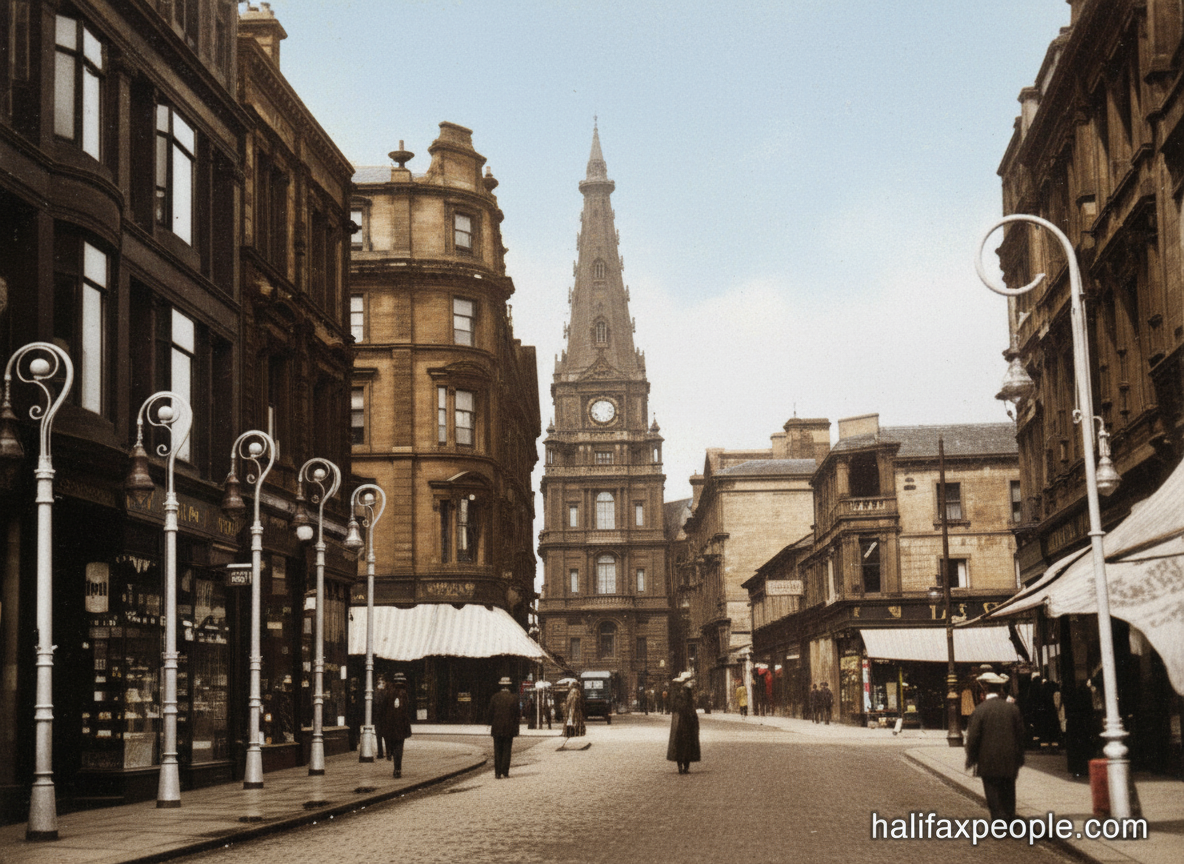
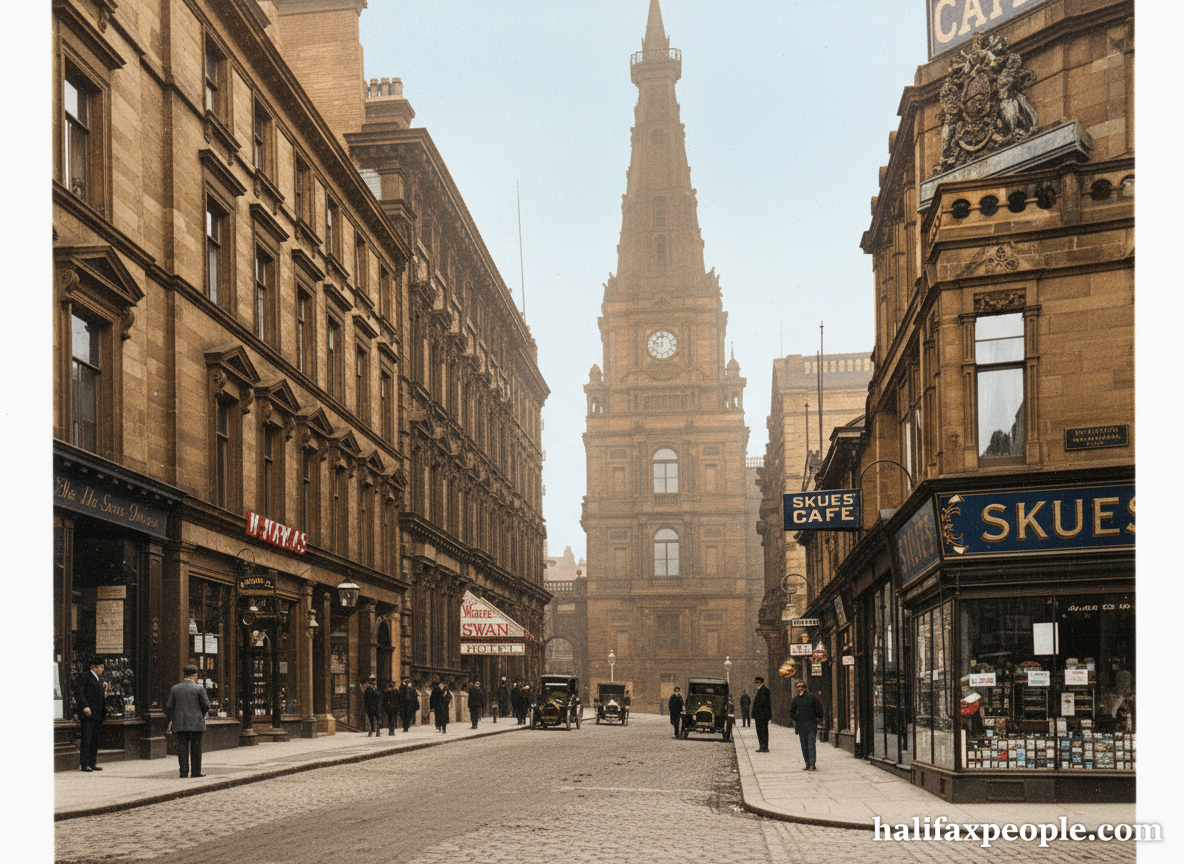
Town Hall in Crossley Street

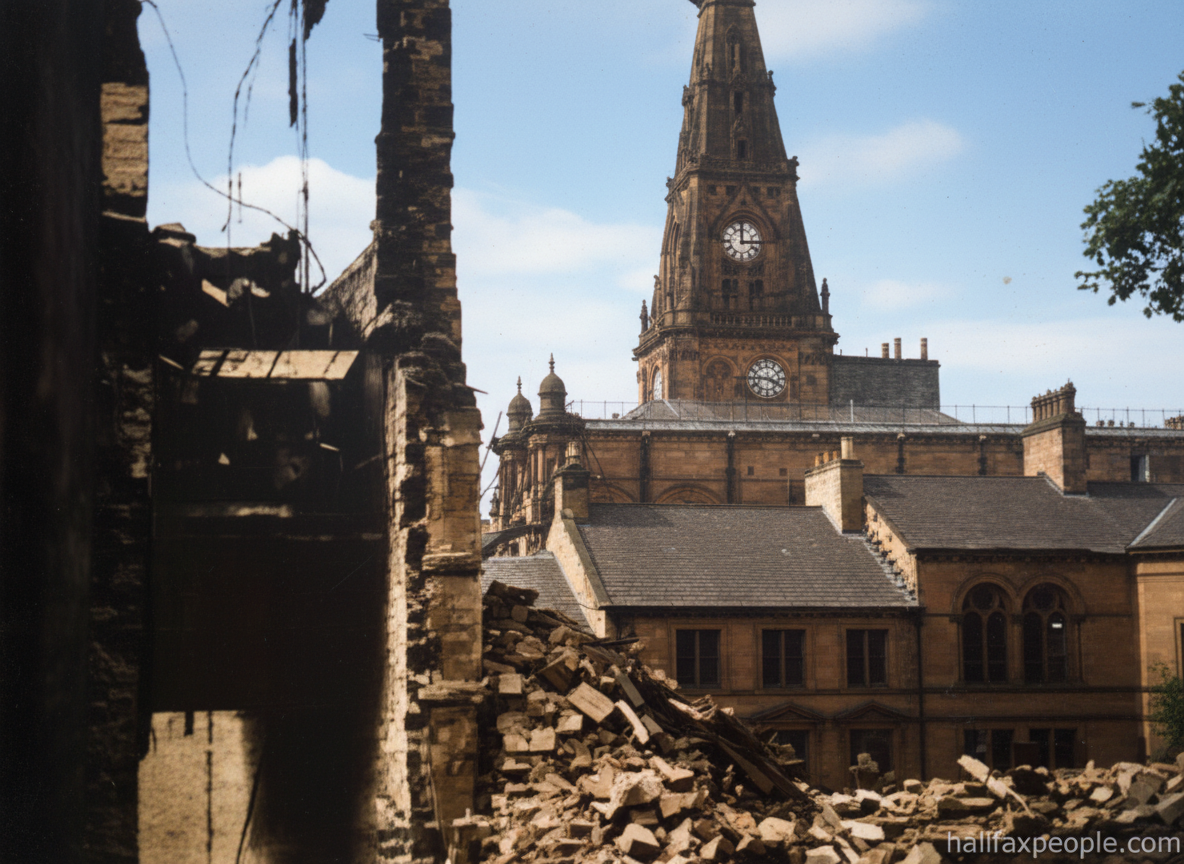
Explore the rich history and architectural grandeur of Halifax Town Hall, a centerpiece of the town’s civic life for centuries. This iconic building stands as a testament to Halifax’s community spirit and its enduring legacy of governance, culture, and public service.

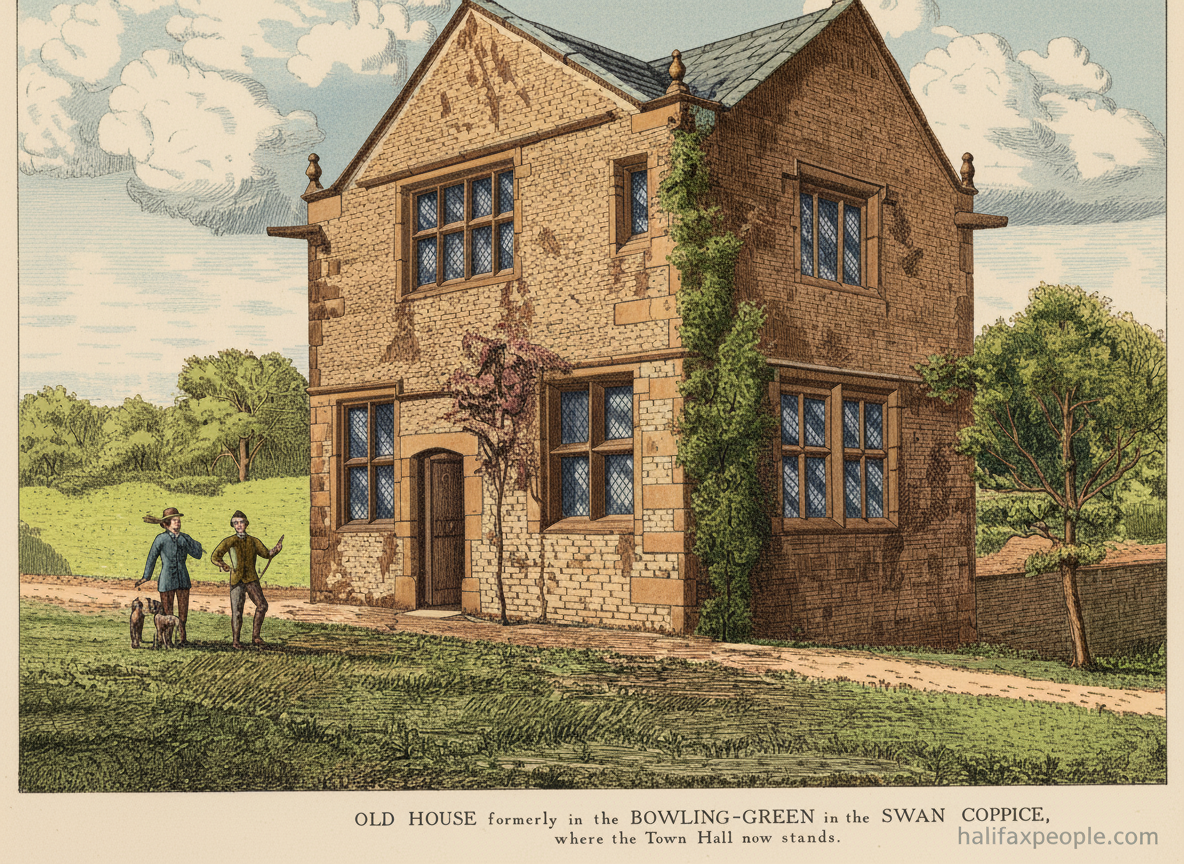
SwanCoppice1
TH-digi

enhanced

thleaflet

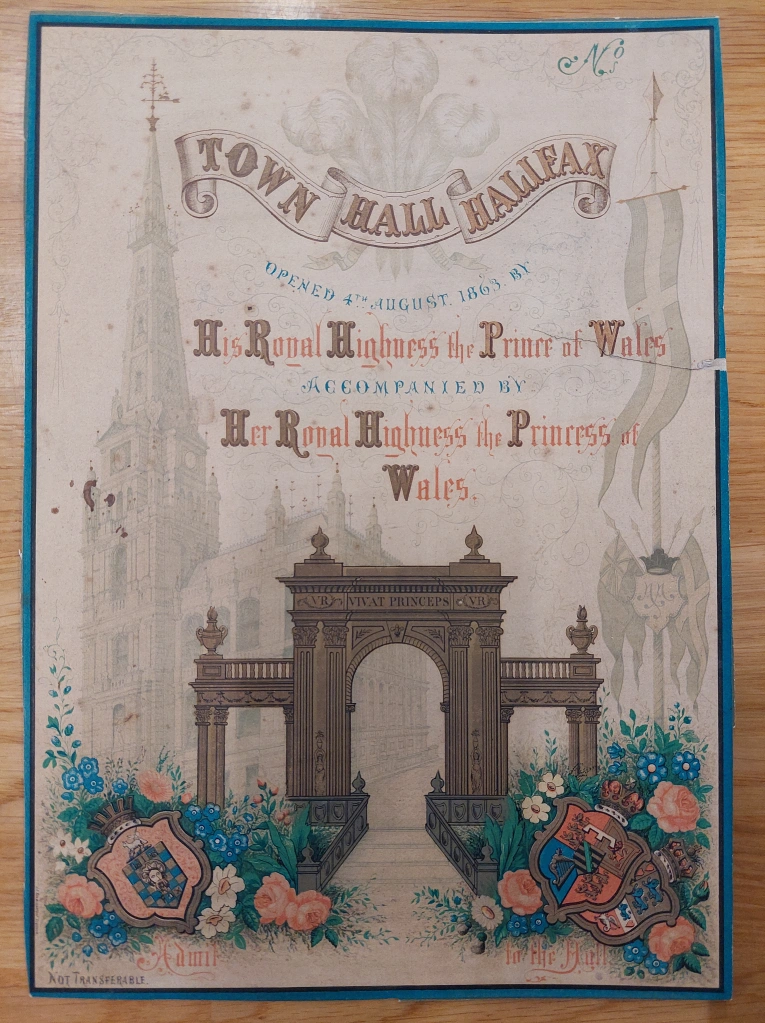
Halifax Town Hall Centenary: The 1863 Opening Remembered

A century ago, on 4 August 1863, Halifax Town Hall was formally opened by the Prince of Wales. It was a huge civic moment, drawing crowds said to be more than 100,000 people into the town centre. Now, one hundred years on, Halifax is set to mark that anniversary with a special ceremony at the Town Hall, where a series of commemorative features will be unveiled.

The centenary event brings together a wide official party. Alongside the Mayor and Mayoress (Ald. Wilson Haigh, J.P., and Mrs Haigh), those taking part include the Recorder of Halifax (Mr A. M. Hurwitz), Mr Maurice V. Macmillan (M.P. for Halifax), Ald. W. Regan, J.P. (chairman of the General Purposes Committee), Coun. C. G. Streeter (vice-chairman), Mr F. A. Leach, J.P. (a Freeman of the Borough), and Mr J. P. Crossley, a great-great-grandson of Ald. John Crossley, who played a leading role in establishing the Town Hall. Also attending are Mr Charles A. Ramsden (a great-great-nephew of Ald. Daniel Ramsden, Mayor when the foundation stone was laid), the Town Clerk (Mr R. de Z. Hall), and the Borough Engineer (Mr G. Holden).

Commemorative tablet and plaques

As part of the ceremony, Mr Ramsden will unveil a tablet to mark the Town Hall’s centenary. After the Mayor has welcomed guests, Mr Crossley will unveil a reproduction of the borough’s coat of arms, which has been set into the centre of the Victoria Hall floor.

Further plaques will also be revealed. Mr Macmillan and Mr Leach will jointly unveil one recording the names of Members of Parliament and Freemen of the Borough. After that, the Recorder and the Town Clerk will unveil another plaque listing the borough’s Recorders and Town Clerks.

Exhibition and a new booklet

The centenary will also include an exhibition. The Mayor will unveil two plaques recording the names of Halifax’s Mayors, and Ald. Regan will officiate at the opening of a small display featuring souvenirs and documents connected with the Town Hall and its history.

Guests’ thanks will be expressed by Mr Macmillan. In addition, the Corporation has published a 100-page booklet, Halifax Town Hall, giving an account of the building and its inauguration, written by the Town Clerk, Mr R. de Z. Hall, and priced at 7s. 6d.

The feature also looks back at Halifax in earlier times, revisiting notable figures who have visited the Town Hall, reflecting on the town’s civic life, and presenting historic images linked with the civic centre.

from Halifax Courier August 6th, 1963

TH2-digi

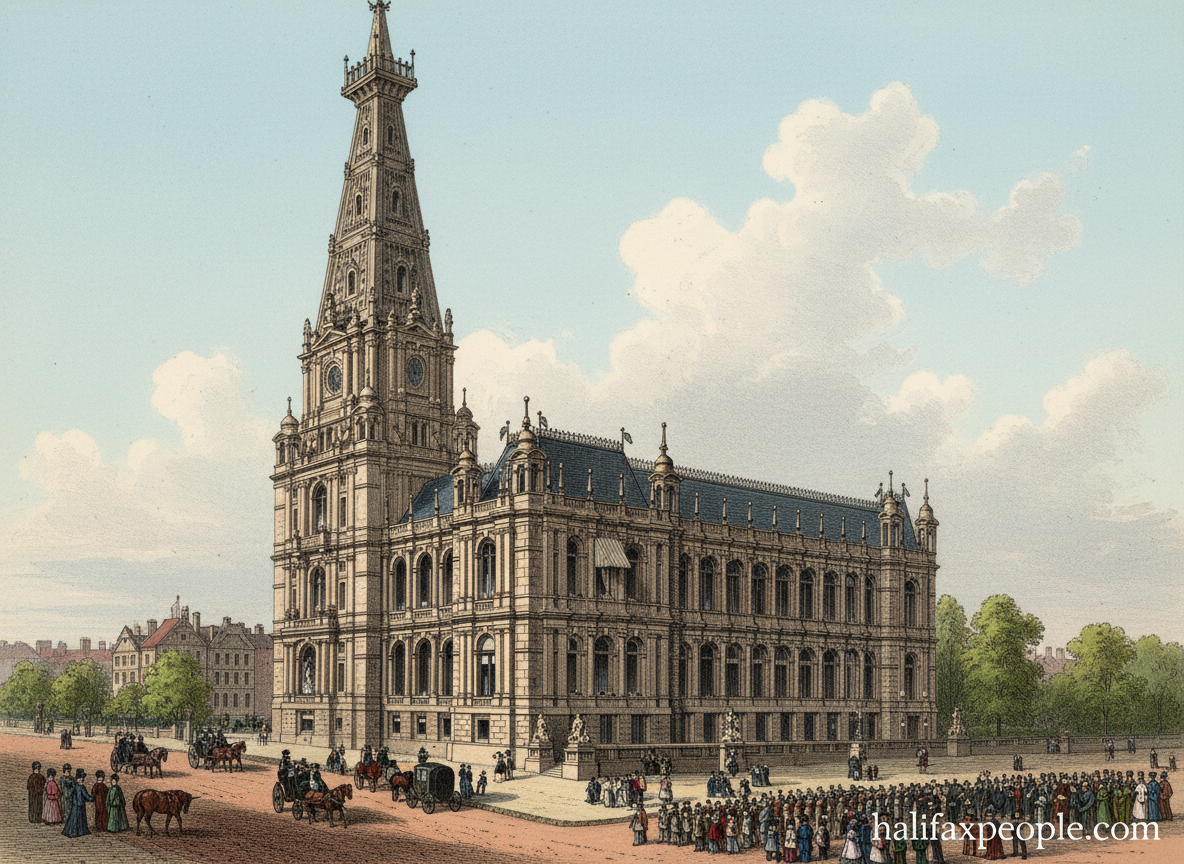
Halifax Town Hall in 1863 from watercolour by E M Barry (architect)

enhanced

TH3-digi

enhanced

TH4-digi

enhanced

GeorgeVId
GeorgeVIs

enhanced

GeorgeVIa
TH5-digi

enhanced

TH6-digi
TH7-digi

enhanced

TownHallView-58
TH8-digi

enhanced

TH9-digi

enhanced


If you have enjoyed your visit to this website, please spread the word by clicking the 'like' and 'share' buttons below. Thank you