HalifaxPeople-Collection-Jan 2027
HalifaxPeople - Collection - Jan2027
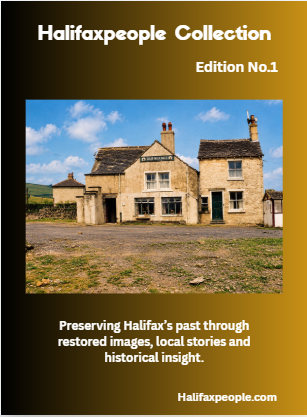
Sour Milk Hall, Claremount – The Lost Farmhouse That Gave Halifax a Baptist Leader
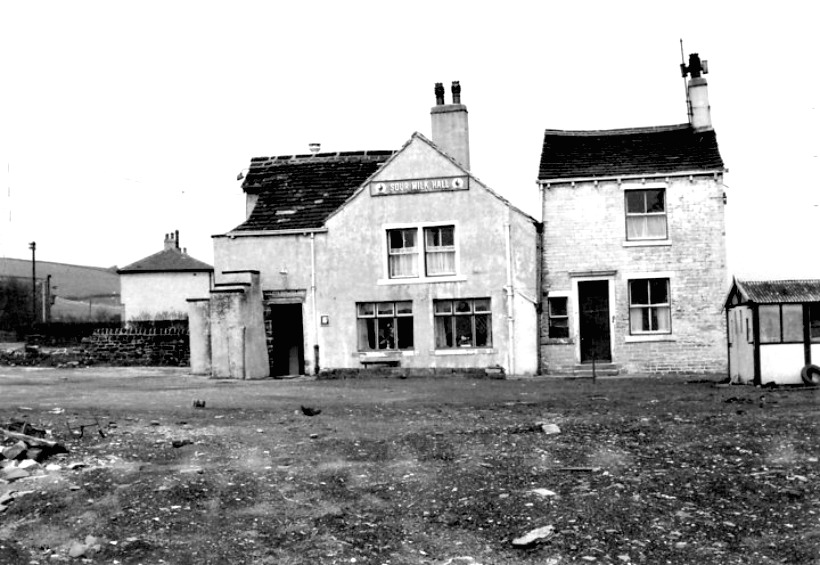
At the corner of Horley Green Road and Miles Street once stood a building with a name that has long intrigued local residents. Sour Milk Hall was remembered in its later years as a beerhouse, but its history reached much further back. It had begun as a seventeenth-century farmhouse, and it was also the birthplace of a man who became one of the most influential Baptist leaders of his generation.
That man was Dan Taylor, born at Sour Milk Hall on 21 December 1738.
Sour Milk Hall stood at 14/16 Horley Green Road, at its junction with Miles Street. The building was described as a former seventeenth-century farmhouse, a reminder that Claremount was once a much more rural place, before the spread of streets, mills and closely packed housing transformed the district.
The old hall retained its name even after its original character had changed. By the nineteenth century it had become a beerhouse, serving the growing neighbourhood around Horley Green.

It is tempting to imagine the building as a grand country house, but the surviving accounts suggest a more modest home. In the nineteenth century, it was described as having the appearance of an ancient mansion, although it had long since been divided into tenements.
Sour Milk Hall's most important historical connection is with Dan Taylor (1738–1816), the son of Azor Taylor, a working miner.
Taylor's early life was one of hard work and very limited formal education. According to the Dictionary of National Biography, he began working alongside his father in a coal mine during his fifth year. He developed a love of reading, despite having little opportunity for schooling.
A later account recalled that he had learned to read at a very young age, with his mother playing an important part in his education. The story is striking: a boy born in a farmhouse in the Halifax district, learning to read while growing up in a mining family, would go on to become a prominent religious figure.
Taylor was drawn towards the Methodist revival and, in 1761, began preaching. He eventually disagreed with aspects of Methodist organisation and teaching, and became a Baptist. In 1763 he was baptised and began gathering followers around Wadsworth, near Hebden Bridge.
He became the leading figure in the New Connexion of General Baptists, a movement established in 1770. His influence spread well beyond Yorkshire. He later ministered in Halifax and London, and became an important figure in the wider development of Baptist life in England.
It is a remarkable connection for a building that would eventually be remembered principally as a local beerhouse.
By the late nineteenth century Sour Milk Hall was operating as a beerhouse. The surviving lists of its landlords provide a glimpse of its later life.
Among those recorded were:
John W. Gregson – listed in 1889 and 1905.
Robert John Winterbottom – recorded in 1911 and 1917.
Mrs Lucretia Winterbottom – recorded in 1927.
Mrs Lucretia Hanson – recorded in 1936.
Jeffrey Bairstow – listed during the 1950s.
The beerhouse closed during the 1960s. The old building survived for a little longer, but was demolished in 1976.
A photograph taken in 1967 records Sour Milk Hall shortly before its disappearance. The image is particularly valuable because it captures the building in its final years, when the old farmhouse and beerhouse still stood among the streets of Claremount.
Today, the name survives in local history records and in the story of Dan Taylor. The building itself has gone, but its association with the birthplace of a major Baptist leader gives Sour Milk Hall a significance beyond that of an ordinary lost pub.
The Day the Ground Shook Beneath Heptonstall
17 May 1759 — people heard thunder beneath their feet, glasses rattled indoors and the ground seemed to roll like waves. Then a visiting preacher heard the news.
We tend to think of earthquakes as something that happens somewhere else. But more than 260 years ago, people around Heptonstall experienced a tremor strong enough to frighten residents across the Calder Valley.
And one of the most famous visitors to the area recorded what people told him.
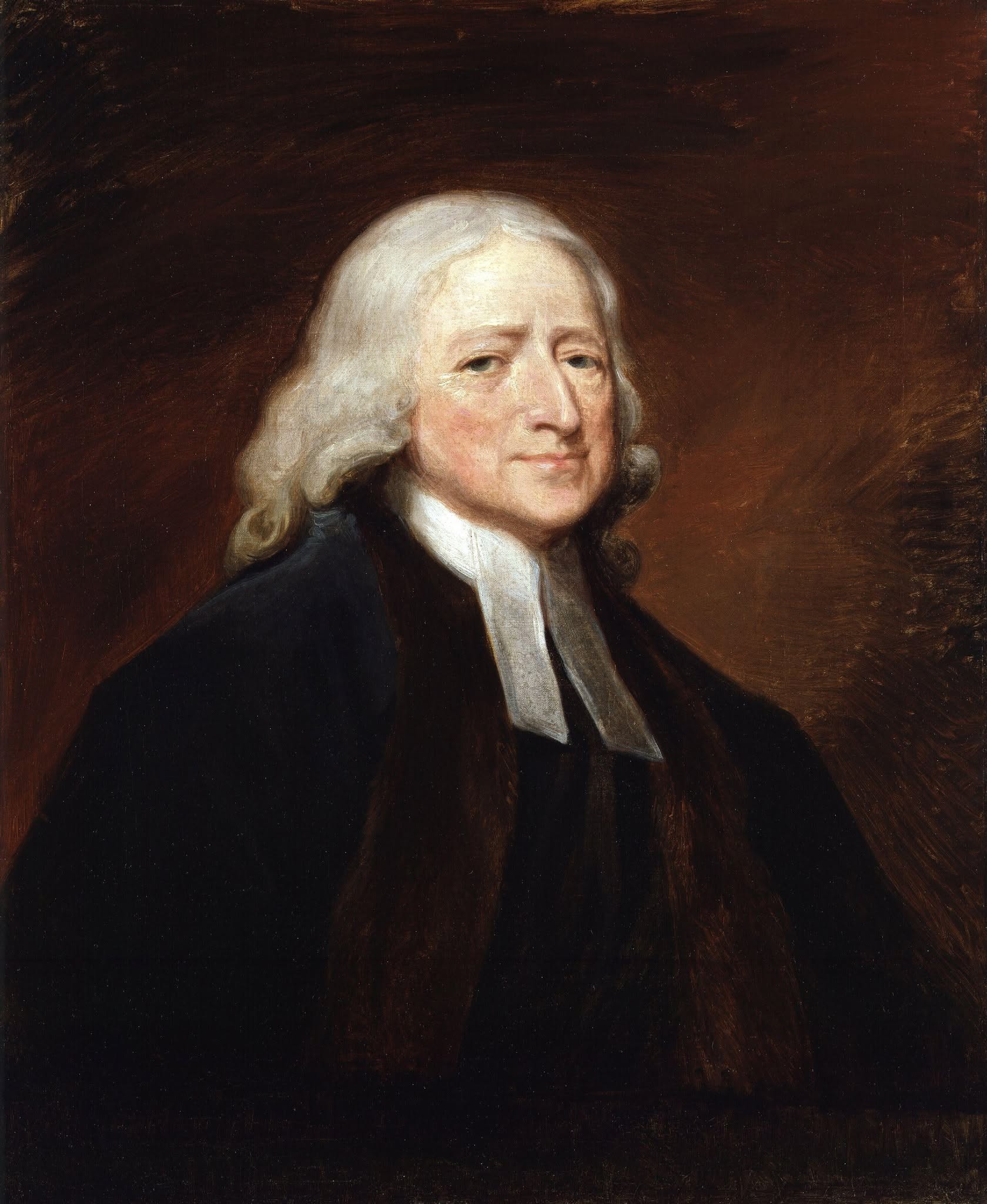
His name was John Wesley, the founder of Methodism.
A rumble that sounded like thunder
On Wednesday 18 May, Wesley rode from Halifax over the hills to Heptonstall, where a large congregation was waiting to hear him preach.
He recorded that the weather was peculiar: rain was falling in the neighbouring valley, but the congregation on the hilltop remained dry.
While he was there, people told him about something that had happened the previous day.
On Tuesday 17 May, people living within five or six miles had heard a strange noise beneath the ground. Some compared it to thunder; others said it sounded like carts rumbling.
Wesley recorded reports of the ground rocking and swaying. People indoors heard their pewter dishes and glass rattling, while those outside felt the earth shaking beneath their feet.
One detail particularly caught his attention: people who had experienced it agreed on the timing, despite having no knowledge of one another's accounts.
How far did the shaking reach?

Wesley's journal also records that the tremor was reported well beyond Heptonstall.
He later heard that it had been felt from the Bingley area, near Keighley, towards the neighbourhood of Preston.
That's a substantial area for an eighteenth-century earthquake report.
There were no seismographs, no scientific instruments and no modern communications network. What we have instead is a collection of eyewitness experiences passed on to a travelling preacher and preserved in his journal.
We cannot confidently identify the geological cause from Wesley's account alone. It is generally described in local historical references as an earthquake, but there is no modern instrumental measurement to establish its strength or precise location.
Nevertheless, the descriptions are fascinating. This wasn't simply one person claiming to have felt a mysterious tremor: Wesley was told that numerous people had independently heard and felt it.
And it happened right here in the Calderdale landscape.
Imagine sitting in your house near Heptonstall, hearing what sounded like a heavy cart passing underground — then watching your glasses and pewter rattling on the shelves.

Did your family ever tell stories of unusual tremors or earth movements in the Calder Valley?
If you have enjoyed your visit to this website, please spread the word by clicking the 'like' and 'share' buttons below. Thank you