Hanson Lane

Hanson Lane, Halifax — Mills, Terraced Streets and a Wartime Tragedy
Hanson Lane lies in the western part of Halifax, in an area shaped by nineteenth-century industry, dense terraced housing and the growth of the town beyond its older centre. Cotton and worsted mills, workshops and workers’ homes developed close together here, reflecting the importance of textile manufacturing to Halifax’s economy. Nearby Queens Road, opened in 1861, improved connections across the expanding district, while schools and places of worship followed as the population grew.
The lane had several notable landmarks. Hanson Lane Debtors’ Prison, built in 1840, replaced the earlier jail on Dungeon Street. It closed in 1868 and was subsequently adapted for military use. The area also had reservoirs built for Halifax Corporation, shops and industrial premises, including the mills that once employed local residents. Hanson Lane was also an early sporting venue: Halifax’s cricket and football club used a ground here before moving to the site that became Thrum Hall in 1886.
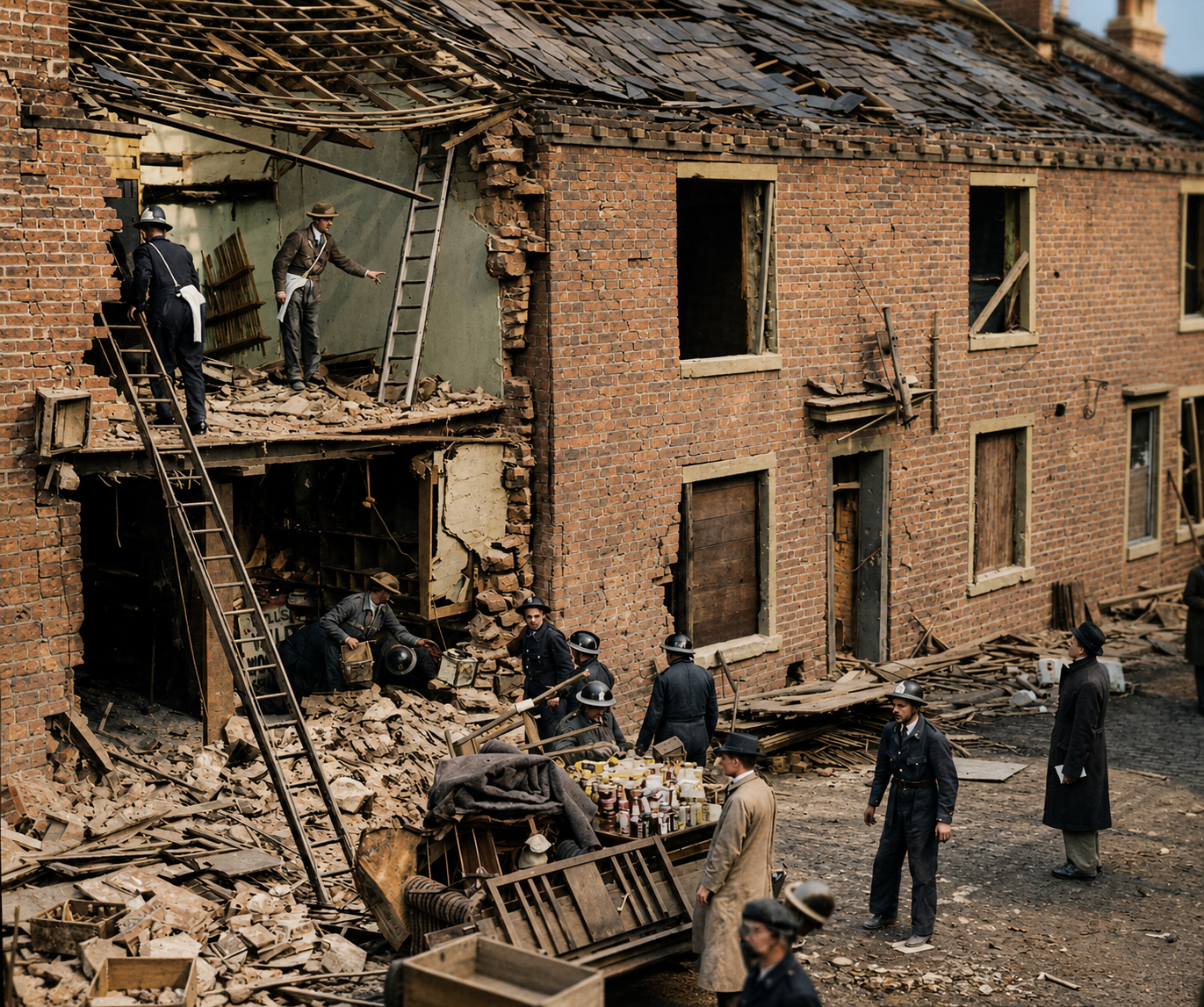
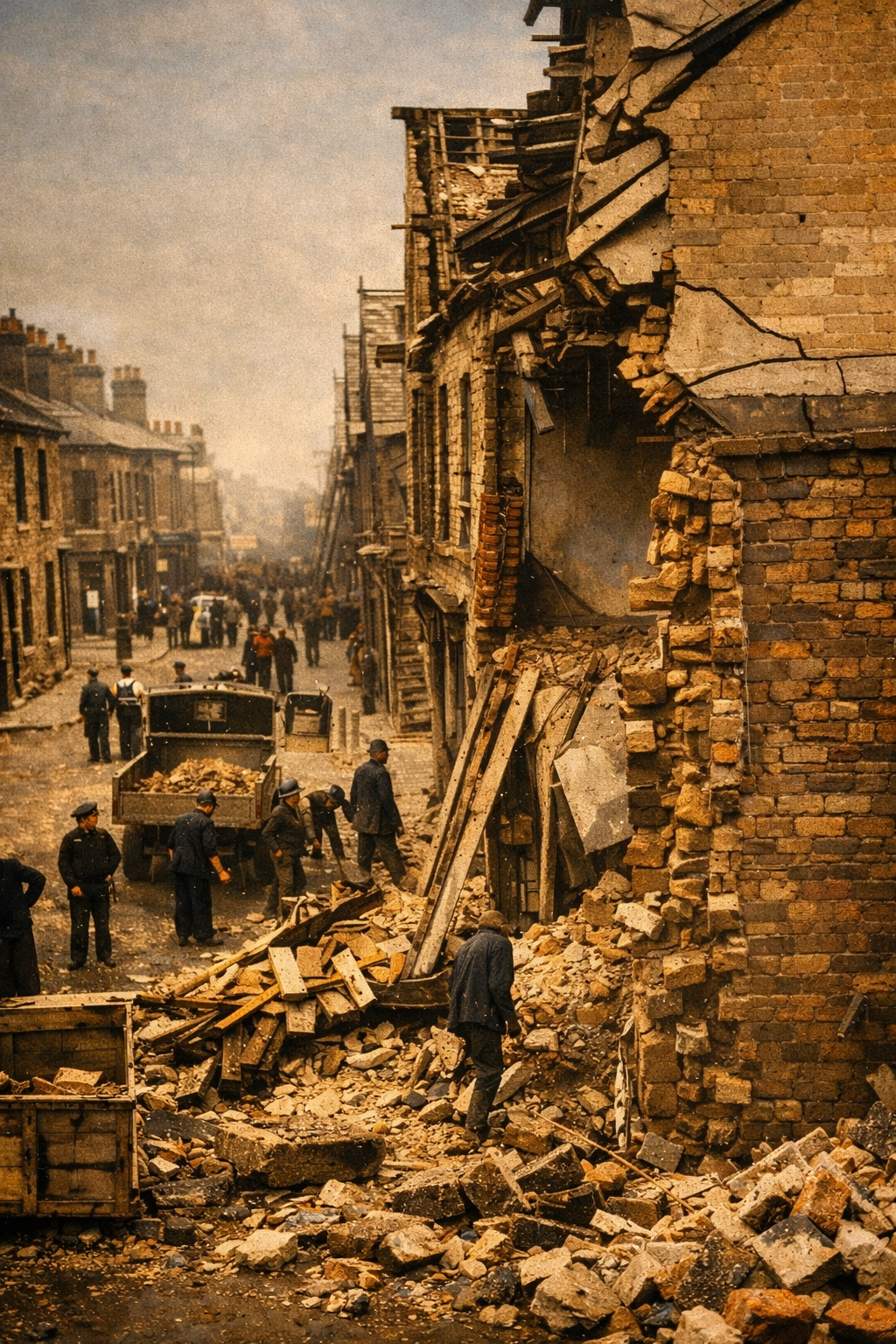
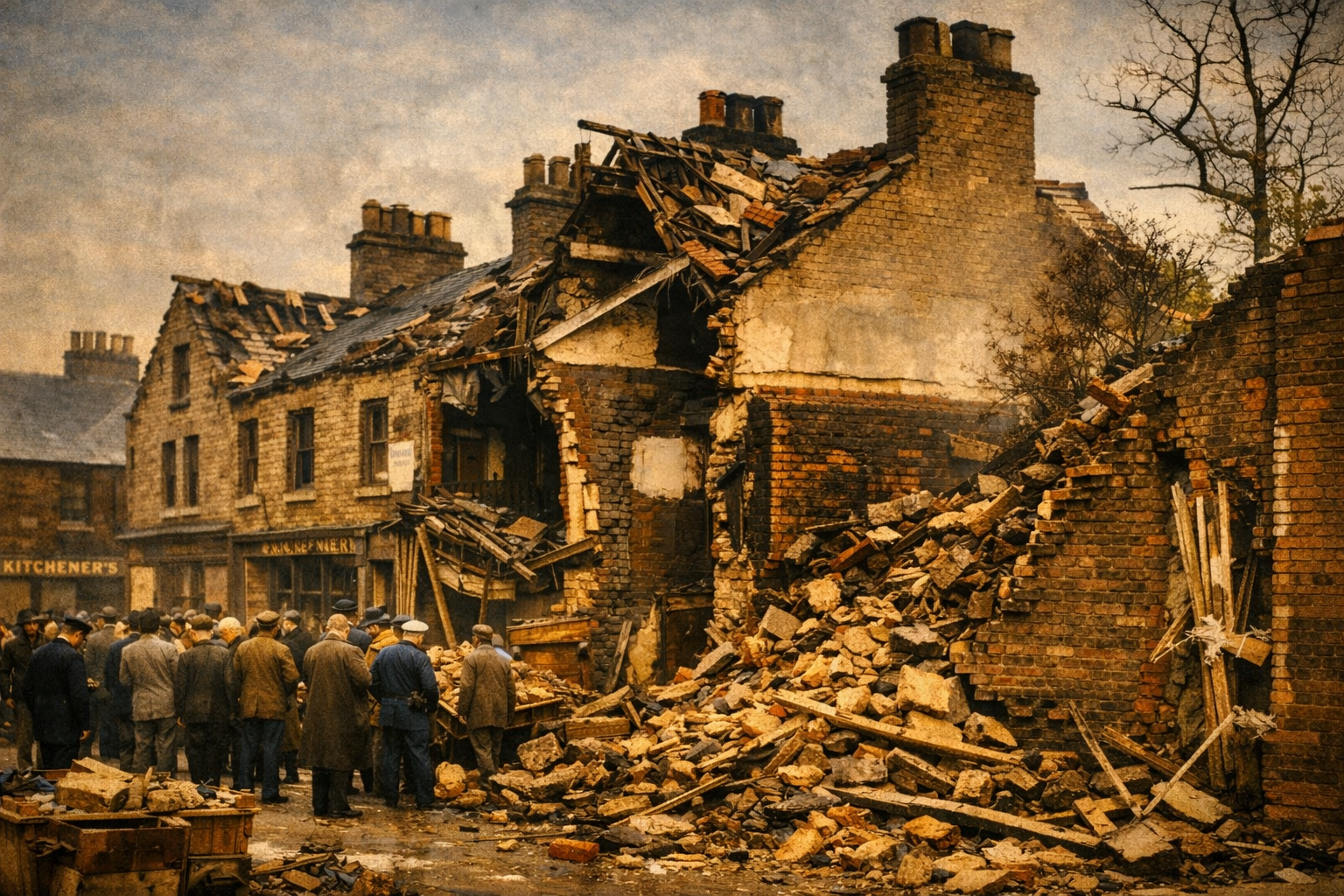
One of the darkest events in the lane’s history occurred on 22 November 1940, during the Second World War, when a bomb fell outside No. 77, near Crossley Terrace. Eleven people were killed, ten others required hospital treatment, and more than 500 properties were damaged. The terraced houses on the site were never rebuilt, and the space later became Hanson Lane Memorial Garden. A commemorative plaque was unveiled in 2018, recording the names of those who died and preserving the memory of the attack.
Old photographs of Hanson Lane reveal a neighbourhood shaped by work, housing and community life, as well as the lasting effects of wartime destruction. Its surviving landmarks and memorial offer a connection to the people who lived and worked here.

Bottom of Hanson Lane, facing Pellon Lane

Hanson Lane viewed from Pellon Lane
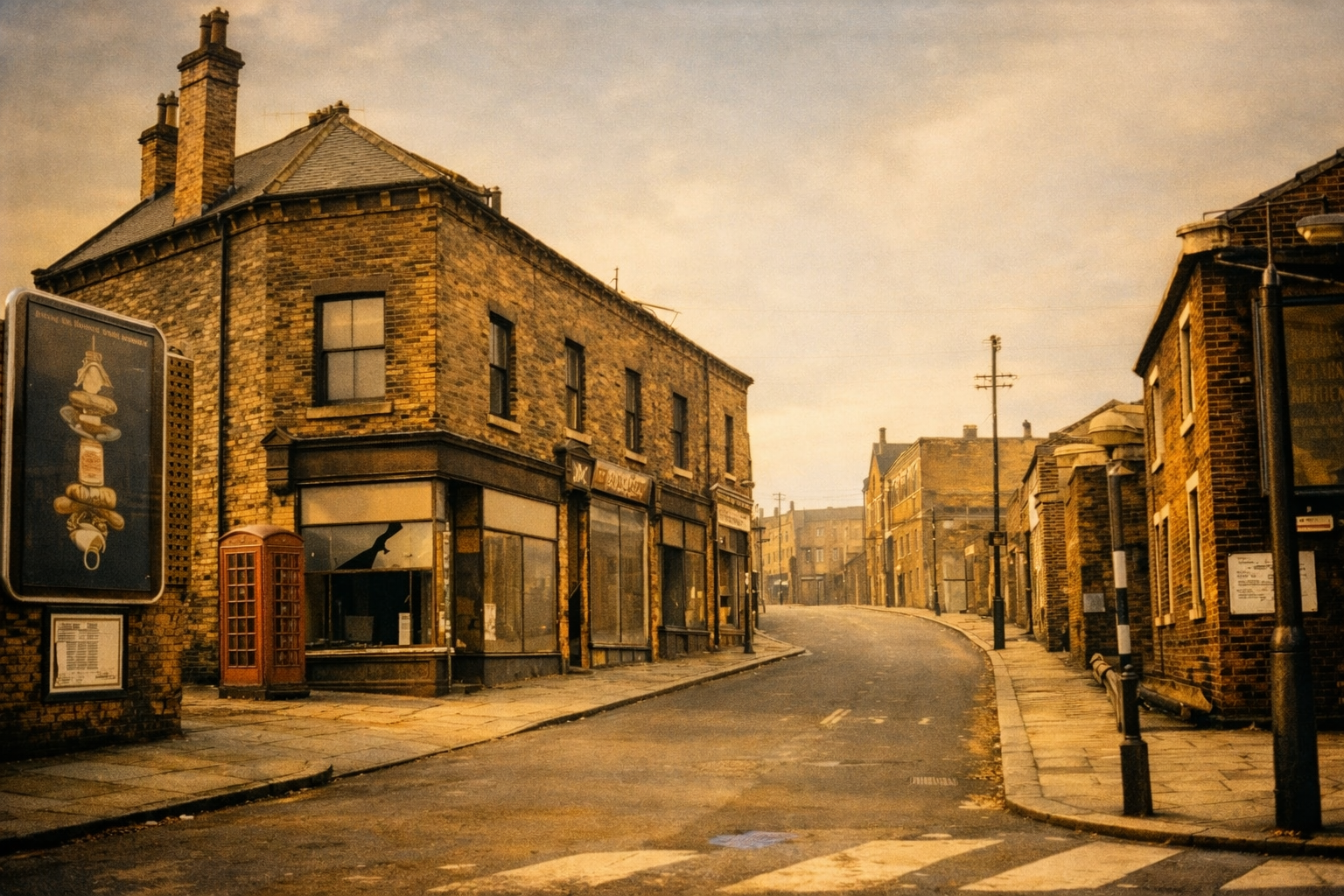
enhanced
 |
 |


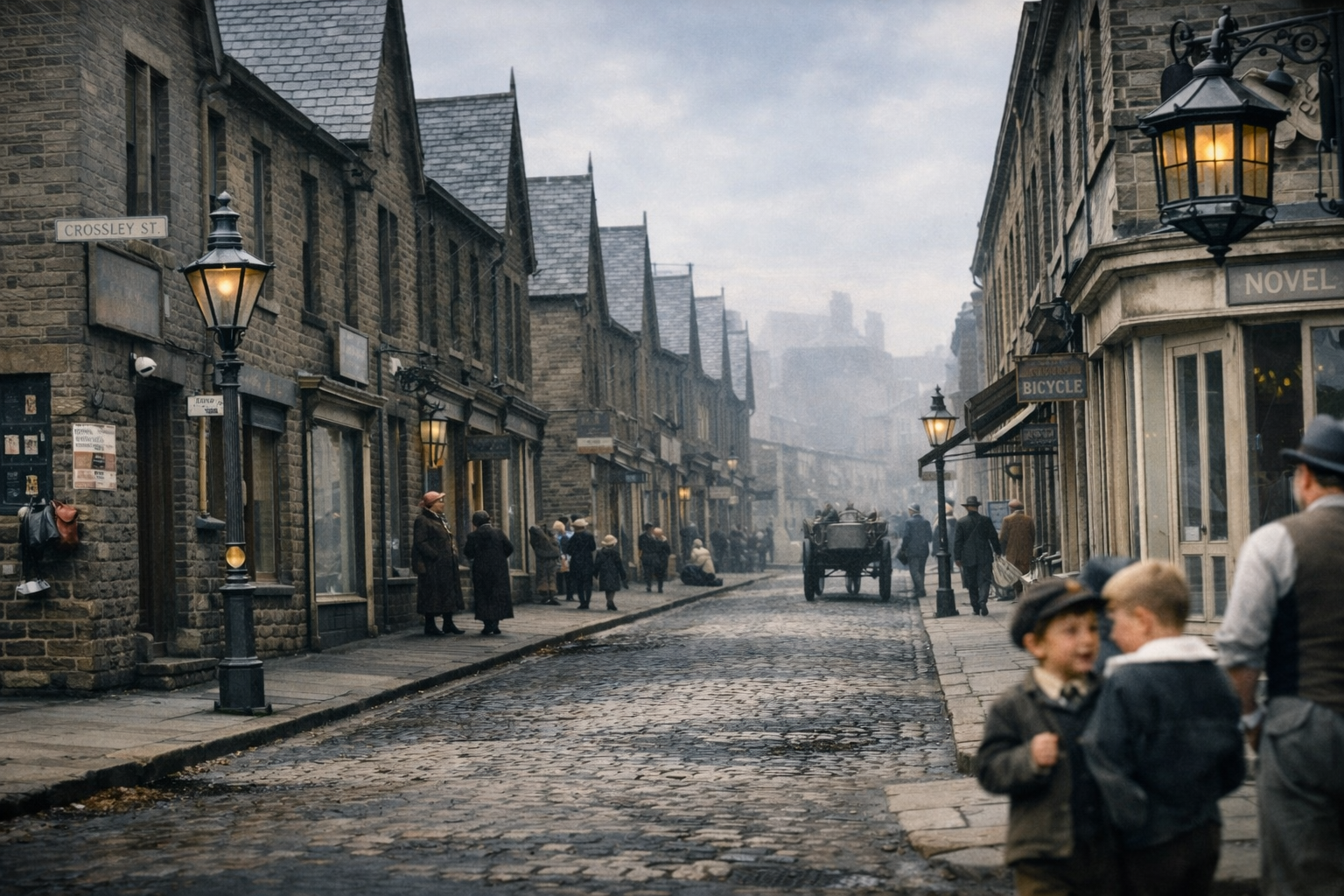
enhanced
 |
 |
 |
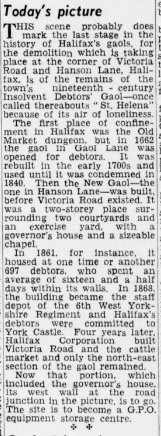 |


Hanson Lane, Regents Mills

Crossley Terrace

Chaffers Court, part of Crossley Terrace, demolished in 1969


Brinton Terrace, which ran through to Taylor Street was part of the West Hill Estate, developed under the Crossleys. Brinton was the maiden name of Francis Crossleys wife. He married Martha Eliza, daughter of Henry Brinton of Kidderminster. Their son, Savile Brinton Crossley became Lord Somerleyton. This detached single property strikes me as being unusually ‘posh’ for that area. Brinton Terrace was named after Sir Savile Brinton Crossley, son of Sir Francis Crossley.

Bowman Terrace took its name from Dr.Frederick Bowman, consulting engineer and author, one of the first members of Halifax School Board
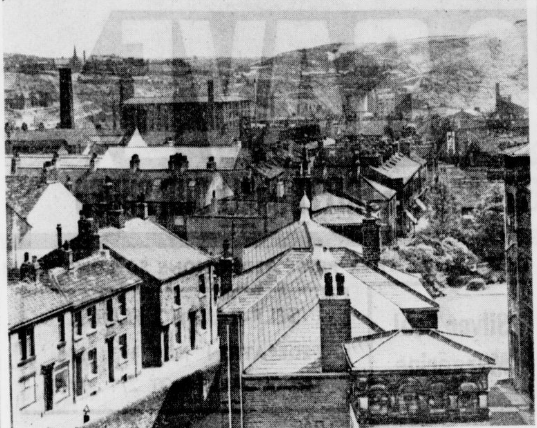 |
  |


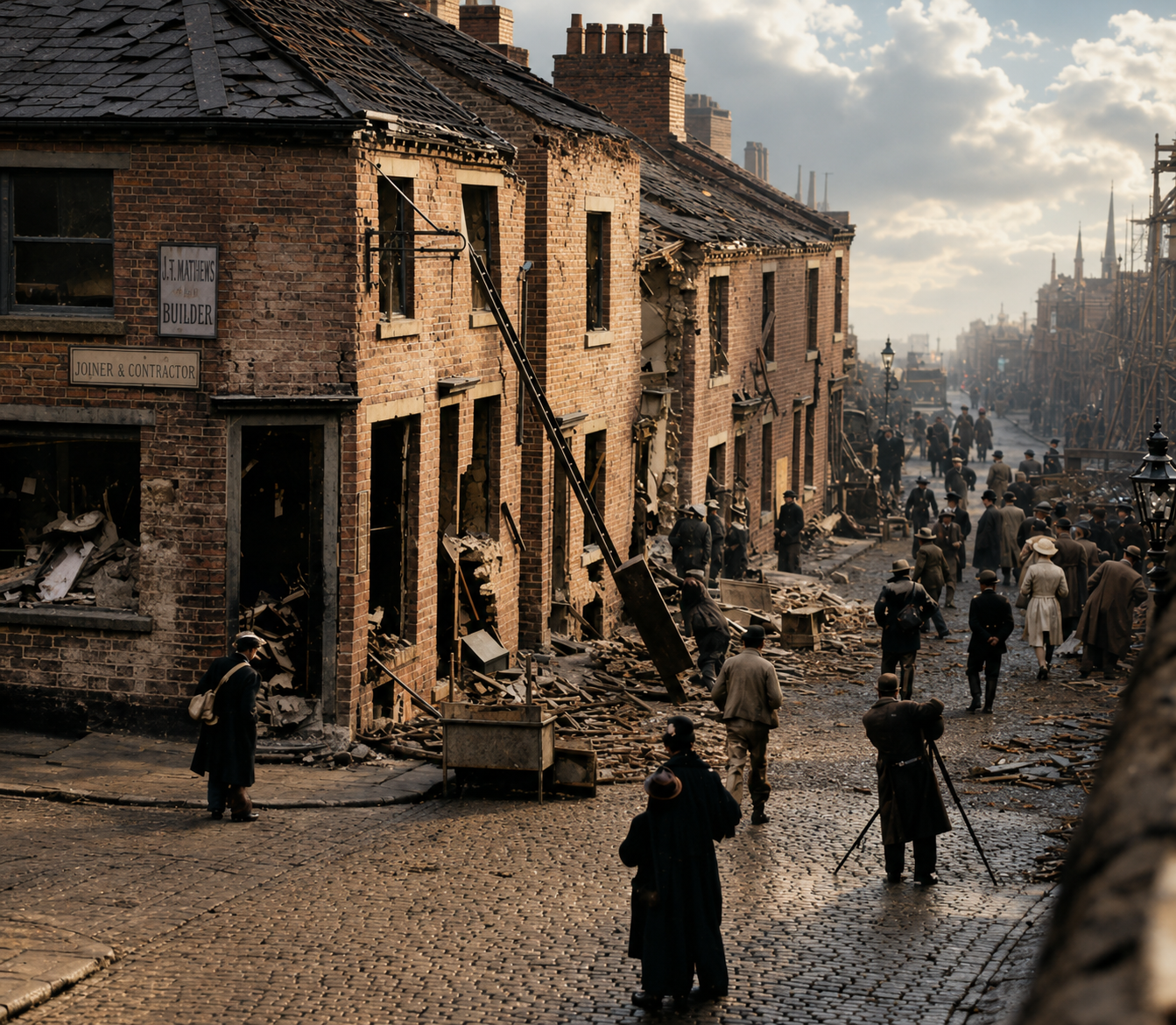
Friday, 22 November 1940. Just over a week after the devastating Luftwaffe attack on Coventry which left thousands dead or injured and homeless, a lone bomber dropped a 100kg bomb on houses in Hanson Lane in Pellon, Halifax, killing 11 civilians and injuring a further 10 people. The bomb hit the pavement in front of number 77.
enhanced

enhanced

enhanced

enhanced


enhanced


 |
 |

 Victoria Road cattle market which closed in 1976 after trade dwindled. The abattoir closed the same year.  Victoria Road auction ring 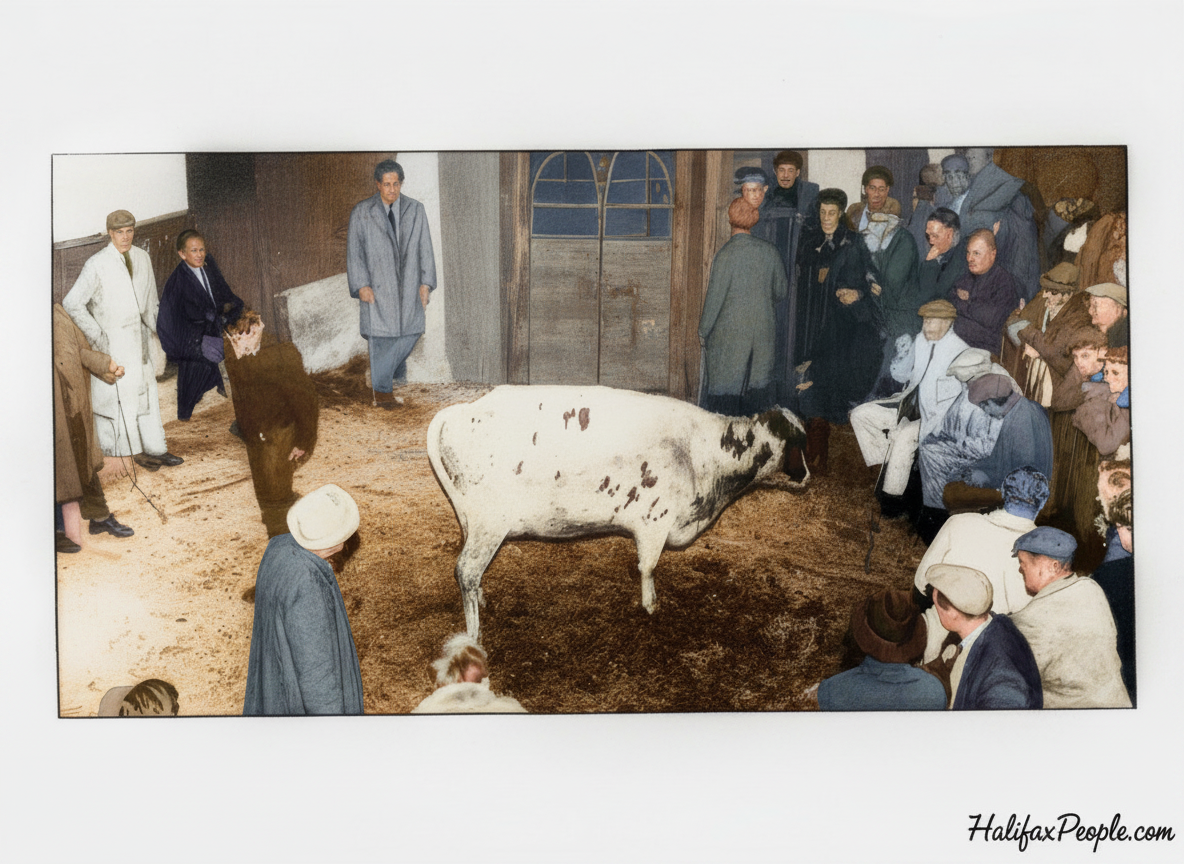 enhanced |
 |


If you have enjoyed your visit to this website, please spread the word by clicking the 'like' and 'share' buttons below. Thank you