
Booth, Halifax
Booth is a small historic hamlet in the Midgley area of Calderdale, tucked into the rural landscape above the Calder Valley. Like many of the scattered settlements around Halifax, its story is closely connected with farming, stone-built houses and the network of lanes that linked isolated farms and communities long before modern roads transformed the district.
Older farms and traditional stone buildings preserve the character of this rural settlement, while historic maps and photographs offer glimpses of how the area looked in earlier generations. Among the places associated with Booth are Wade Wood and Jerusalem Farm, reminders of the farms, woodland and working countryside that shaped life here.
Village life once included the Woodman Inn, a local public house recorded in the nineteenth century. The inn was still associated with Booth in 1945 and closed in 1949, marking the loss of one of the community’s familiar gathering places. Today, Booth remains part of the wider Midgley landscape, where historic farmsteads, winding lanes and surrounding countryside provide a link with Calderdale’s rural past.

enhanced
  |
 |


enhanced

  |
 |

 |
 |


 |
 |

 |
 |

This has was previously the Woodman pub which closed in 1949


  enhanced |
  |
  |
 |
Midgley, Halifax
Midgley is a traditional Pennine village perched on a hillside above the Calder Valley, between Halifax and Hebden Bridge. Surrounded by open moorland, fields and stone-built farmsteads, it retains much of the character of an older rural community. Its position on a shelf of land below Midgley Moor gives it wide views across the surrounding valleys, while its historic centre follows Town Gate, a village street lined with buildings that reflect centuries of local life.
Midgley is recorded in the Domesday Book of 1086 under the name “Micleie”, making it one of the area’s long-established settlements. The village grew through farming, wool production, handloom weaving and quarrying. Many of its older houses and barns were built from local Millstone Grit, and some preserve features dating back to the seventeenth century. The surrounding township once included a much wider area, embracing parts of Luddenden, Luddenden Foot and Mytholmroyd, where mills and workshops developed along the streams and valley floor.
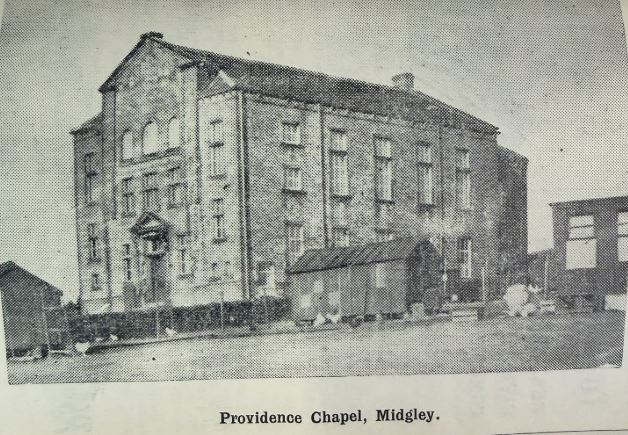
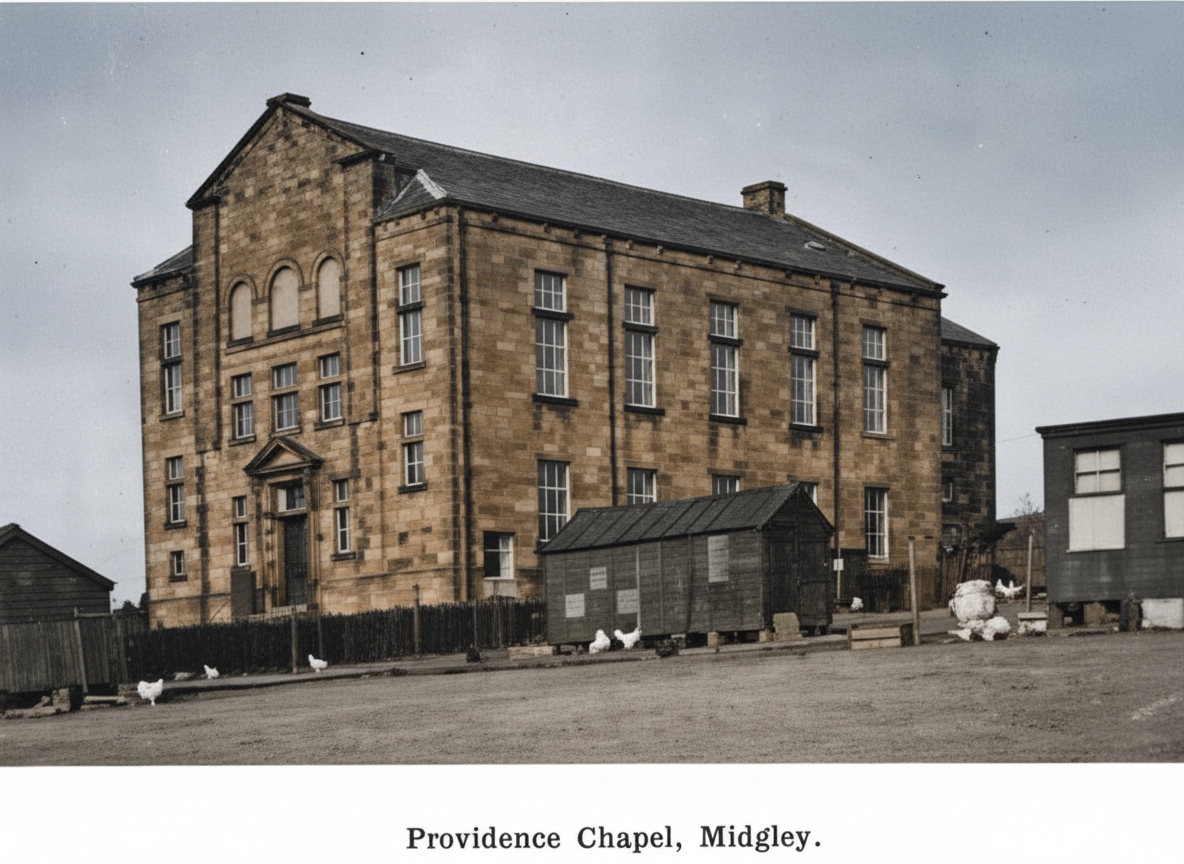
Midgley also has a strong community tradition. Its Methodist chapel, village school and local farms played important roles in everyday life, while the nearby moors contain prehistoric archaeological remains. In more recent times, residents have worked together to maintain village facilities, including the community shop and meeting room. Today, Midgley combines its historic Pennine character with an active village community, making it a distinctive part of Calderdale’s rural heritage.


 Lydgate 1940 enhanced |
  |

Midgley pinfold at Green Royd

enhanced


Continue to Historic Luddenden Foot
or
Return to Home Page
If you have enjoyed your visit to this website, please spread the word by clicking the 'like' and 'share' buttons below. Thank you