Historic Boothtown 2
Historic Boothtown 2

Boothtown House

Boothtown was once a closely packed community of small houses, workshops and local businesses. Many of the older properties were occupied by working families, and some combined a home with a place of work. Photographs taken by H. C. Morris in 1966 provide a valuable record of these streets shortly before redevelopment swept away much of the old neighbourhood.

Barston Road, Mill Lane (no's 2-10) & no.70 Mill Lane (was shop). 1968 Halifax Photographic Society

Blackpool Street, Mill Lane (no's 1-9) 1968 HPS

Wood Street North and 'Prince of Wales' 1968 HPS

Rear view of 'Prince of Wales'. 1968 HPS

Outside the 'Prince of Wales'. 1968 HPS

China Row, Wood Square looking towards Mount Pleasant. 1968 HPS

China Row, Wood Square. Looking towards Waterloo Street. 1968 HPS

Toilet Out-house east side of Wood Square. 1966 HPS

Wood Square east side. 1966 HPS

Wood Square rear of 'Prince of Wales'. Showing passage through to Mill Lane

Mill Lane and Wood Street North. 1968 HPS

Waterloo Street (no's 2-18) 1968 HPS

Waterloo Street

Waterloo Street between 14-16 Mill Lane. 1966 HPS

Mill Lane facing west. 1966 HPS


Lumb Lane Terrace (no's 1-7) 1966 HPS

Backs of no's 1-2 Sladden Street and no's 11-13 Mill Lane. 1966 HPS

Mill Lane (no.11) 1966 HPS

Gold Street (no's1-4) 1966 HPS

Gold Street (no5) 1966 HPS

Gold Street (no's 5,6,7) 1966 HPS

Gold Street (no7) 1966 HPS

Gold Street (no's 6,7) 1966 HPS

Back Gold Street (no1) 1966 HPS

Gold Street entrance to no.8. 1966 HPS

Gold Street (no8) from the south-east. Used some years ago as a bake-house for the shop at no.5 Leyland Street. 1966 HPS

Back Gold Street (no's 1-3) 1966 HPS

Leyland Street (no1) 1966 HPS

Leyland Street (no 1) Gold Street (no 1) 1966 HPS

Leyland Street (no's 1-5) Corner shop with Sladden Street. 1966 HPS


Leyland Street (no's 2-3) 1966 HPS

Fur Street (no's 2-8) 1966 HPS

Early 15th century timber framed house, no's 2-8 Fur Street and Hall Street North no's 8-11. View from the S.E after demolition of other houses in Leyland Street. 1966 HPS

Leyland Street (no12) 1966 HPS

Outside W.C. at the junction of Hall Street North and Mill Lane. 1966 HPS

Carved door lintel from no.10 Hall Street North. This date, 1630, was the date when the original timber built structure was clad in stone. 1966 HPS
The carved stone dated 1630 is an important clue to the age of this property. The date is associated with the later stonework surrounding an earlier timber-framed building, rather than necessarily marking the original construction of the house. Such reused and altered buildings are a reminder that parts of Boothtown's history were already several centuries old before the Victorian streets developed around them.

Mill Lane view from Hall Street North. 1966 HPS

Hall Street North (no's 8-11) 1966 HPS

Hall Street North (no's 8-12) with Leyland Street (no.12). These houses formed the original 14th century Boothtown Hall. 1968 HPS

Mill Lane (no's 7-9) Hall Street North (no's 1-3) 1966 HPS

Hall Street North facing Boothtown House

Hall Street North
Boothtown Hall had a history extending back to the medieval period. Archaeological investigations carried out in 1968, before the building was demolished, revealed evidence of two earlier buildings dating from the thirteenth or fourteenth centuries. The hall itself is described in the archaeological record as a fifteenth-century building.
The original timber-framed structure was later encased in stone, with the date 1640 recorded above its doorway. By the nineteenth century the property had been divided into tenements, providing accommodation for several families. It was demolished in April 1968, but the archaeological discoveries revealed that this part of Boothtown had been occupied for centuries before the streets shown in these photographs were built.

Hall Street North (no2) 1966 HPS

17th Century door and gargoyle at no.2 Hall Street North. This was the northern end of a through passage of the 17th century timber framed house formed by this house and no's 3-4-5 Sladden Street. The porch of no.3 Sladden Street formed the other end of this passage. 1967. HPS

Hall Street North (no's 4-6) 1966 HPS

Hall Street North (no's 21-23) 1966 HPS

Hall Street North (no16) 1966 HPS

Hall Street North (no2) 1966 HPS

Sladden Street (no's 1-2) 1966. HPS

Sladden Street (no's 3-4) 1966. HPS

Sladden Street (no's 5-6) 1966 HPS

Sladden Street (no's 13-14) 1966. HPS

Sladden Street (no's 7-11) 1966 HPS

Sladden Street (no6) 1966. HPS

Sladden Street (no5) Decorated hood mould return on first floor window. 1966. HPS

Sladden Street (no3) Decorated door lintel 1966. HPS

Sladden Street (no12) 1966 HPS

Percy Shaws house
The carved stone dated 1630 is an important clue to the age of this property. The date is associated with the later stonework surrounding an earlier timber-framed building, rather than necessarily marking the original construction of the house. Such reused and altered buildings are a reminder that parts of Boothtown's history were already several centuries old before the Victorian streets developed around them.


Claremount Primitive Methodist Church, near the end of Claremount Road
The Primitive Methodist congregation at Boothtown was being established during the 1860s. An account published in the Primitive Methodist Magazine in July 1866 describes the difficulties encountered while raising money for the chapel. There were disagreements among those responsible for the funds, and the building project experienced considerable financial problems.
The account records the involvement of John Sutcliffe, who laid the foundation stone, together with several local preachers and supporters who helped raise the necessary money. Despite the difficulties, the congregation succeeded in securing the funds to establish its chapel. The story provides an interesting glimpse of the determination and community effort behind religious life in nineteenth-century Boothtown.
-
Mount Carmel was a substantial Primitive Methodist chapel built on Claremount Road and opened in 1907. Its size and architectural presence reflected the importance of Nonconformist worship in the growing residential districts around Boothtown.
The chapel served the local Methodist community for many years. Although it is no longer used as a place of worship, the building remains an important reminder of the religious and social life that once centred on the chapels of this neighbourhood.
-
The film of the opening of the Serbian Orthodox Church provides a later chapter in Boothtown's religious history. It records the arrival of a different Christian tradition in the area and shows how buildings and places of worship continued to find new roles as the local population and community changed.
OPENING Of THE SERBIAN ORTHODOX CHURCH | Yorkshire Film Archive (yfanefa.com)
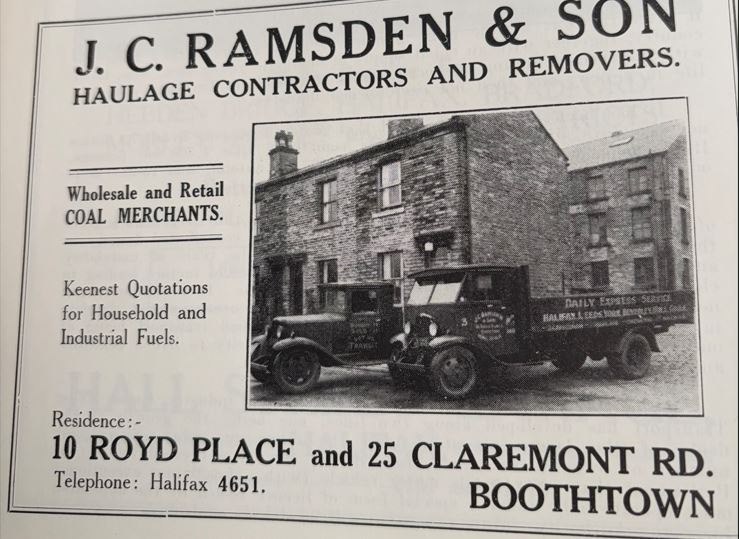
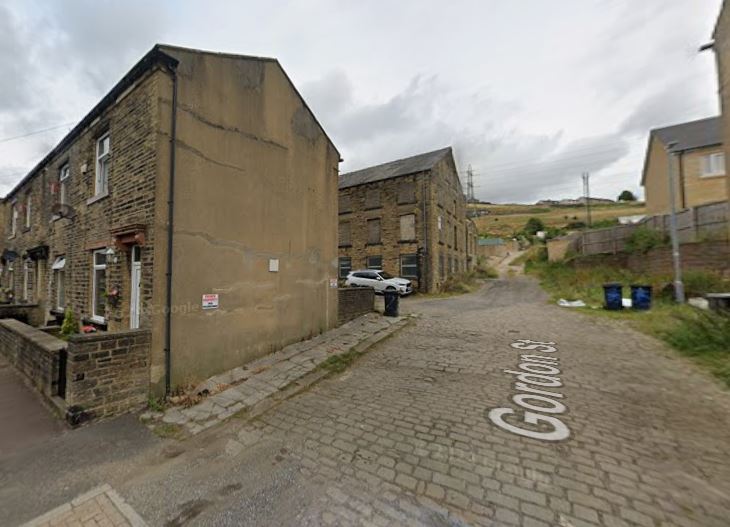
25 Claremount Road
 |
 |


Boothtown Mission Church just below bottom of Ploughcroft Lane
 |
|
If you have enjoyed your visit to this website, please spread the word by clicking the 'like' and 'share' buttons below. Thank you