
Haugh Shaw, Halifax
Haugh Shaw is a historic area to the west of Halifax town centre, around Savile Park and Haugh Shaw Road. Its name is pronounced “Hoff Shaw”, and its past reflects the transformation of this part of Halifax from open fields and country estates into a busy residential and industrial neighbourhood.
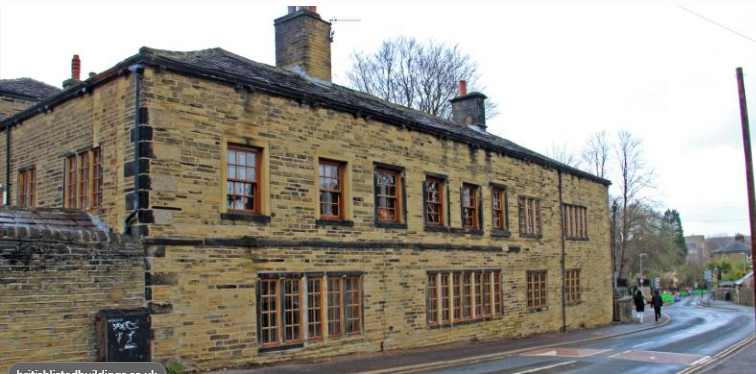
One of the area’s most important surviving landmarks is Haugh Shaw Hall, a seventeenth-century stone house that was originally a single substantial property. Its traditional stonework, mullioned and transomed windows, and distinctive two-storey porch provide a glimpse of the homes built by prosperous local families before Halifax expanded into the surrounding countryside. The property later became divided into Haugh Shaw Hall, Haugh Shaw House and Haugh Shaw Villa, and is now Grade II listed.
During the nineteenth century, the district changed as mills, schools, public houses and new housing developed around it. Haugh Shaw Board School opened in November 1879 and became one of the early schools established by the Halifax School Board. The area also had local industries, including Haugh Shaw Mills, while the Trafalgar Inn became a familiar meeting place for residents near the mills and workers’ housing.
Today, Haugh Shaw forms part of the wider Savile Park and King Cross neighbourhoods. Historic houses and old street names preserve traces of its earlier rural character, while schools, homes and former industrial sites tell the story of how Halifax grew beyond its original centre.


enhanced

Saville Park Road - Haugh Shaw Road
  enhanced |
 |

Paradise Street


enhanced


The original Savile Hall was built in 1726. On 7 January 1835, following the Halifax election disturbances known as the window-breaking election, rioters attacked the property. Windows, the verandah, front door and portico were damaged.
The owner, James Edward Norris, claimed compensation and recovered £799 from the county. Anne Lister recorded the destruction in her diary, describing furniture in the lower rooms being destroyed and pictures and books thrown about.

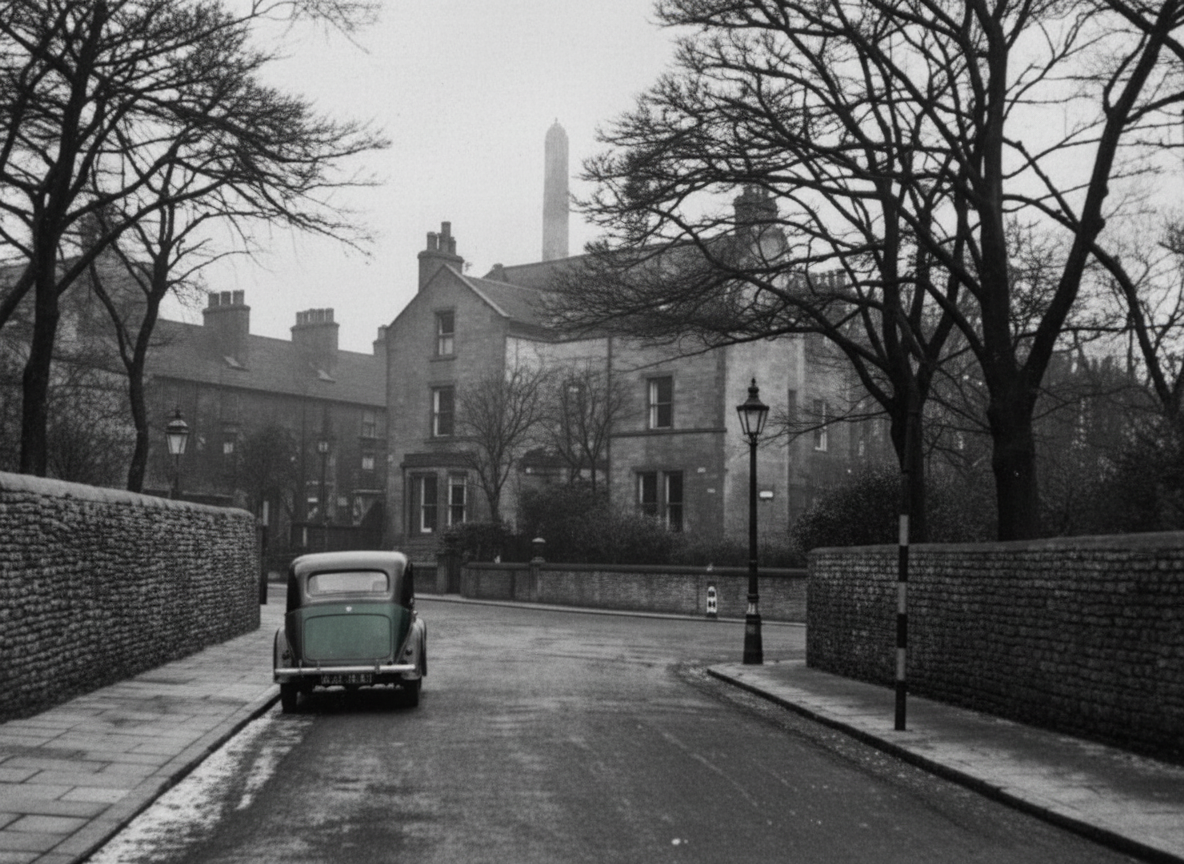
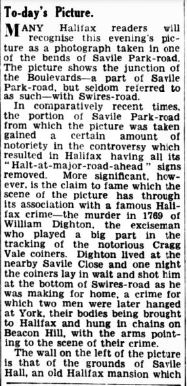
The original Savile Hall building was erected in 1726 and faced on to, what is now, Savile Park Road.
There is a datestone 17 RBF 26, possibly for Robert and Barbara Fawcett.
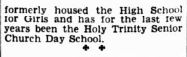
In 1931, Halifax High School for Girls was here.
In 1933, the Hall became the new Holy Trinity Senior School when the Holy Trinity schools on Harrison Road became overcrowded. The Hall was bought for £5,000.
With the Education Act [1944], it was decided that Savile Hall was inadequate, and a new school would have to be built. In order to remain under the control of the Church of England, the diocese would have to raise half the cost of the project.
In 1950, an appeal was launched to raise £30,000 for a new Holy Trinity secondary school.
Work on the new Holmfield School began in April 1961 and the first pupils moved in by May 1962.
In 1966, Savile Hall became Holy Trinity Junior Boys & Girls School. There were several extensions and additions to the buildings in the 1960s.
In 1985, a new sports hall was built on the western part of the site, following fund-raising by Rev Jack Freeborn.
 Saville Hall is now The Boulevard surgery |
 |
 |
  |


 |
 |


enhanced

  enhanced |
 |
 |
 |
 |
 |

Arden House


Allotments on Arden Road enhanced


 |
 |

The site was the barracks of the 2nd West Riding Yorkshire Volunteer Artillery. The buildings were gutted by fire on 6 December 1910. A new drill hall opened on Arden Road on 12 December 1913.

Raymond and Joyce Patchett behind the bar at the Arden Road Club


enhanced


enhanced

Boulevard or now known as Savile Park Road

Haugh Shaw Hall, also known as Haugh Shaw House and Haugh Shaw Villa, is a Grade II listed building dating from the 17th century.
Its features include:
- A substantial two-storey stone porch.
- A round-arched entrance beneath an elaborate gable.
- Mullioned and transomed windows.
- An east wing with paired sash windows.


enhanced


Royal Oak on Haugh Shaw Road


Scarboro Mills, Haugh Shaw Road, Halifax
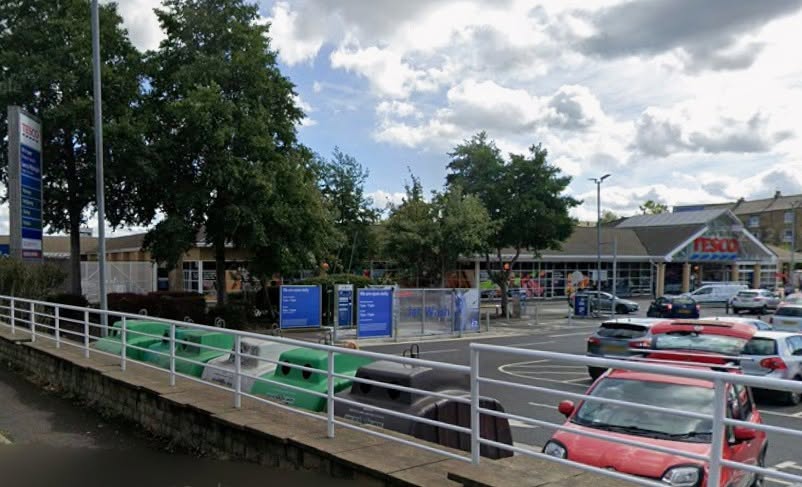
For generations, Scarboro Mills stood on Haugh Shaw Road at King Cross, occupying a site that is now remembered by many people as the location of the Tesco store. The works were also known as Trafalgar Mills, and their history links the Scarborough family of worsted manufacturers with several later textile businesses.
The Scarborough brothers
The mills were established by Thomas Smith Scarborough and his brothers during the 1860s. The family were involved in the worsted trade, an important part of Halifax's textile industry.
The name Trafalgar was not accidental. It referred to the Battle of Trafalgar, fought in 1805. The name became attached to the mills and survived alongside the Scarborough name.
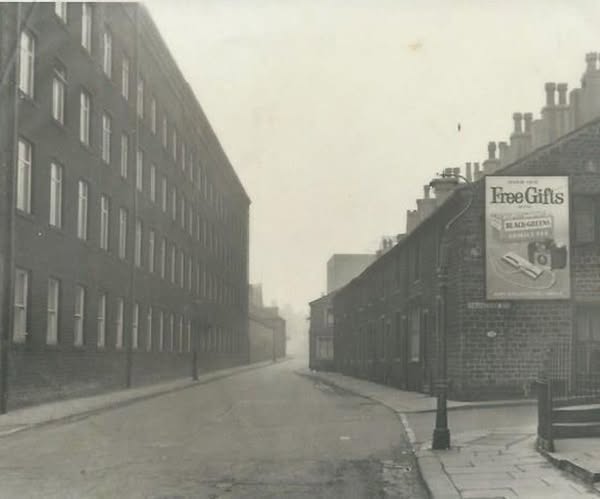
A particularly useful contemporary record appears in The Edinburgh Gazette of 2 December 1884. It identifies John Scarborough of Myrtle Grove, George Scarborough of Holly Bank, Thomas Smith Scarborough of Savile Terrace and Joseph Scarborough of Elmfield Place, Halifax, trading together as Scarborough Brothers.
The notice describes them as worsted spinners and manufacturers and names both Trafalgar Mills and Brunswick Mills as their business premises. This is valuable evidence that the family operated more than one substantial mill concern.
Brunswick Mills were in the West Parade area of Halifax, so they should not be confused with the Haugh Shaw Road works. The two sites were connected by the same family business.
Changing ownership
The Scarborough family's connection with the mills was followed by a succession of other textile concerns.
The Halifax Worsted Spinning Company became associated with the site, followed by Cleckheaton Spinning Company Limited, recorded there in 1936.
Another important name was Willey & Pearson Limited, which occupied the mills until 1994. The changes in ownership reflect the way Halifax's textile industry evolved, with older family businesses giving way to larger companies and changing forms of textile production.
Baldwin & Walker and Ladyship Wools
One of the better documented later connections is Baldwin & Walker.
Founded in 1836, Baldwin & Walker became known for its Ladyship Wools. In 1936 the company was operating from West Croft Mills at King Cross. The firm moved from West Croft Mills to Scarboro Mills in the 1970s.
This gives the site a connection not only with the Scarborough family's nineteenth-century worsted business but also with a well-known Halifax wool manufacturer in the later twentieth century.
Demolition and the Tesco site
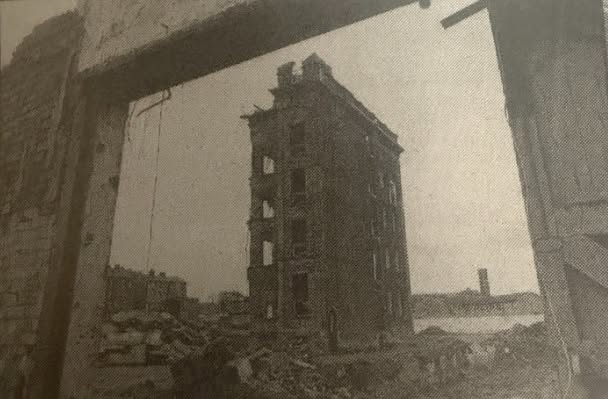
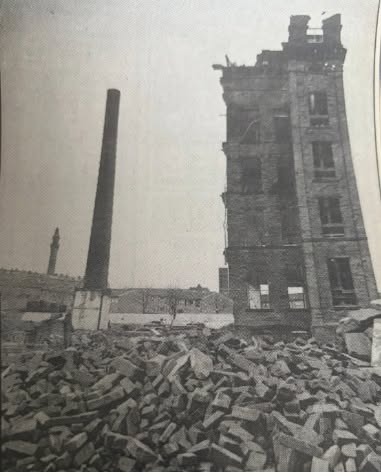
The textile works finally disappeared in the 1990s. Scarboro Mills were demolished in 1996, and a Tesco store was built on the site in 1997.
The change was a striking one. A place that had been associated with worsted spinning and textile manufacturing for well over a century became a modern retail site.
The name Scarboro Mills is still useful when tracing the industrial history of Haugh Shaw Road and King Cross. It preserves the memory of the Scarborough family, the Trafalgar name and the generations of textile businesses that occupied the works.
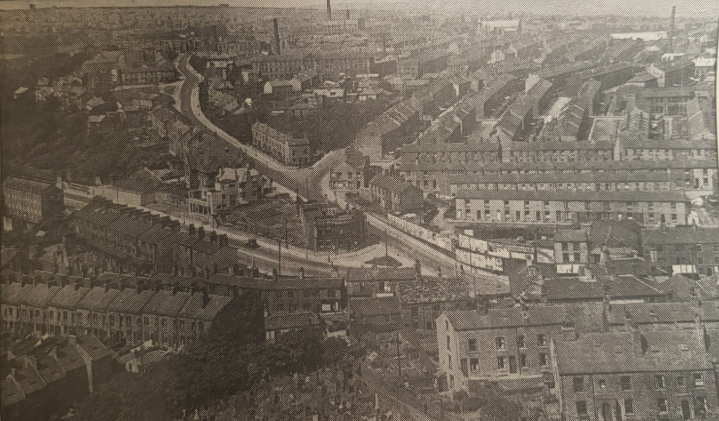
Bell Hall – an older estate with a malt kiln
The name Bell Hall is older than the surrounding streets. An advertisement in the Leeds Intelligencer on 18 May 1784 offered the freehold estate for auction. It consisted of a house, several other houses, a large malt kiln and several fields, then occupied by Duke Fielding.
This is useful because it shows Bell Hall was once a small rural estate, before the later streets and terraces developed around it. John Foster subsequently owned a parcel of land where the shops now stand.
Bell Hall is a historic area of Halifax around Savile Park Road, where traces of the town’s rural and industrial past sit alongside later housing and commercial development. In the eighteenth century, the area included a substantial estate, farmland and buildings connected with local industry. A notice published in the Leeds Intelligencer in May 1784 advertised Bell Hall as a freehold estate near Halifax, comprising a house, other buildings, a large malt kiln and surrounding fields.
One of the area’s important historic industries was malting. Bell Hall Maltings, built around 1764 by James Howorth to complement his windmill, is described by Industrial History Online as one of the district’s oldest surviving commercial malting premises. The buildings were partly rebuilt around 1790 and later adapted for other industrial uses, reflecting the way Halifax’s older working buildings evolved as the town expanded.
Bell Hall’s story is also linked to the changing landscape around Savile Park Road, where former fields and industrial sites gradually gave way to streets, homes and community buildings. Today, the name survives as a reminder of this earlier chapter in Halifax’s history, when estates, mills and maltings stood on the edge of the growing town.
 |
 |

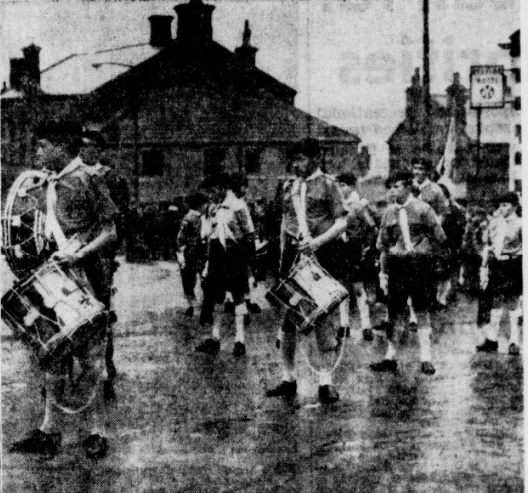
Bell Hall church
 |
 |
 |
 |
 |
 |
 |
 |
Continue to Historic Skircoat Green
or
Return to Home Page
If you have enjoyed your visit to this website, please spread the word by clicking the 'like' and 'share' buttons below. Thank you