North Parade, Halifax: the street where churches stood beside mills
North Parade was once one of Halifax’s most distinctive religious streets. Lying just off Northgate, towards the industrial district around North Bridge, it developed in a neighbourhood where churches, mills, workers’ housing and small businesses stood close together.
Old photographs show a street very different from the one remembered by people who knew the area after the post-war clearances. Its history is particularly revealing because the growth of local industry and the expansion of nonconformist churches happened side by side.
A Baptist congregation moves into town
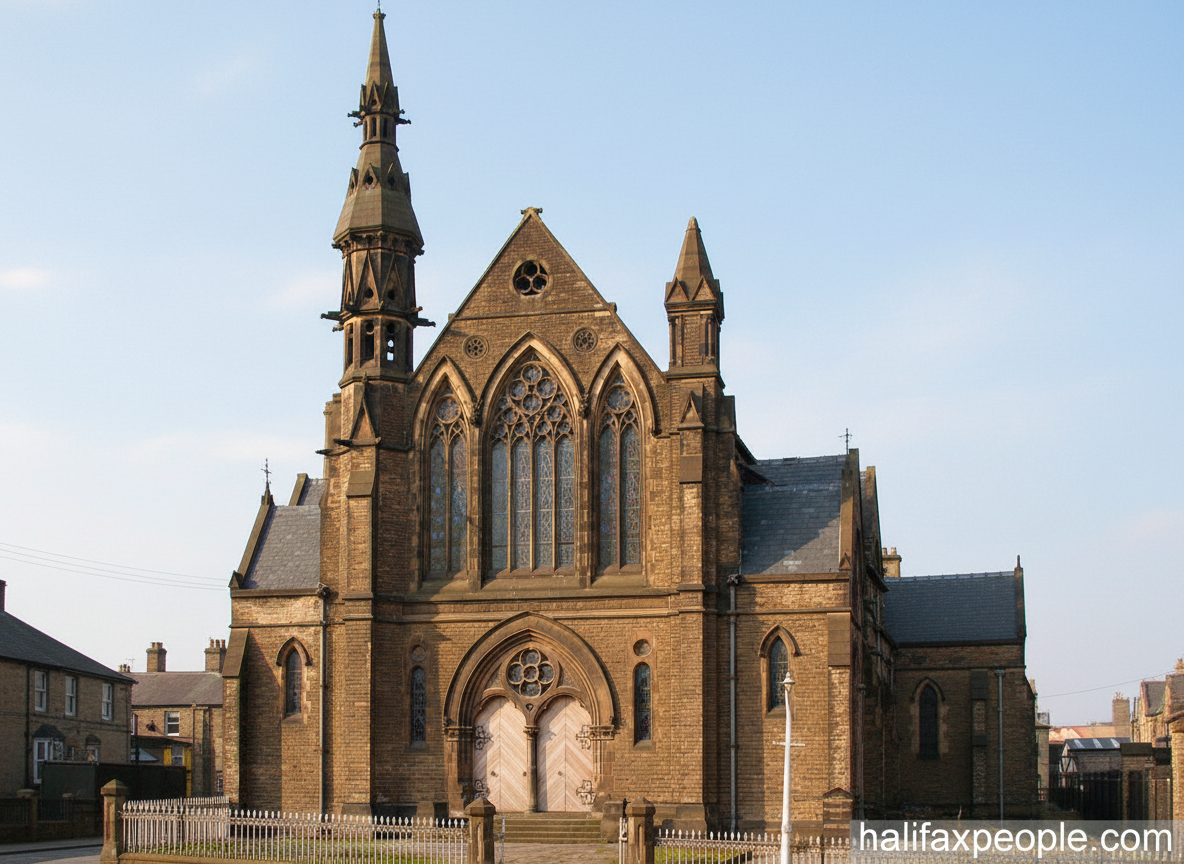
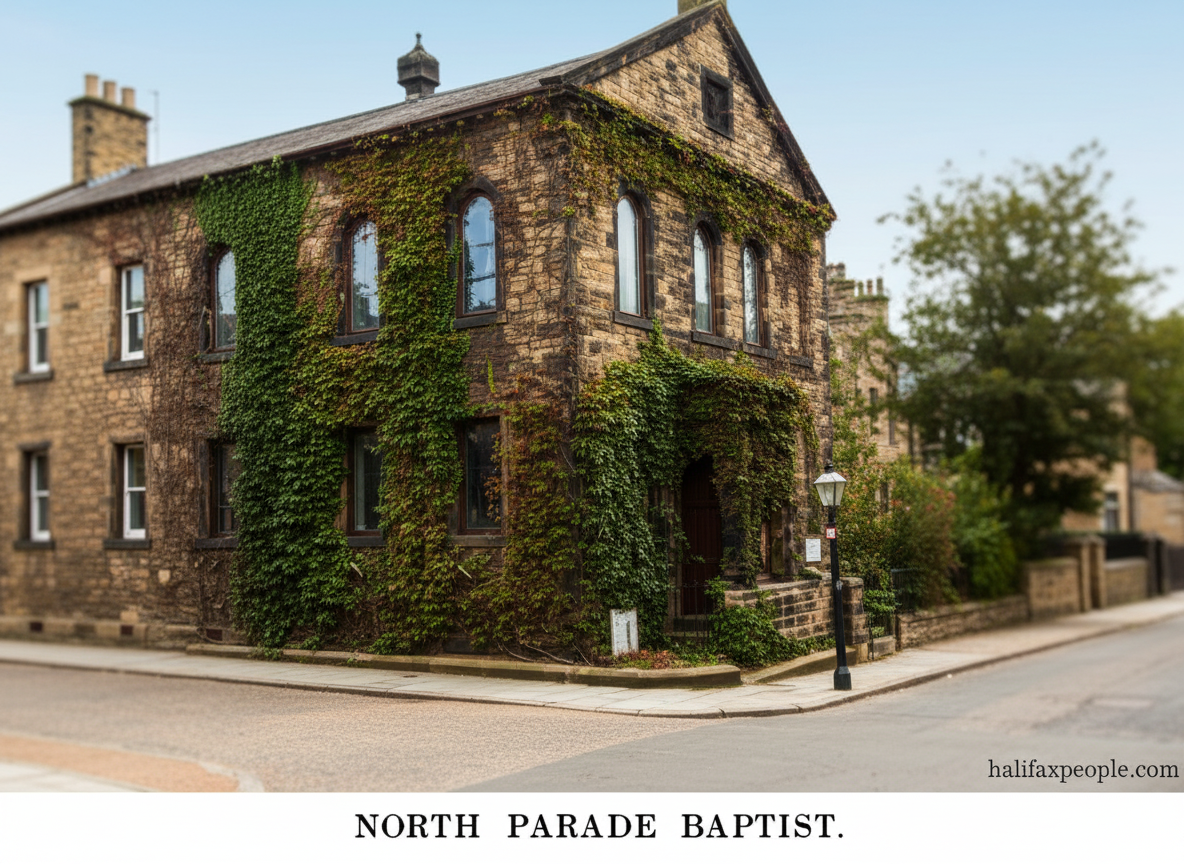
The best-documented landmark was North Parade Baptist Church, which opened on 21 December 1854.
The congregation had a much older history. Services had been held in Halifax from the 1770s, and the church became an independent congregation in 1782. For many years it was associated with a chapel at Haley Hill. By the early 1850s, its members wanted a more convenient location, and the move to North Parade brought the congregation closer to the expanding town.
The church attracted prominent ministers. Among them was the Reverend Charles Clark, who took up the pastorate in 1862 and was described in a later history of Yorkshire Baptists as drawing large crowds. The congregation also supported religious work elsewhere: it took responsibility for the struggling church at Lee Mount in 1858 and helped establish a new congregation at West Vale in 1863.
Salem Chapel: an earlier Methodist landmark
North Parade was also home to Salem Methodist New Connexion Chapel, part of a religious movement that broke away from Wesleyan Methodism in the late 18th century.
The congregation began meeting in Halifax in the 1790s, and Salem became an important centre for the Methodist New Connexion locally. The chapel was rebuilt in 1815. As the congregation grew, its buildings were enlarged again during the 1870s. The Sunday school was also significant: a new school building had its foundation stone laid in September 1857 and officially opened in February 1858.
These were not just places for Sunday worship. Chapels and Sunday schools provided education, community networks and opportunities for local people to take on teaching and organisational roles. Salem’s influence spread beyond North Parade through daughter congregations elsewhere in Halifax.
A street transformed
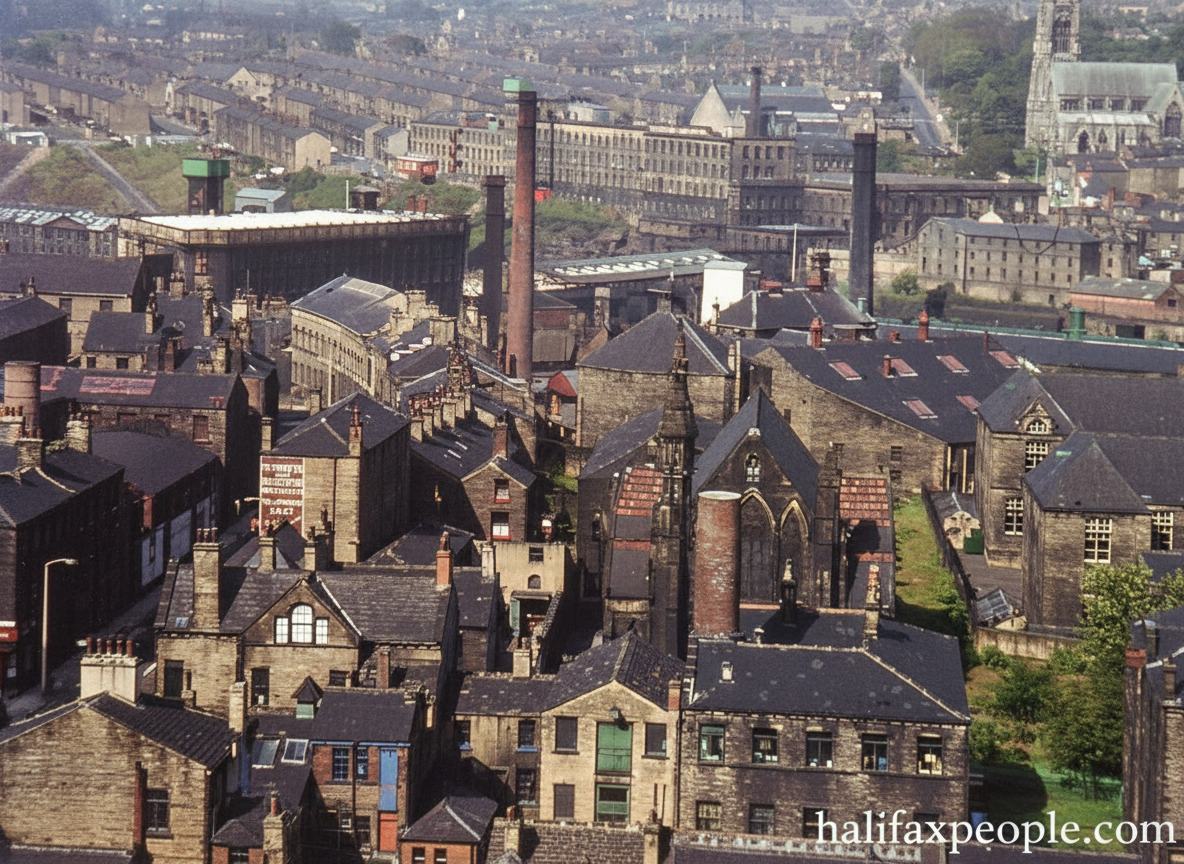
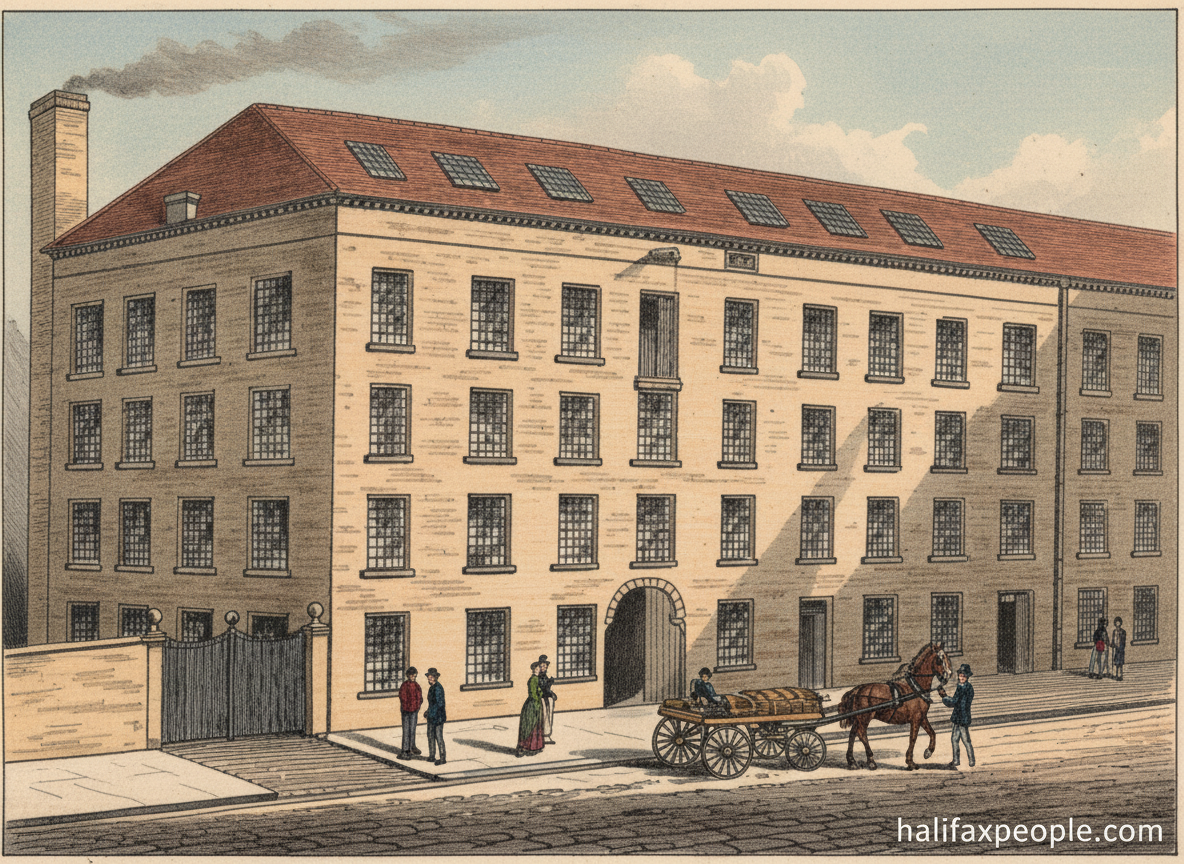
The churches were surrounded by mills and workshops. One old photograph shows Fearnaught Mill on Akroyd Place, behind the shops, with Salem Methodist Chapel visible beyond it. The image captures how tightly religious and industrial life were woven together in this part of Halifax.
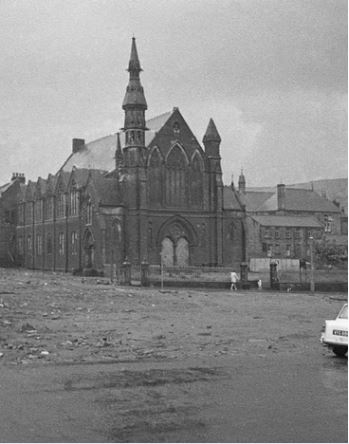
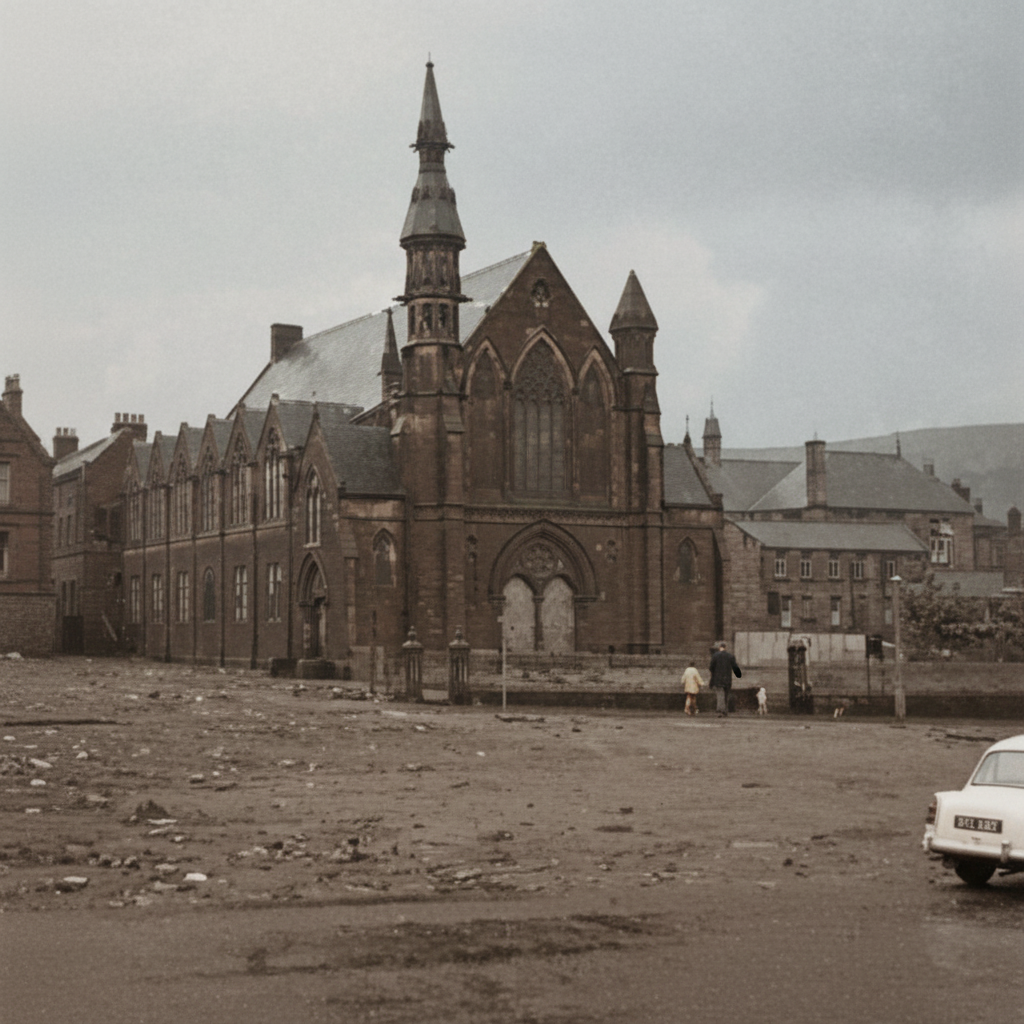
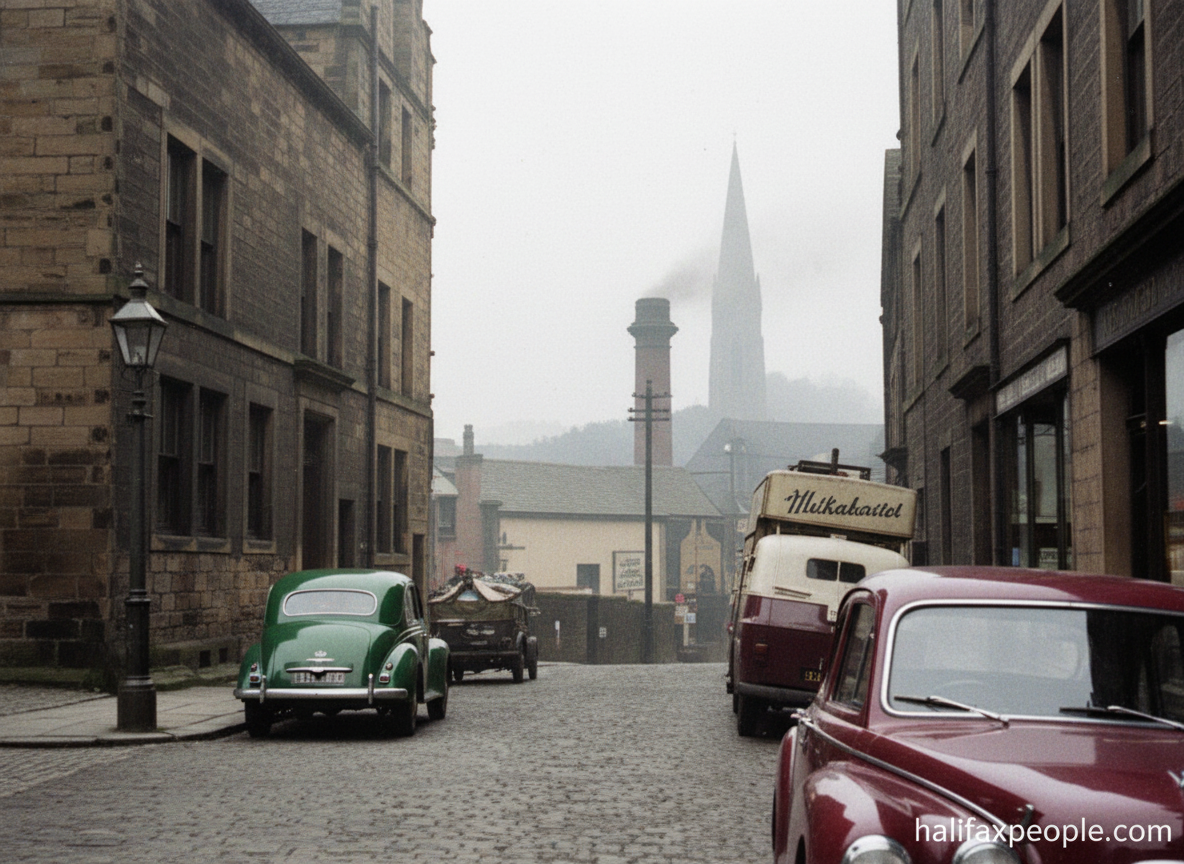
Much of this streetscape disappeared during redevelopment in the 20th century. HalifaxPeople preserves photographs of North Parade before and during demolition, including views of the Baptist church and Salem Methodist buildings. The photographs are especially valuable because they record a neighbourhood that cannot be reconstructed from the surviving street layout alone.
enhanced
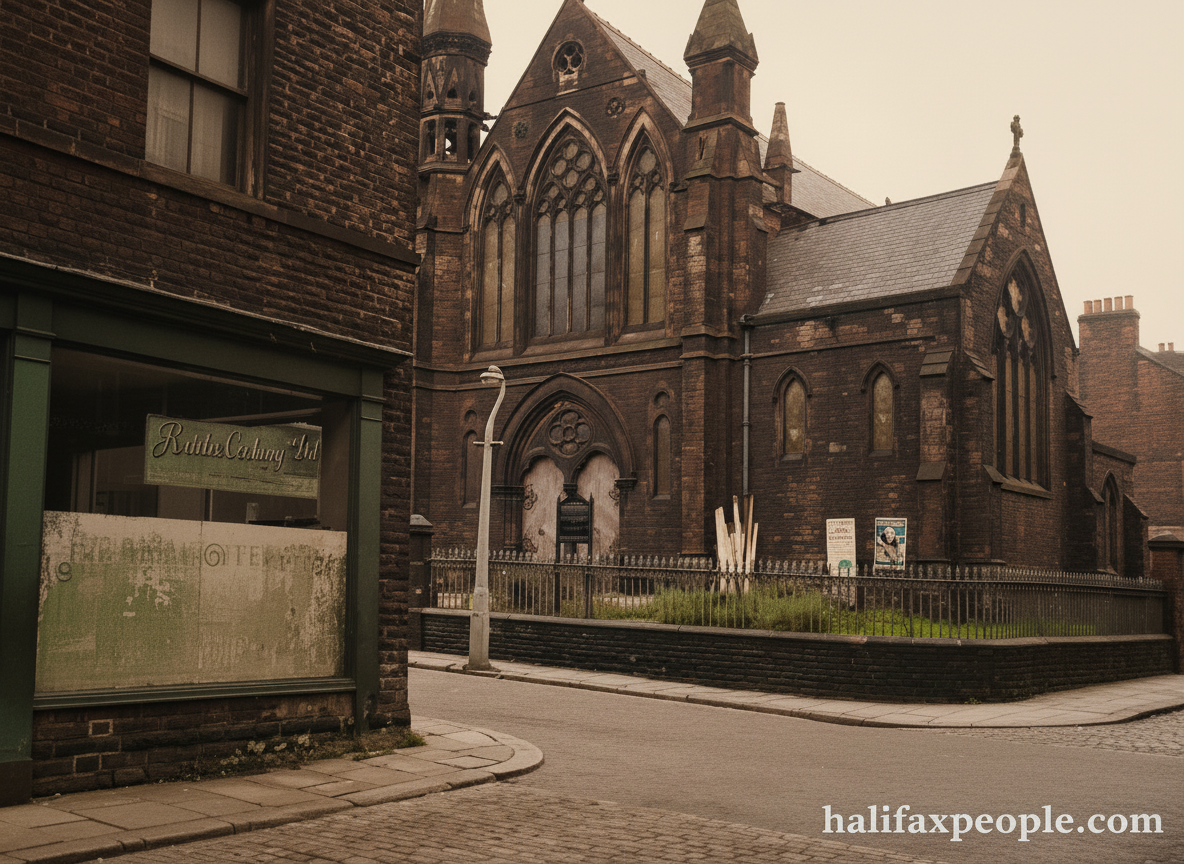
Salem Methodist on North Parade enhanced
enhanced
enhanced
enhanced
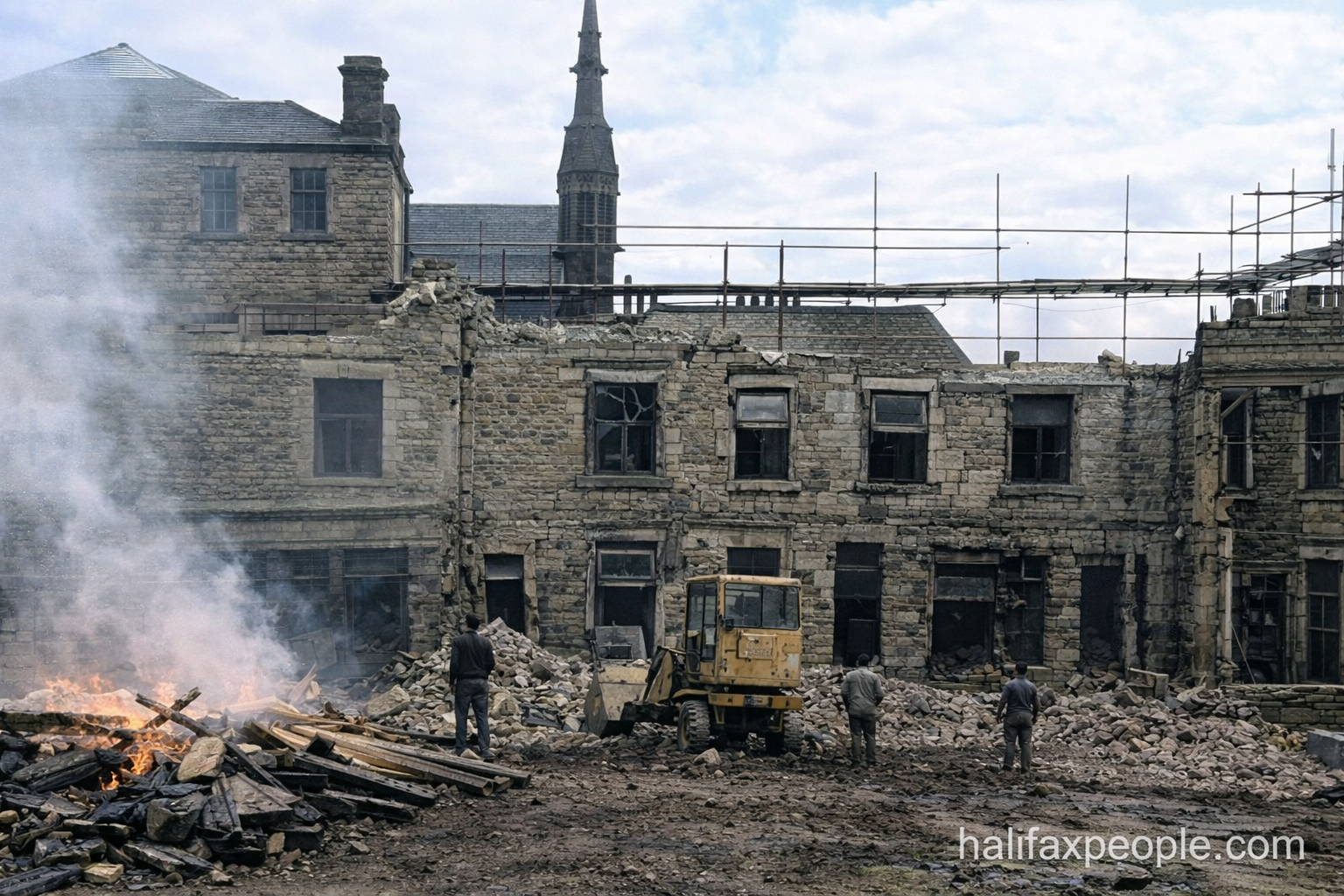
Demolition at Corporation Street and North Parade
This photograph records demolition work taking place at the junction of Corporation Street and North Parade in Halifax.
The buildings shown were being removed as part of a road improvement scheme intended to ease traffic congestion in the area. The clearance was planned to make way for the construction of a roundabout at the junction.
enhanced
The Salvation Army Comes to Halifax | Halifax PeopleHalifax PeopleLocal History Collection
People · Faith · Community
The Salvation Army Comes to Halifax
A new movement arrived in town, bringing open-air
meetings, music, uniforms and a very different kind
of religious mission.
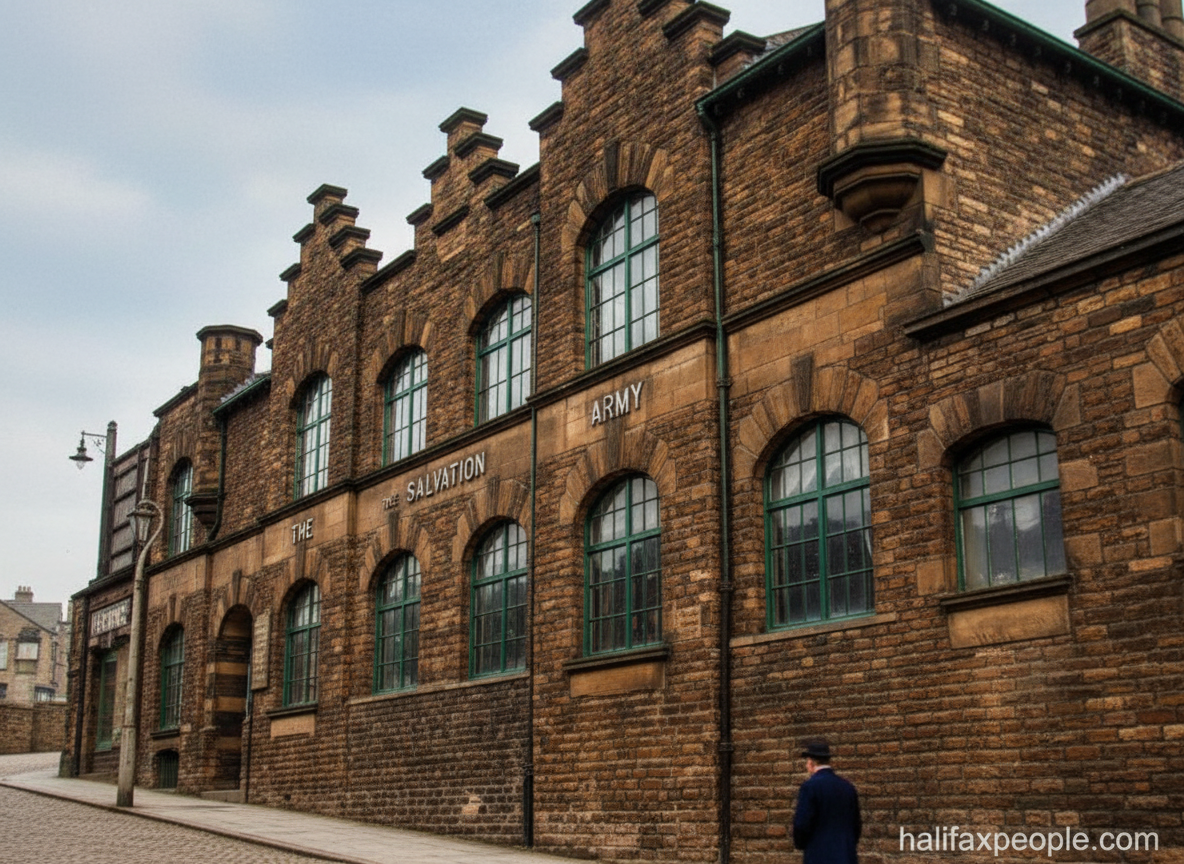
The Salvation Army premises on North Parade,
photographed in 1961. From the Halifax People
North Parade photograph collection.
When the Salvation Army began its work in Halifax
in January 1882, it arrived with a style of religious
mission that was unlike anything many local people
had seen before.
The movement had been founded by William Booth
in London, and its approach was energetic and
highly visible. Meetings were held in the streets
and public halls, accompanied by singing, preaching
and the distinctive uniforms that soon became
recognisable across the country.
Halifax was no quiet introduction. Reports from the
early years describe large crowds attending meetings.
The Army attracted converts from a wide range of
backgrounds, and its activities became a talking
point around the town.
Its first Halifax meetings were held in converted
premises known as the barracks. These former
bonding warehouses were adapted to provide a
substantial meeting place, with contemporary
accounts describing accommodation for several
thousand people.
As the organisation became established, it developed
a network of local halls and centres. By the early
twentieth century it had a presence in several
working-class districts, including Ovenden and
Haley Hill.
The North Parade Citadel became one of its best-known
Halifax buildings. Its memorial stones were laid in
1910 and the new premises opened in 1911. The
Citadel remained part of the town's religious and
community life until the redevelopment of the area
led to its closure and demolition in 1969.
The Salvation Army continued its work in Halifax,
moving to new premises on St James's Road, where
the Bramwell Booth Memorial Halls opened in 1970.
Fearnaught off North Parade, on Akroyd Place, can be seen behind the shops in the photo below with Salem Methodists behind the mill
enhanced
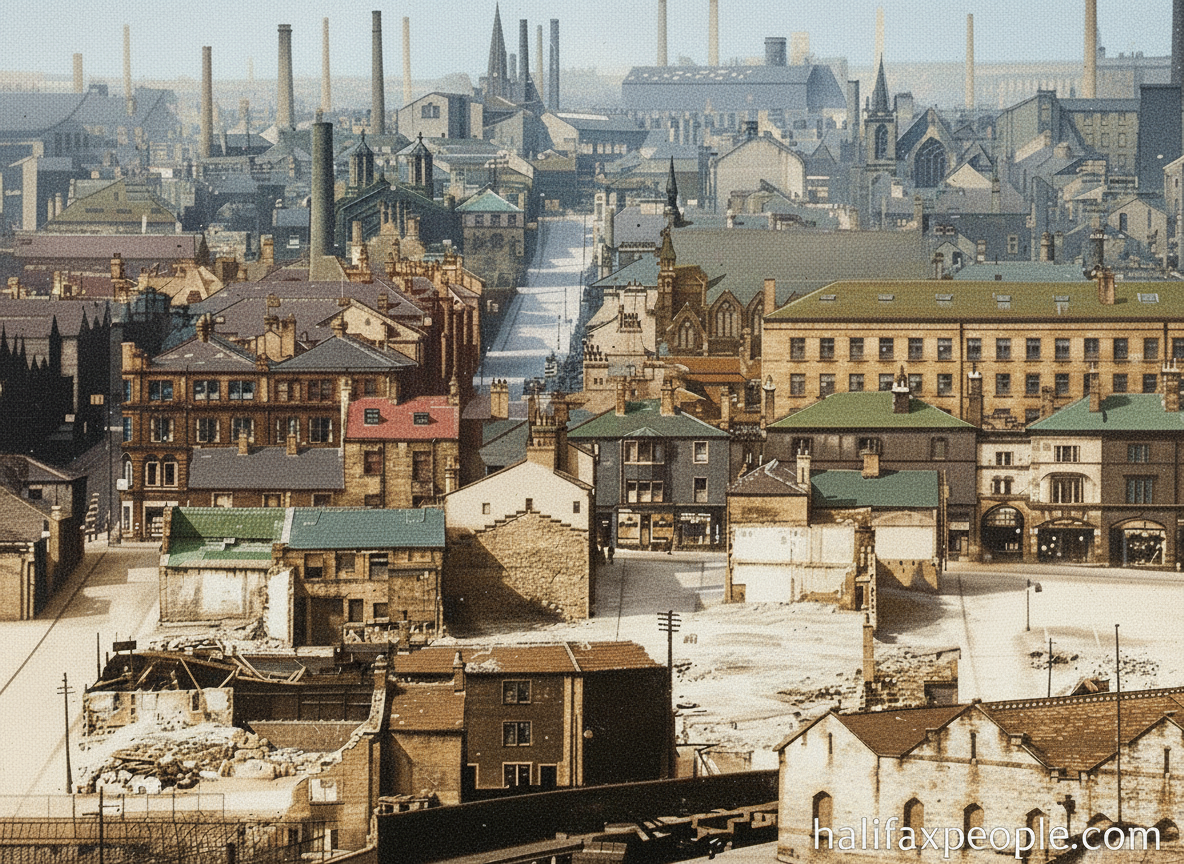
Part of Northgate running from left to right towards North Bridge.
The road running from centre of picture towards the top of picture was North Parade
The road to the bottom left of the picture was Foundry Street. At the top of here once stood 'The Foundry' beerhouse. This was granted a music and dancing license in 1868. It closed in 1905.
The small road running straight up from the bottom-centre of the picture was Grove Street and at the top of here was the Bridge Tavern at 84 Northgate (opened in 1822 and closed in 1940).
The next road along (next to the waste land) was Park Street which curved back round to Foundry Street.
If you have enjoyed your visit to this website, please spread the word by clicking the 'like' and 'share' buttons below. Thank you
Copyright - On this subject which can be a bit of a mine-field I would like to state that I have not knowingly breeched any copyright and if found that I have I will be happy to discuss the issue with the owner hopefully to come to a happy solution and if this is not possible I will immediately remove any offending material.