Pohlmann & Sons
Pohlmann & Sons
Pohlmann & Sons – The Halifax Piano Makers Who Made Their Mark on the World
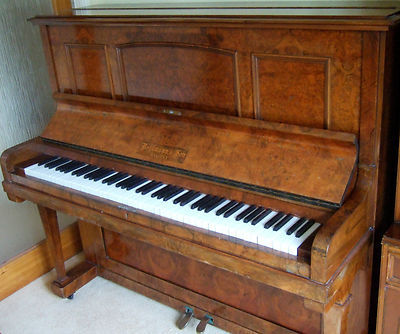
Halifax was famous for its woollen mills, but there was another manufacturing business in the town whose products travelled across the world. For more than a century, the name Pohlmann was associated with fine pianos, technical innovation and a family business that became one of Halifax's most unusual industrial success stories.A family with a musical tradition
The story of Pohlmann's pianos began long before the factory appeared in Halifax.
The Pohlmann family had German origins. Johannes Christoph David Pohlmann is credited with making an early pianoforte in England in 1765. The family's musical instrument-making tradition was continued by later generations.
In 1823, Henry William Pohlmann came to Halifax and established a piano-making business. At a time when piano manufacture was heavily concentrated in London, this was an unusual venture for a Yorkshire town.
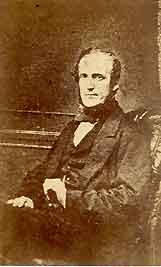
Halifax was already prosperous through its textile trade. Its wealthy merchants and clothiers provided a potential market for expensive musical instruments, and Pohlmann's business found a place among the town's growing range of specialist trades.From Corn Market to Hall Street
The business developed from relatively modest beginnings.
Henry Pohlmann was listed in the 1822 Halifax trade directory as a dealer in music, musical instruments and fancy stationery at Corn Market.
By 1823 the piano-making enterprise was established. Its early workshops were in Hall Street, while the first retail premises were on Commercial Street.
By 1830 the business had moved to Waterhouse Street. Later, impressive showrooms and warehouse premises opened on Princess Street, opposite the White Swan Hotel.
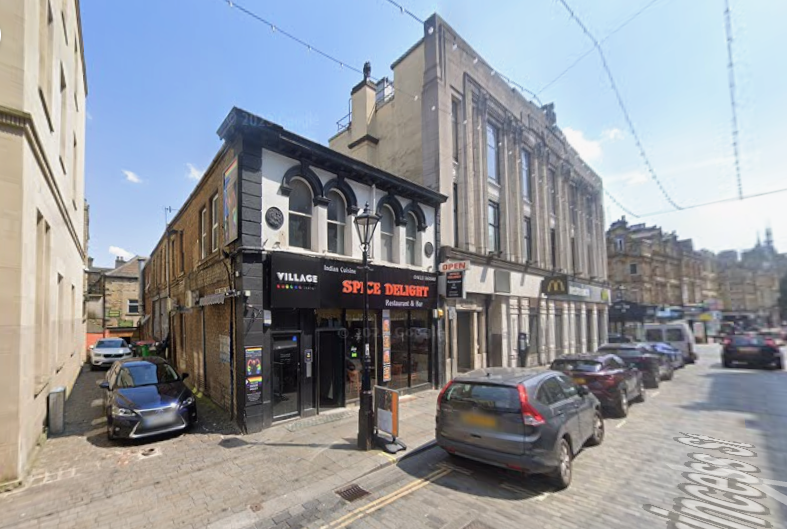
Princess Street where Polmann's showroom stood
The company also developed its manufacturing facilities at 14 Hall Street, where it had a piano manufactory, workshops, warehouse and steam works.
This was no longer simply a music shop selling instruments made elsewhere. Pohlmann was establishing a substantial manufacturing operation in the heart of Halifax.A family partnership
The business passed through different family arrangements.
Henry William Pohlmann worked with his brother Edward. A notice published in the Halifax Guardian on 27 January 1858 announced the dissolution of their partnership as pianoforte manufacturers and dealers.
The business subsequently traded under the Pohlmann & Son name.
The family continued to build its reputation, combining retailing, manufacturing and technical development.Innovation in piano making
Pohlmann's reputation was not based solely on attractive furniture and fine craftsmanship.
The firm became associated with important developments in piano construction. It introduced full iron frames into English piano manufacture around 1870 and was among the early makers to use the overstrung bass arrangement in upright pianos.
These developments mattered because piano makers were trying to produce instruments that were stronger, more stable and capable of delivering a fuller sound.
Pohlmann's technical work helped establish Halifax as a place where sophisticated musical instruments could be manufactured, rather than simply sold.
The firm also registered patents for improvements to pianofortes, including developments intended to combine strength and lightness with improved continuity of tone.
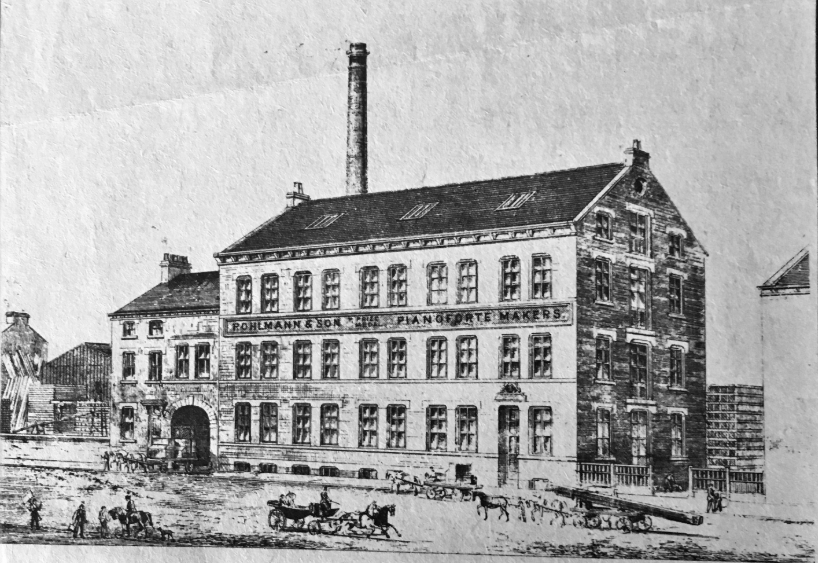
Pohlmann & Son, Hall Street
Pianos for distant markets
Pohlmann instruments were not confined to Yorkshire.
The firm's products were exported overseas, with markets reported in South America, New Zealand and Australia.
Its reputation extended beyond the local area, and the business became one of the most significant piano manufacturers outside London.
The instruments were expensive purchases. One advertised rosewood Piano d'Artiste was priced at seventy guineas, with hire-purchase terms available at two guineas per month.
Each instrument was advertised with a ten-year guarantee – a considerable commitment to customers buying a costly piece of household furniture and musical equipment.The end of piano manufacture
The twentieth century brought new challenges.
The First World War disrupted established markets and changed the economic circumstances of British manufacturing. The firm's fortunes declined, and the arrival of radio and later television transformed home entertainment.
Pohlmann's piano production finally ceased in 1931.
The company did not disappear immediately. It changed direction and began selling electrical equipment, adapting to the changing tastes and technology of the twentieth century.
The Pohlmann business name remained associated with Halifax into the late 1970s, but the days of piano manufacture were over.A Pohlmann piano at Shibden Hall
One particularly interesting reminder of this forgotten Halifax industry survives at Shibden Hall.
A piano associated with the earlier Pohlmann family can be seen in the Savile Room. It provides a tangible connection with the family tradition that helped bring piano making to Halifax.
It is easy to pass through the town today without realising that its streets once housed workshops producing instruments that travelled to customers thousands of miles away.
The story of Pohlmann & Sons is a reminder that Halifax was much more than a textile town. Its manufacturers made specialist products, developed new techniques and built businesses that reached international markets.
For over a century, the name Pohlmann was part of that story.
If you have enjoyed your visit to this website, please spread the word by clicking the 'like' and 'share' buttons below. Thank you