Princess Street, Halifax


Princess Street is part of the Halifax town centre we recognise today, but it owes much of its character to a major wave of Victorian redevelopment during the 1850s and 1860s. As Halifax grew wealthier through textiles and manufacturing, civic leaders and local businessmen wanted a town centre that looked more prosperous and modern. Princess Street and neighbouring Crossley Street were developed as part of that transformation.
A bank built to make a statement
The street’s standout building is Princess Buildings, at No. 18. It was designed by the Bradford architectural firm Lockwood and Mawson and built in 1858 as the headquarters of the Halifax Joint Stock Banking Company. Its classical sandstone frontage, grand columns, decorative window surrounds and elaborate upper cornice were designed to project confidence and financial strength.
The bank expanded in 1887, extending south along Princess Street and almost doubling the size of its premises. By the end of the nineteenth century, it had 29 branches across the West Riding. Following later mergers, the business became part of Lloyds. Halifax Borough Council bought the building in 1939 for £9,500, and it subsequently served as council offices.
The White Swan and Halifax’s musical side
At the other end of the street stands the White Swan Hotel, another important part of the Victorian streetscape. The hotel and Princess Buildings are both included in a Grade II-listed group of historic town-centre buildings.
Princess Street was also home to the showroom of Pohlmann, the piano-making firm. Founded in Halifax by Henry William Pohlmann after his arrival in 1823, the business became known for exporting pianos around the world. Its showroom later opened on Princess Street opposite the White Swan, connecting this commercial street with Halifax’s manufacturing and musical history. The firm stopped making pianos in 1931 and disappeared from the town by the late 1970s.
A street shaped by ambition
Princess Street’s story is not simply about a name or a single building. It reflects a period when Halifax invested in grand banks, hotels, shops and civic architecture to match its industrial success. Today, the surviving Victorian façades preserve part of that ambition in the middle of the modern town centre.


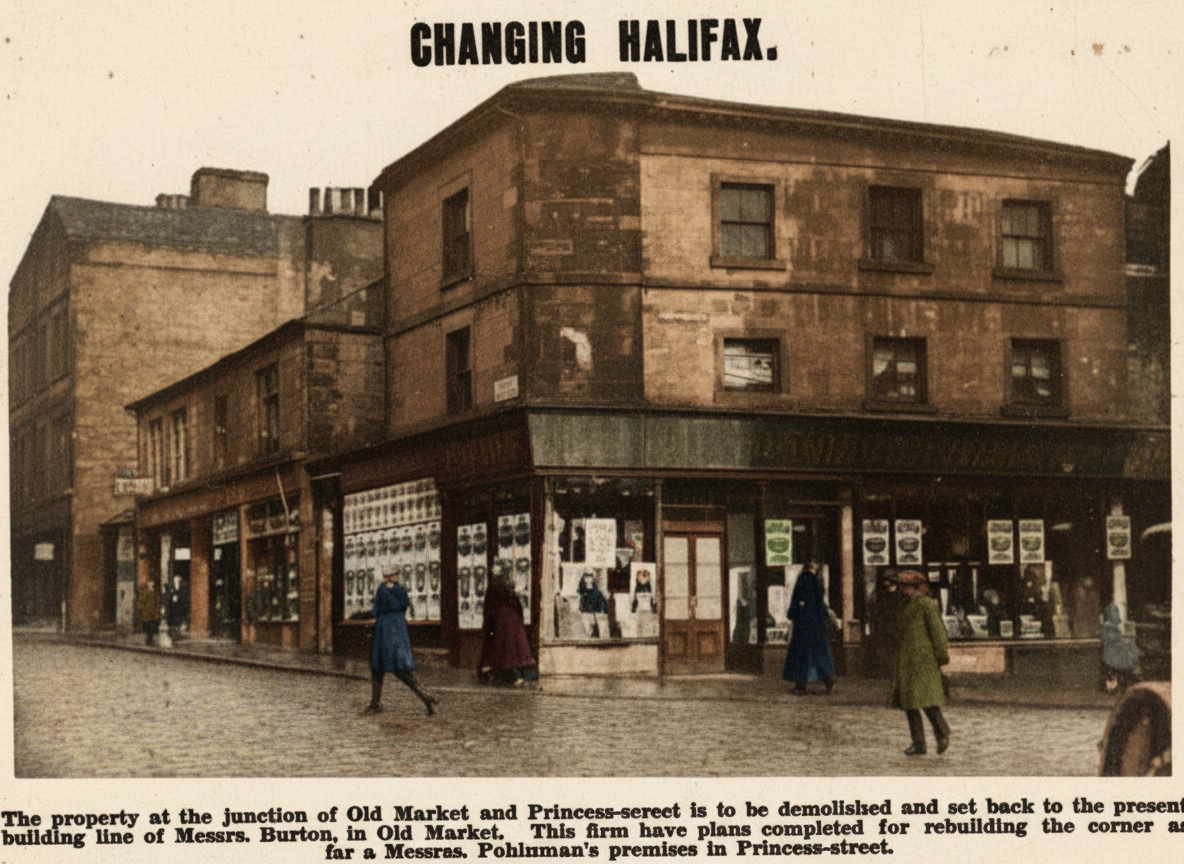
digitally generated from a black and white print


Liptons - on the corner of Cornmarket and Crown Street


enhanced


Halifax Permanent looking up Crossley Street

If you have enjoyed your visit to this website, please spread the word by clicking the 'like' and 'share' buttons below. Thank you