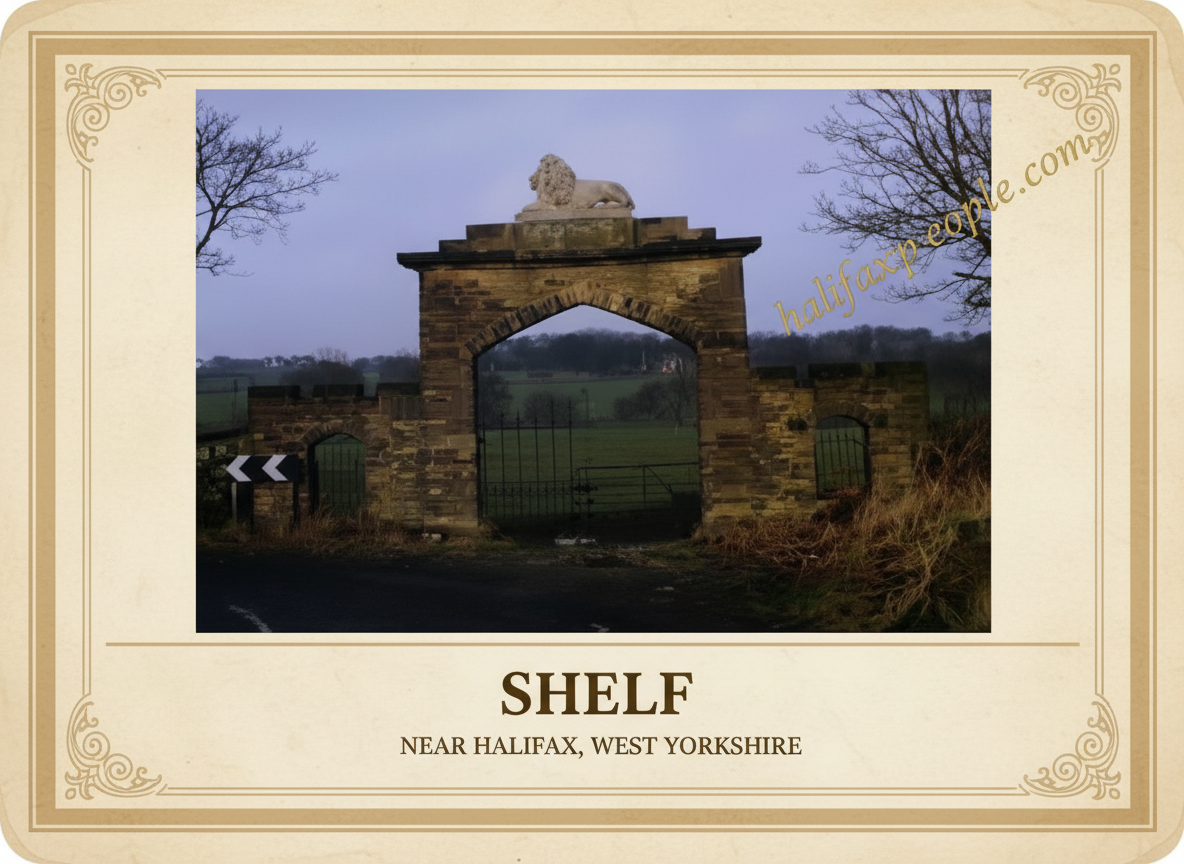
Shelf

WundaNumba 777-545 - What's behind your WundaNumba.com
Shelf, Halifax — Ancient Farmsteads, Lost Ironworks and the Stone Chair
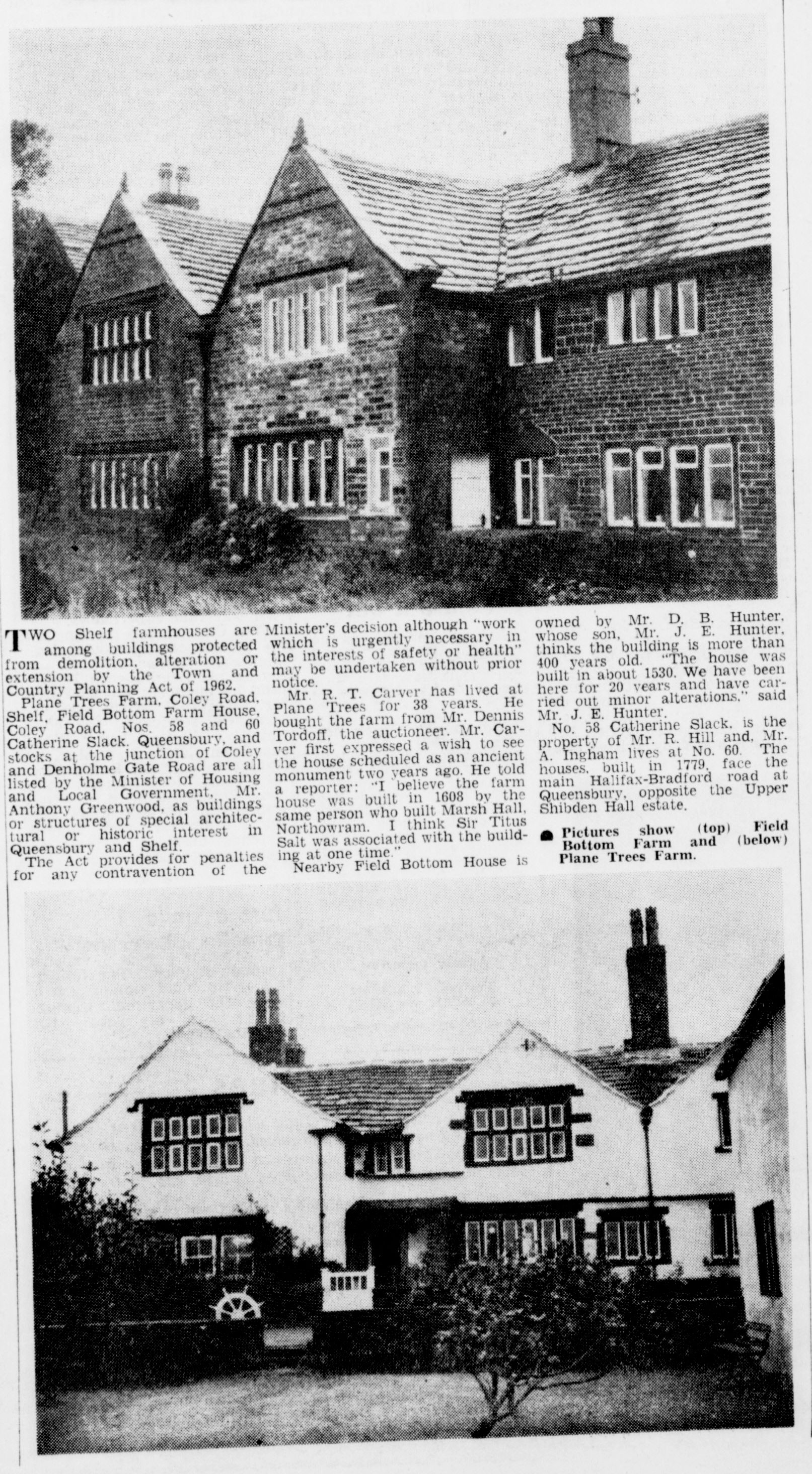
Shelf is a historic village between Halifax and Bradford, with roots stretching back to the Domesday Book of 1086, when the settlement was recorded as Scelf. Its name is thought to come from an Old English word describing a broad, level shelf of land surrounded by hills. For centuries, Shelf developed as a scattered landscape of farms, cottages and old halls, before gradually growing into a more established village. One of its historic buildings, Shelf Old Hall, stood on the site of an earlier timber-framed house and was rebuilt in stone in 1629. The hall was demolished in 1958, but the site remains part of the village’s story.
During the Industrial Revolution, Shelf became home to mills, coal pits, stone workings and a substantial ironworks. Established in the 1790s by iron founders Aydon, Elwell and Crawshaw, Shelf Iron Works expanded to include furnaces, workshops and other industrial buildings. The works supplied iron for projects including bridges and railway infrastructure, before eventually closing around 1849. Although most of the complex disappeared, local street names such as Aydon Way and Elwell Close preserve the memory of the industry that once dominated this part of the village.
Shelf’s heritage can also be seen in its historic churches and roadside landmarks. St Michael and All Angels Church was built in the mid-nineteenth century, with its foundation stone laid in 1849 and the church consecrated in 1850. The village is also associated with the Stone Chair milestone, originally erected in 1737, which helped give the local area its name. By the nineteenth century, Shelf had developed into a small industrial community with chapels, public houses, workers’ cottages and local government of its own. Today, its surviving historic buildings and traces of lost industries tell the story of a village shaped by farming, ironmaking and its position between Halifax and Bradford.
 Historic Shelf Tour |


Joseph Hobson Jagger of Shelf near Halifax in Yorkshire, was one of the men who "broke the bank at Monte Carlo".
This brass engraved plaque was on a broken presentation box that I was asked to repair for an elderly lady a few years ago (it contained a very large key). Unfortunately the photo is very unclear, but the inscription reads:
"Presented to J H Jagger Esq., by his friends and admirers on the occasion of his great and unprecedented success on the ROULETTE which he achieved over the BANK at MONTE-CARLO extending over a period of FOUR YEARS having thus accomplished what the whole world had failed to do for more than a century. MONTE CARLO 1st May 1884".
There's a lot of information on the web about Mr Jagger, but the stories on the web don't quite seem to match the detail in the inscription.
For example, the plaque mentions a period of four years, but the internet stories usually say he did it in eight days.
Also, although he's described in the internet stories as being "a poor millworker" who had started work as a child and worked with machines as a mechanic, in April 1860 he was one of several prisoners brought before a judge at the County Court of Lancaster as an Insolvent Debtor "to be dealt with according to Law".
He was then described as "a Book Keeper, then of Girlington-road, Manningham, near Bradford aforesaid, part of the time carrying on business in co-partnership with Charles Aykroyd, at Lady Royd Size Works, Manningham aforesaid, under the style or firm of Charles Aykroyd and Company, as Warp Sizers, also part of the time in co-partnership with Alexander Roberton, at Pitt-lane, Bradford aforesaid, as Stuff Finishers, under the firm of Alexander Roberton and Company, then carrying on business on his own account as Warp Sizer, at Lady Royd Size Works aforesaid, and late of Market-street, Manchester, in the county of Lancaster".
It would be interesting to know the true story.
 |
 |

If you have enjoyed your visit to this website, please spread the word by clicking the 'like' and 'share' buttons below. Thank you