Shibden Industrial School Halifax
History, Trades, and Canon Worthy
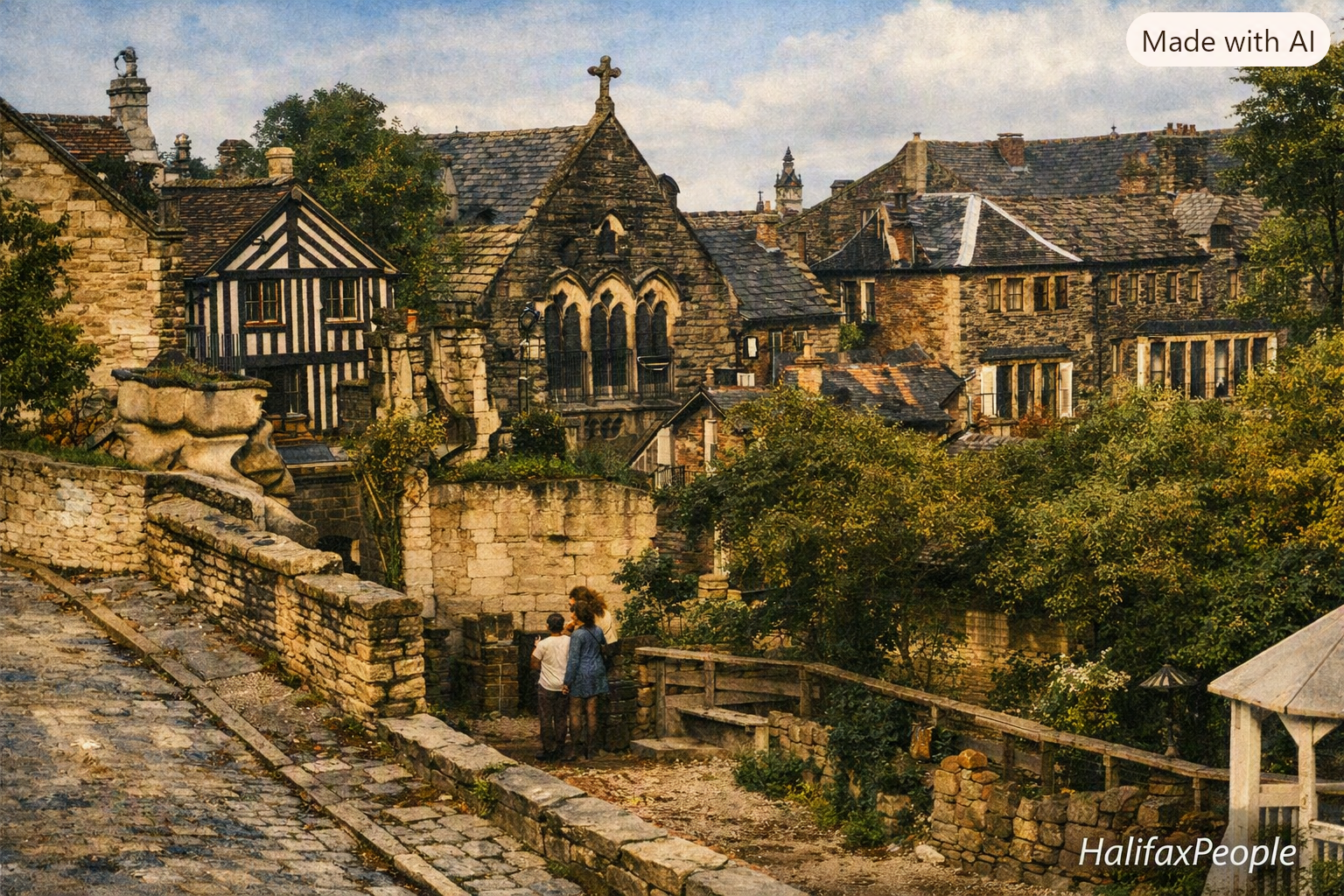
enhanced
Industrial schools were created for one hard, practical purpose: to stop crime by intervening early, while children were still young enough to change course. In their earliest form they could be harsh and openly punitive, but by the time Shibden Industrial School was established the idea had shifted. The “modern” industrial school was presented as a rescue institution — not simply for children already in trouble, but also for those judged “potential criminals” if no one stepped in.
That was the thinking behind Shibden Industrial School, one of ten such schools spread across Yorkshire (with two each in York, Leeds and Hull). Founded in 1877 and dedicated to the Good Shepherd, it was described as the only institution of its kind in Halifax and district, and the first Catholic industrial school for boys in the Diocese of Leeds.
How it began: an idea, a site, and a local benefactor
The school owed its beginning to Mr Lister of Shibden Hall, who turned an idea — suggested by Father Geary, then priest at St Mary’s — into a real institution. Lister gave the block of farm buildings and the land where the school stood, providing the site that made the project possible. The article makes a point of saying how satisfying it must have been for Lister to see the school producing results and fulfilling the purpose he had in mind at its birth.
The buildings themselves carried older layers of history. In 1857, Lister’s father had started a national school in part of the farm buildings. It ran for eighteen years and educated many local people. An Anglican Sunday school met there too, and Sunday evening services were conducted by Rev. Thos. Snow, who was chaplain at the Workhouse.
Even the ground beneath the school had an earlier industrial story: the present schoolyard had once been the site of the old Shibden Hall Colliery, and the old shaft was said to still be visible. At the height of mining activity, colliers’ cottages stood nearby.
A much older building inside the school: “Dove House”
One of the most striking details is that what became the school dining hall was part of an ancient residence known as Dove House. The Lister family held deeds said to prove its history went back to 1408. The old house was described as a smaller cousin of Shibden Hall: a central “house‑body” with a hall-like main room, a screen or party wall, and a through passage connecting north and south entrances.
Inside the dining hall, the school retained a portion of oak panelling and wainscot from the fifteenth century. Time had worn it, but enough remained to show painted designs — roses, fleur‑de‑lys, and bramble blossom — set within decorative panels, with a red border running along the timbers.
From farm buildings to a working institution
Shibden was adapted from a collection of farm buildings, and the first year’s outlay for buildings and “sundries” was recorded as £365. Additions were made as the school grew. The old barn was converted into a dormitory, and by 1882 the premises were enlarged again — justified, the article says, when the certified number of inmates increased.
On 1 November 1877, Shibden Industrial School was certified for 60 children. Early on it struggled, partly because there were not many boys within its walls and because public grants were small. The average grant received varied from 4 shillings to 5 shillings and 6 pence, depending on the section of the Act under which boys were committed.
Up to 1882 the school was run by a military man, Sergeant‑Major Gosling, who guided it through a trying early period. He was succeeded by Father Downes of Bradford, but only for about six months. After that, Rev. Canon Worthy took over — and under his superintendence the institution was said to have progressed and prospered.
By 18 April 1880, the school was certified for 150 boys, more than double the earlier number.
What the school tried to do: character first, trade alongside it
The stated aim of the training was ambitious: to develop mind and body, instil a love of work, encourage independence, and form boys who were brave, self‑reliant, and self‑respecting. In the education of boys in industrial schools, the teaching of trades was meant to go hand‑in‑hand with schoolroom learning. The expectation was simple: half the working day at a trade, half in class.
But the article insists that trade training was not the main point. The principal aim was the formation of character, and it argues that the schoolroom, workshop, and playground mattered equally. It even praises the officer who took as keen an interest in boys at play as in boys at lessons or work.
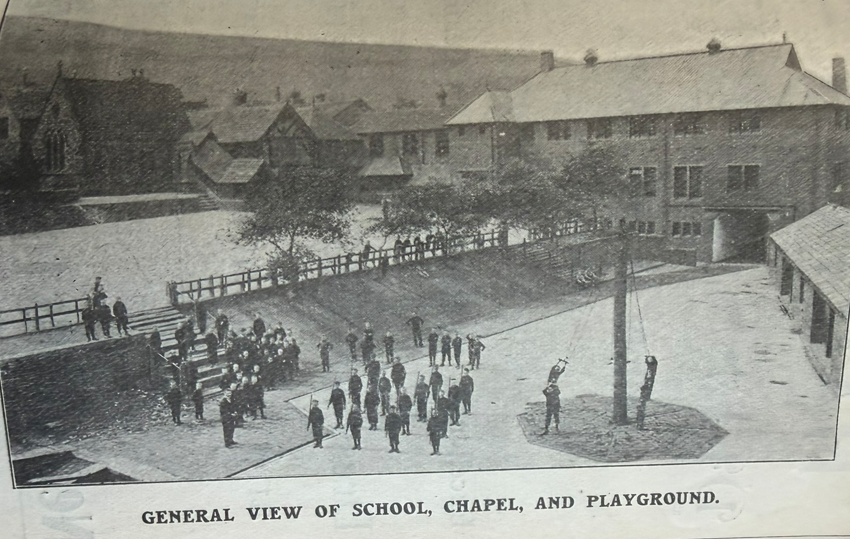
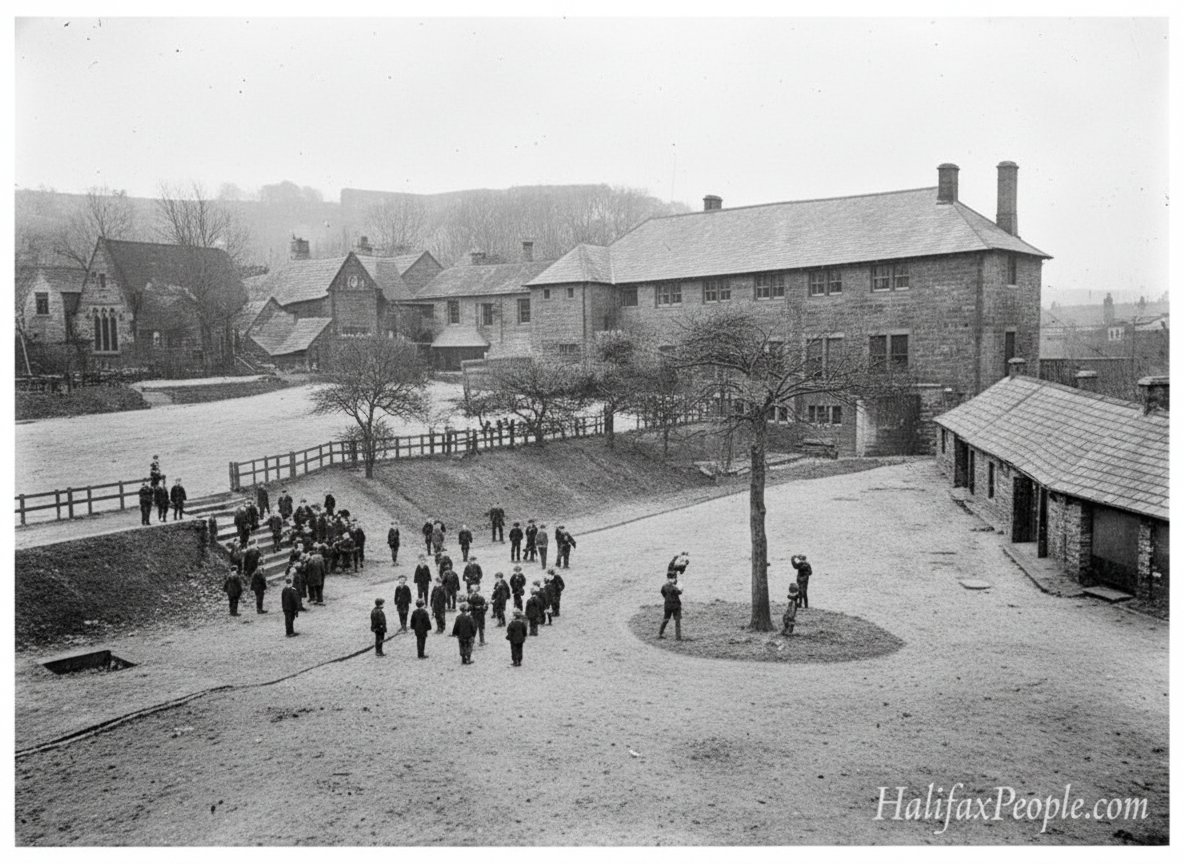
To a visitor, the place could be deceptive. The buildings formed a rough quadrangle and were described as a somewhat mixed collection, the result of many extensions over time. Workshops and rooms were arranged “by accident and not design,” so that a newcomer might underestimate the scale of the institution—until opening one of the many small doors and finding “scenes of industry and activity” behind them.
Inside the workshops: noise, skill, and steady output
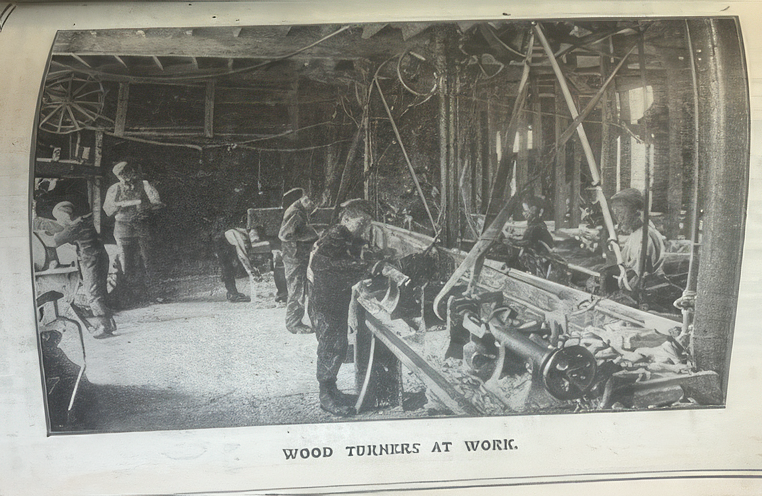
The article walks the reader through the working departments. In the wood‑turners’ shop the “hum of industry” is immediate: lathes whir, chips fly, and the scene is full of motion. A dozen or more boys are at machines, doing work of different difficulty depending on skill. The tone is approving: the boys are described as intelligent, cheerful, and willing, with skilled journeymen present to instruct and supervise.
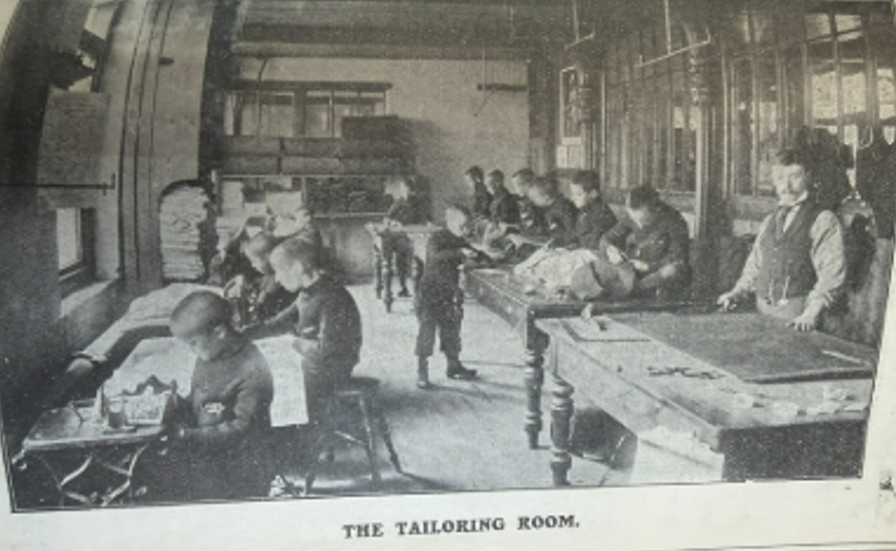
The same is said to apply across departments. In the tailoring room, about fourteen boys worked under Mr William Lawlor, making outfits for the school and also for boys going to Canada. The article notes, almost affectionately, the sight of youthful tailors copying adult habits as they sew, cross‑legged on tables.
It even mentions the cloth: tweed made at Foxford, County Mayo, a factory established to stem emigration from that district. The machines were described as up‑to‑date, and output was steady.
In the carpenters’ shop, boys produced household joinery—steps, rubbing‑boards, clothes‑horses and more—work said to be good enough to stand beside adult labour on the market. Printing was another outlet, with book‑work and general jobbing done.
There was also a boot department producing footwear for the boys, run on “efficient and business-like lines.” At one time there had been an outside market for the bakery’s output, but later it was worked only for home consumption. Butter was made on the adjoining farm. Overall, the institution was presented as largely self‑sustaining, supported by a commissariat department.
Recreation was not ignored: the boys’ life included provision for a gymnasium and a swimming bath, and the value of physical training was emphasised.
Who came to Shibden — and where they went afterwards
The pages also reveal a more uncomfortable truth: by the early 1900s, authorities were said to be more cautious about committing children to industrial schools, sending only the most urgent cases. The result at Shibden, the article claims, was that many of the boys received were physically and mentally “inferior,” and in some cases quite unfit for training.
A quoted annual report from 1909 complains that the “finer material” that might once have come to the school was now being directed into Senior Home Office Schools or Reformatories, and that authorities often delayed action until a boy had passed the age of fourteen—when he might previously have been sent to an industrial school.
The same year, the article notes, 33 boys were admitted, and 7 could neither read nor write. The ages included one under 8, four between 8 and 10, one between 10 and 12, and one nearly 14 — figures used to argue for the need for patient, painstaking teaching staff.
When boys completed their term (often three to four years), they were placed out with business firms in the district, or emigrated to Canada, where they were placed with “good, pushing, industrious farmers” who treated them as family. Boys were first received at St George’s Home, Hintonburg, Ottawa, described as a distributing centre. Others went to St Vincent’s Working Boys’ Home in Leeds, where they continued their trades.
The article even gives a vivid sense of the school’s global footprint. Former Shibden lads were said to be scattered across the world: one a first‑class petty officer and leading signalman in the Navy stationed at Shanghai; another a bombardier in the 19th Battery of the R.F.A. at Cawnpore, India; another studying to be a doctor in America; another a successful blacksmith in Ontario who had bought his master’s business; others even becoming professional footballers.
Canon Worthy: the man at the centre of the story
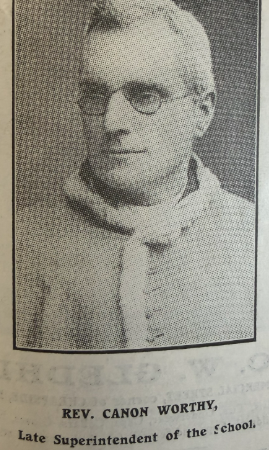
Across the pages, one figure steadily becomes the centre of gravity: Rev. Canon Worthy. He is described as having devoted a life’s work to child rescue, giving 27 years of time and energy to the school. The writing is clear about the cost: the work demanded sacrifice day and night, taxing mind and body, and requiring patience and judgement to know which faults in a boy could be tolerated and which needed to be eradicated.
He was not alone. The school’s management was said to have been influenced by Mrs Worthy, his aunt, and supported by a reliable right‑hand man, Mr Doherty, described as a valuable and efficient officer.
Evidence of the school’s success, the article claims, appeared year after year in government reports and in reports of former boys. Canon Worthy was said to receive letters from all points of the compass — simple, touching notes of gratitude from men who still remembered the care and attention they received in earlier days.
In January 1906, when Worthy was made Canon of Leeds Cathedral, friends and admirers presented him with a tribute: an illuminated address (the work of the nuns at Horley Green), a purse of gold, and a photograph of Father Worthy alongside a group of former Shibden boys. The pages reproduce the message’s tone: it argues that the work of regenerating “socially submerged” children receives little public applause, yet demands rare qualities and constant self-sacrifice.
What these pages really show
Read straight through, the story of Shibden Industrial School is not just about a building or a system. It’s about a Victorian and Edwardian belief that character could be rebuilt through structure: routine, discipline, education, work, and supervision — and that a boy’s direction in life could be changed if intervention came early enough.
It also shows the contradictions of the era. The language about “inferior” boys and “potential criminals” is blunt and uncomfortable now. Yet the practical detail — the trades taught, the emphasis on hygiene, the attempt at recreation, the careful tracking of outcomes — reveals an institution that saw itself as reforming rather than punishing.
And behind it all is the local reality: a school built out of farm buildings on land given by the Listers, standing on ground once worked by miners, with a dining hall that carried timberwork from the fifteenth century. Shibden’s story is Halifax history in layers — charity, industry, education, religion, and social control — all written into one place.
School of discipline for child delinquents
Half a century ago, Shibden Industrial School at Shibden Hall Road, Halifax, closed its doors to 150 boys. It had opened in 1877 as a so-called “house of correction” for young offenders and parentless children, with truants from elementary schools also sent there.
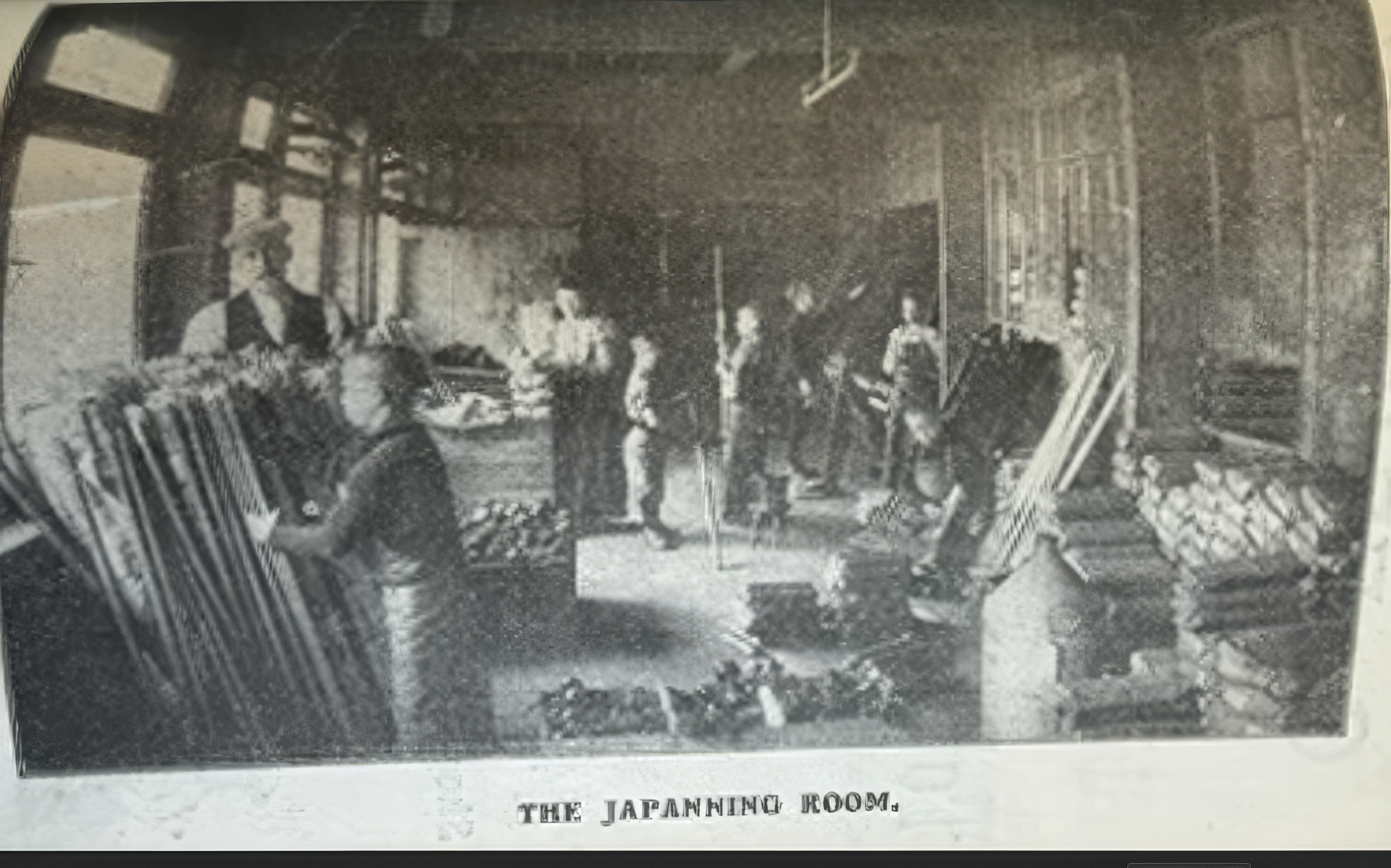
The aim, in the language of the day, was to make the boys “respectable members of society” through strict routine and hard work. Mornings were given to lessons, followed by training in trades such as shoemaking, tailoring, woodturning, carpentry, printing, farming, gardening, baking and painting.
The school’s grounds stretched across more than five acres along Halifax Old Road. When it opened, it was the only industrial school in the Roman Catholic Diocese of Leeds. Many Halifax boys attended, as did boys from Bradford and Leeds, and the school also drew pupils from the surrounding districts.
Over time, the buildings expanded and the institution became a familiar presence in the area. Former pupils recalled discipline as firm and the days as tightly ordered. One former resident, Mr Bill O’Connell of Welburn Avenue, Hipperholme, remembered that the school was largely self-sufficient, with its own bakery and gardens supplying food.
He said the boys were generally well disciplined and that serious trouble was rare. Yet the regime could be harsh: he recalled that boys were birched if they tried to run away. Despite this, he spoke of ordinary moments too — games in the alleys, a gymnasium and a swimming bath, and the small Anglican chapel built in 1870.
The chapel, he remembered, was designed by Mr John Lister in memory of his father, and included a stained-glass window that was paid for by the students and staff as a tribute to the Listers. Mr O’Connell said he had been a pupil at St Joseph’s School near Godley Bridge and that the industrial school was a different world, shaped by work and rules.
The school’s last use came in 1948, when the Polish Resettlement Corps left. By then, the institution’s story was already fading into memory. The family who owned the site decided to demolish the school after consulting Brighouse Civic Trust and other local preservation societies, who raised no objection.
Outline planning permission has since been granted for homes on the site, which is now almost cleared — leaving only photographs, recollections, and the uneasy question of what “discipline” meant for boys who had little choice in the matter.
If you have enjoyed your visit to this website, please spread the word by clicking the 'like' and 'share' buttons below. Thank you