Silver Street
Silver Street, Halifax: Inns, Trams and a Furniture Empire
Silver Street was once one of the busy commercial streets of old Halifax, lined with inns, shops, banks and businesses serving the town’s growing population. Nineteenth-century pictures show a street quite different from the one people know today.
A street of trades and taverns
An 1822 trade directory gives a glimpse of the people working on Silver Street. Among those recorded were Sarah Atkinson, a confectioner and fruiterer; James Crabtree, a cooper; Thomas Walker, a bookseller, stationer and bookbinder; and Sarah Parker, a grocer. Their trades reveal the variety of everyday services found in Halifax’s town centre.
The street also had its drinking establishments. A print depicting Silver Street in 1868 shows the White Lion Hotel and the Globe Inn, both important features of the old streetscape. The White Lion was also a posting house, serving travellers as well as local customers.
Demolition and rebuilding
Silver Street underwent a major redevelopment in 1882, when much of its older property was demolished. The work changed the appearance of the street, although several nineteenth-century commercial buildings have survived and are now listed for their architectural interest.
One of the most significant businesses associated with the rebuilt street was Simpson & Sons. The furniture-making and furnishing firm had a long history in Halifax, having been established by Thomas Simpson in 1798. In 1886, the business moved into new premises on Silver Street, built on the site of the former White Lion Hotel and Posting House.
Simpson’s grew into one of the largest furniture retailers in the north of England, with premises in other towns as well as Halifax. The company eventually closed in 1957, ending a business history that had spanned more than a century and a half.
A street that kept moving
Trams were another part of Silver Street’s changing story. Historic photographs show a tram turning into the street, providing a visual record of the town’s public transport network and the bustle of its commercial centre.
Today, some surviving stone buildings still reveal the ambitions of Victorian Halifax, while photographs preserve the lost inns, shopfronts and businesses that once filled the street.
Silver Street’s story is not just one of buildings being demolished and replaced. It is also the story of generations of small traders, a famous furniture business and a town centre continually adapting to new ways of shopping, travelling and doing business.


An old view of Silver Street


Silver Street rises up to the left of picture and Upper Crown Street rises to the right

Tram about to turn left onto Silver Street

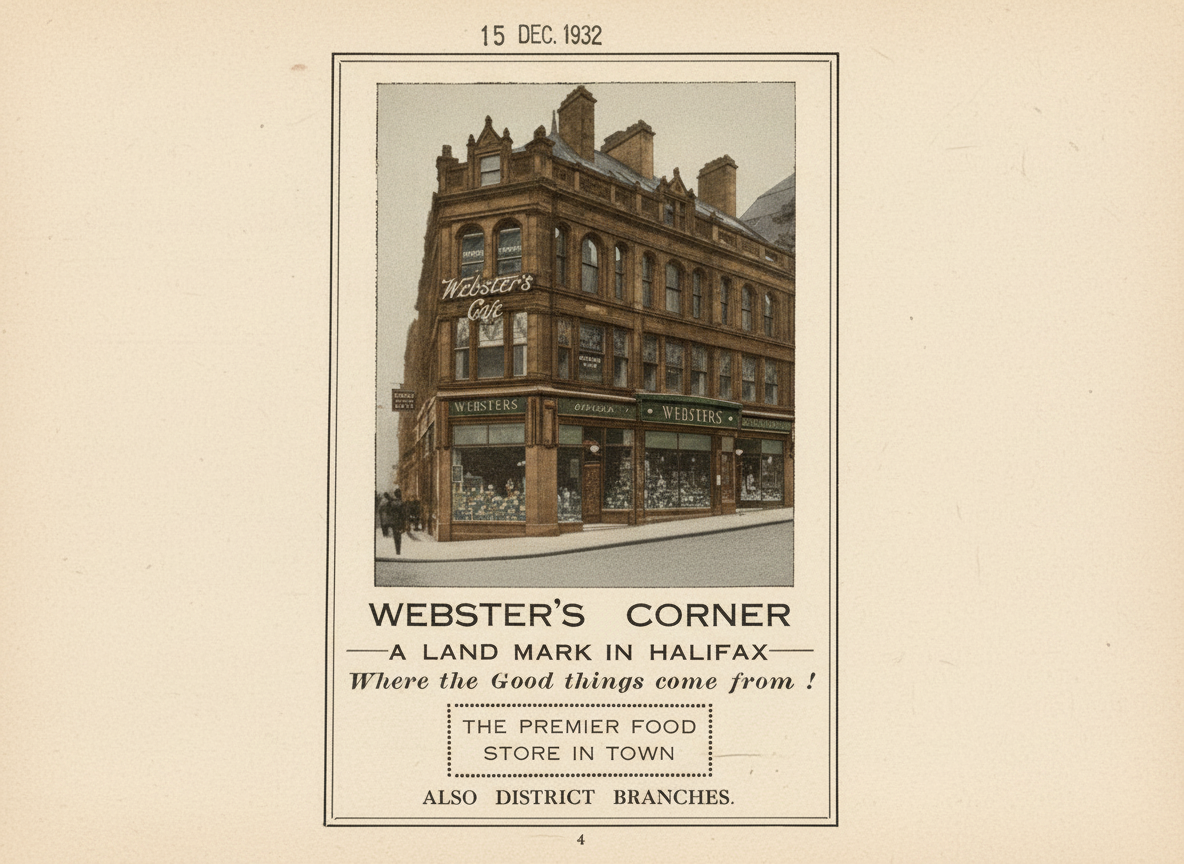

Display in Webster's window 1931 - digitised

A room at the Mikado enhanced
The Mikado Café
One of Silver Street's more unusual establishments was the Mikado Café, which opened in 1889 above George Webster & Sons' grocery shop at numbers 3 and 5.
The café had a Japanese theme and was quite an attraction in its day. Coffee-grinding and roasting machines were displayed in the shop window, while inside there was a large porcelain stove manufactured by Doulton & Company.
It was a no-smoking establishment and the café eventually extended above the adjoining premises of Edward Mortimer on Commercial Street.
The Mikado closed in 1961, while George Webster's business continued until 1963. The old building was subsequently demolished.


Silver Street in 1868

Halifax Equitable Building Society
This impressive building on the corner of Central Street and Silver Street was originally the headquarters of the Halifax Equitable Benefit Building Society.
Established in June 1871, the Society grew considerably and eventually occupied these prominent premises, which had previously been the site of the Globe public house.
The associated Halifax Equitable Bank opened at 16 Silver Street on 1 January 1900. In 1927 the bank was acquired by Martins Bank, and the premises subsequently became a branch of Martins Bank and later Barclays.
The building is a fine reminder of Halifax's important history as a centre of banking and building societies.
It later became a series of pubs and nightclubs with names such as Silvers, Coiners and Bar Rouge.

Equitable Building Society


 |
 |


 Stewart Vaults, the building 2 doors down from the Black Lion |
 |


 |
The Black Swan in Silver Street had a passage below it, Black Swan Passage as we know it today(1), and also a passage above it (2), which met behind the pub. These were previously known as Red Lion Alley and Woodhead Alley although I have yet to find the background of these names. |


Top of Silver Street 1960's enhanced


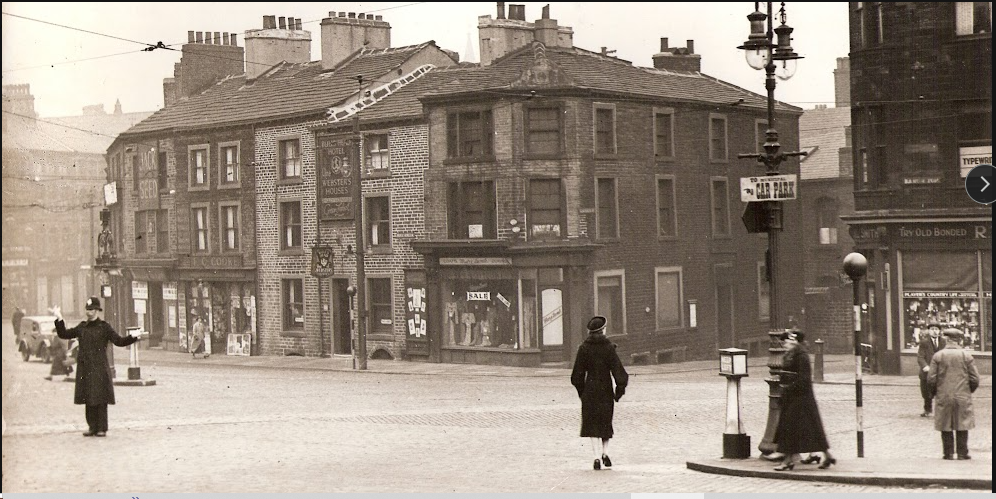

Adverts in 1955
Central Street
  enhanced |
 |
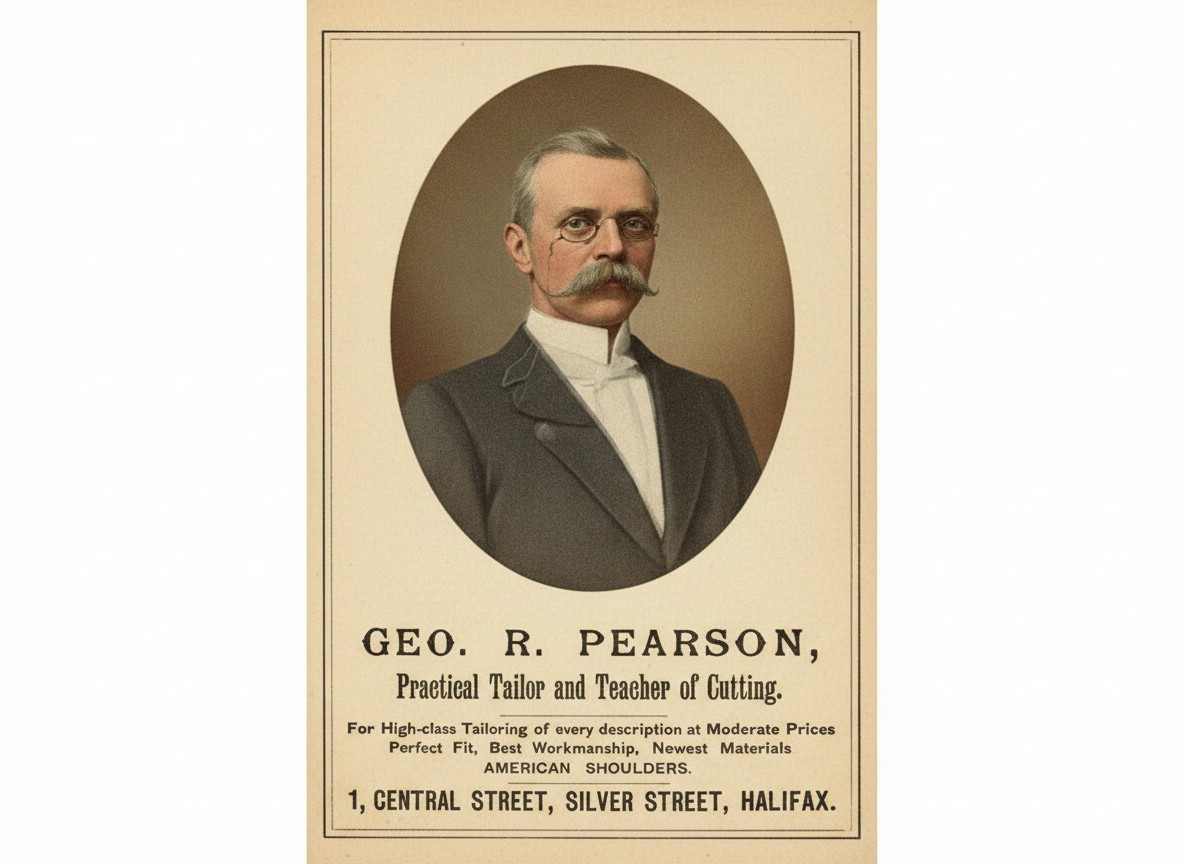
Argyle Street
Previously called 'Long Back Side'


The Sportsman Inn was formerly known as the 'Rose and Crown Inn' and is commonly thought to be the place that Daniel Defoe penned Robinson Crusoe on one of his many visits to the Inn. He visited Halifax many times in the early part of the 18th century, and he wrote a valuable account of the local trade.


Back of the Sportsman which was apparently the front in its early days.

Do you have something to add?
You can add anything at all to this page here!
Return to History Tour
or
Return to Home Page
If you have enjoyed your visit to this website, please spread the word by clicking the 'like' and 'share' buttons below. Thank you