Sowerby Bridge Blog


WundaNumba 777-545 - What's behind your WundaNumba.com
Sowerby Bridge, Calderdale — Canal Junction, Textile Mills and Victorian Town Life
Sowerby Bridge grew from a small settlement around a crossing of the River Calder into one of the important industrial towns of the Calder Valley. The bridge itself was recorded by 1314, serving travellers moving between the older hilltop village of Sowerby and routes through the valley. In medieval times, the surrounding communities relied on farming and domestic woollen-cloth production, but from the eighteenth century onwards, industry increasingly moved down beside the rivers, where water could power mills. The meeting of the Calder and Ryburn rivers provided both a useful crossing point and a source of power for the growing town.
The arrival of canals transformed Sowerby Bridge into a major transport and trading centre. The Calder and Hebble Navigation connected the area with wider waterways, while the Rochdale Canal created an important east–west route across the Pennines. The canals met at Sowerby Bridge Wharf, where warehouses and canal-side buildings handled goods including wool, cloth, coal, stone and lime. This transport network helped local textile businesses grow and encouraged the development of engineering, dyeing and other industries. The restored wharf remains one of the town’s most distinctive historic places, with its basin, warehouses and locks preserving the character of its canal-trading past.
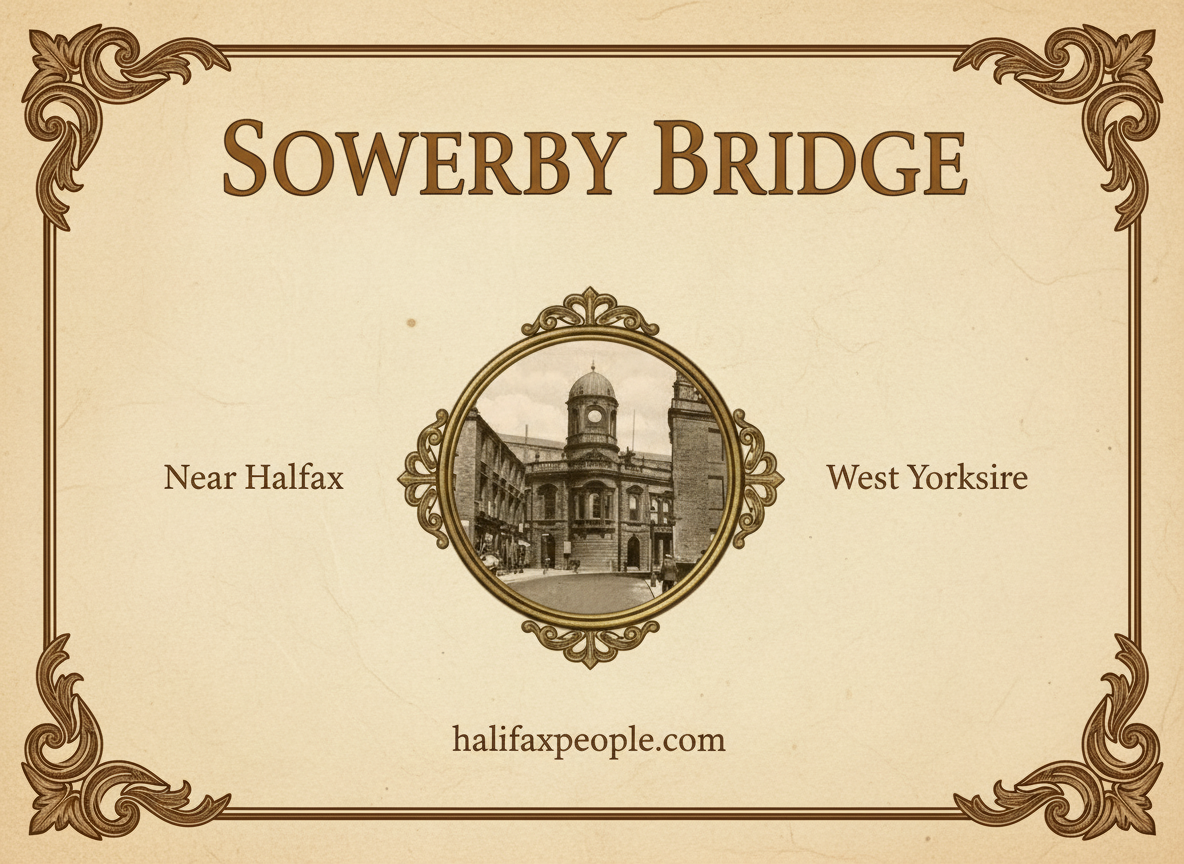
In the nineteenth century, the railway brought another major change. The railway reached the town in 1841, improving connections between Lancashire and Yorkshire and helping factories expand. Large mills, foundries, workshops and workers’ housing spread through the valley, while civic buildings reflected the prosperity of the growing community. Christ Church, the old Town Hall and the historic County Bridge became important features of the townscape. Sowerby Bridge developed its own local government and commercial centre, with busy streets serving mill workers, traders and residents. Although much of the heavy manufacturing later declined, many former industrial buildings have survived through conversion and reuse. Today, the canal basin, historic streets, mills and railway heritage tell the story of a town shaped by water, transport and textile production.


Have A Great Story About This Topic?
Do you have anything to add to this page?
If you have enjoyed your visit to this website, please spread the word by clicking the 'like' and 'share' buttons below. Thank you