Square Road, Halifax —
The First Brick Houses in Town
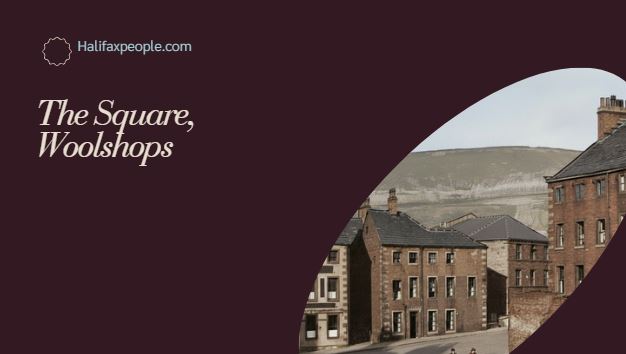

"Dear friends, not every hidden treasure in Halifax is buried underground or locked behind a forgotten door. Sometimes, you simply need to look up — and notice what's been standing quietly in front of you for over two hundred years." — Harry Facks
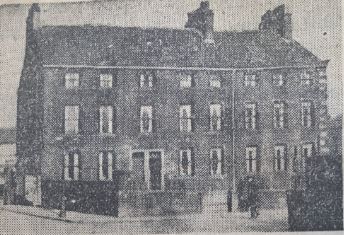
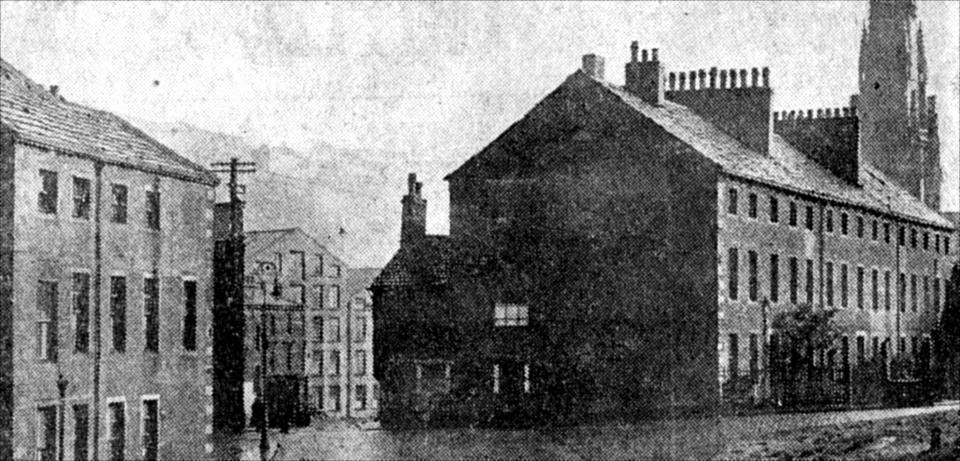
"The lofty brick houses at the Square, Halifax — among the first brick buildings in a town of stone. From a Halifax newspaper feature"
A New Era in Building
Halifax is a town of stone. Always has been. The dark gritstone of the Pennines runs through every mill, every terrace, every church. Stone is what Halifax was made of — literally and in the minds of its people.
So when two large blocks of three-storey brick houses appeared at the Square in the 18th century, people noticed. These were among the first brick buildings ever constructed in Halifax, and they looked like nothing else in town.
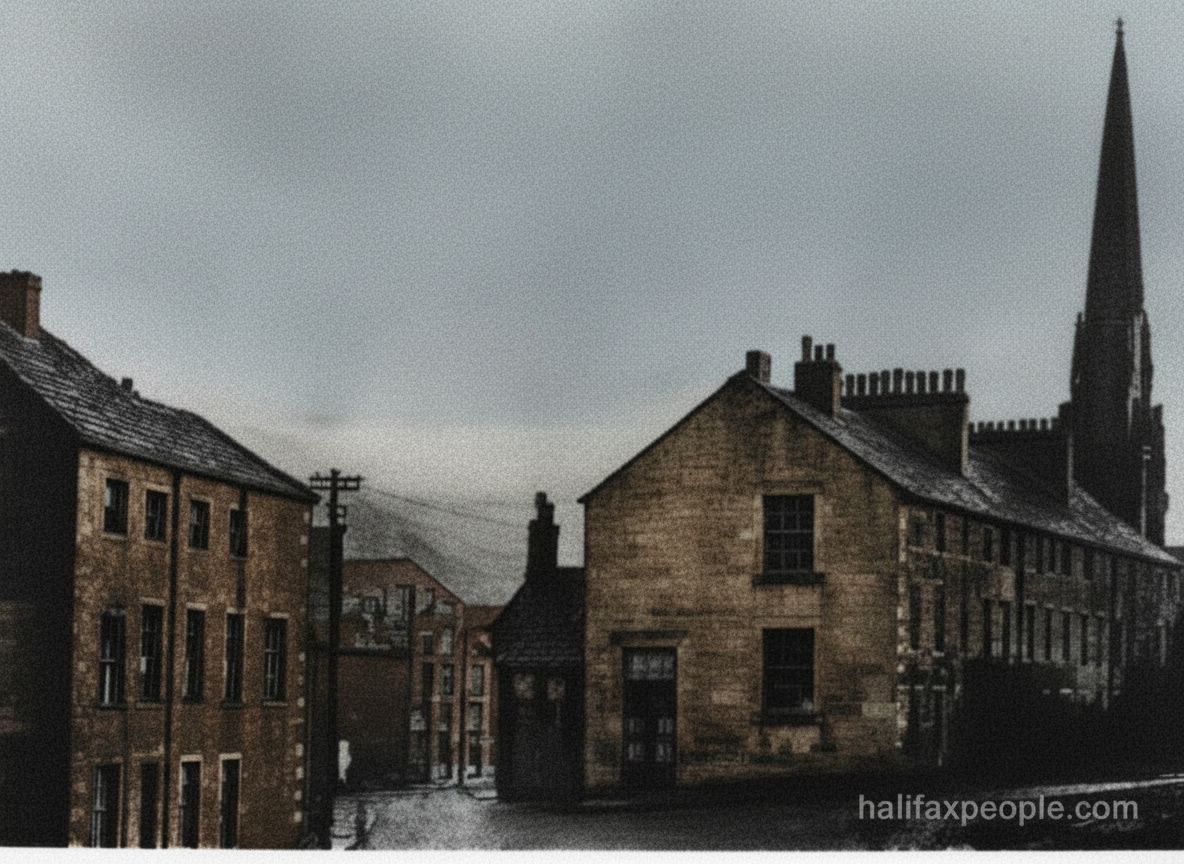
The red bricks used were no ordinary bricks. They were of a deeper hue than the common bricks of later years — and according to those who remembered them at their best, they glowed warmly under the rays of the sun.
Local historian Councillor T.W. Hanson, in his book "The Story of Old Halifax", wrote that the 18th-century brick "must have looked like sealing-wax" — the deep red wax used to seal every letter in those days.
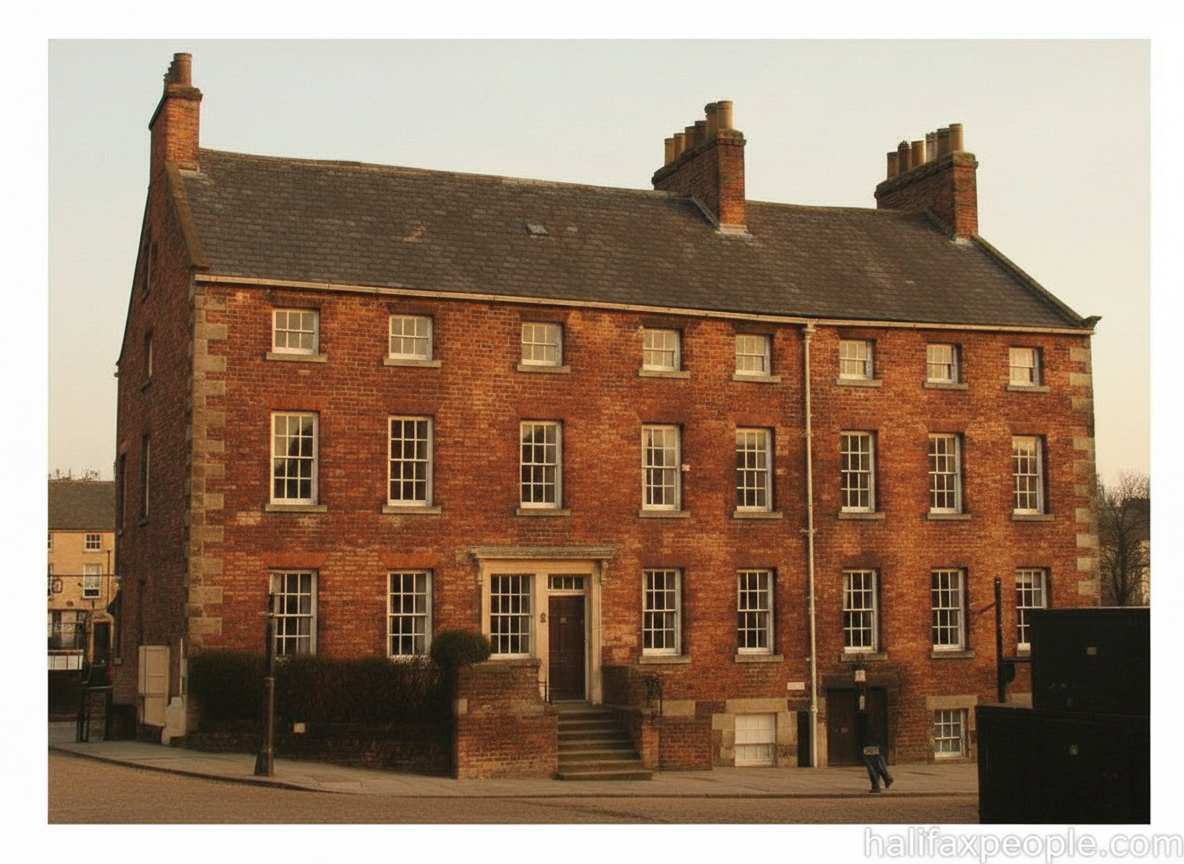
The Square Road houses brought to life — the deep red brick that T.W. Hanson said 'must have looked like sealing-wax' enhanced
"Halifax Is Made of Wax"
The sight of brick in a stone town made such an impression that Halifax boys and girls used to sing a rhyme about it:
"Halifax is made of wax, Heptonstall of stone; There's pretty girls in Halifax, In Heptonstall there's none."
The newspaper that recorded this verse added, with dry Yorkshire wit, that "no doubt residents of the hill-top village will stoutly deny that there is any foundation for it."
But the doggerel tells us something important. The arrival of brick — the substitution of the cheaper brick for the native stone — was so striking that it became part of Halifax folklore.
Why "Square Road"?
The two blocks of houses never actually formed a complete square. But the land behind them follows a broadly square plan — and that's how the name stuck.
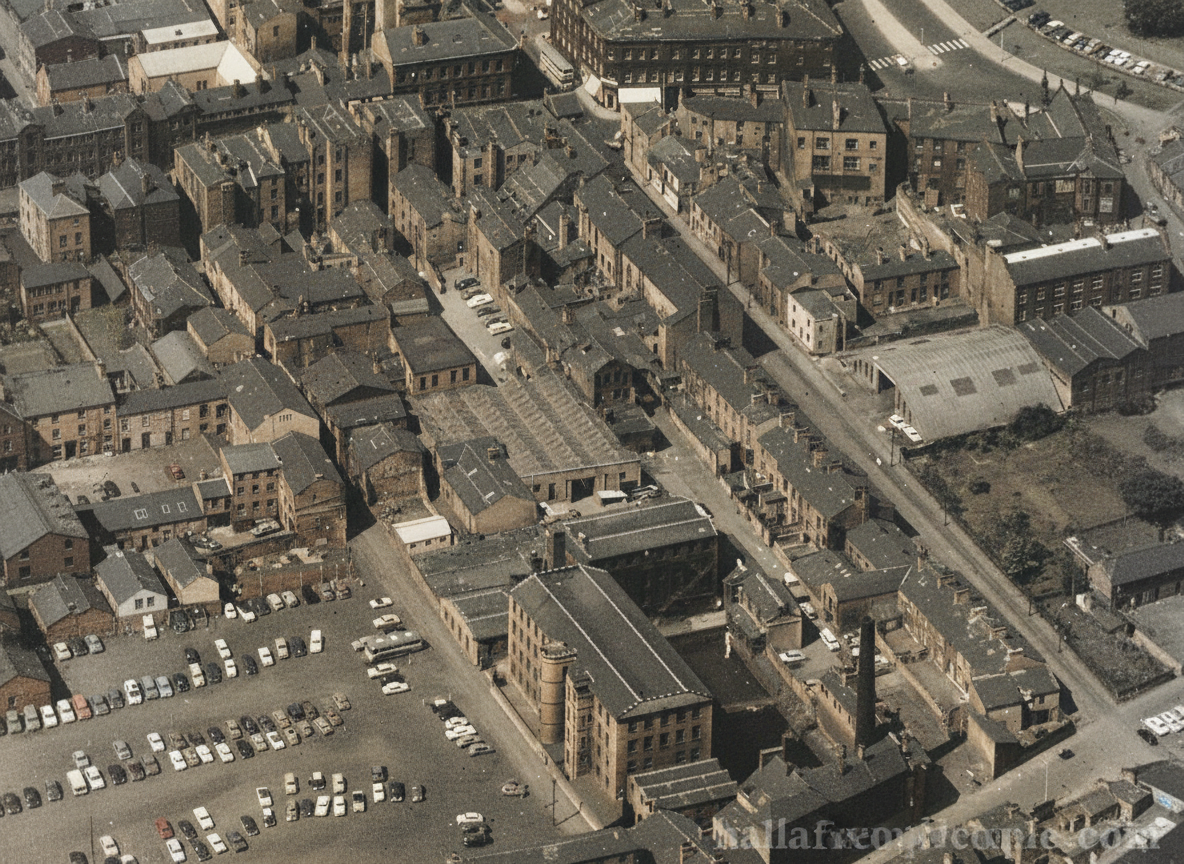
The street sits at the junction with Woolshops, where the road narrows towards the station, opposite the top of Hatter's Fold. The aerial view reveals how the two blocks relate to each other and to the surrounding streets, with the Piece Hall visible along the top side.
Built Alongside Halifax's Finest
These brick houses weren't built in isolation. They were contemporaneous with some of Halifax's most important buildings:
- Square Chapel — the magnificent Nonconformist chapel nearby
- Stoney Royd — one of Halifax's grand estates
- The first Halifax baths at Lilly Bridge — the town's earliest public bathing house
This was a period of ambition and expansion. Halifax was growing, and the people building these houses were making a statement about the town's future.
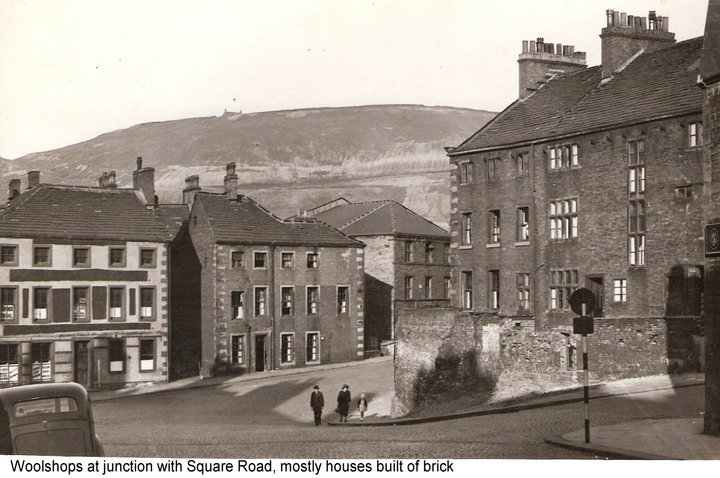
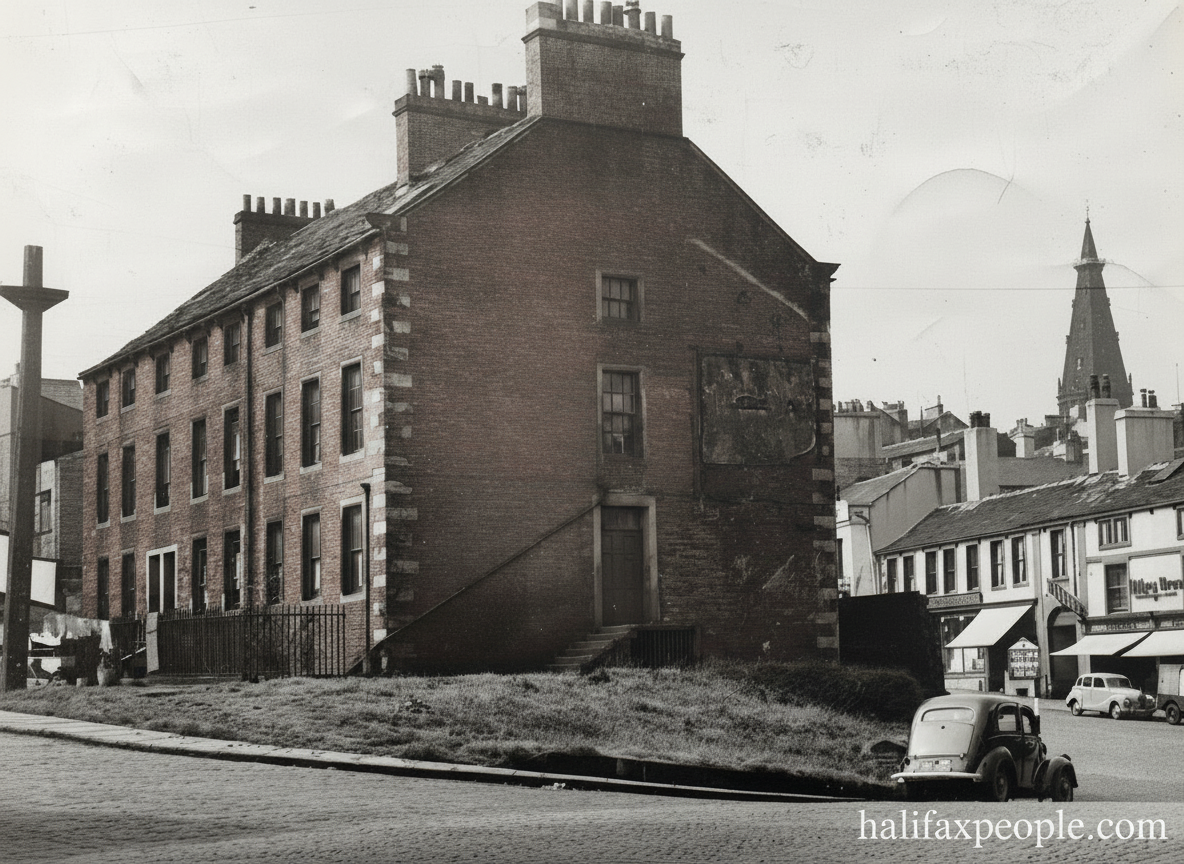
The end block of Square Road's brick houses, with the spire of Square Congregational Church behind and a 1950s car in the foreground
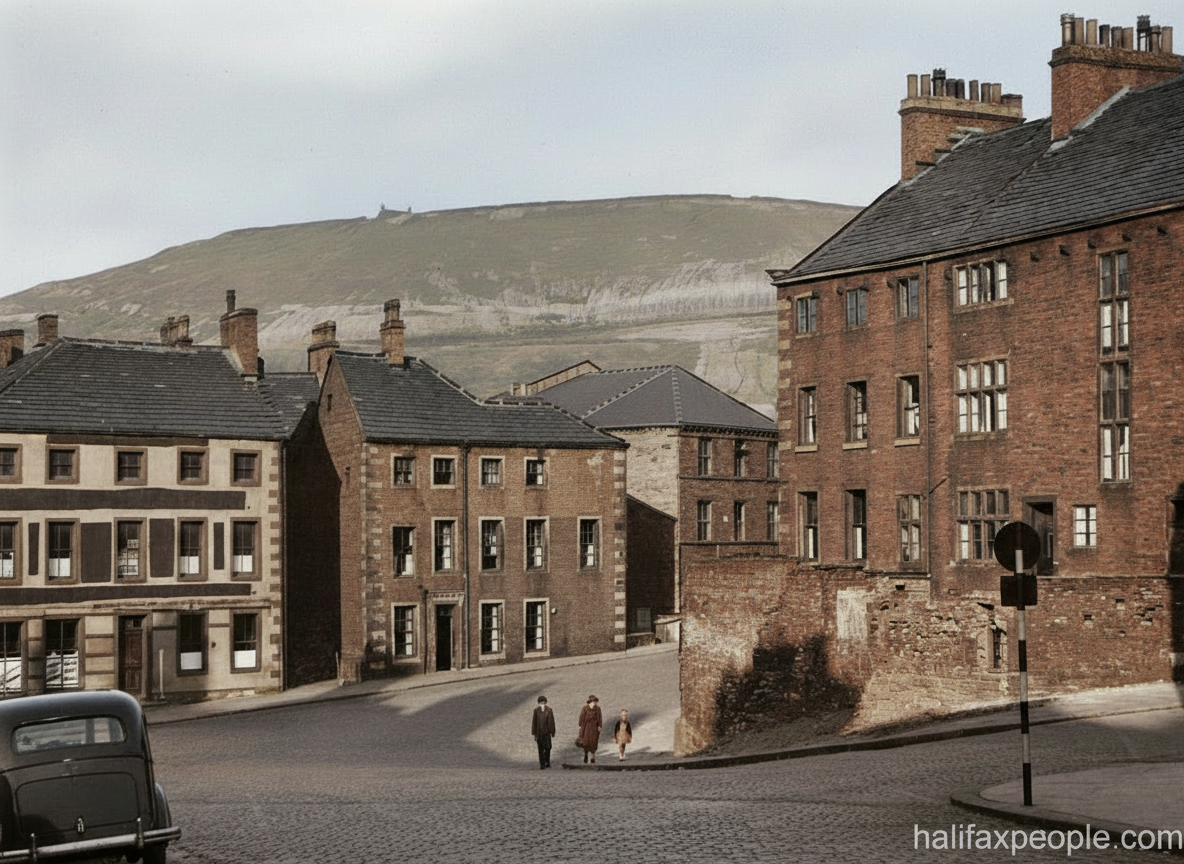
Square Road brought to life — Halifax's first brick houses, built around 200 years ago and attributed to architect John Carr of York
Designed by John Carr of York
The design of the Square Road houses has long been attributed to John Carr of York — one of the most celebrated architects of 18th-century England.
Carr designed grand country houses, public buildings, and bridges across Yorkshire and beyond. If he truly was the hand behind these houses, it tells you something about the ambitions of whoever commissioned them. These weren't thrown up cheaply. They were built to impress.
When first completed, the houses came with frontal gardens that gave the street "a seclusion reminiscent of a cathedral close."
Imagine that. A quiet, elegant enclave in the middle of bustling, industrial Halifax.
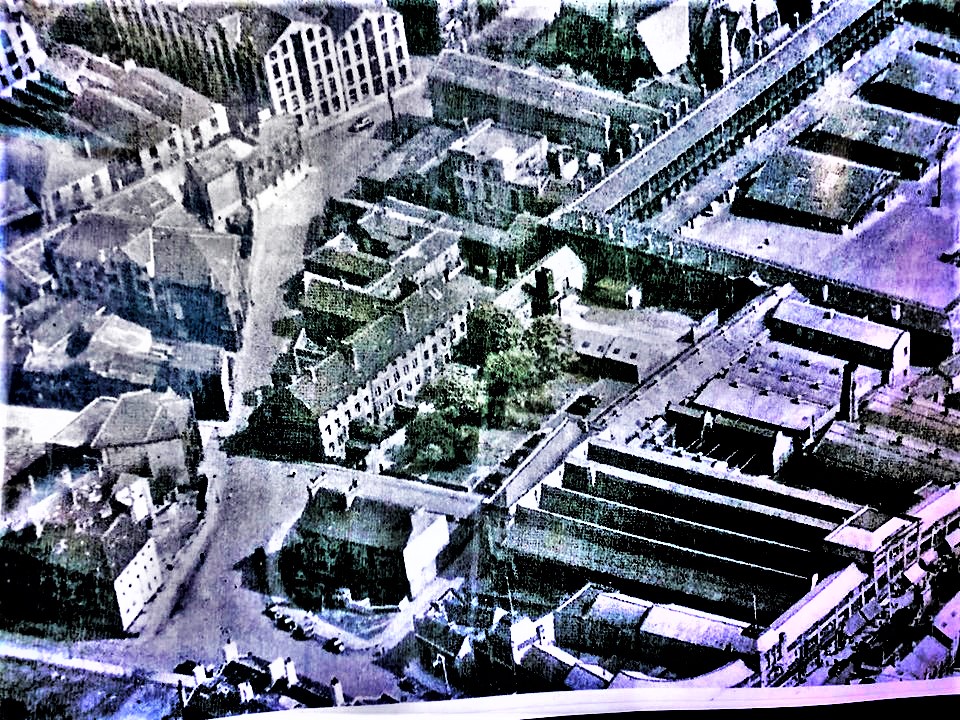
Square Road from the air — the two blocks of brick houses clearly visible, with Piece Hall top right
Where the Halifax Courier Was Born
Here's a fact that stops most people in their tracks.
No. 9 Square Road was where the Halifax Courier was first printed — on January 8, 1853.
One of Yorkshire's most enduring newspapers took its first breath on this quiet brick street. The Courier has been reporting Halifax life ever since — more than 170 years and counting.
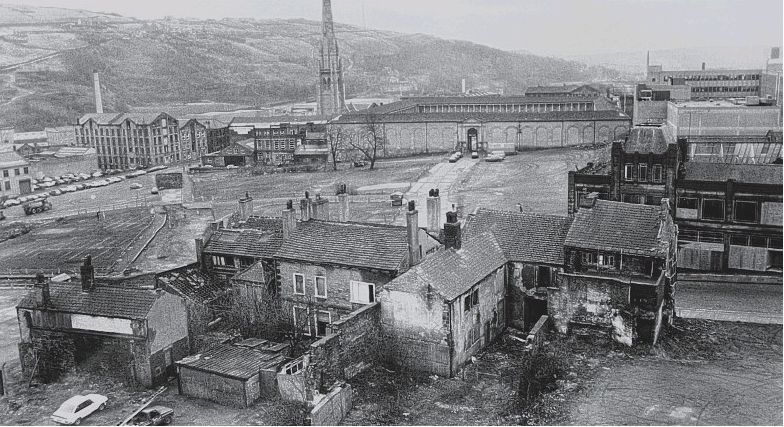
The area to the left was The Square
What Was Lost
Not all of the Square's brick houses survived.
Another row of brick houses was pulled down when the Woolshops improvements were carried out. The upper part of the Square estate underwent great changes over the years:
- Piece Hall was extended along the top side
- The abattoir was removed (1929)
- The old Assembly Rooms attached to the original Talbot Hotel were demolished
The frontal gardens disappeared. The wool warehouses fell silent. But the surviving blocks of brick houses — Halifax's first — kept standing through it all.
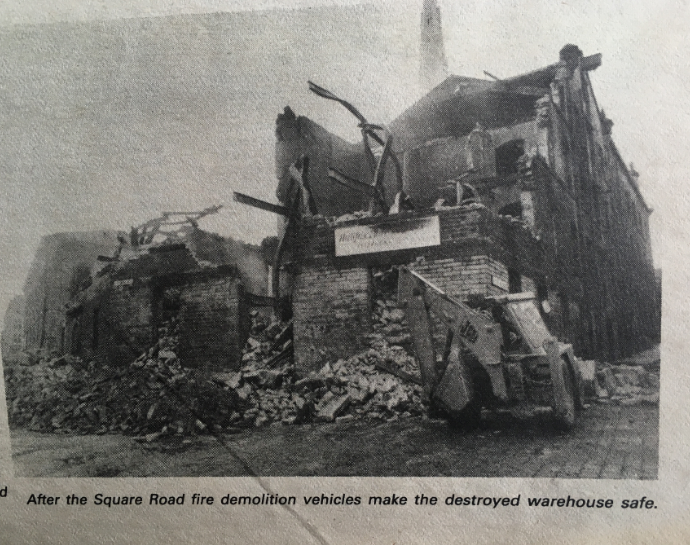 |
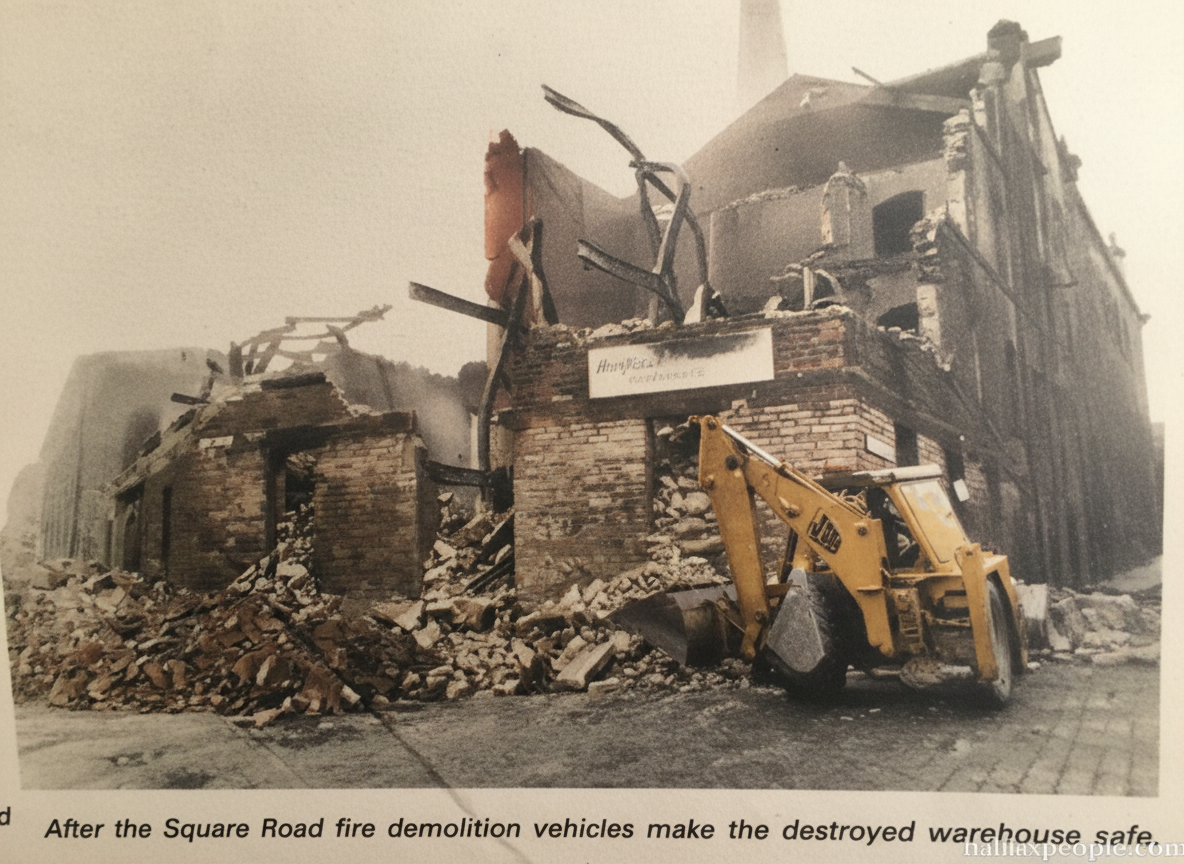 enhanced |
enhanced
The Wool Warehouses
Behind the houses, warehouses devoted to the wool merchanting trade lined the streets. Bales of worsted and wool passed through here daily. The merchants who traded here built the wealth that built the town.
Square Road sat right at the crossroads of Halifax's residential ambition and its industrial muscle.
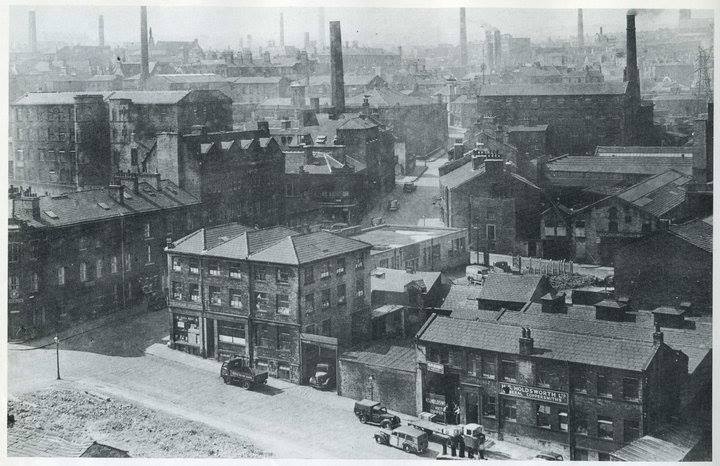
Wool warehouses and The Square to the left
Square Road Mill — Powerhouse of the Electric Revolution
"By the mid-1800s, Square Road Mill had become something extraordinary — not just a place of industry, but a laboratory of invention."
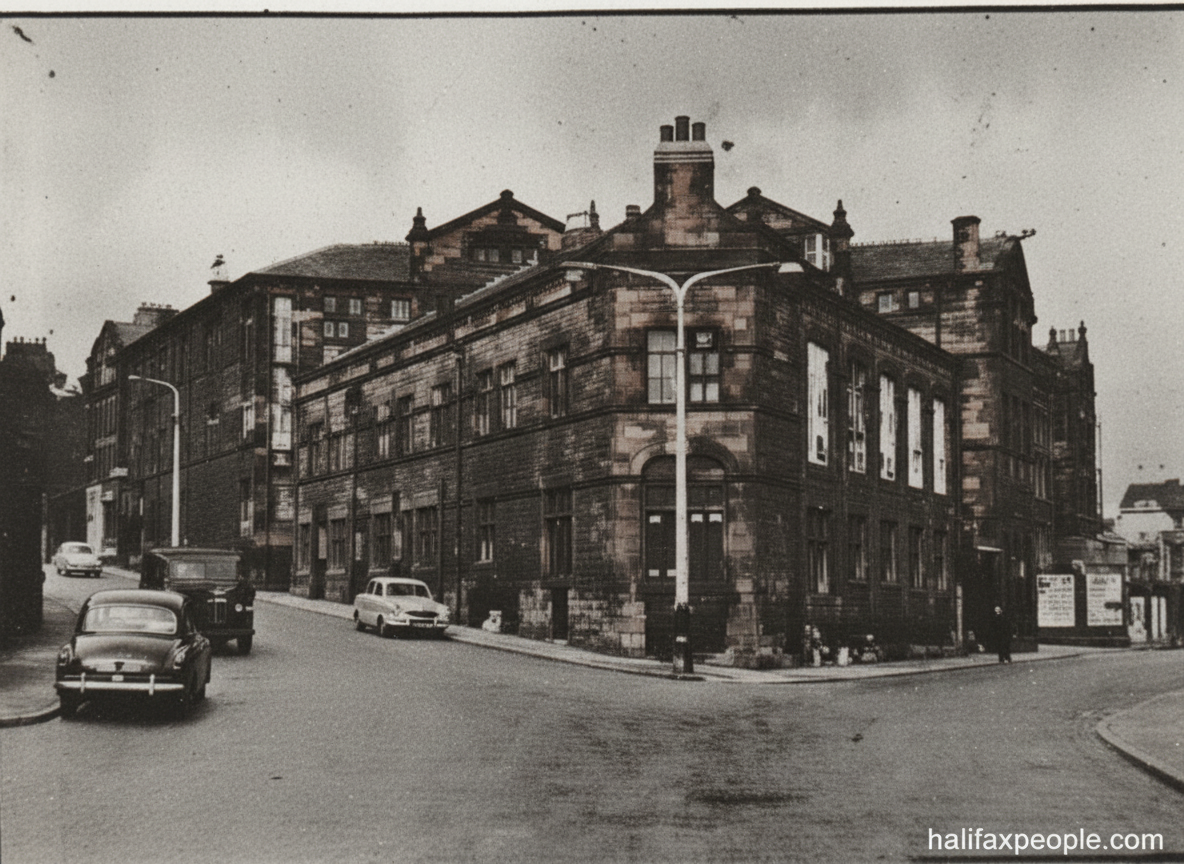
Square Road Mill began life around 1810 as Halifax's last cotton mill, built by the Bates family — a prominent Quaker family with a passion for science and innovation.
But it was what happened here in the 1880s that changed Halifax forever.
Walter Emmott was, by common agreement, "by far the most important figure in the development of electricity in Halifax."
Working from Square Road Mill, Emmott formed a partnership with the firm of Binley, Emmott and Company — electrical engineers who would transform how Halifax was lit and powered.
He worked closely with Louis Crossley of the great carpet-manufacturing dynasty, and together they installed incandescent and arc lights at Dean Clough.
In November 1881, a rugby match at Hanson Lane was played under electric light — one of the first sporting events in England to be illuminated by electricity.
In 1882, Arthur Bates set up his first dynamo at Square Road Mill — generating electricity that would light not just the mill, but the buildings around it. This was the first electric lighting of a public building in Halifax — and possibly among the first in the entire West Riding.
Square Road Mill wasn't just making cloth. It was making history.
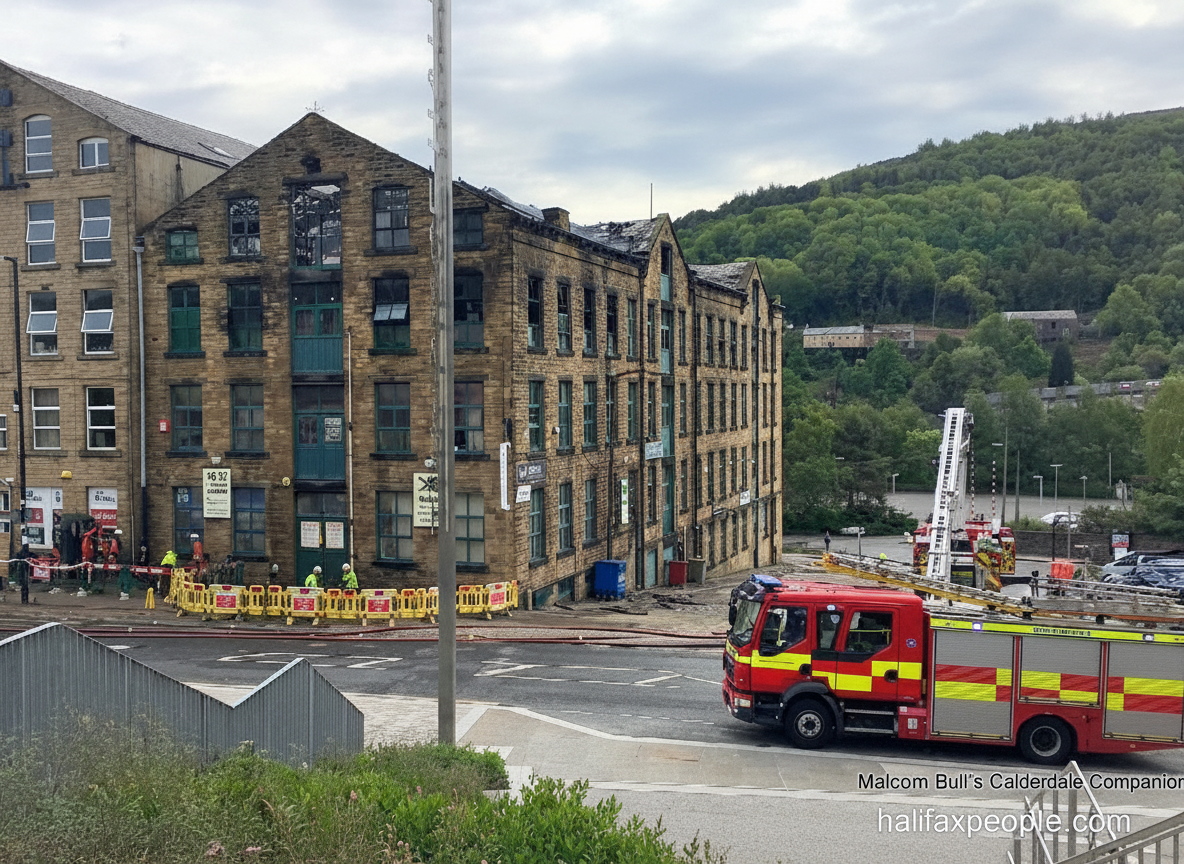
Square Road Mills in 2019
The Square Congregational Church
Dominating the skyline above Square Road is the soaring spire of Square Congregational Church — rising to 235 feet and visible from across the town.
Opened in 1857, the church could seat 1,240 worshippers — a measure of how large and confident Halifax's Nonconformist community had become by the mid-Victorian era.
That spire appears in almost every photograph of the Square Road area, a constant landmark above the rooftops.
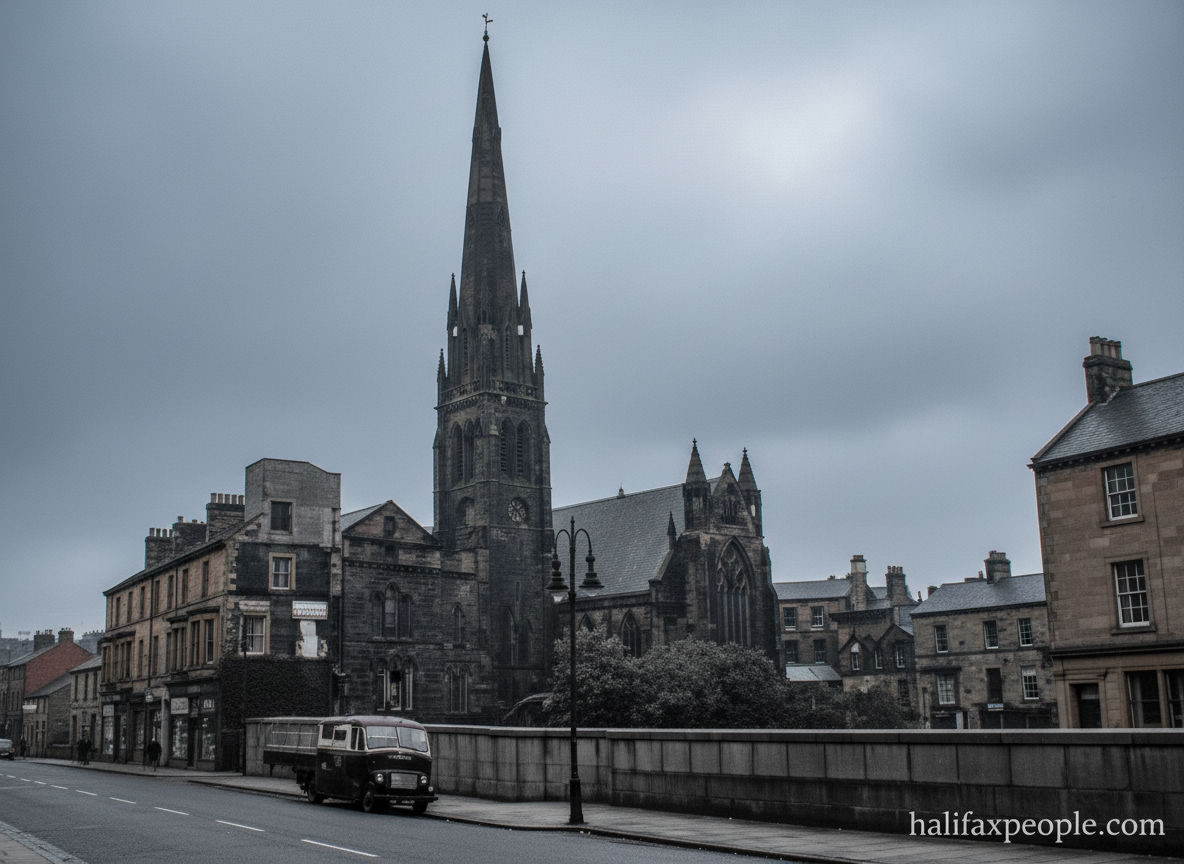
Square Congregational Church was built by the Crossley family — Halifax's greatest industrial dynasty, whose carpet mills at Dean Clough made them one of the wealthiest families in Victorian England.
At 235 feet, the spire is the third highest in the county — and just one foot shorter than Wakefield Cathedral at 247 feet.
The second highest? All Saints, Boothtown — also in Halifax, built by Colonel Edward Akroyd, the great Crossley rival.
Two of the tallest church spires in Yorkshire, both in Halifax. Both built by competing industrial dynasties. Both within a few hundred yards of each other. That tells you everything about the ambition — and the rivalry — of Victorian Halifax.
Square Chapel — A Georgian Gem Reborn
"Of all the buildings on and around Square Road, none has had a more dramatic journey than Square Chapel."

Square Chapel as it looks now — the restored red brick Georgian facade with the blue door.
Square Chapel was built in 1772 — making it one of the oldest Nonconformist chapels in Halifax.
It was founded by Reverend Titus Knight, who laid the foundations of Congregationalism in Halifax and drew his first congregation as far back as July 1697. For over 170 years, Square Chapel was the spiritual home of Halifax's Nonconformist community.
By the 20th century, the congregation had dwindled. The chapel fell into disuse, then into dereliction. For years it stood empty — one of Halifax's finest Georgian buildings slowly crumbling.
Multiple attempts were made to find a new use. Each one failed.
Eventually, Calderdale Council and a dedicated trust took on the challenge. What followed was eight years of fundraising — raising hundreds of thousands of pounds — to bring the chapel back to life.
The restored Square Chapel Arts Centre opened to widespread acclaim. Described as "the finest Georgian building in Halifax", it was transformed into a performance venue, cinema, and community arts space.
If you haven't been inside Square Chapel recently — go. You'll be astonished.

Do You Remember Square Road?
Did you live on Square Road? Work in the warehouses? Attend Square Church? Do you remember the brick houses before the changes?
📧 Send your stories and photos to info@halifaxpeople.com
Explore More of Halifax
- 🏛️ An Historic Tour of Halifax
- 🏘️ Halifax Places
- ⛪ Halifax Minster — The Parish Church
- 🎭 The Piece Hall
- 🛍️ Woolshops Halifax
- 🏠 Back to Home
If you have enjoyed your visit to this website, please spread the word by clicking the 'like' and 'share' buttons below. Thank you