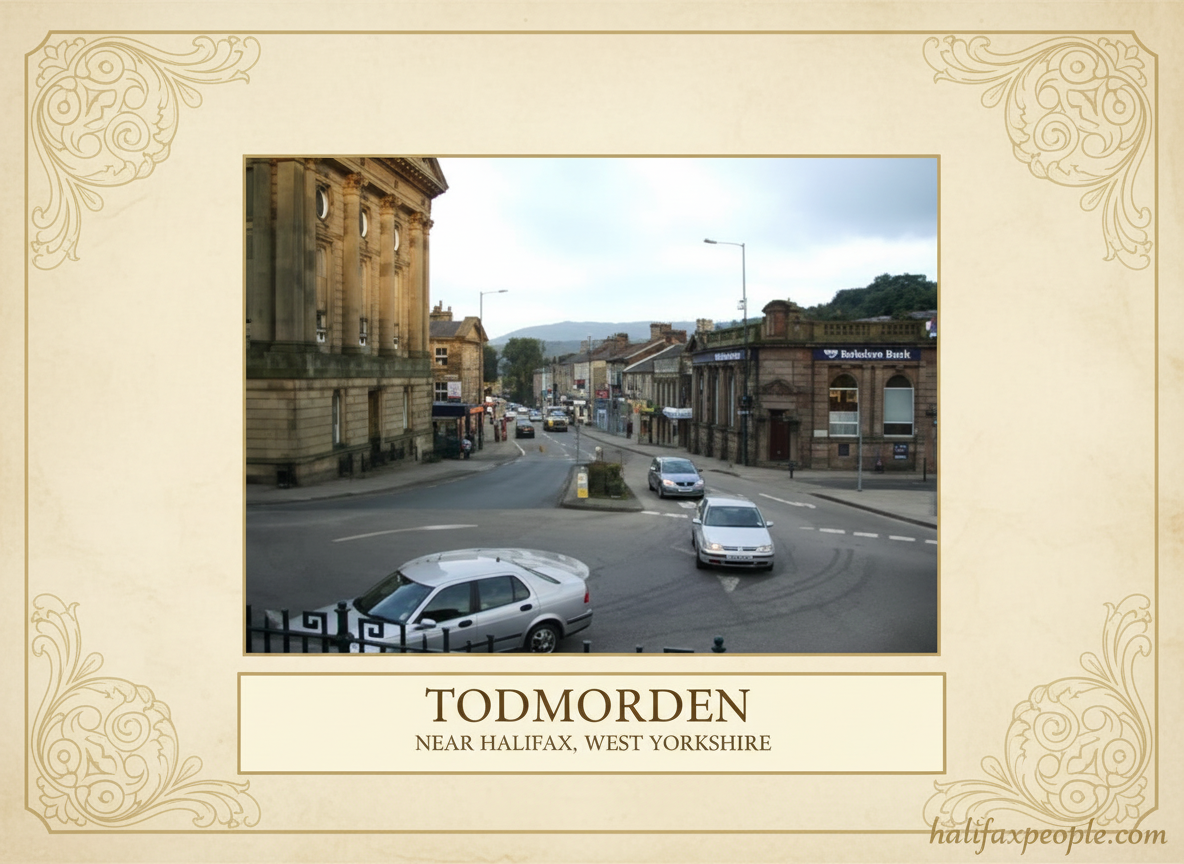
Todmorden


WundaNumba 777-545 - What's behind your WundaNumba.com
Todmorden, Calderdale — The Lancashire–Yorkshire Border, Cotton Mills and Victorian Town Hall
Todmorden grew from a collection of rural farming and weaving communities into a prosperous industrial town in the Upper Calder Valley. The settlement was recorded as Tottmerden in 1246, and for centuries sheep farming and woollen cloth production supported families living in the valley and surrounding hillsides. Before large factories transformed the area, many households spun and wove cloth at home. From the eighteenth century onwards, turnpike roads, canals and railways improved connections across the Pennines, helping Todmorden develop into a major centre for textile manufacturing and trade.
The Fielden family played a major role in the town’s industrial growth, expanding cotton manufacturing and becoming prominent employers and benefactors. John Fielden, a mill owner and Member of Parliament, campaigned for factory reform and was closely associated with the Ten Hours Act of 1847, which restricted working hours for women and young people in textile mills. The family’s influence is still visible in Todmorden’s architecture, particularly the magnificent Grade I listed Town Hall, designed by John Gibson and opened on 3 April 1875. Its sculpted decoration represents the industries of Lancashire and Yorkshire, reflecting the town’s unusual position astride the historic county boundary.
Todmorden’s location made it an important transport hub. The Rochdale Canal opened through the area in the early nineteenth century, linking waterways across the Pennines, while the railway arrived in the 1840s and brought further opportunities for industry and commerce. Mills, engineering works, warehouses, churches and rows of workers’ housing spread through the valley, and the town centre developed around its market and commercial streets. Christ Church, the Unitarian Church and the historic market buildings reflect the prosperity and community life of the Victorian era. Although textile manufacturing declined during the twentieth century, Todmorden retains a remarkable collection of industrial-era buildings set against the dramatic Pennine landscape.
 |
 Random Todmorden |
If you have enjoyed your visit to this website, please spread the word by clicking the 'like' and 'share' buttons below. Thank you