Wainstalls and Mount Tabor Blog


WundaNumba 777-545 - What's behind your WundaNumba.com
Wainstalls, Calderdale — The Calvert Mills and the Story of the Wainstalls Waifs
Wainstalls is a hillside village north-west of Halifax, in the historic township of Warley, where farming and rural life gradually gave way to textile production. Situated high above the Calder Valley, the village developed from a small farming settlement into a centre of the woollen and worsted trade during the 17th century. By the early 19th century, the Calvert family had established a significant mill business, making Wainstalls part of the wider industrial story of Calderdale.
The Calverts operated several mills around Wainstalls, using water power from hillside dams and streams before later adopting additional power sources. Their business included worsted spinning and associated textile processes, and mill buildings became central to the local economy. One surviving example is the former Lower Mill, later known as New Mill, whose industrial history included large water-wheels and subsequent changes to its machinery.
One of Wainstalls’ most significant and moving stories is that of the Wainstalls Waifs. From the late 19th century, more than 250 girls were brought from institutions in Liverpool to work as apprentices in the Calvert mills. Their experiences were complex: the work was demanding, but they learned textile skills, earned wages towards their upkeep and became part of village life. The memorial to girls who died is associated with the former chapel graveyard at nearby Luddenden Dean. This history has been explored by Visit Calderdale and the Calderdale Industrial Museum. Wainstalls also retains a strong rural character, with its old stone buildings, surrounding moorland and historic chapel reflecting the close connection between industry, landscape and community.


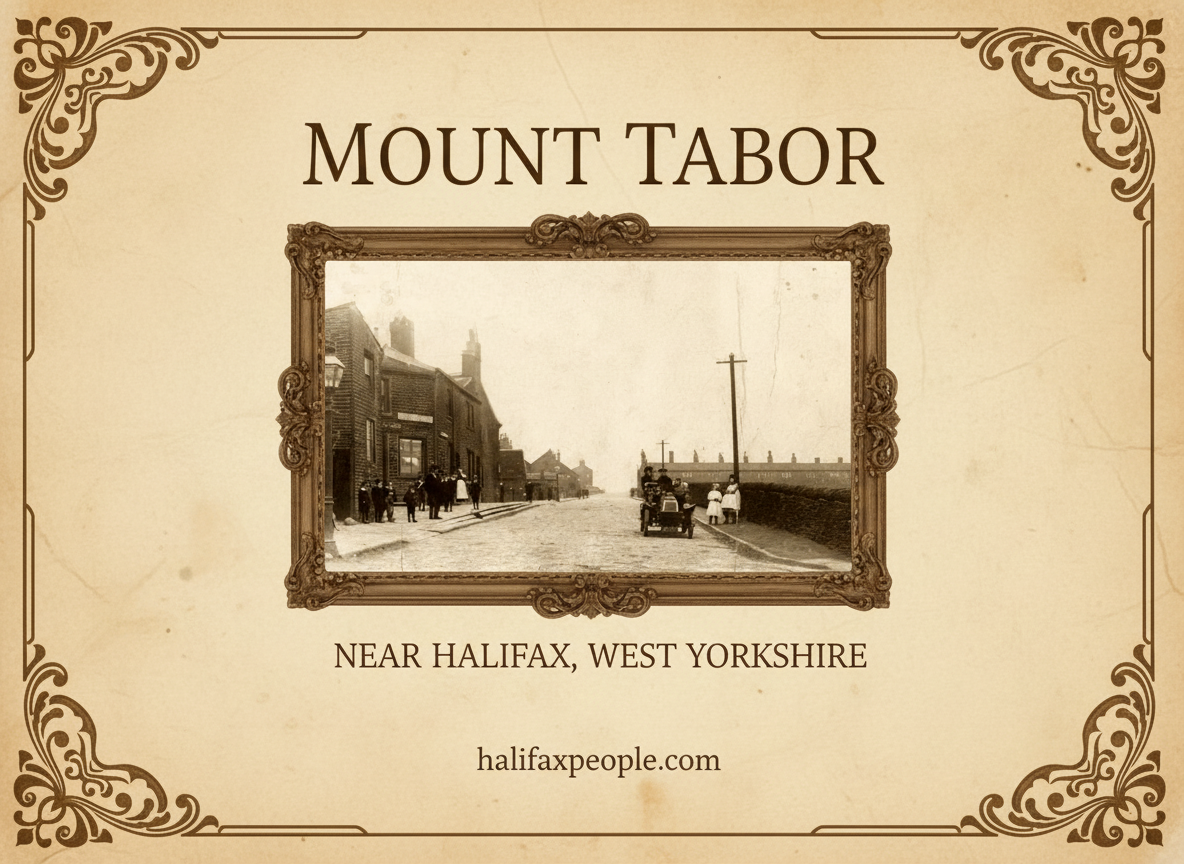
Mount Tabor, Halifax — From Stone-Working Village to Close-Knit Community
Mount Tabor lies to the north-west of Halifax, within the historic township of Ovenden. Set on the hillside above the town, it developed as a small village with strong connections to the local stone trade. In the 19th century, quarrying and stone dressing provided work for many residents, and census records show that these occupations formed an important part of the village’s working life.
Religion and education helped shape the growing community. Mount Tabor’s Wesleyan Methodist Chapel dates from 1820 and became a familiar landmark, built during a period when Methodist worship and Sunday schools played an important role in village life. The chapel and its burial ground remain significant reminders of the people who helped establish the settlement and the families who lived and worked there. By the 19th century, Mount Tabor was recognised as a distinct village, with a post office, a brewery and its own chapel.
Among the village’s notable connections was Whiteley Turner, the local author whose book A Spring Time Saunter recorded observations of the countryside and communities of the district. Turner was born at Mount Tabor and was later buried in the Methodist churchyard, linking the village to the wider literary and local-history tradition of Halifax and Calderdale.
Over time, changes in employment, transport and housing altered the character of Mount Tabor, but its origins as a stone-working community remain central to its story. Historic photographs and local records preserve glimpses of its chapel, streets, workers and everyday life, helping to tell the story of a hillside village that grew through hard work, faith and strong local ties.


Do you have something to add?
You can add anything at all to this page here!