West Vale E-zine

WundaNumba 777-545 - What's behind your WundaNumba.com

West Vale, Calderdale — Victorian Mill Heritage and the Rise of an Industrial Village
West Vale, between Elland and Greetland, grew from a rural valley into a busy industrial settlement during the 19th century. Its name has an uncertain origin: it may simply refer to the valley west of Elland, or it may have developed from the name of a local building or weaving shed. According to Malcolm Bull’s Calderdale Companion, the area was once associated with Lower Greetland before the name West Vale came into use. As textile manufacturing expanded, mills, workshops, houses and shops transformed the valley into a distinctive working community.
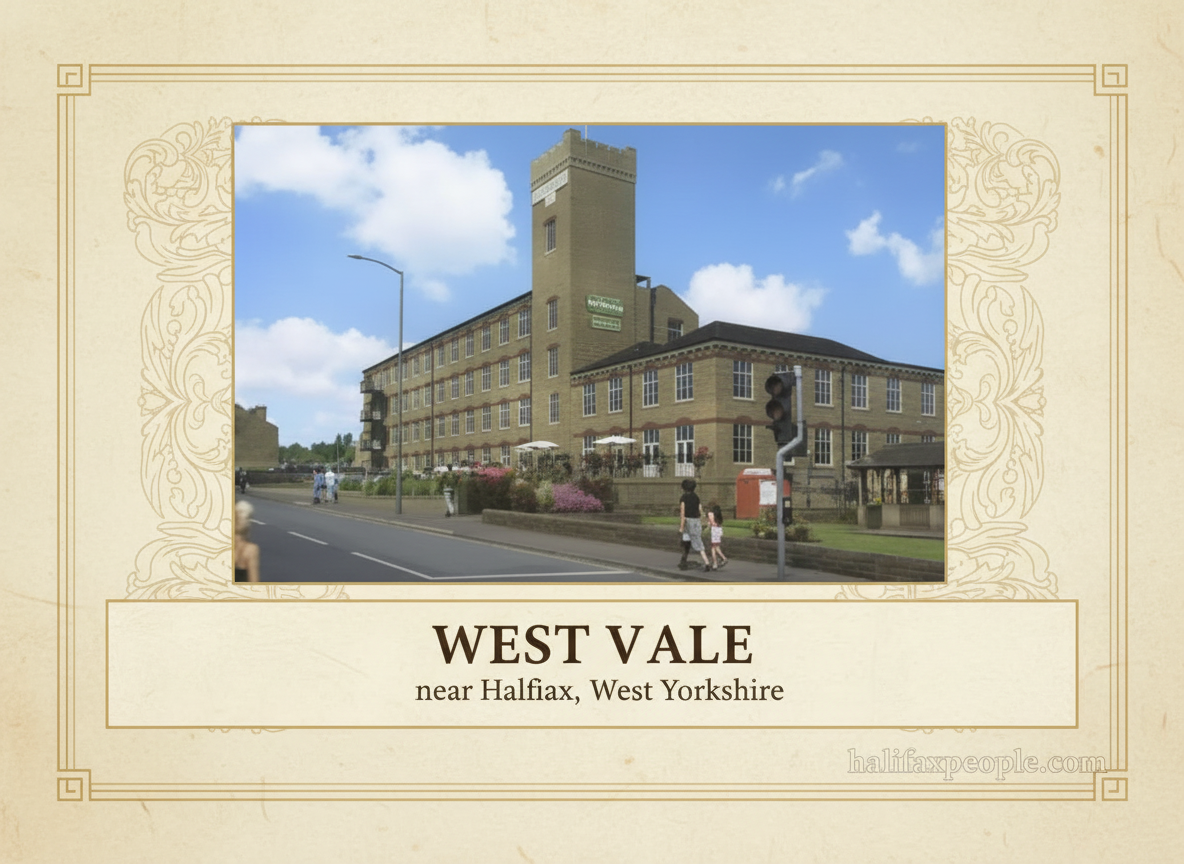
The textile industry was central to West Vale’s growth. Mills were built along the Black Brook and nearby valley routes, producing woollen and worsted cloth and, in some cases, cotton yarn. North Dean Mill, built in 1876–77, became a substantial steam-powered woollen and worsted mill, while Victoria Mills and Low Mill developed as a cotton-spinning complex from the 1850s. A fire in 1893 destroyed parts of the Victoria Mills complex, prompting rebuilding in 1894–95. Although many of West Vale’s original industrial buildings have disappeared or been altered, surviving mill structures still reveal the scale and architectural character of the area’s manufacturing past.
West Vale’s growth also created a need for civic buildings, places of worship and public entertainment. The Greetland and West Vale Mechanics’ Hall, now known as West Vale Public Hall, opened on 18 May 1874 after its foundation stone was laid by Edward Crossley the previous year. It provided a public hall for meetings and concerts, alongside classrooms, a library and offices. St John the Evangelist Church, designed by T. Rushforth, followed in 1880 and is now Grade II listed. The railway added another layer to the village’s industrial story: the Stainland branch line crossed the area on a striking 13-arch stone viaduct, opened in 1875 to serve local mills. Today, West Vale’s surviving buildings and transport remnants offer a glimpse of the busy industrial settlement that emerged in the Victorian era.






Have A Great Story About This Topic?
Do you have a great story about this? Share it!
If you have enjoyed your visit to this website, please spread the word by clicking the 'like' and 'share' buttons below. Thank you