Westgate and Albion Street
Westgate

Westgate, Halifax: The Street Built to Reach the Piece Hall
Westgate has an unusual place in Halifax’s history: it was created to provide access to one of the town’s most important buildings.
The Piece Hall opened in 1779 as a purpose-built cloth market, where textile manufacturers could sell their pieces of cloth to merchants. Its western entrance did not originally open onto an established street. The land outside belonged to Halifax Vicarage, and an Act of Parliament was obtained in 1781 to allow a road to be built between Southgate and the west gate of the Piece Hall. That road became Westgate.
The street therefore grew out of Halifax’s textile trade. The Piece Hall was designed to bring cloth sellers and buyers together in a dedicated setting, and Westgate provided another route into the complex. Today, the Grade I listed building remains one of Halifax’s best-known historic landmarks.
Westgate was also a working commercial street in its own right. Nineteenth-century directories record businesses and tradespeople there. In 1822, Daniel Collingwood was listed as a stonemason, while the 1837 directory recorded John Oldfield Bates as a cardmaker and a Fire Officer at 27 Westgate, Norris Edward as an Attorney. These entries offer small glimpses of the people and businesses that occupied the street over time.
Westgate has also had a more modern chapter. In 2006, a canopy was erected above part of the street as part of an attempt to create a covered shopping arcade. The idea was to give the area a more sheltered retail environment, although the scheme did not turn Westgate into one of Halifax’s busiest shopping streets.
From its origins as an access road to the Piece Hall to its changing shops and later covered section, Westgate reflects the way Halifax’s streets have been shaped by trade, architecture and attempts to adapt the town centre to changing times.


digitised

Carrier Street

S Gee
Carrier Street, Halifax: A Name in the Records
Carrier Street appears in the 1853 index of Halifax streets, transcribed from White’s Gazetteer and Directory. The entry reads “Carrier street, Westgate”, confirming that the street was known by this name by the mid-nineteenth century.
blunham.com
But what gave the street its name? It might suggest the transport of goods, an important part of a trading town’s life, but I have found no reliable evidence confirming that explanation. Its origin therefore remains unknown.
To discover more, historic maps, trade directories and local newspaper archives could help identify the street’s earlier buildings, businesses and residents. Calderdale’s Central Library holds historical newspapers and local-history resources that may help with this research.
Calderdale Council
For now, the 1853 listing gives us one firm historical fact. Further research is needed before a fuller story of Carrier Street can responsibly be told.

Albion Street

S Gee
Albion Street, Halifax: Markets, Trades and the Fire Brigade
Albion Street was an established part of Halifax by the nineteenth century. Historical trade directories record people working there, and the street index of 1853 lists it as “Albion street”. These records confirm its place in the town’s street network, although they do not establish where its name came from.
But Albion Street had another role in Halifax’s history: it was once home to the town’s fire engines.
An account of Halifax’s early fire brigade records that, during the nineteenth century, the service operated from several locations, including Horton Street, Westgate and Albion Street. The fire brigade began to become more organised in the 1820s, when rules were drawn up for its firefighters. Early engines were hand-drawn, and crews relied on buckets of water before fire plugs were installed in the town centre in 1846.
A historical account places an early fire-station site just below the present-day Merry England café, near the top of the old fish market. The site is a reminder that the street’s history was about more than shops and trade: it also played a part in protecting the town from fire.
Albion Street was also connected with Halifax Borough Market. Calderdale Council’s history of the market records that the fish market once stood along the street, outside the main market building. Over time, changes to the market altered the way its stalls and shops occupied the surrounding streets.
The fire brigade eventually moved to purpose-built premises in Gibbet Street. That station opened in 1892 and served Halifax until the new station at King Cross opened in 1970.
Albion Street’s past therefore brings together several strands of Halifax life: everyday trade, the busy market and the practical business of fighting fires. Its precise name origin and the full chronology of the early fire-engine site still need further documentary research.
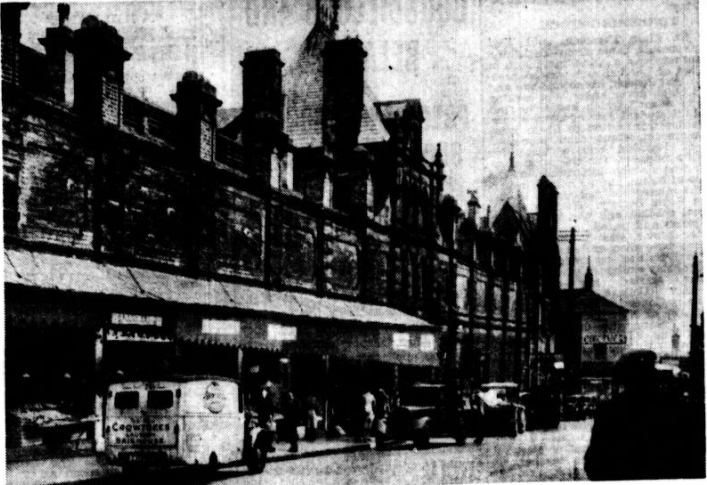
Albion Street: Halifax's Street of Fish and Buses
The Halifax street featured in today's picture will be remembered by many local people for two things above all others: fish and buses.
The street is Albion Street, running between Southgate and Thomas Street. By the time this article was written, it had already been a familiar part of Halifax for many years and had changed little over the previous four decades. Its appearance had remained largely the same since the construction of the New Halifax Markets in the closing years of the nineteenth century.
Part of the Market building can be seen in the original photograph. Construction began in 1892, with the foundation stone laid on 6 October that year. The building was officially opened on 25 July 1896 by the Duke and Duchess of York, who later became King George V and Queen Mary. The development also included provision for a fish market, which remained on Albion Street for many years afterwards.
While the fish market gave the area its distinctive character, buses became an equally important feature in later years. Albion Street and nearby King Edward Street developed into one of Halifax's principal transport hubs, with numerous street bus stands serving destinations across Yorkshire and beyond.
Passengers could board buses to Manchester, Bingley, Wakefield, Leeds, Bradford, Keighley, Cleckheaton and many other towns. The constant flow of vehicles made Albion Street one of the busiest roads in the town centre, and pedestrians often faced a challenging task navigating their way through the traffic during peak periods.
The congestion became a frequent source of public criticism, and discussions regularly took place about the need for a dedicated bus station. It was hoped that such a facility would eventually relieve pressure on Albion Street, although at the time that prospect still seemed some way off.
Today, Albion Street remains an important reminder of Halifax's commercial and transport history, linking memories of the bustling fish market with an era when buses dominated the heart of the town.


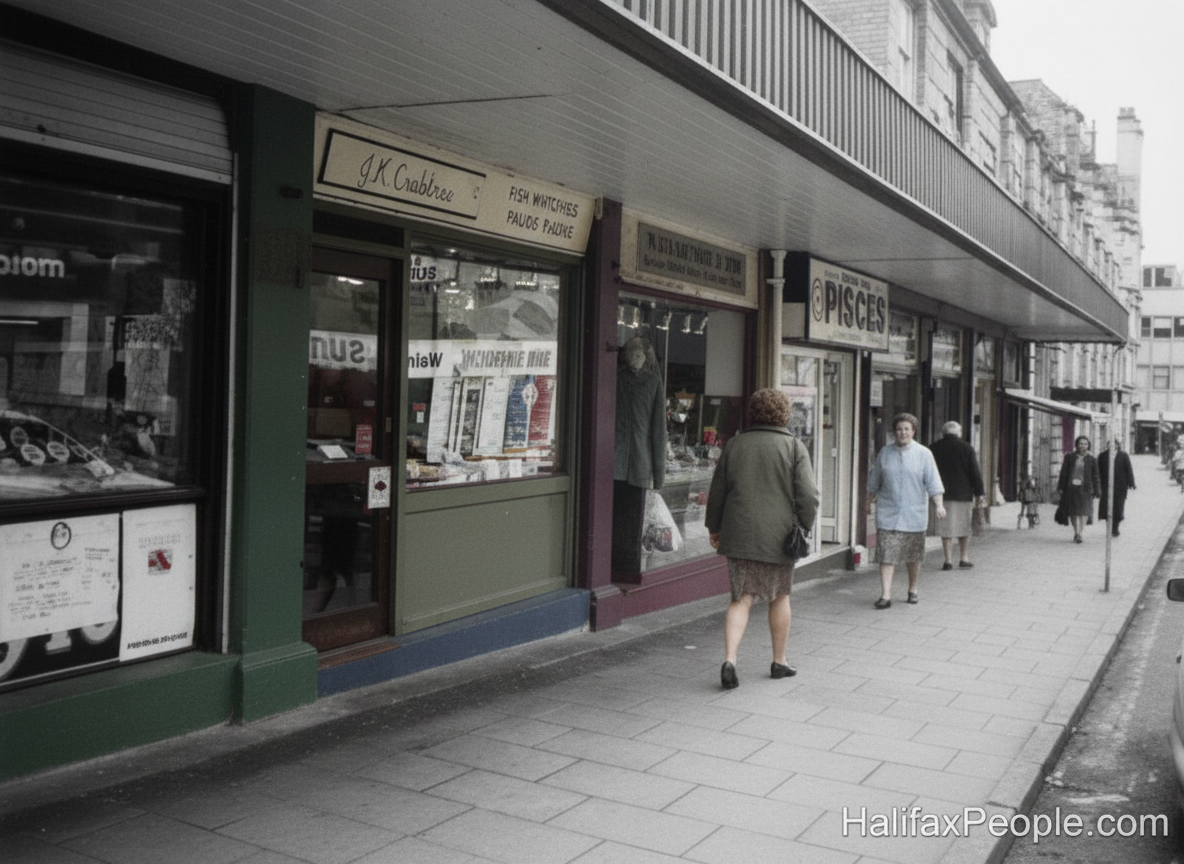
enhanced
 |
 |

Return to History Tour
or
Return to Home Page
If you have enjoyed your visit to this website, please spread the word by clicking the 'like' and 'share' buttons below. Thank you