Commercial Street

Commercial Street, Halifax: The New Street That Changed the Town Centre
Commercial Street may look like an established part of Halifax, but it is younger than many of the streets around it. Its creation was authorised by an Improvement Act in 1853, yet construction did not begin until around 1880. The new street was finally opened towards the end of the nineteenth century, cutting through an area that had previously contained buildings, open land and the grounds behind older properties.
Even its name took some settling. “Oxford Street” and “New South Street” were among the alternatives proposed before Commercial Street became the chosen name.
A post office at the heart of the new street
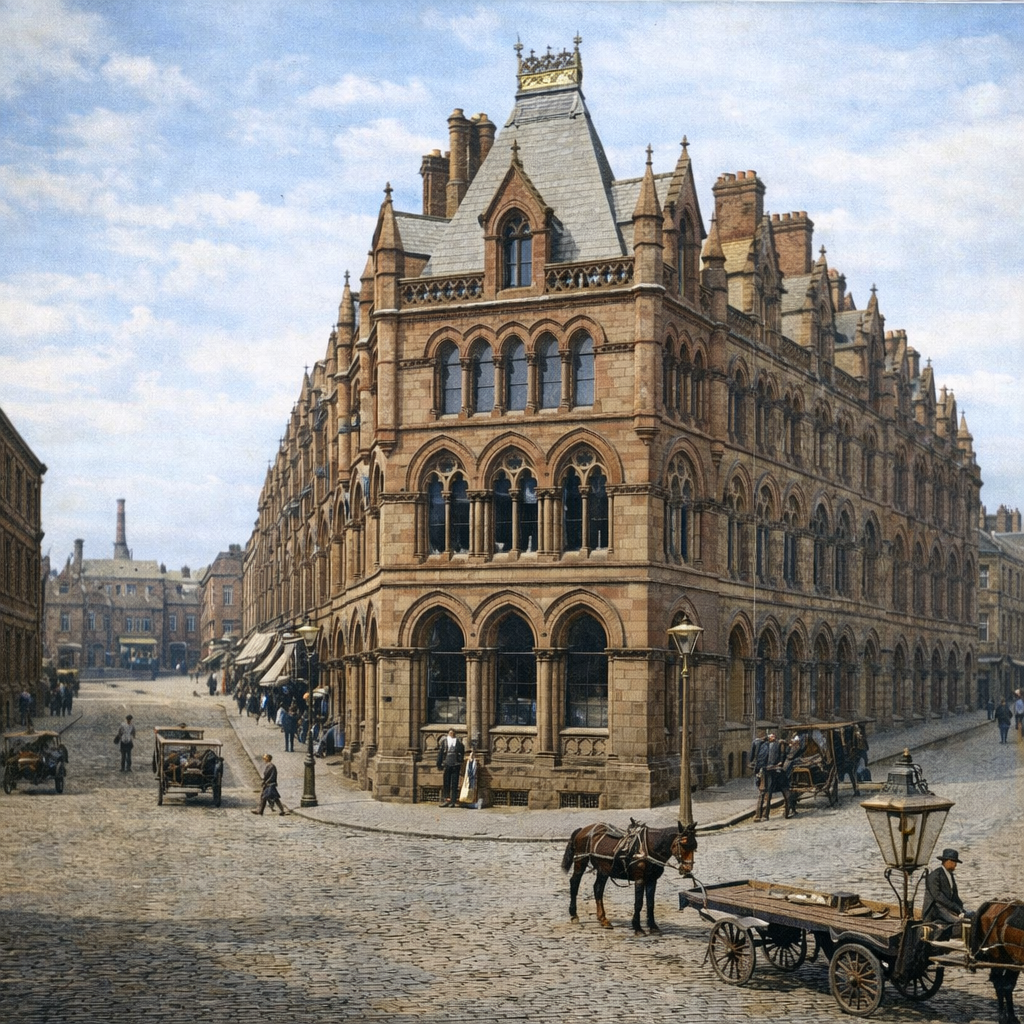
One of the first major buildings to establish itself along Commercial Street was Halifax’s General Post Office. Designed by Henry Tanner, it opened on 23 June 1887. Its imposing Gothic Revival stone façade was intended for a major public building, and the post office helped establish the character of the new thoroughfare.
The building replaced an earlier, smaller post office on Cheapside. It was more than a place to post letters: it was a prominent civic building at a time when Halifax was expanding and modernising its town centre.
Banks, theatres and electric trams
Commercial Street soon became associated with the financial and cultural life of Halifax. In 1897–98, new premises were built for the Halifax and Huddersfield Union Banking Company. To make way for them, the eastern part of the older Somerset House — originally Royds’ House, built in 1766 — was demolished. The bank later became associated with Lloyds Bank.
The street’s entertainment landmarks followed. Victoria Hall opened in 1901, and the Picture House, a purpose-built cinema designed by William Wormald Longbottom, opened in 1913. Its elaborate stone frontage remains a reminder of the architectural ambition of Edwardian Halifax.
Commercial Street also became part of the town’s electric tramway network. Halifax’s tramways opened on 9 June 1898, bringing a new form of public transport into the town centre.
A street built for a changing Halifax
Commercial Street was not simply another road added to the map. Its creation brought new public buildings, banking premises, theatres, shops and transport into one planned route. Its history captures a period when Halifax was reshaping itself for a modern urban age.
Editorial status: The 1853 authorisation, construction period, post office opening, banking development, theatre and cinema dates are supported by local-authority and heritage records. The proposed alternative street names are recorded in local-history sources.

Prescott Fountain >>>>>>>>>>>>

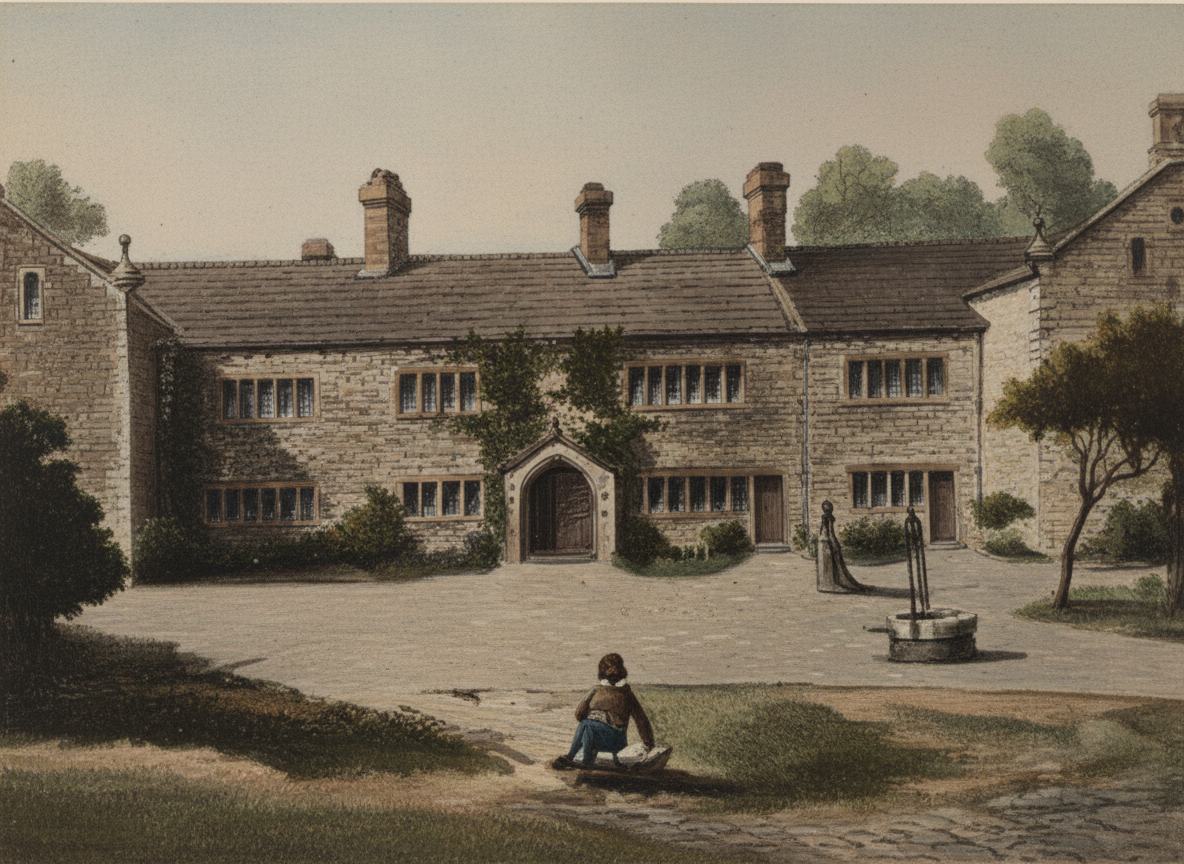
According to this map of 1835, Commercial Street and Huddersfield Road didn't exist. Ward's End, the house in the top picture existed but behind it was a large field(centre). No Victoria Theatre or picture houses or banks, but the Post Office is there. Much of the rest of the town roads as we know them can also be seen. So, Commercial Street is a comparatively new road.
  digitised |
 |


 |
 |


 |
  |


The site of Hebble Motor Services later became ABC cinemas


Same scene, different day


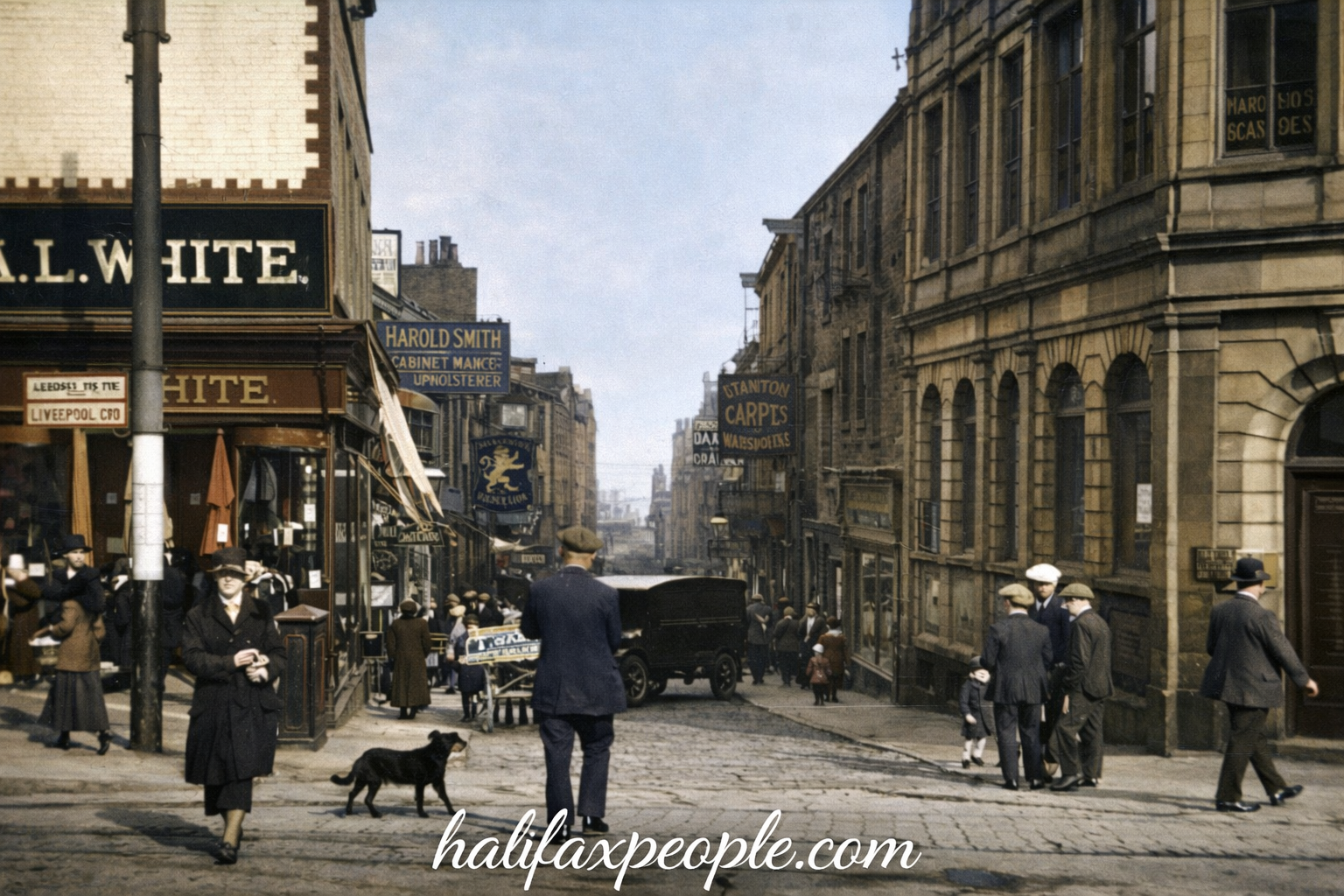
Commercial Street, Halifax, in 1902, the year after the Victoria Hall, now the Victoria Theatre, opened. 'The construction of the Victoria Hall completed the newest and grandest of Halifax's late Victorian thoroughfares.'

The entrance to Arcade Royale is part of the building at 28–32 Commercial Street.
The building dates from around 1900, with the arcade entrance inserted around 1912, probably designed by Clement Williams.
Its elaborate stonework includes towers, turrets, carved decoration and a distinctive mansard roof.
 |
 |


The first electric street light in town was in front of the Post Office


 |
 |

View from the tram

 |
 |

This is one of the most interesting buildings on Commercial Street.
- Built in 1897 for the Halifax and Huddersfield Union Bank.
- Designed by architects Horsfall and Williams.
- The banking hall has elaborate plasterwork by T. Cordingley of Bradford.
- The entrance has red granite columns, carved cherubs and the Halifax coat of arms.
It is Grade II listed.
The 1897 date is actually displayed above its entrance.
The ornate banking hall, including its glass roof, is particularly noteworthy.


Jubilee Day, 9th June 1898. Opening of the tramways


Post Office c1905
The General Post Office was opened on June 23rd, 1887 and the Victoria Hall on February 8th, 1901. The organ in the Victoria Hall was presented to the people of Halifax by Miss Elizabeth Porter of Savile Royd as a memorial to her brother, Samuel Porter.

Read more about the Post Office


 |
 |
Hall End


enhanced

enhanced


 |
 |


 |
 digitised |


digitised

  |
 |


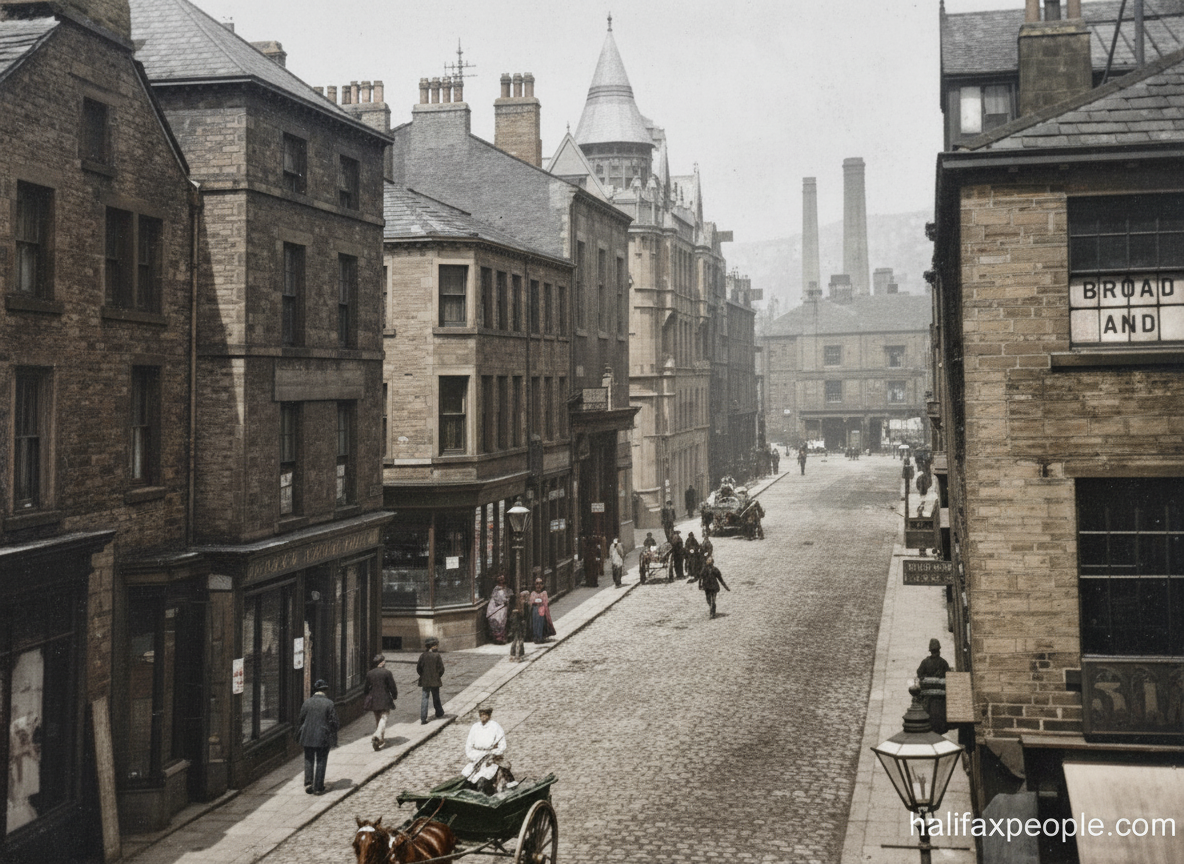
Crown Street (left) - Hall End corner looking towards Waterhouse Street(right)

This picture was taken in 1888, just after the Penny Bank had been completed at the corner of John Street (turreted roof - top centre)
digitised

If you have enjoyed your visit to this website, please spread the word by clicking the 'like' and 'share' buttons below. Thank you