Crag Vale Blog

WundaNumba 777-545 - What's behind your WundaNumba.com
Cragg Vale, near Halifax — the story behind the photographs
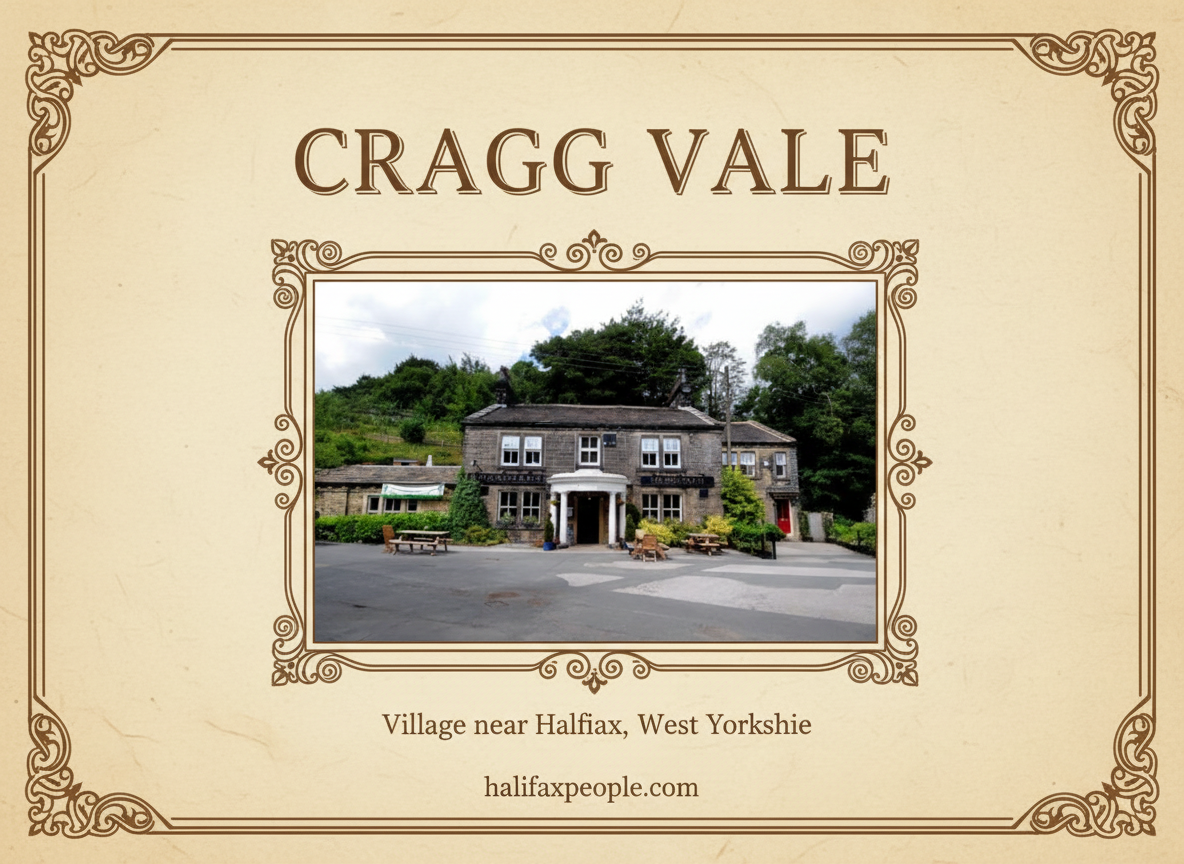
Cragg Vale is a rural village in the steep-sided Pennine valley south of Mytholmroyd, where Cragg Brook winds between wooded slopes, old farms and open moorland. The name appears in historical records by 1449, although the settlement may originally have consisted of scattered hill farms rather than a village clustered around a central street. The earliest settlement developed around the bridge over Cragg Brook, Church Bank Lane and Rudd Lane, where old routes connected the valley with the uplands and neighbouring communities. The road through Turvin Clough also formed part of an important route towards Blackstone Edge and Lancashire.
The Cragg Vale Coiners
Cragg Vale is particularly famous for the Cragg Vale Coiners, an eighteenth-century gang of counterfeiters led by David Hartley, known as “King” David Hartley. The gang clipped small amounts of precious metal from the edges of genuine gold coins, collected the shavings and used the metal to make counterfeit coins. The trade flourished in a period when many local families combined handloom weaving with farming to make a living, while the remote valley offered opportunities to conceal illegal activity.
The Coiners’ activities brought them into conflict with the authorities. In 1769, exciseman William Deighton was murdered after investigating counterfeiting in the district. The subsequent prosecutions helped bring the gang’s activities to an end, and David Hartley was executed in 1770. The story has since become one of Calderdale’s best-known episodes of criminal history, inspiring Ben Myers’s novel The Gallows Pole and the BBC television adaptation.
Mills, mill owners and working life
Long before large factories dominated the valley, Cragg Vale’s economy combined farming with textile work carried out in cottages and small workshops. The area’s plentiful streams provided power for water-driven mills, and by the eighteenth century there were already mills for paper-making, corn milling and fulling woven cloth. As production expanded, families including the Hinchliffes, Greenwoods and Sutcliffes developed mill businesses throughout the valley.
During the nineteenth century, cotton mills brought employment to the community, but industrial growth also created harsh working conditions. Children and adults worked long hours, and contemporary criticism of the mill system helped fuel wider demands for factory reform. The mills eventually closed or changed use, but their ruins, mill ponds, old cottages and stone bridges remain clues to the industrial landscape that once filled the valley.
Cragg Hall, the church and village landmarks
One of the valley’s most prominent historic houses was Cragg Hall, associated with the Hinchliffe family, whose textile businesses helped shape the local economy. The family’s fortunes grew alongside the mills and cottages they developed for workers. Cragg Hall was destroyed by fire on 12 August 1921, leaving a lasting gap in the local landscape and a subject of continuing interest for historians and residents.
The village’s St John the Baptist in the Wilderness Church, built in 1839, became a focal point for local worship and community life. The Robin Hood Inn and Hinchliffe Arms also remain familiar landmarks, reflecting the importance of inns in a rural district where travellers, workers and neighbours met. The Hinchliffe Arms was previously known as the Cragg Vale Inn before being renamed in 1912. Historic photographs of the church, inns, mills and old houses help trace how the village developed from a scattered rural settlement into an industrial community.
The road over the moors and Cragg Vale today
Cragg Road climbs steeply from the Calder Valley towards the open moors and Blackstone Edge. The route follows a historic transport corridor that linked the valley with settlements beyond the Pennines; the Mytholmroyd Bridge Trust turnpike dates to 1815, although it may have followed an older packhorse route. Today, the climb is well known to cyclists, and the upper valley remains a starting point for walks across the moors and through woodland. The Cragg Vale Heritage Trail uses interpretation boards to connect visitors with the valley’s buildings, industries and social history.
Cragg Vale’s story is far richer than its association with the Coiners alone. Its history brings together isolated hill farms, textile mills, influential mill-owning families, religious life, notorious crime and the transport routes that linked Calderdale with Lancashire. Old photographs help preserve the memory of the mills, houses, inns and people that shaped this distinctive Pennine valley.
 Historic Cragg Vale |
 Random Cragg Vale |
 |
 Crag Hall OLD CRAGG HALL & THE LEGEND There are buildings in Yorkshire that sit quite happily in their own skin — and then there are those that seem to carry two ages at once. Old Cragg Hall is one of those. Part ancient, part altered, it has the look of a place that has been patched and re-patched by time, and it stands in a position that makes even the passing wanderer slow their step and stare. Perched up on the hillside, it commands attention — and if you’ve a romantic bone in your body, you’ll feel it working on your imagination straight away. Yet the earlier history of the dwelling has long been wrapped in uncertainty, and that very mystery has helped the hall gather stories around it like mist. Tradition clings to Old Cragg Hall in abundance, and one tale in particular has refused to die. It is said that, in the days when the hall was held by the ancient family of Sunderland, a maid-servant met her end in the porch chamber — and that her spirit returned, haunting the place for forty years. Grim stuff, no doubt… but Yorkshire has never been short of grim tales, especially where old houses and lonely hillsides are concerned. The story was collected and shaped into verse by F. C. Spenser — father of N. B. Spenser of Halifax — a man remembered as poet and antiquary. His poem, known as the Cragg Vale Ballad, deals with the causes and consequences of the murder, and he notes that local belief held the ghost would not have troubled the hall at all had the woman’s life not been cruelly cut short. The poem ends with reassurance that, at the time of writing, the hall was free of its disembodied visitor. There is even a place-name tied to the tale: Burnt Wood, where the body was said to have been buried, still standing not far from the old hall. Whether you take that as proof, coincidence, or simply the valley’s way of keeping a good story anchored to the land — well, that’s for each of us to decide. As for the official record, it is said not to run further back than 1837, when the hall came into the hands of Christopher Rawson, Esq., J.P., a name well known in the Parish of Halifax. By that time the building had fallen into poor repair, and rather than merely patch it, he chose to rebuild — keeping to the original lines, which helped preserve its air of antiquity. Later, the hall passed into the hands of the Hinchliffe family, and in more recent times it was owned by Mr. W. A. Simpson-Hinchliffe, J.P., who built a beautiful and commodious residence in the valley — giving the name “Cragg Hall” to the newer house, while the smaller dwelling became known as Old Cragg Hall. And that’s the thing about places like this: they are never just stone and timber. They are story, rumour, record, repair, and remembrance — all laid one on top of another, until you can’t quite separate the facts from the feelings. Question for locals: Have you ever visited Old Cragg Hall — or heard the ghost story told in your family? And do you know where people locally place “Burnt Wood”? Call for contributions: If you’ve photos, clippings, or any solid references (especially dates, owners, or maps), send them in — and we’ll pin the history down properly. |
 |
If you have enjoyed your visit to this website, please spread the word by clicking the 'like' and 'share' buttons below. Thank you