Hebden Bridge Blog


WundaNumba 777-545 - What's behind your WundaNumba.com
Hebden Bridge — From Pennine Weaving Town to Calder Valley Landmark
Hebden Bridge grew where Hebden Water meets the River Calder, in a steep-sided valley where the landscape shaped both work and daily life. Before the town expanded, nearby hillside settlements such as Heptonstall were more significant. A stone packhorse bridge, generally dated to around 1510, helped traders cross the stream and linked routes carrying woollen goods through the valley. The old bridge remains one of the town’s most recognisable historic features.
For centuries, many local families combined farming with textile work, weaving woollen cloth in small workshops and homes. Industrialisation changed the valley dramatically. Mills were built beside fast-flowing streams to harness waterpower, and later factories used steam power as coal arrived through improved transport links. Hebden Bridge became an important centre for cotton and fustian production; fustian, a durable cotton fabric, was used to make work clothes. The town’s narrow valley left little room for expansion, so terraces and mills climbed the slopes and filled the valley floor.
Transport helped fuel that growth. The Rochdale Canal reached the area in the late 18th century, connecting local manufacturers with wider markets, followed by the railway through the Calder Valley in the 1840s. Warehouses, mills, bridges and workers’ housing still reveal traces of this industrial past. In the later 19th century, civic and community buildings—including the Co-operative movement’s buildings—reflected the town’s changing social life.
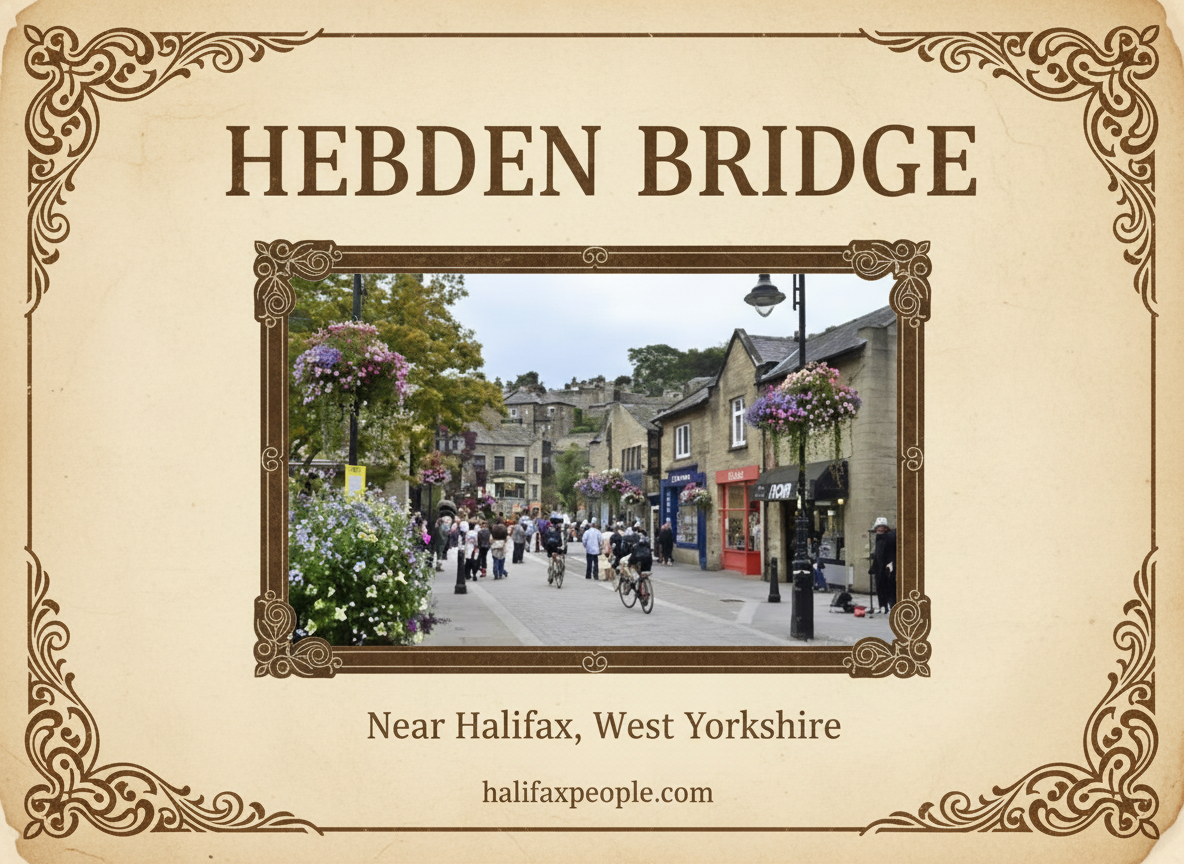
Hebden Bridge has continued to change since the decline of traditional textile manufacturing. Its independent shops, arts scene and historic streets now sit alongside the canal, river and surviving industrial buildings. The surrounding hills and woodland add to its distinctive character, while the town’s built heritage offers a reminder of how water, textiles and transport shaped this corner of Calderdale.
 |

|
 |

|

|

|
If you have enjoyed your visit to this website, please spread the word by clicking the 'like' and 'share' buttons below. Thank you