Historic Ainleys -
The Gateway Between Two Towns
Historic Ainleys

For over a century, Historic Ainleys has served as the dramatic gateway between Halifax and Huddersfield. This steep, winding road—one of Calderdale's most challenging highways—has witnessed trams struggling up impossible gradients, trolley buses negotiating hairpin bends, and the complete transformation of the landscape with the arrival of the M62 motorway.
The story of Ainleys is the story of transport evolution, industrial ambition, and the determination of communities to stay connected despite the formidable geography of the Calder Valley.

One of Calderdale's Steepest Roads
Ainleys Hill rises dramatically from Elland, climbing with a gradient of 1 in 11—making it one of Calderdale's steepest roads. Combined with a tricky bend near the summit, this made the Ainleys one of the most potentially hazardous highways in the district. For many years, it was the chief link between Elland and Huddersfield, carrying all manner of traffic from horse-drawn carts to modern motor vehicles.
The road's elevation and challenging topography meant that every journey up or down Ainleys was an adventure. In winter, ice and snow made the ascent treacherous. In summer, the steep climb tested the endurance of horses, engines, and drivers alike.

SHeppener
The Age of Trams: 1914-1938
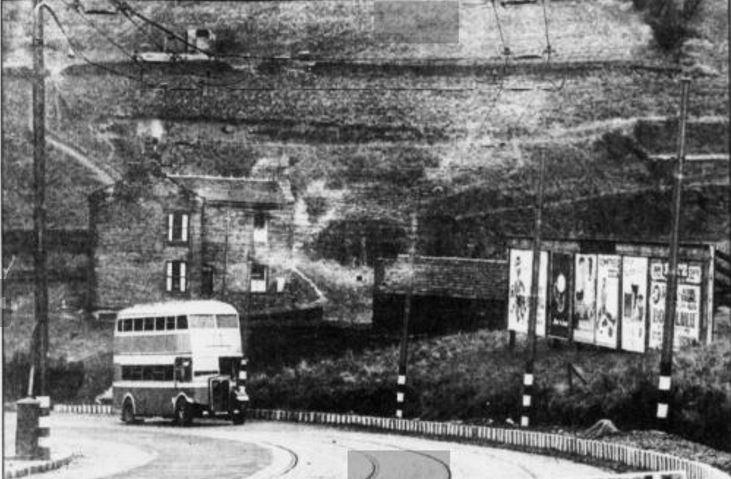
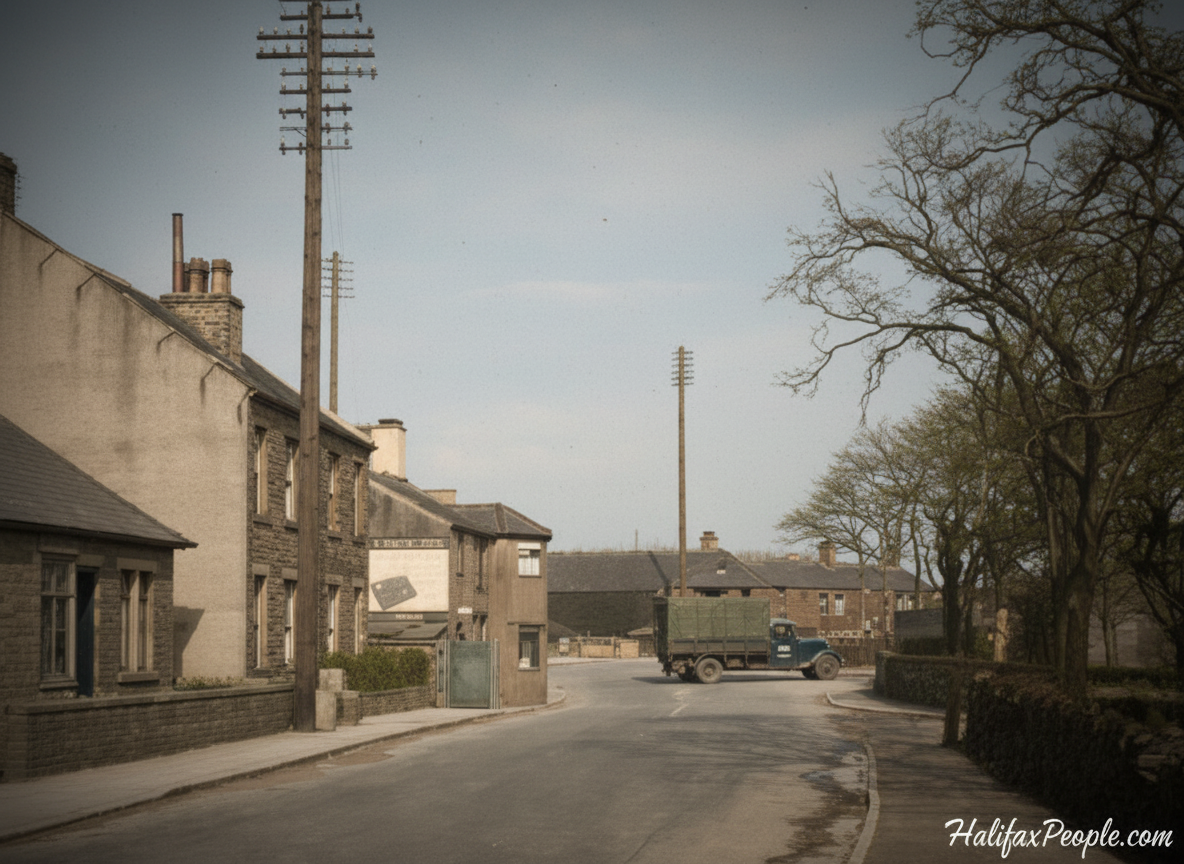
January 1914 marked a revolution in local transport when trams first began to climb and descend the Ainleys. The smaller picture from the early 1940s shows a tram negotiating the bend—a sight that would have been familiar to thousands of commuters and travelers.
The trams faced a formidable challenge. The steep gradient required powerful motors and skilled drivers. Descending was equally dangerous, with brakes tested to their limits. Yet for nearly a quarter of a century, the trams persevered, providing a vital public transport link between the two towns.

SHeppener

May 1938 saw the last tram run replaced by "trackless cars"—or trolley buses—operated by Huddersfield Corporation as far as West Vale. These electric buses, drawing power from overhead wires, were more flexible than trams and better suited to the challenging terrain.


The Horse and Jockey: A Landmark on the Climb
As you climbed towards Ainley Top, a familiar sight on the right-hand side was the Horse and Jockey pub. This traditional Yorkshire inn served as a welcome resting point for travelers who had just conquered the steep ascent—or were fortifying themselves before the descent.
The pub's name reflected the era when horse-drawn transport dominated the roads. Horses pulling heavy loads up the Ainleys would often need to rest, and the Horse and Jockey provided refreshment for both animals and their drivers.

Horse and Jockey was on the right as you climb towards Ainley top.



The 1912 Strike: Labor History at Ainleys
Your historic photographs capture a significant moment in local labor history—the 1912 strike. These images show workers gathered at Ainleys, likely connected to the broader industrial unrest that swept through Britain's textile and manufacturing districts in the years before the First World War.
The Calder Valley's mills, factories, and workshops were centers of industrial action during this period. Workers fought for better wages, improved conditions, and recognition of their unions. The fact that Ainleys—a major transport route—was chosen as a gathering point suggests the strategic importance of the location for labor organizing.


The Old Ainley Bridge: 1970 Demolition
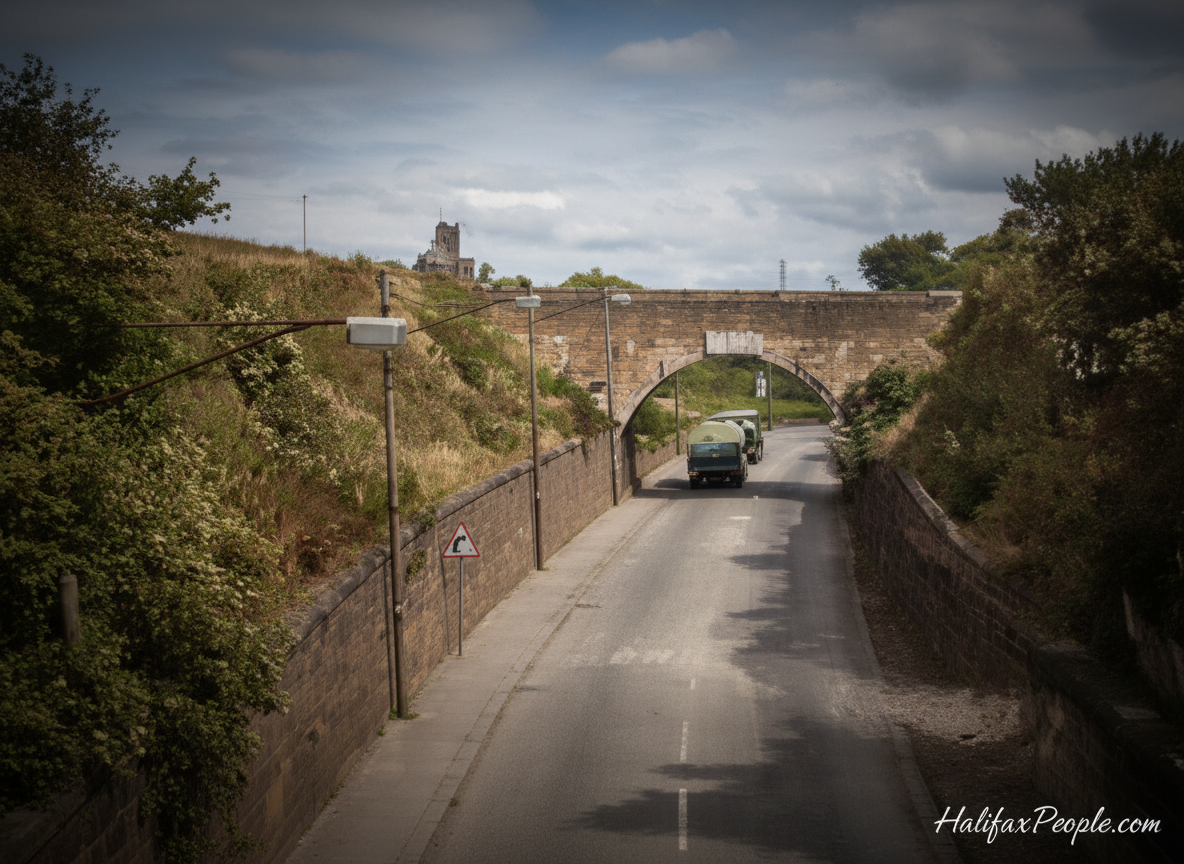
For decades, a modest bridge stood at the top of the Ainleys, carrying the road over a small valley. This bridge became a familiar landmark for travelers—a signal that the steep climb was finally over and Ainley Top had been reached.
July 11, 1970 marked the end of an era when the old Ainley Bridge was demolished. The demolition was necessary to make way for the construction of the M62 motorway—a project that would completely transform the landscape and transport infrastructure of the region.
The last photograph of the bridge while it was still open to traffic was taken on the day before its demolition. After that Saturday night, the last bus journey up the Ainleys had been completed, and the old bridge was gone forever.
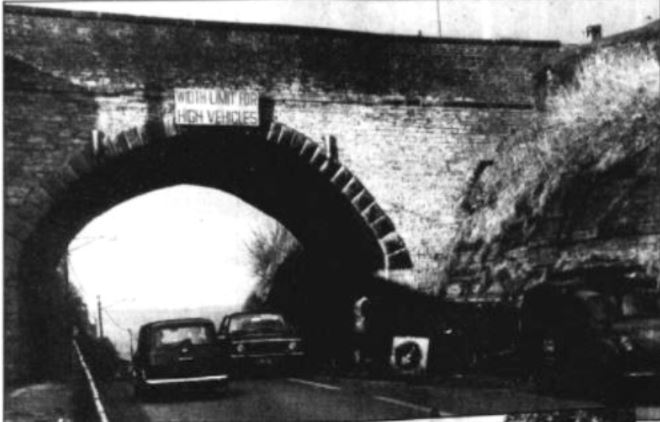
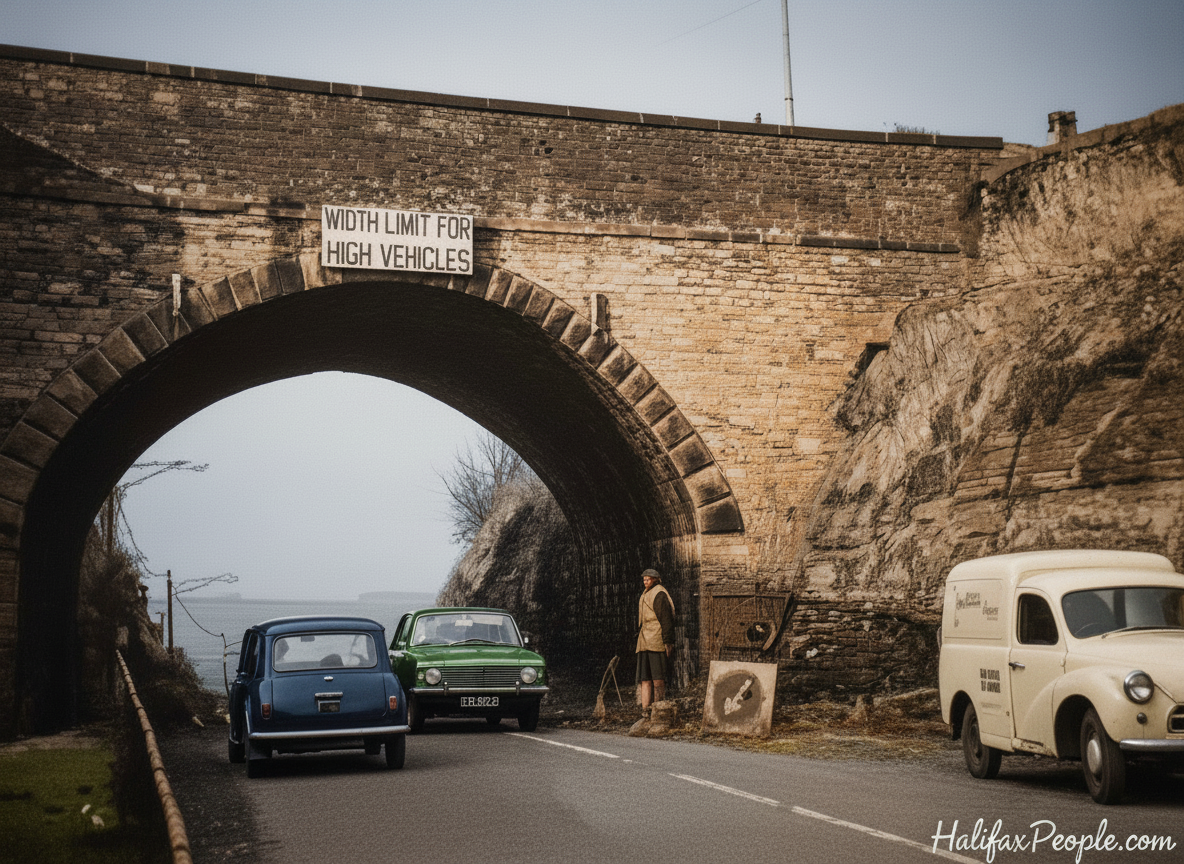
The old bridge which was replaced which was demolished on July 11th, 1970 to make way for the motorway bridge which is called Whitehaughs but that name is never used.
enhanced
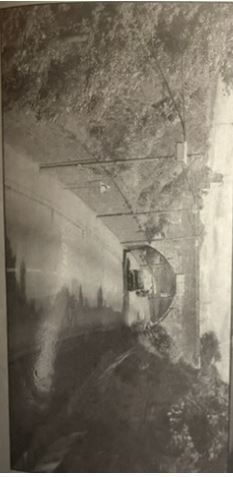
Old trolley bus posts, being used here for street lights.
enhanced
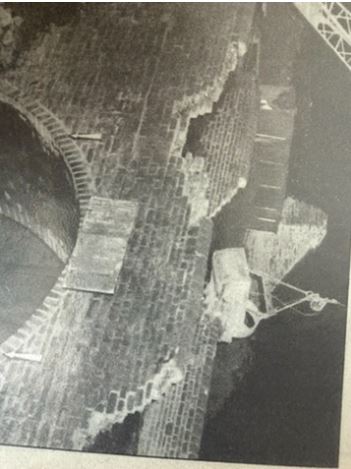
The old bridge was taken down overnight and the road was open again the next day.

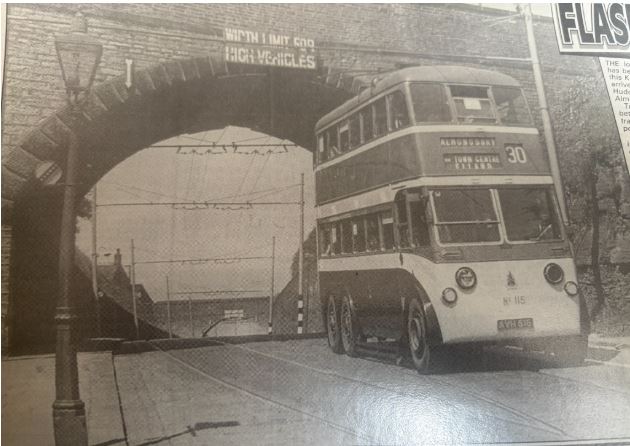
Trolleybus Karrier E6 to Almondbury went as far as West Vale, Elland pictured here in the late 1930s
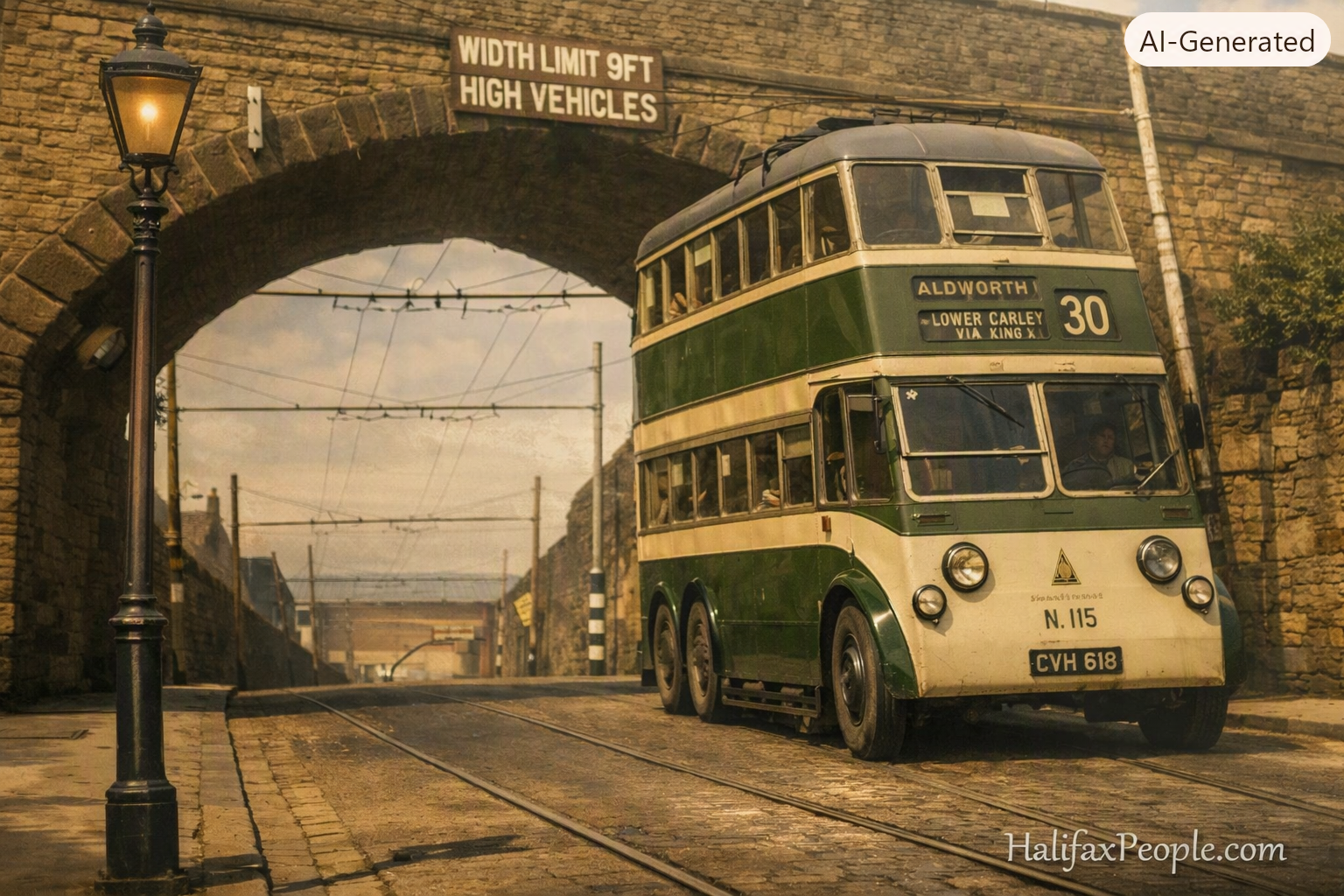
enhanced
The M62 Construction: 1971 Transformation
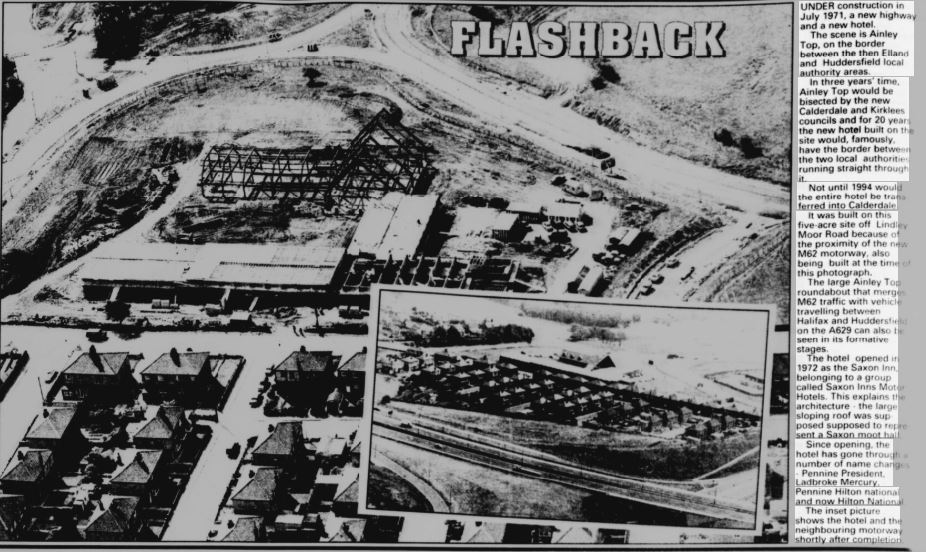
July 1971 brought dramatic change to Ainley Top. Aerial photographs from this period show the massive construction project underway—a new highway being carved through the landscape, with the M62 motorway and the A629 dual carriageway taking shape.
The scene at Ainley Top was one of industrial-scale transformation. Where once there had been fields and modest roads, now there were massive earthworks, concrete bridges, and the infrastructure of modern motorway travel.
The new bridge at the top of the Ainleys became a concrete arc carrying the M62 across the A629, giving drivers heading towards Elland or Halifax a dramatic first glimpse of Calderdale spread out below.


The Border Dispute: 20 Years of Uncertainty
An interesting footnote to the Ainley Top story concerns the border between Halifax and Huddersfield local authority areas. For many years, there was confusion and dispute about exactly where the boundary ran.
It was feared that Ainley Top would be bisected by the new motorway, creating administrative complications for both councils. The dispute ran for 20 years before being finally resolved. The new hotel built at Ainley Top—opened in 1972 as the Saxon Inn (later changing names multiple times)—stood right on this contested border.

enhanced

When the New Elland Bypass Opened: 1978
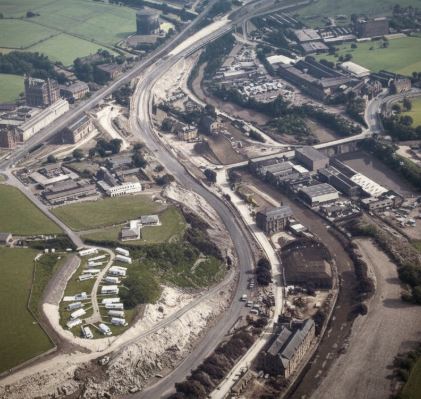
1978 brought another major change when the new Elland bypass—the Calderdale Way—opened. At last, there was a modern, streamlined, and much safer main road between the two towns. The Ainleys, which had carried the burden of through traffic for so long, became a slip road.
This transformation was bittersweet. The new road was undoubtedly safer and faster, but it also meant that the historic Ainleys—once the main artery between Halifax and Huddersfield—was now a secondary route. The days of trolley buses and trams climbing the steep gradient were long gone, replaced by the hum of motorway traffic on the elevated M62.
enhanced
Ainley Top Today: Roundabout & Landmark
Today, Ainley Top is dominated by the large roundabout that manages traffic between the M62, A629, and local roads. The roundabout has become a landmark in its own right—a place where travelers pause before continuing their journeys to Halifax, Huddersfield, Manchester, or Leeds.
The hotel at Ainley Top (originally the Saxon Inn, later rebranded several times) remains a visible reminder of the 1970s development. The bridge still offers that dramatic first glimpse of Calderdale for travelers heading towards Halifax.
Harry Facks' Note
"I must say, the Ainleys always struck me as one of those places where you could truly appreciate the determination of Victorian engineers and transport pioneers. To think of trams climbing that gradient—and doing it day after day, year after year! And the poor horses before them! The modern motorway is certainly more convenient, but one does miss the character of the old routes. Still, progress marches on, doesn't it?"

If you have enjoyed your visit to this website, please spread the word by clicking the 'like' and 'share' buttons below. Thank you