Historic Elland

Historic Elland is surrounded by several other smaller communities and therefore we have divided this page into the following sections.
- Elland - Long Wall, Elland Bridge and Northgate(this page)
- Elland - Briggate and Huddersfield Road
- Elland - Church Street, Westgate and Hullen Edge
- Elland - Southgate and side streets
- Elland - Victoria Road and streets to south
- Elland - Ainleys
- Elland - Elland Lane and Dewsbury Road
Huge thanks go to Steaven Heppener for allowing the use of his huge collection of photographs of Elland and surrounding areas.

1. Elland from Halifax, West Vale and Elland Bridge
From West Vale

Longwall and the Road into Elland
The road from West Vale towards Elland passes along the stretch locally known as Longwall. The old photographs show the road looking back towards West Vale and Salterhebble, with Hullen Edge above it. Another view shows the steps leading up to Hullen Edge Park.
This was an important approach to Elland Bridge before the modern road network changed traffic patterns. The steep hillside, retaining wall and connecting steps are reminders of the older routes linking West Vale, Hullen Edge and the Calder valley.
The photographs also show how the road divided: the upper route led towards Hullen Edge, while the lower road continued towards Elland Bridge.


Albert Mills at Bank Bottom
Albert Mills stood at Bank Bottom, where Saddleworth Road narrows as it approaches Elland Bridge. The mill was originally known as Crossley's Mill and was owned by Luke Crossley when a devastating fire destroyed it on 7 June 1860.
The five-storey building measured approximately 21 yards by 16 yards. Its ground floor contained a blue dyehouse, with dye vats valued at nearly £1,000. The upper floors held machinery including tumming machines and power looms, together with stocks of wool and shoddy.
The mill was subsequently rebuilt by Joseph Smithies & Son. The replacement was a six-storey building, lit by electricity. By 1895 the Smithies business employed around 800 workers across its operations, including its Elland mills.
Joseph Smithies & Son continued at Albert Mills until the business closed in 1970. Parts of the mill buildings were demolished during the 1970s.

The bottom road approaching Elland Bridge from the West Vale direction, the top road approaching the top of Westgate.

SHeppener

SHeppener
Elland Bridge

Elland Bridge to the left (where the cows have come from).

Elland Bridge taken from the 'The Royal' or 'The Bridge' side.

The Long History of Elland Bridge
Elland Bridge is much older than the stone structure seen in the historic photographs. References to a crossing here go back to 1199, when it was known as Brigrode, and again to 1316, when William was recorded as living at the Bridge of Elland. The earliest bridges were wooden and were repeatedly damaged or swept away by floods.
In 1483, Henry Savile of Hullen Edge contributed money towards the bridge, and in 1540 John Savile of New Hall left a further sum in his will for its repair. A stone bridge was built in 1579 by Richard Aske, a stonemason from Hope in Derbyshire, but its foundations failed in 1584. The Great Flood of 1615 destroyed another bridge, and a replacement costing £485 was completed by 1617.
The bridge was widened several times between 1797 and 1813, when it was extended to cross both the River Calder and the canal. In 1897 it was widened again, increasing its width from 22½ feet to 36 feet. It remained a vital route through Elland until the construction of the bypass.
The history of the bridge is also a history of the town itself: its importance as a river crossing brought roads, trade and industry to this part of the Calder Valley.

New Hall at Elland
New Hall, on Whitwell Green Lane, is one of the most important surviving late-medieval houses in the Elland district. It was built for Nicholas Savile in the second half of the fifteenth century, probably around 1490. Originally timber-framed, it was later partly encased in stone.
The house was substantially altered around 1640 by John Foxcroft, who refaced the main hall range in stone. Its original timber framing can still be seen in parts of the building. The house has an unusual H-shaped plan, with a central hall and projecting cross-wings.
One of its most distinctive features is the unusual window above the entrance, popularly known as the Apple and Pear Window. It has a circular central opening surrounded by six pear-shaped openings.
New Hall was associated with the Savile family, who became lords of Elland following the marriage of Sir John Savile to Isobel de Eland. The house was later occupied by Dr Henry Power, the seventeenth-century physician and scientist associated with the early Royal Society.
New Hall is Grade I listed. It must be distinguished from the old Elland Hall near the river, which was demolished in 1976 during the construction of the bypass.

The Royal Visit of 1912 – Elland's Triumphal Arch
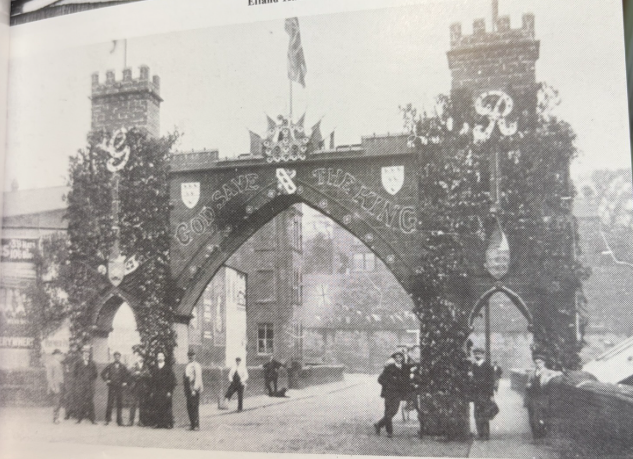
When King George V and Queen Mary visited the district in July 1912, Elland prepared a special welcome for the royal couple. A temporary triumphal arch was erected at Elland Bridge as part of the town's decorations.
The arch was intended to provide a ceremonial entrance for the royal visitors as they passed through Elland. Such structures were commonly erected for royal visits, coronations and other important civic occasions, and were usually decorated with flags, royal emblems and welcoming messages.
The proposal was discussed at a meeting of Elland District Council, reported in the Halifax Evening Courier on 4 July 1912. The temporary arch would have been a striking feature of the bridge and its approaches, but it was not a permanent part of the historic structure.
It is a fascinating detail in the history of Elland Bridge, showing how the old crossing became a centre of civic celebration as well as an important route through the town.


Before the Bridges – The River Crossing
Before a permanent bridge was built at Elland, people crossing the River Calder would have depended on a less reliable route. The Elland Conservation Area appraisal records that stepping stones existed across the river and could have been used when floods swept away the wooden bridges.
The early crossing was important enough to give its name to the locality. The reference to “Brigrode” in 1199 means the road to the bridge, while a reference in 1316 mentions William living at the Bridge of Elland.
The stepping stones are a reminder that the river crossing was not simply a matter of building a bridge. It was a route that had to be maintained and adapted to the changing river, especially after floods.

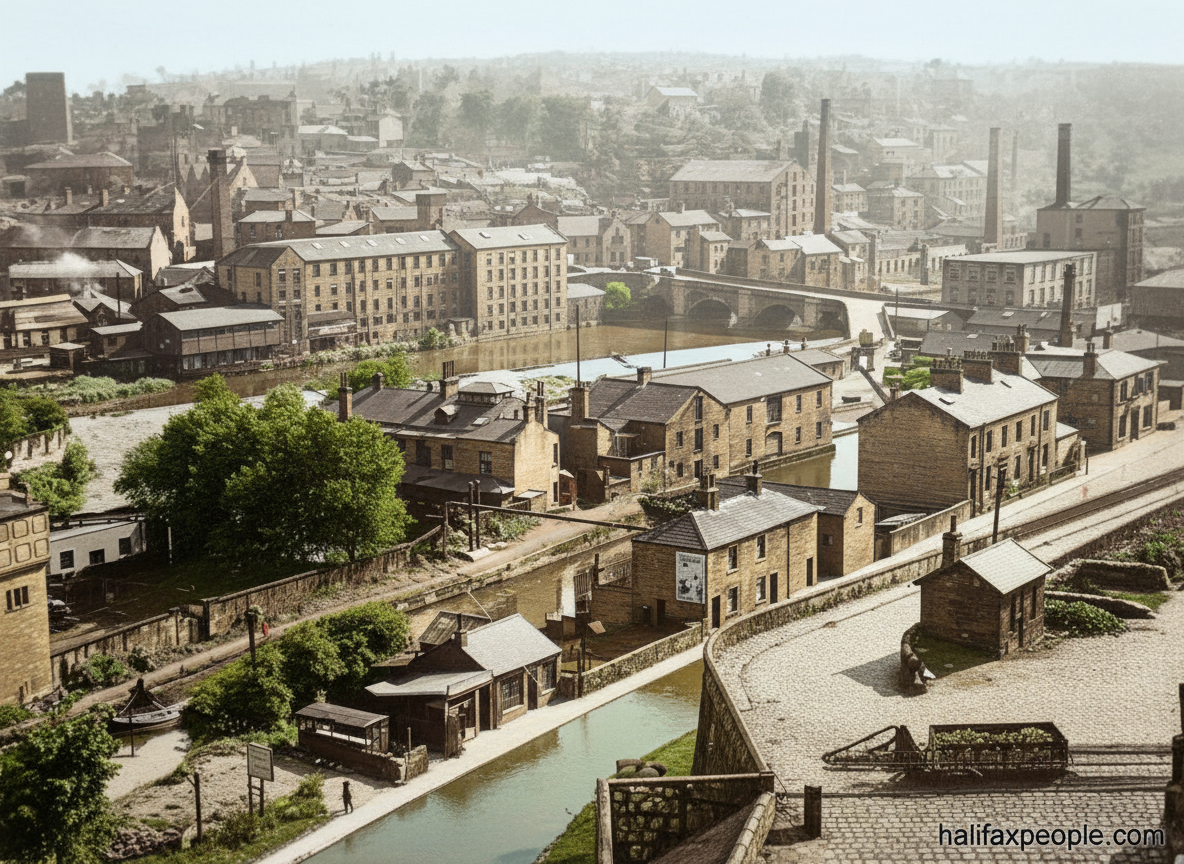
Elland Wharf and the Calder and Hebble Navigation
Before the railway transformed transport in the Calder Valley, the canal was one of the most important routes for moving goods through Elland. Work on the Calder and Hebble Navigation began in the 1750s, with engineer John Smeaton involved in the construction of an early cut from the river near West Vale towards Elland Weir.
The canal was gradually extended, and a wharf was established at Elland. By about 1830, Wharf House had been built, when the canal trade was flourishing. Coal was unloaded at the staith for the Elland and Greetland Gas Works, and the wharf became an important point for the distribution of fuel and other goods.
At the beginning of the twentieth century, Robert Carey operated a fleet of six barges from the wharf. His son Thomas Carey was remembered locally as the first bargee to take a diesel-powered barge down the canal in 1919.
The arrival of the railway reduced the canal's importance, although commercial traffic continued for many years. The last commercial boat traffic on the Calder and Hebble Navigation ended in 1955. Today the waterway is principally used for leisure boating and walking, but the old wharf and canal-side buildings recall the period when Elland was an important inland transport centre.


 |
 |

enhanced

enhanced
Elland New Hall

Graham Jagger
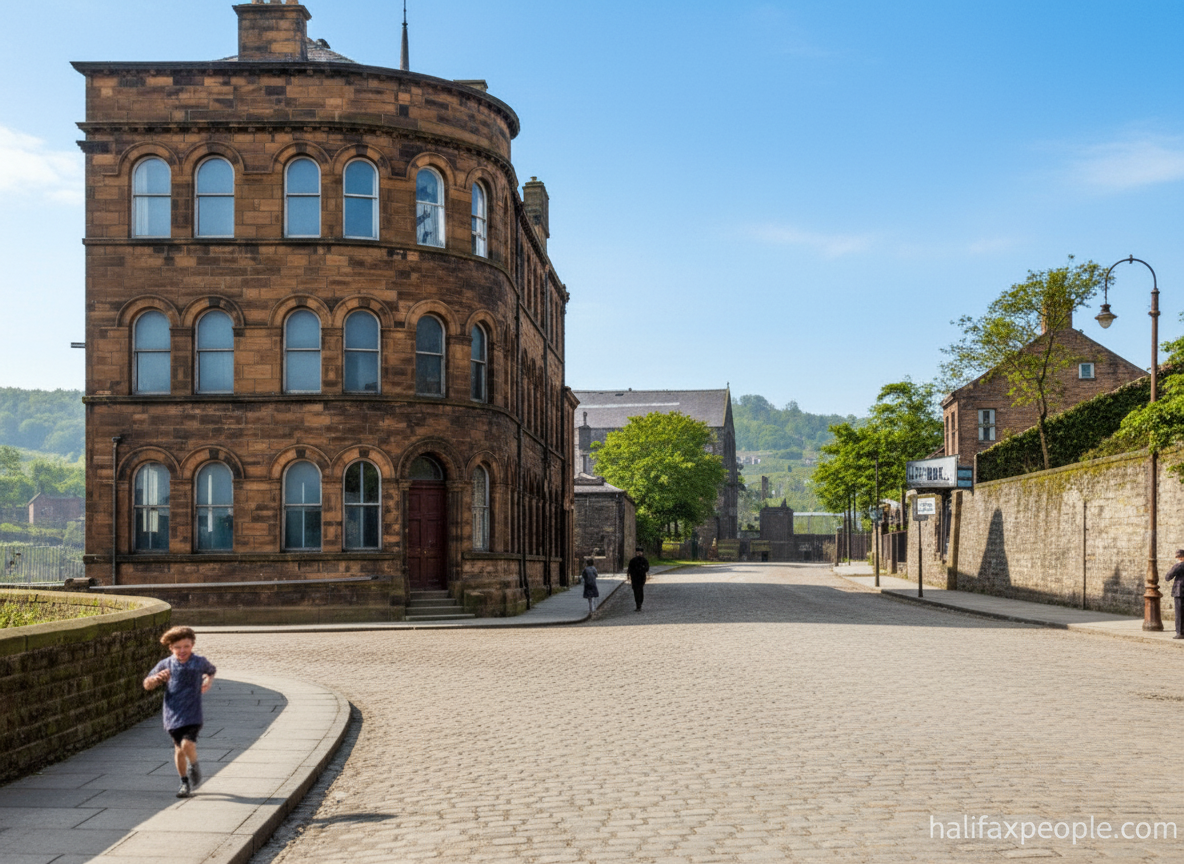
On the left was Lilies Dye Works, demolished in the 1930s. Elland Hall was demolished in the 1970s.
On the right was Elland Toll House, demolished in the early 1900s when it became unoccupied and is now a small park.
Elland Toll House and the Turnpike Roads
The toll house was part of the network of turnpike roads which developed around Elland during the eighteenth and nineteenth centuries. The tolls helped pay for the upkeep of roads that were increasingly important to the movement of goods, livestock and people.
The Halifax to Elland turnpike was established in 1735, while the Halifax to Huddersfield route followed in 1777. The latter was constructed by John Metcalf, better known as Blind Jack of Knaresborough, the celebrated road builder. A toll-bar at Elland Bridge charged two pence for a packhorse and one penny for a person, according to the Greater Elland Historical Society's town history trail.
Other turnpike routes connected Elland with Leeds and Brighouse. The toll house eventually became unoccupied and was demolished in the early twentieth century. The small public open space on the site preserves the memory of a building that once stood beside one of the town's busiest approaches.
Park Road towards Brighouse


The Station Hotel and the Barge and Barrel
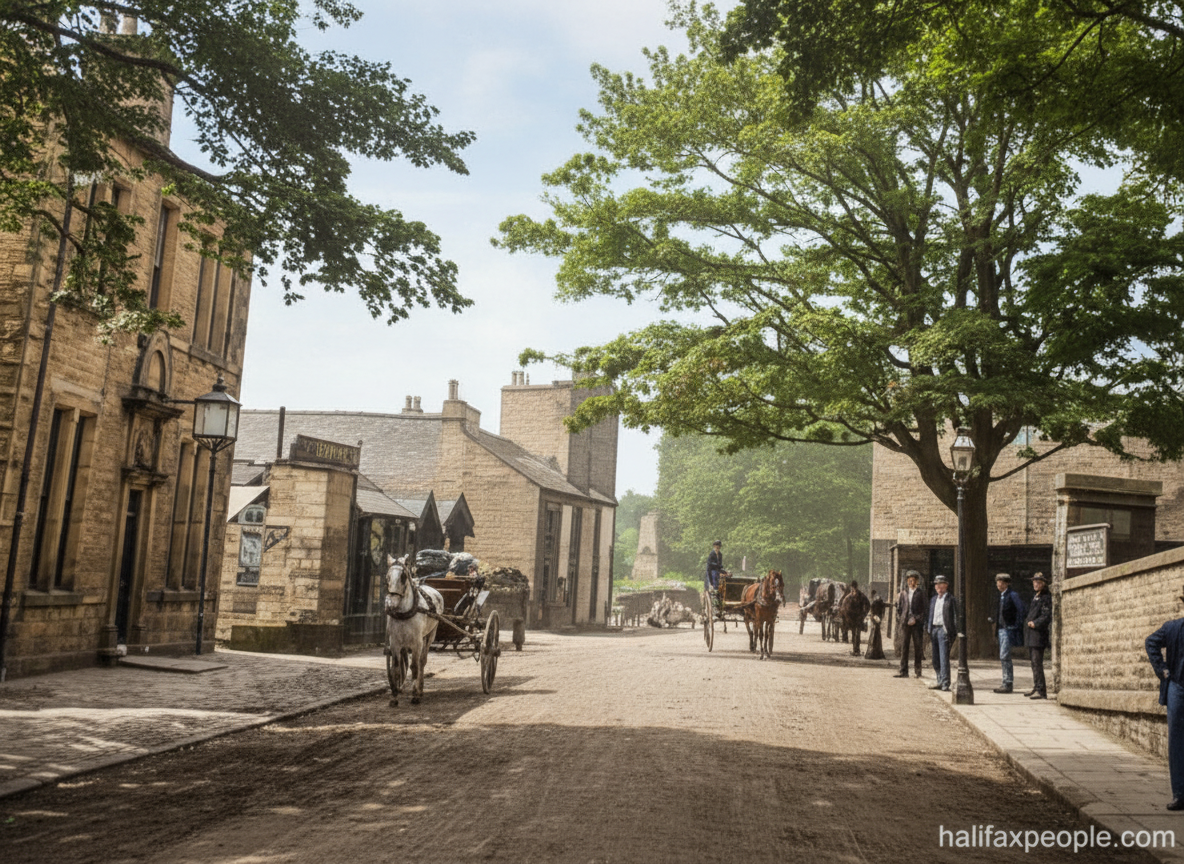
The large public house on Park Road opposite Elland railway station was originally the Station Hotel. It was built to serve railway passengers and became an important stopping place for people using the station.
The pub had an earlier name, the Railway, which appears in records between 1861 and 1881. By the 1880s it was known as the Station Hotel. During the 1970s the premises became the Barbados disco, before reopening in 1980 as the Barge and Barrel.
The pub later developed its own brewing operation. John Eastwood established a brewery there in 1993, producing beers principally for the pub, and Andrew Firth took over as head brewer in 2013.
The Barge and Barrel closed in December 2022. A later planning application approved a change of use to residential accommodation, comprising two houses, five apartments and an office. Its history reflects the changing fortunes of Park Road, from railway-era hospitality to a modern pub and brewery.

enhanced

enhanced


Elland Railway Station and the Plug Riots
The railway reached Elland in the early 1840s, providing a new means of transporting goods and passengers between Manchester and Leeds. Local tradesmen met at the Savile Arms in 1840 to promote the establishment of a station, and the first station opened in 1842.
The station has an unusual place in the history of the Plug Riots of 1842. During the disturbances, workers removed plugs from steam boilers in mills and factories in an attempt to bring industrial production to a halt. The Greater Elland Historical Society records that Elland station was used to send away rioters who had been arrested on Skircoat Moor.
The original station was subsequently replaced by later buildings, with new stations constructed in 1865 and 1894. Passenger services ended on 10 September 1962, and goods facilities were withdrawn earlier that year.
The old station building and railway photographs therefore record the end of a transport era. A new station is now planned for Elland, with funding approved in March 2026 and an anticipated opening in spring 2029.

Elland Bridge left. Straight ahead towards Salterhebble
Elland Train Station


SHeppener

SHeppener


SHeppener
Park Road continued

SHeppener


enhanced
Valley Mills on Park Road
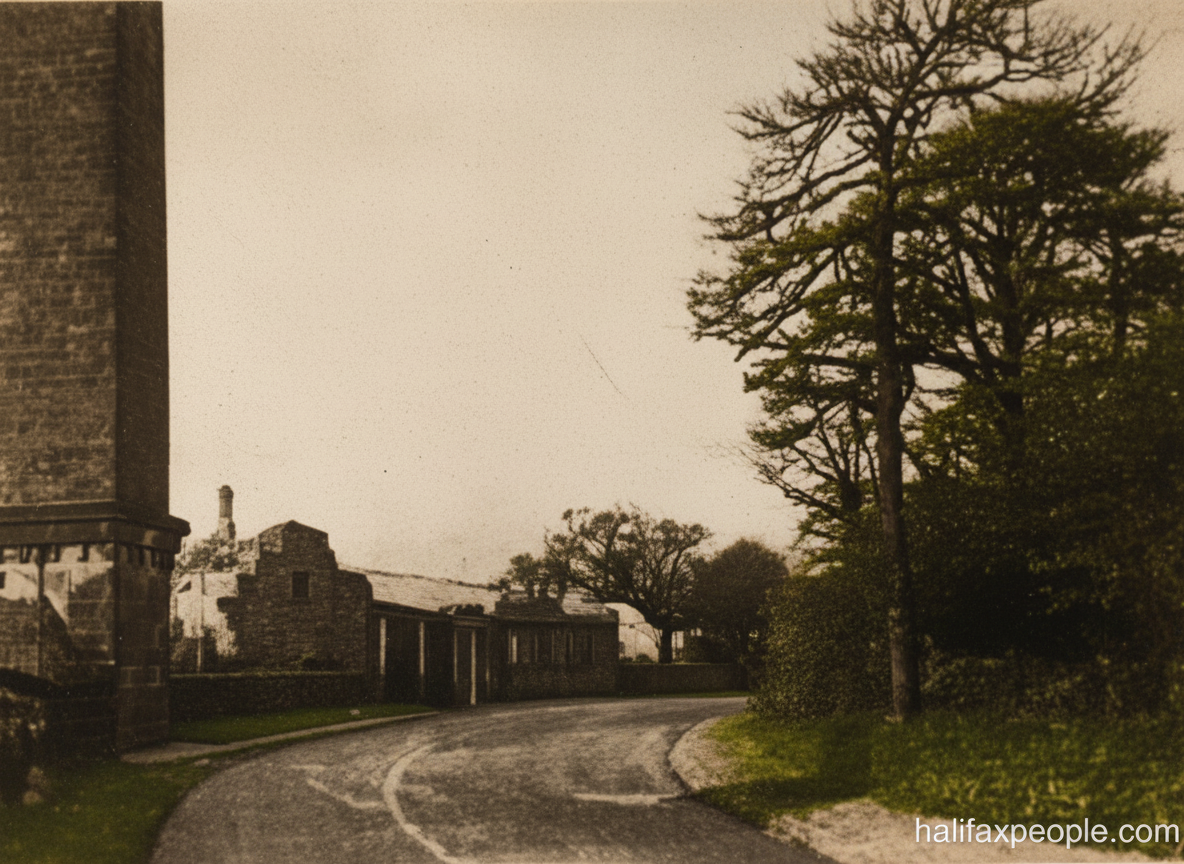
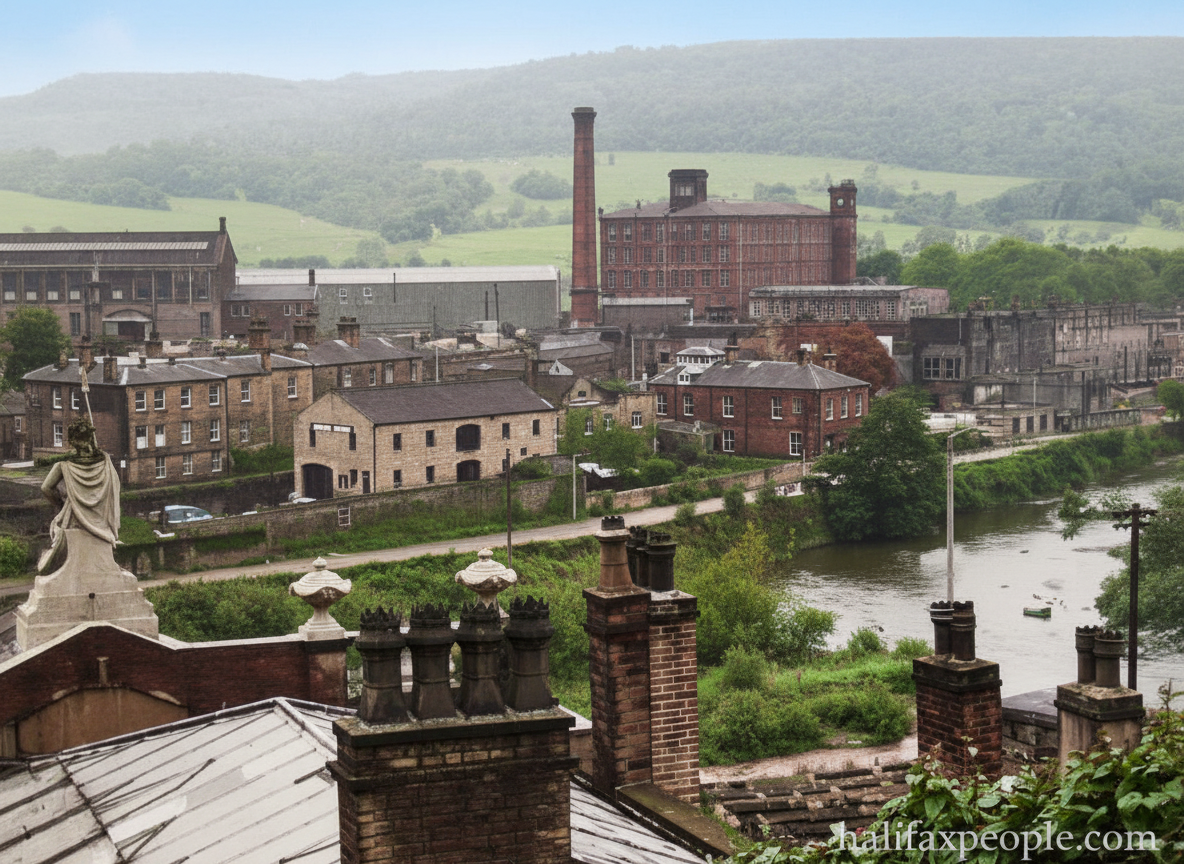
Valley Mills stood on Park Road beside the Calder and Hebble Navigation. The complex was notable for its elaborate Italianate chimney, which became a distinctive feature of the industrial skyline in this part of Elland.
The mill was occupied by John Dewhirst & Company until 1967, after which the buildings were used as an engineering works. During the Second World War the Admiralty took over the premises for military storage.
The site also witnessed two serious industrial accidents. On 26 February 1908, two men died after falling down a hoist at the mills. On 11 October 1927, a flywheel burst, causing considerable destruction.
The former mill buildings were converted into 139 apartments in 2006. Their survival provides a visible reminder of the textile industry that once occupied the Park Road corridor.
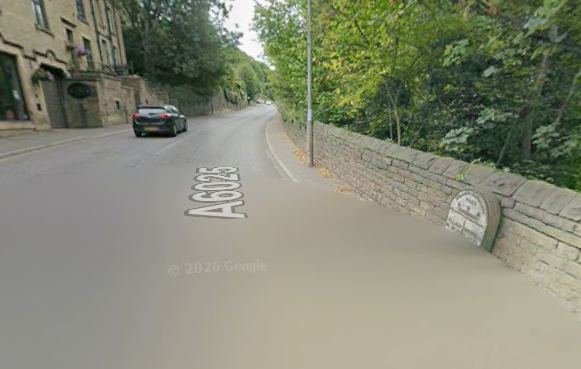
The Elland and Brighouse Turnpike Milestone
A small but interesting historic feature survives on Park Road, opposite No. 19. This nineteenth-century milestone is Grade II listed and has a cast-iron face beneath an arched stone head.
The inscription identifies the road as the Elland and Brighouse Road. One side gives the distance to Elland as three-quarters of a mile, while the other records Wakefield as 15¾ miles away and Dewsbury as 10 miles.
The milestone belonged to the former Leeds and Elland Turnpike Trust. It is a reminder of the importance of the turnpike roads in the days before motor traffic, when milestones helped travellers and carriers judge their progress along the routes connecting the Calder Valley with the wider West Riding.
See Cromwell Bottom
Returning across Elland Bridge again and heading towards Westgate

The Old Wharf Office
A small single-storey stone building with three chimneys survives beside the Calder and Hebble Navigation near Elland Bridge. It was formerly used as the office for Elland Wharf and dates from approximately 1820.
The building is a reminder of the organisation needed to handle the busy canal trade. Wharf offices dealt with the practical business of receiving and dispatching goods, while the nearby staith and moorings allowed barges to unload coal and other cargo.
The wharf was particularly important to the local gas industry, as coal was brought by water for the Elland and Greetland Gas Works. The surviving office is one of the less obvious historic buildings in the bridge area, but it helps bring the old canal-side working landscape to life.

SHeppener


enhanced
Elland Bridge Foundry
An industrial works once stood in the narrow strip of land between the River Calder and the Calder and Hebble Navigation, immediately west of Elland Bridge. Known as Elland Bridge Foundry, it formed part of the engineering industry that developed alongside the river and canal.
The original foundry was demolished in 1979, and a new factory was built on the site. Businesses associated with the works included Plews & Turner and, later, Ardeth Engineering.
The foundry is a reminder that the area around the bridge was not just a transport crossing. It was also an industrial location where engineering and manufacturing businesses took advantage of the river, canal and road connections.


enhanced
The Canal Basin at Elland
Close to Elland Bridge was the canal basin, where boats could manoeuvre and goods could be transferred between water and land transport. The wharf and staith were particularly important for the delivery of coal to the Elland and Greetland Gas Works.
By 1830, Wharf House had been built beside the canal, reflecting the importance of the waterway to the town's commercial life. At the beginning of the twentieth century, Robert Carey operated six barges from the wharf. His son Thomas Carey was remembered locally for taking a diesel-powered barge down the canal in 1919.
The basin and wharf formed part of a busy transport interchange, linking the canal with the bridge, road network and nearby mills. Commercial traffic on the navigation finally ended in 1955, after which leisure boating gradually became its principal use.

The Rebuilding of Elland Bridge, 2015–2017
Elland Bridge suffered catastrophic damage during the Boxing Day floods of 26 December 2015. The force of the floodwater undermined its foundations, leaving a major crack in the road and making the Grade II listed canal bridge unsafe.
The bridge had to be dismantled, but considerable care was taken to preserve its historic appearance. The original stonework was individually recorded, removed and stored so that it could be reused in the reconstruction. A temporary footbridge was installed to maintain a crossing for pedestrians, while a separate temporary structure carried essential utility services.
The new foundations and arch were constructed during 2016. The original masonry was then rebuilt around the stronger structure, retaining the familiar appearance of the historic bridge while making it more resilient to flooding.
The bridge reopened to pedestrians and cyclists in January 2017 and to road traffic in February. The canal and towpath followed, with an official community reopening celebration on 2 April 2017.
The reconstruction was a major undertaking, involving the Council and Canal & River Trust, and formed an important part of Calderdale's recovery from the 2015 floods.

SHeppener
The Royal Hotel at Elland Bridge
The public house standing beside Elland Bridge was built in 1865 to designs by the architect William Henry Crossland. It was originally called the Royal Hotel and was constructed on a site adjoining the Crown and Anchor Inn.
The building stands against the old quarry face, which forms its rear boundary. Crossland is also believed to have designed the adjoining shops and houses to the west, giving this part of Briggate a distinctive Victorian architectural character.
The Royal was recorded as a Stocks brewery house in 1914. It later became known as The Bridge. Its position beside the river crossing made it an important landmark for travellers entering Elland from the Brighouse and Halifax directions.

enhanced


 |
 |
Britannia Buildings at the Head of Elland Bridge
One of the most striking buildings at the head of Elland Bridge is Britannia Buildings, constructed in 1893 for the Halifax and Huddersfield Banking Company. Designed by E. W. Johnson of Southport, it was built in ashlar stone and has an imposing classical frontage.
Its most distinctive features are the large polished Aberdeen granite columns, carved stone decoration and the figure of Britannia above the central pediment. The building also carries carved coats of arms representing Halifax and Huddersfield.
The former bank is Grade II listed and was recognised for its architectural importance in 1968. Its grand appearance reflected the prosperity and commercial confidence of late Victorian Elland, when banking facilities were expanding to serve the town's growing industrial businesses.

enhanced

Briggate – The Road that Bypassed the Old Town
Briggate was constructed in the early nineteenth century to provide a more convenient route through Elland. Before its construction, traffic had to negotiate the older streets around The Cross, Northgate, Southgate and Westgate.
The new road ran alongside the river and helped relieve congestion in the medieval centre. The Elland town history trail describes it as Elland's first bypass, long before the modern Calderdale Way bypass was built.
Briggate changed the way people approached the town and helped create the road layout seen in later photographs. It also became an important route connecting the bridge with the growing industrial and commercial districts.
This will be the start of the "Elland - Huddersfield Road and Historic Ainleys" page which would be to continue along this main road OR this page continues up Northgate on the right, just before the distant telegraph pole and up to The Cross.


Northgate and the Old Centre of Elland
Northgate formed one of the principal streets of historic Elland, leading from The Cross towards St Mary's Church. The old town developed around the crossroads where Northgate met Southgate, Westgate and Church Street.
Among the best-known businesses on Northgate was Joseph Dobson & Sons, the traditional sweet-making firm established in 1850. Its courtyard entrance retains grooves in the stone paving, originally intended to give horses better grip when entering with carts.
Next door stands the former Rose and Crown, an important seventeenth-century building. Other historic buildings around The Cross include the Savile Arms, built in 1748, and former bank premises which reflect the commercial growth of the town during the nineteenth century.
Northgate's buildings reveal how Elland developed from a medieval settlement around its church into a busy market and commercial town.


Watch Sweet Life online - BFI Player
 |
 |

The Rose and Crown, Northgate
The Rose and Crown is one of Elland's oldest surviving buildings. It stands opposite the western end of St Mary's Church and is generally dated to the seventeenth century. The building is dated 1682 in Malcolm Bull's historical records, while Calderdale's conservation documents describe it as a mid-seventeenth-century house.
It was originally a substantial U-shaped house, with a central hall and projecting wings. Its surviving architectural details include mullioned windows, gables and an impressive historic fireplace. It is thought to have been built as accommodation for clergy connected with the church.
The premises later became a public house. The Elland Church and King Society met there in 1808, and records suggest the pub reopened in 1834. By 1858 it was operating as a coaching inn. It was also advertised in 1900 as the "Old Football Headquarters".
The Rose and Crown closed on 19 December 1914, partly because so many other public houses operated nearby. The building is Grade II listed and has subsequently been used for other purposes, including as a warehouse.

 |
 |

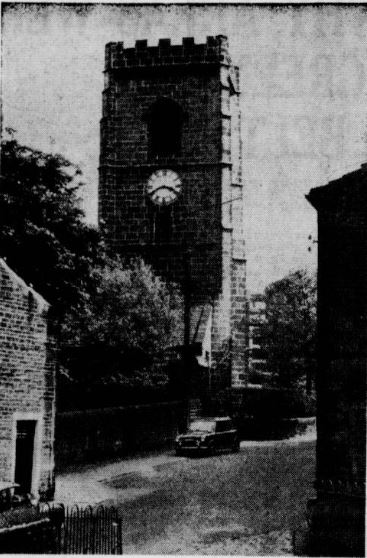
St Mary's Church, Elland
St Mary's Church is one of the oldest and most important historic buildings in Elland. Its origins reach back to the medieval period, and a chapel here was mentioned in 1205. The church is dedicated to St Mary the Virgin and is Grade I listed.
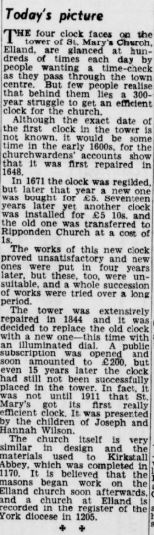
The oldest surviving architectural feature is the chancel arch, dating from around 1180. Much of the present building belongs to the thirteenth and fourteenth centuries. The west tower was added around 1490 and has three stages, diagonal buttresses and an embattled parapet.
The south porch dates from 1696 and incorporates a sundial dated 1648. The church underwent a major restoration in 1856 under the architect William Henry Crossland, who was responsible for many of the present window features.
The church was at the heart of medieval Elland, when the town formed part of the large parish of Halifax. Its position beside Northgate and the old market centre reflects the importance of the church to the development of the settlement.


Elland Historic Society webpage


Where in Elland was this pub? - The Friendly
Continue with our next tour of Historic Southowram
or
Return to Home Page
Have you got something to add to this Topic?
Do you have anything to add to this page?
If you have enjoyed your visit to this website, please spread the word by clicking the 'like' and 'share' buttons below. Thank you