
Welcome to our Historic Tour of Halifax and surrounding areas
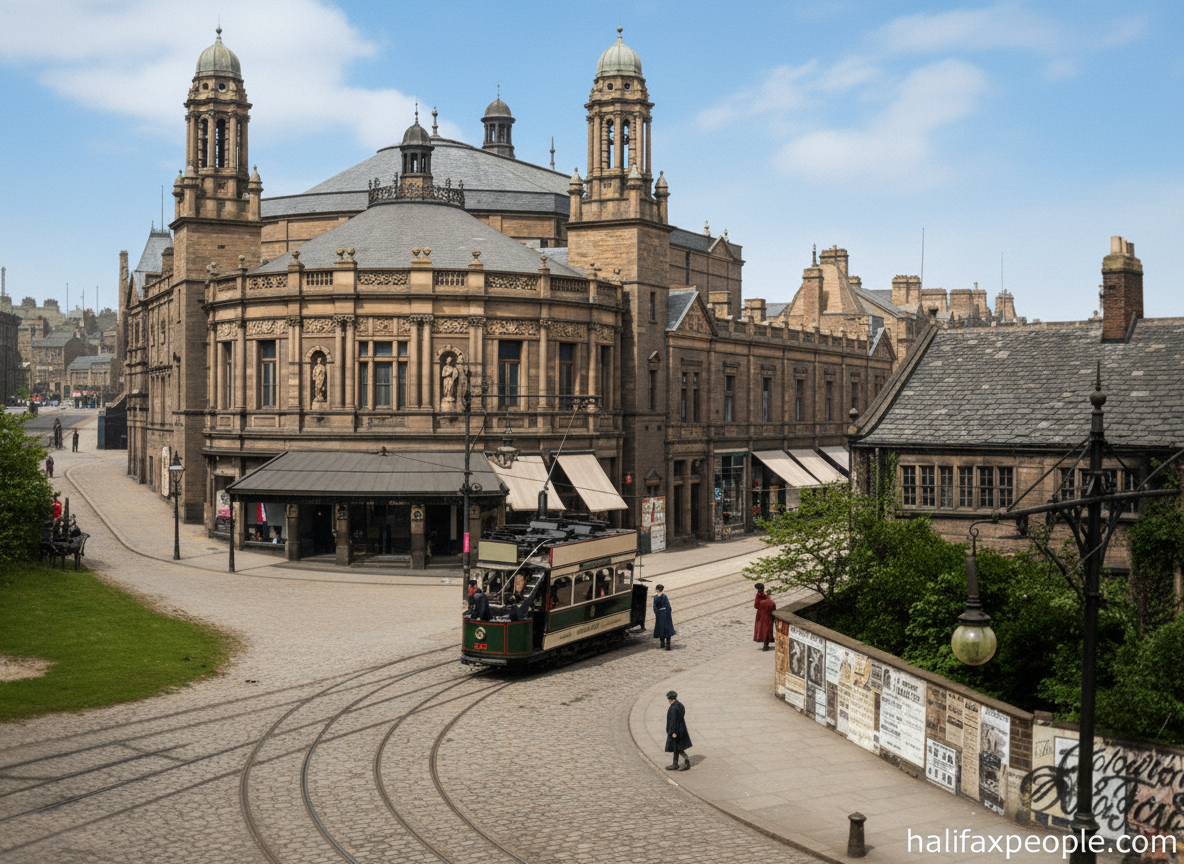
We shall begin our tour by exiting Halifax town centre from the Victoria Theatre.
As we travel on our tour, there will be links to places of interest for you to view and then re-join the tour.
These pages will grow over time but will always be under construction because more material can always be added at any time as your knowledge and information is shared.

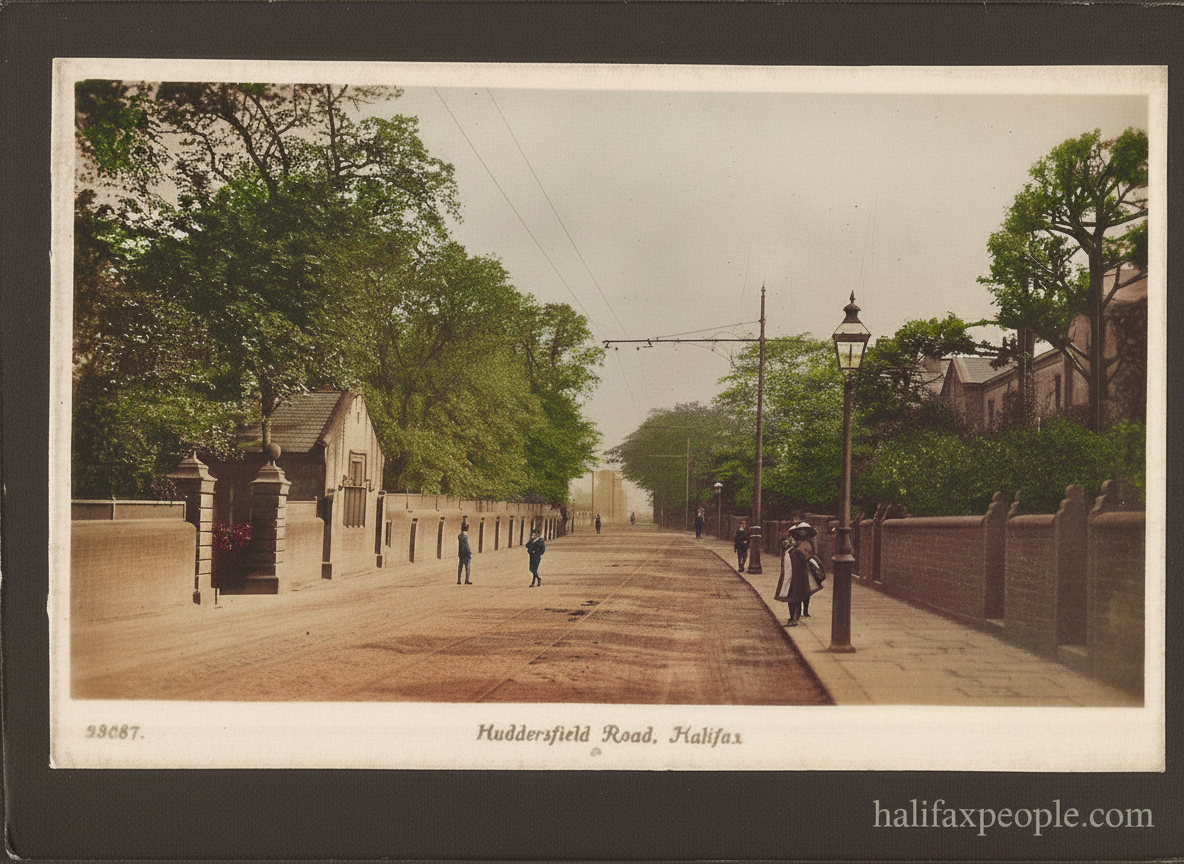
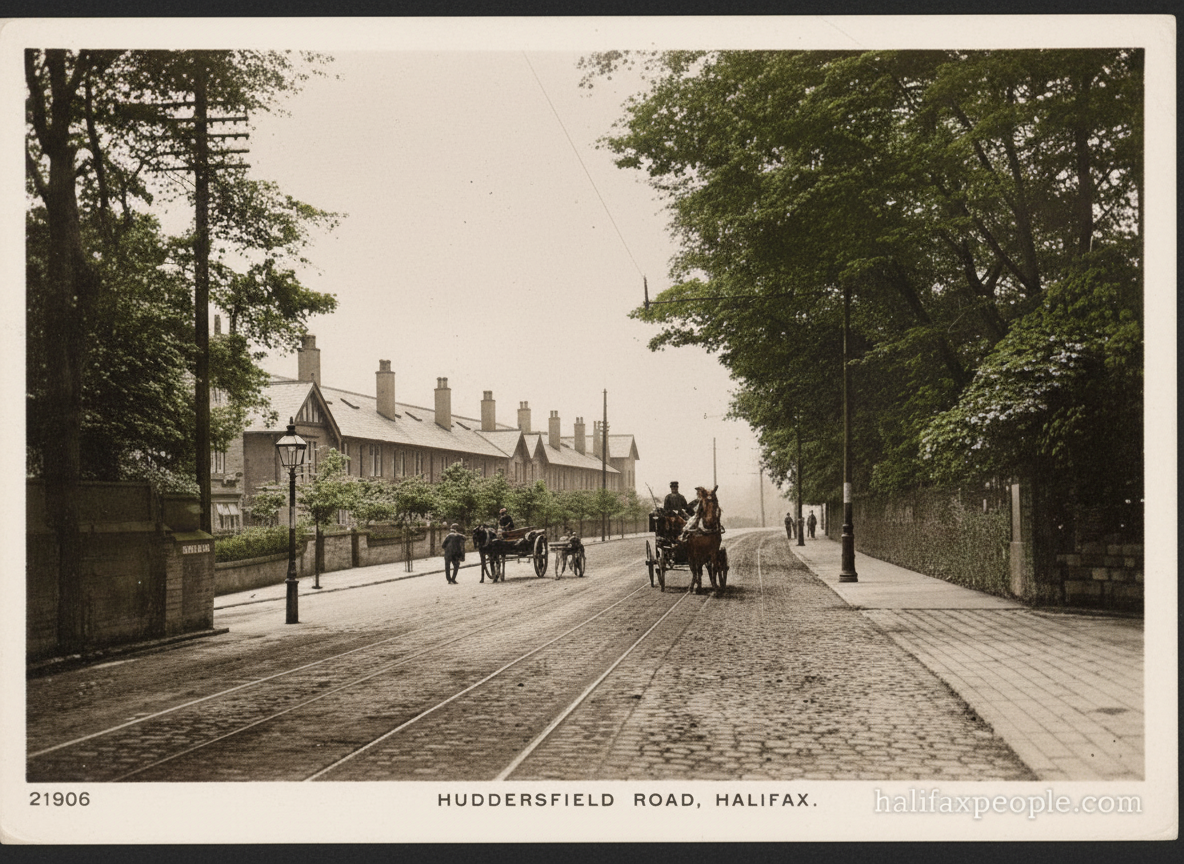
Although I have called this page 'Historic Huddersfield Road', it is only to explain the route out of Halifax towards Huddersfield. The route actually starts as Portland Place, then becomes Skircoat Road before it reaches Huddersfield Road.
The road is actually very new in comparison to most main routes out of town and Skircoat Road only opened in 1891.

enhanced
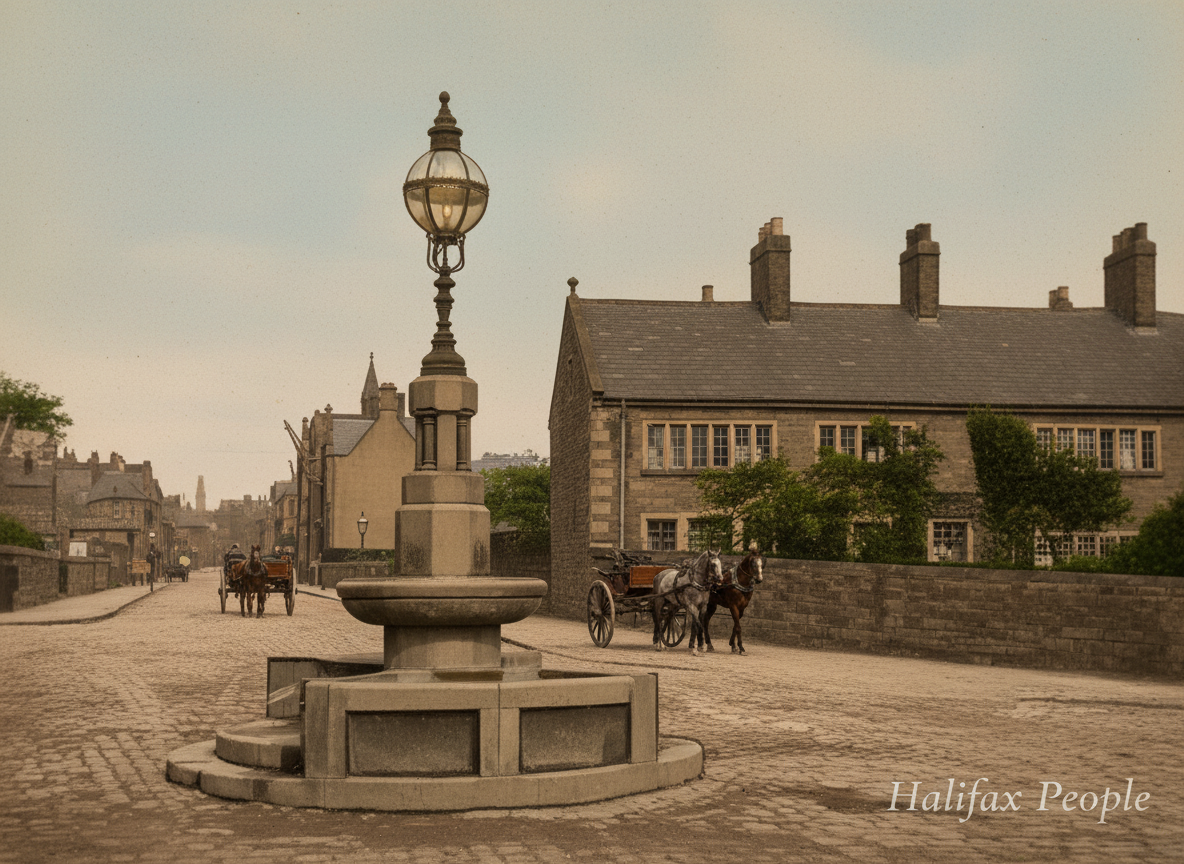
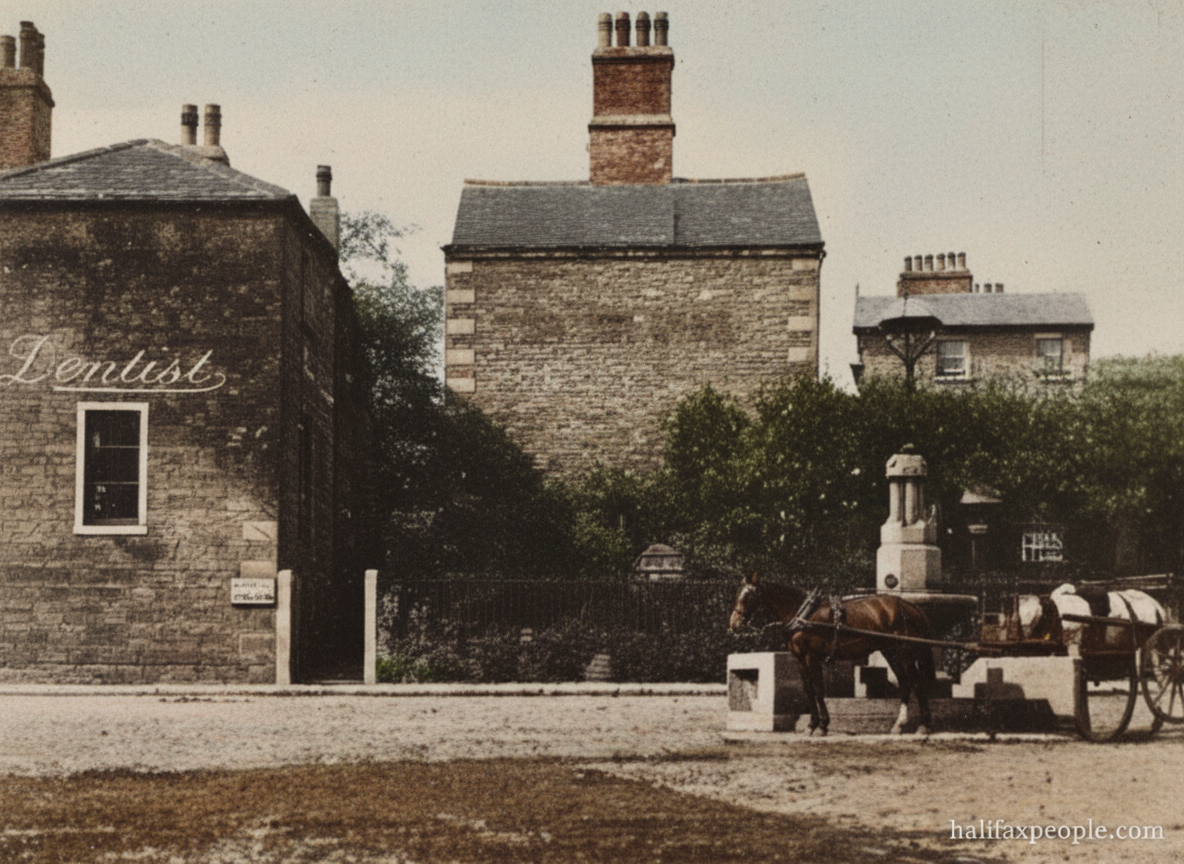
Before the Victoria Theatre even existed this was a view back towards the centre of town. The post office can be seen on this photo behind the fountain.
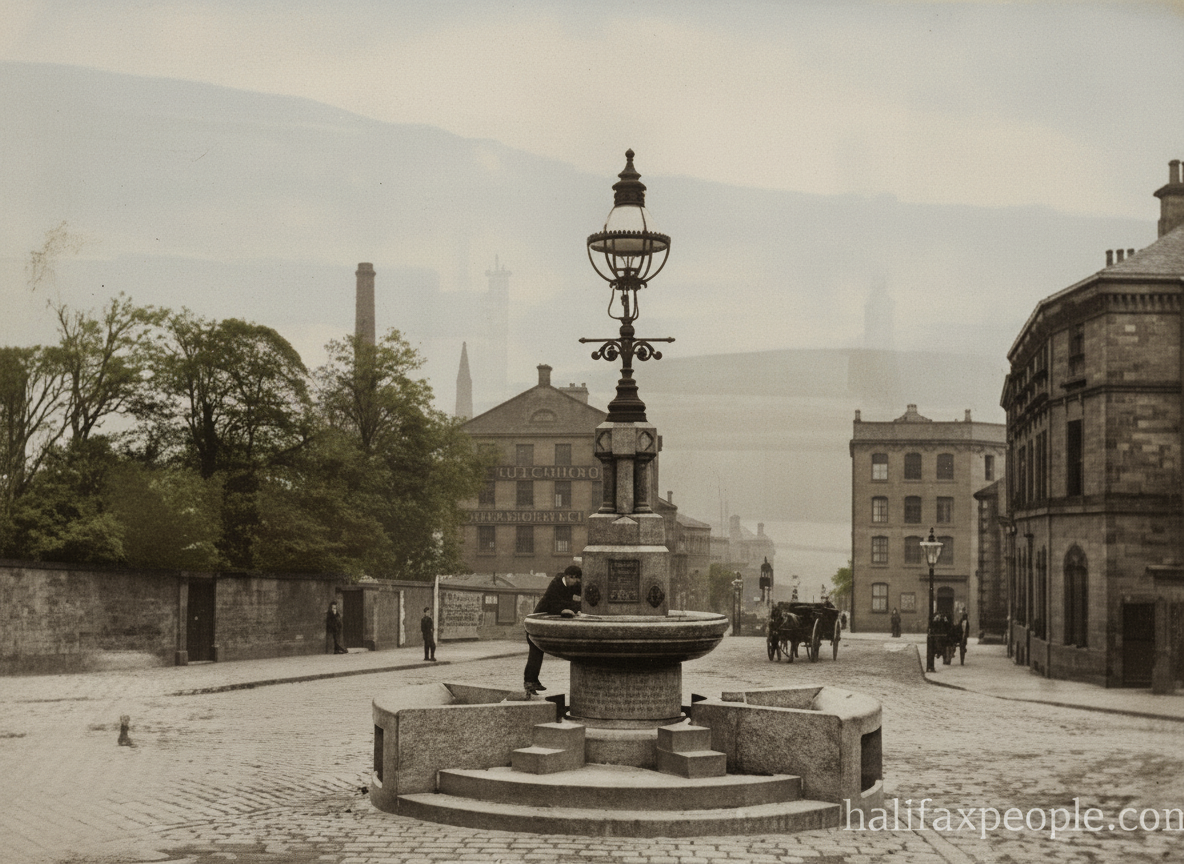
Prescott fountain was erected in 1884 in memory of Mrs Cyril Prescott and her daughter Mrs Marian Leigh. This replaced a stone trough which stood here previously. The fountain was moved to King Cross in 1898 (outside the Feathers pub) to make way for the new tramway and then moved again in 1932 to Spring Edge near what is now the Crossley Heath school. This was to make room for road improvements.
The building on the right was Ward's End Hall which was demolished in early 1900s to make way for the bus station which later became the Regal cinema (also ABC cinemas) and which is now 'Maggies' nightclub (previously Jumpin Jack's, The Groove and Chicago's).

enhanced
This view looks past Prescott fountain and down Horton street. You can see the Prince Albert memorial statue at the end of Wards End.

enhanced
 |
 |

enhanced

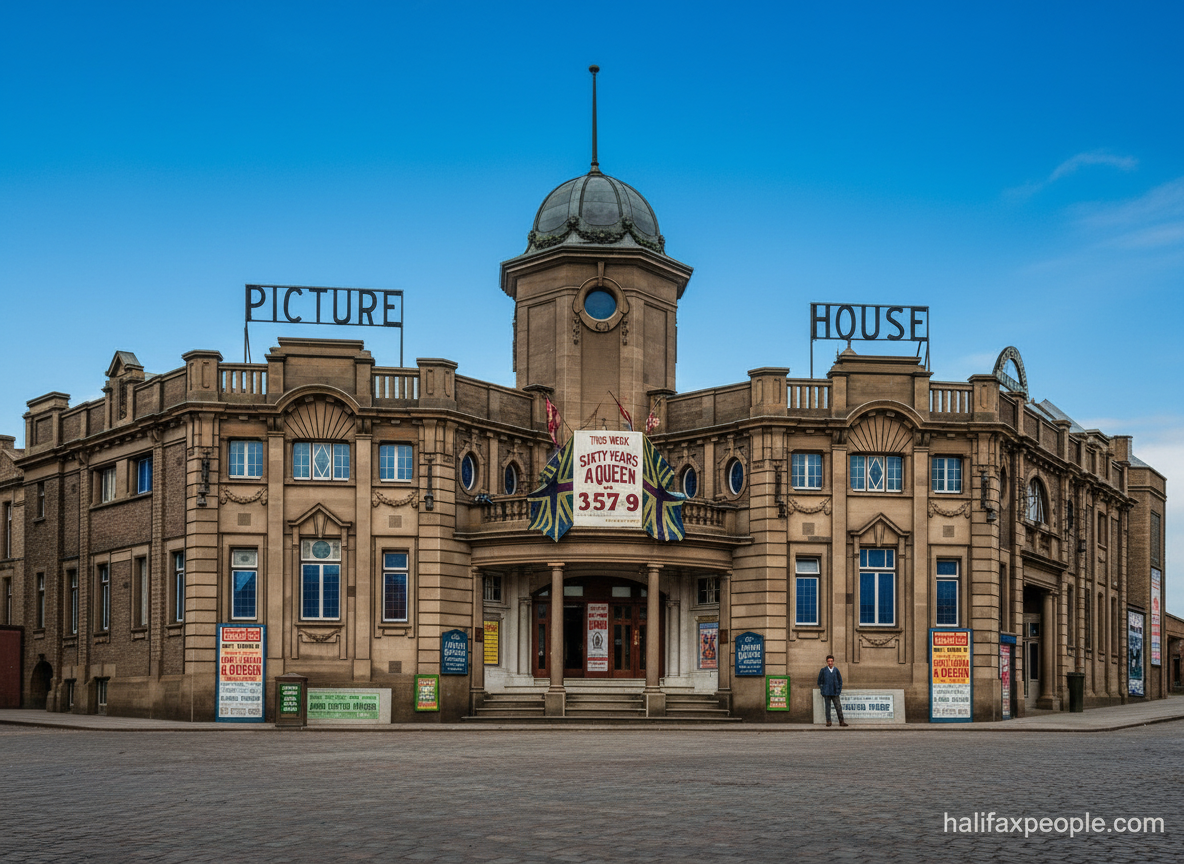
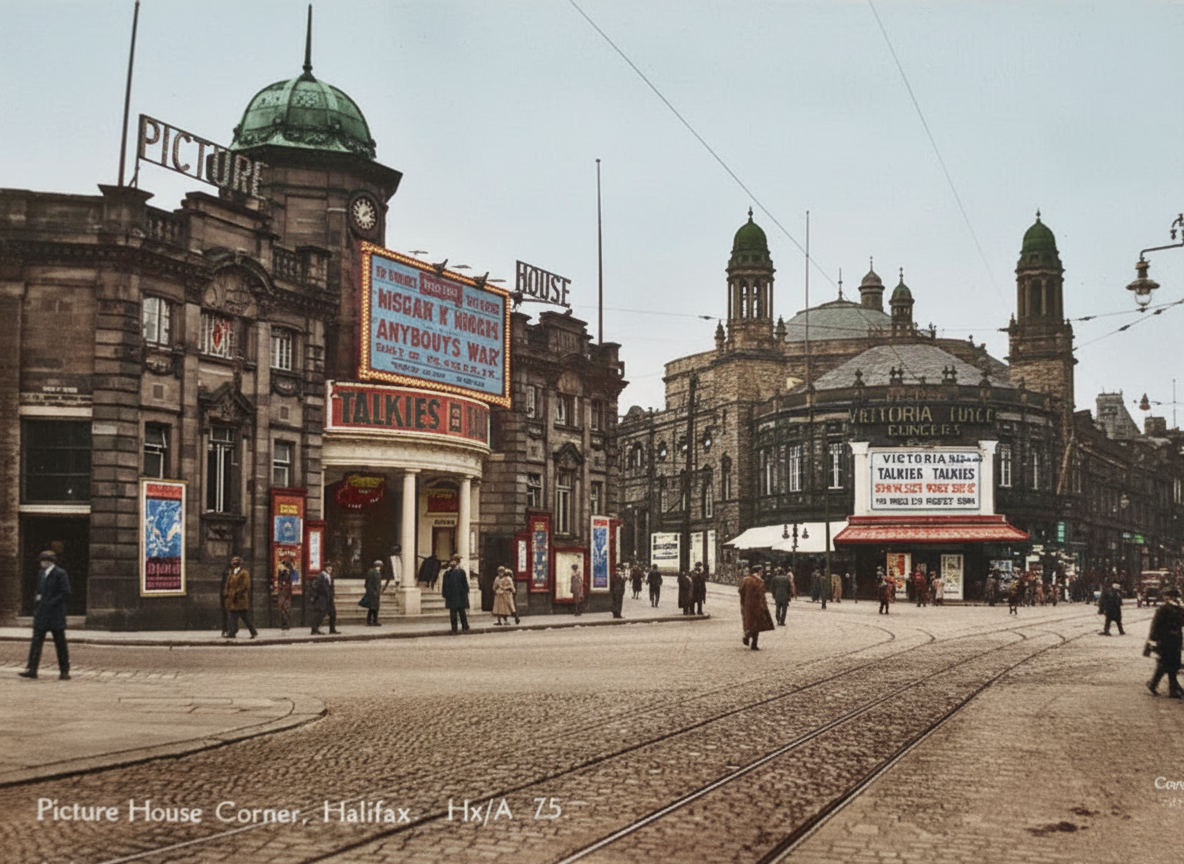
This building has been the Picture House, Top Rank Bingo and Social Club, Surewin Bingo Hall, Astra 1 + 2 Pictures in 1973 then closing in 1982 before becoming the Coliseum nightclub and Maine Street(upstairs) in 1987. It has remained a nightclub until recently called 'Liquid' and 'ATIK' but has now closed down.

Before the 'Picture House' was built Grove House(above) stood there as part of Grove Estate. There was a group of about 12 springs and wells on the estate that supplied the water to Stone Trough Brewery before running down Horton Street.
 |
  digitised |

enhanced
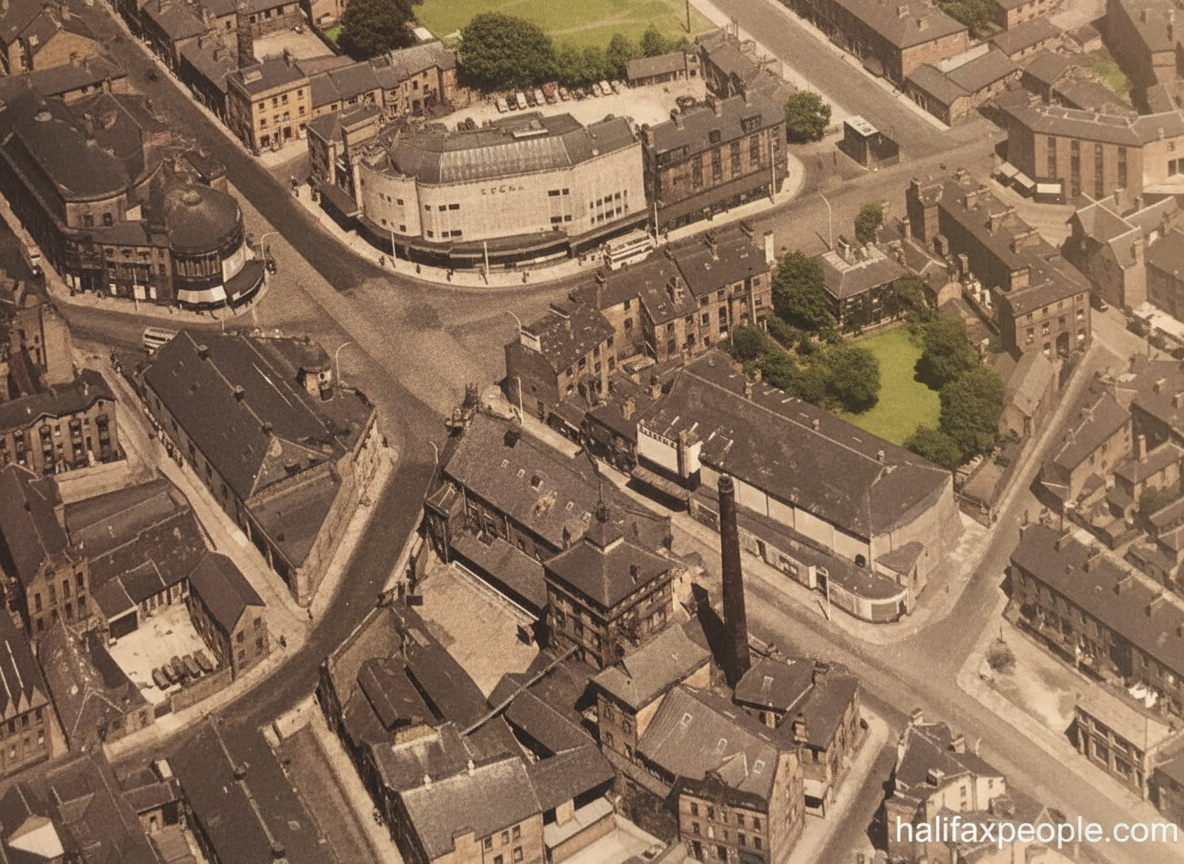
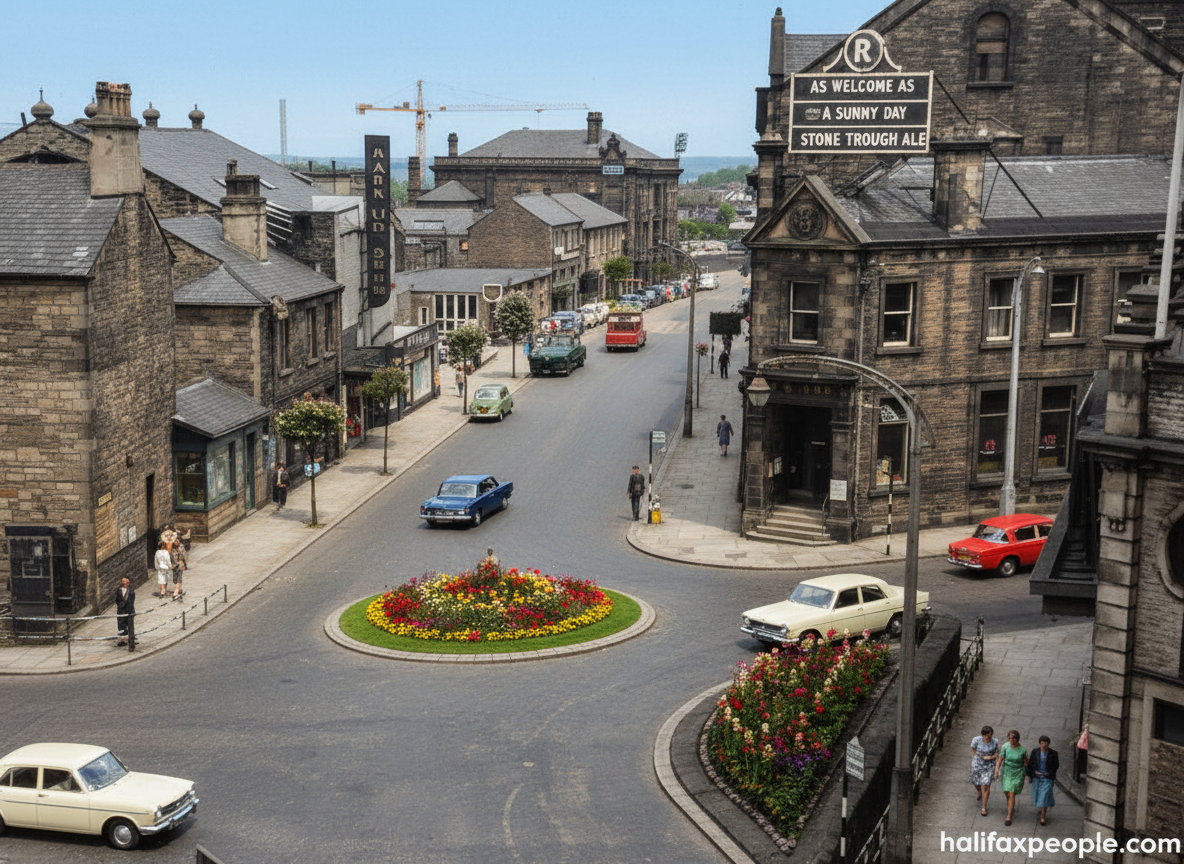
The Commercial Street/Horton Street junction starts off as Portland Place and continues into Skircoat Road and then eventually becomes Huddersfield Road where it meets Shaw Hill.

enhanced

enhanced
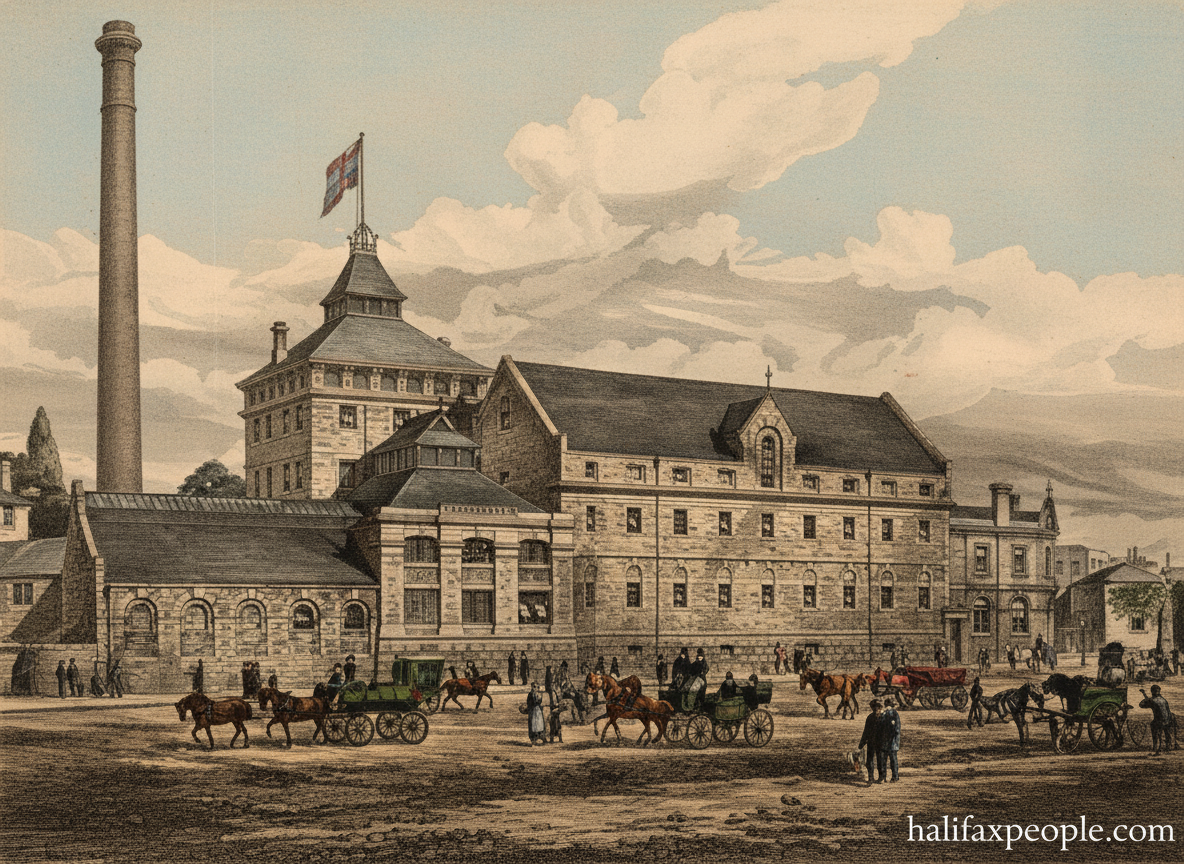
Stone Trough Brewery later became ……………..
Ramsdens Brewery before it was demolished and replaced by the Halifax Building Society
(now Lloyds Group)


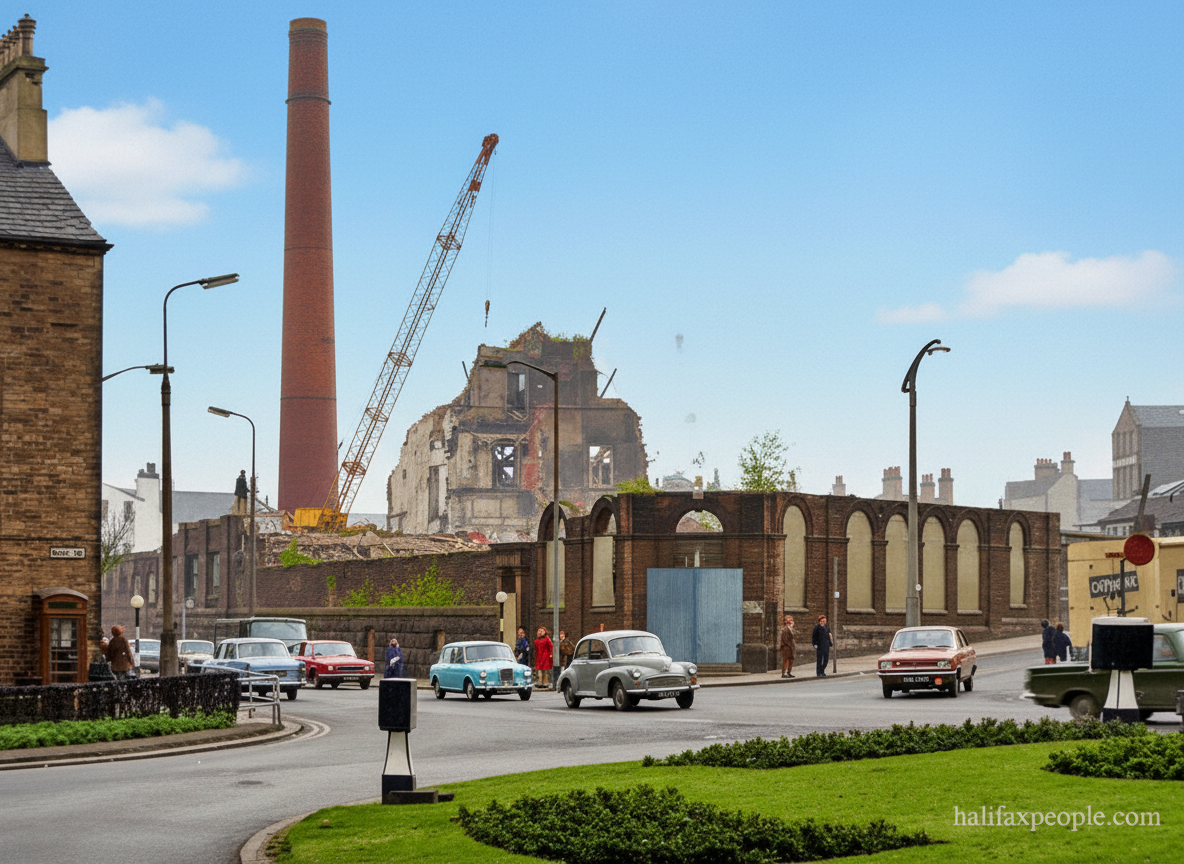
Demolition of Ramsdens Brewery enhanced

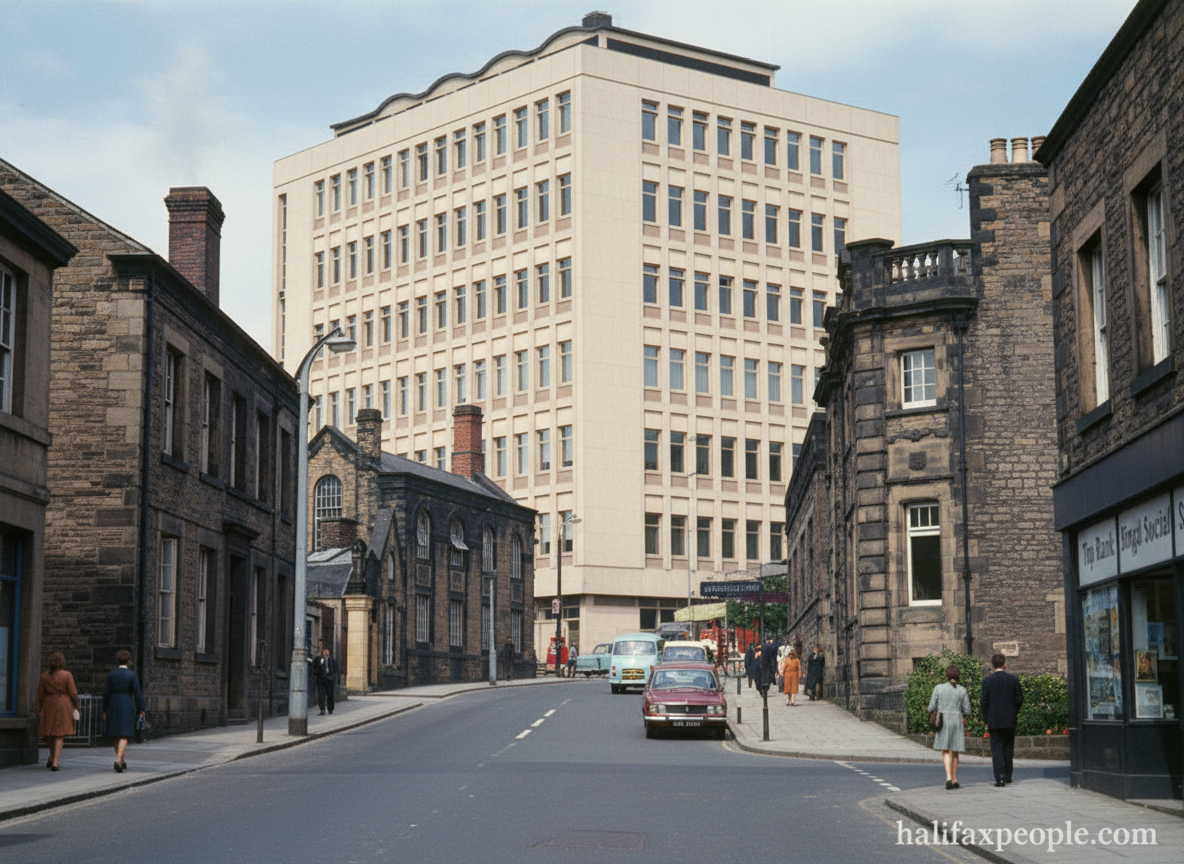
enhanced

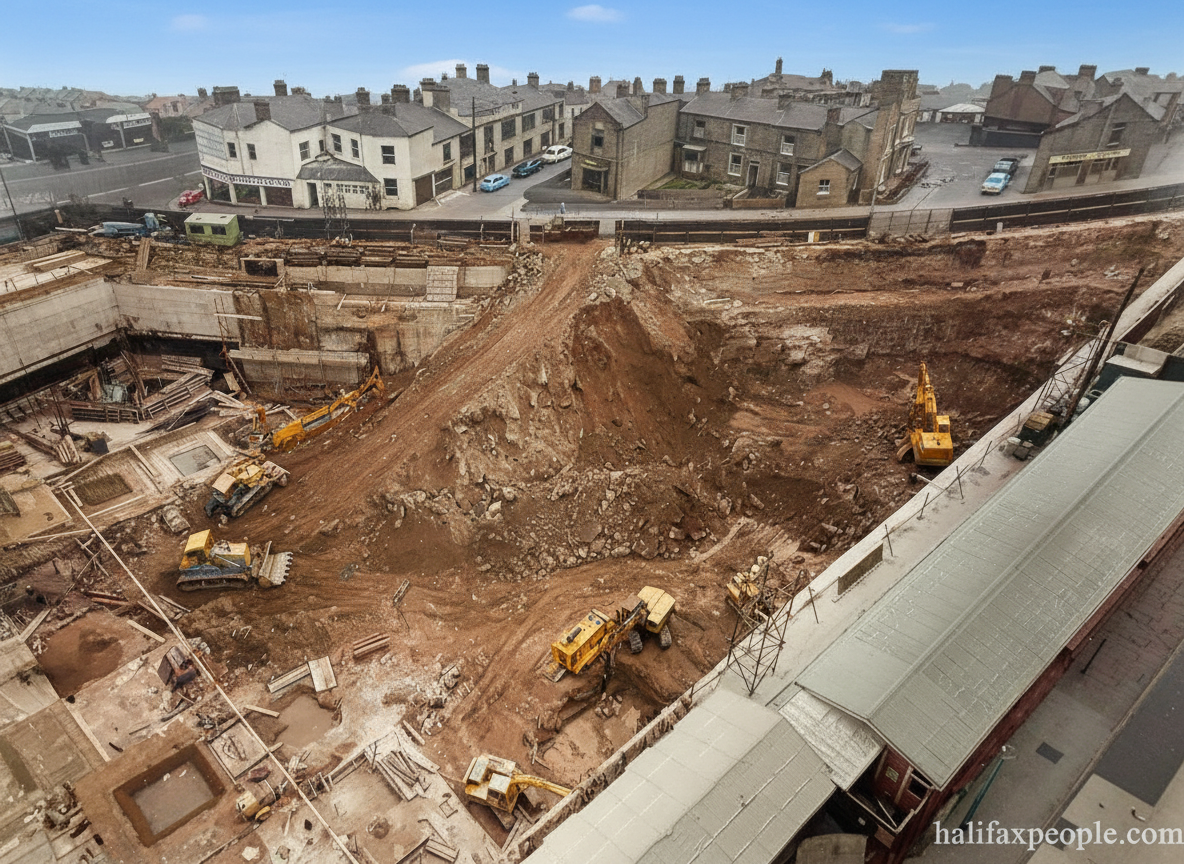
enhanced
Out with the old (Ramsdens) and in with the new (Halifax Building Society).

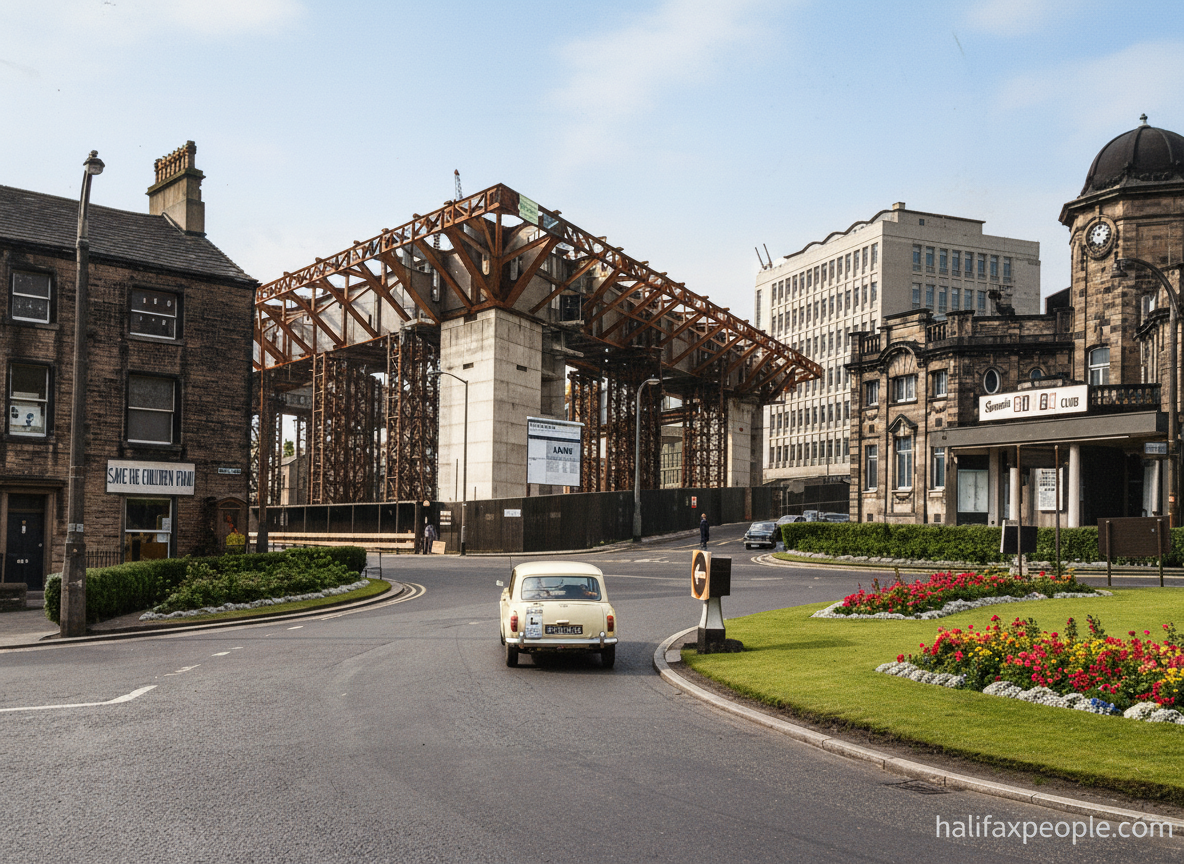
enhanced
Trinity Road (between Building Society and Bingo club)
enhanced
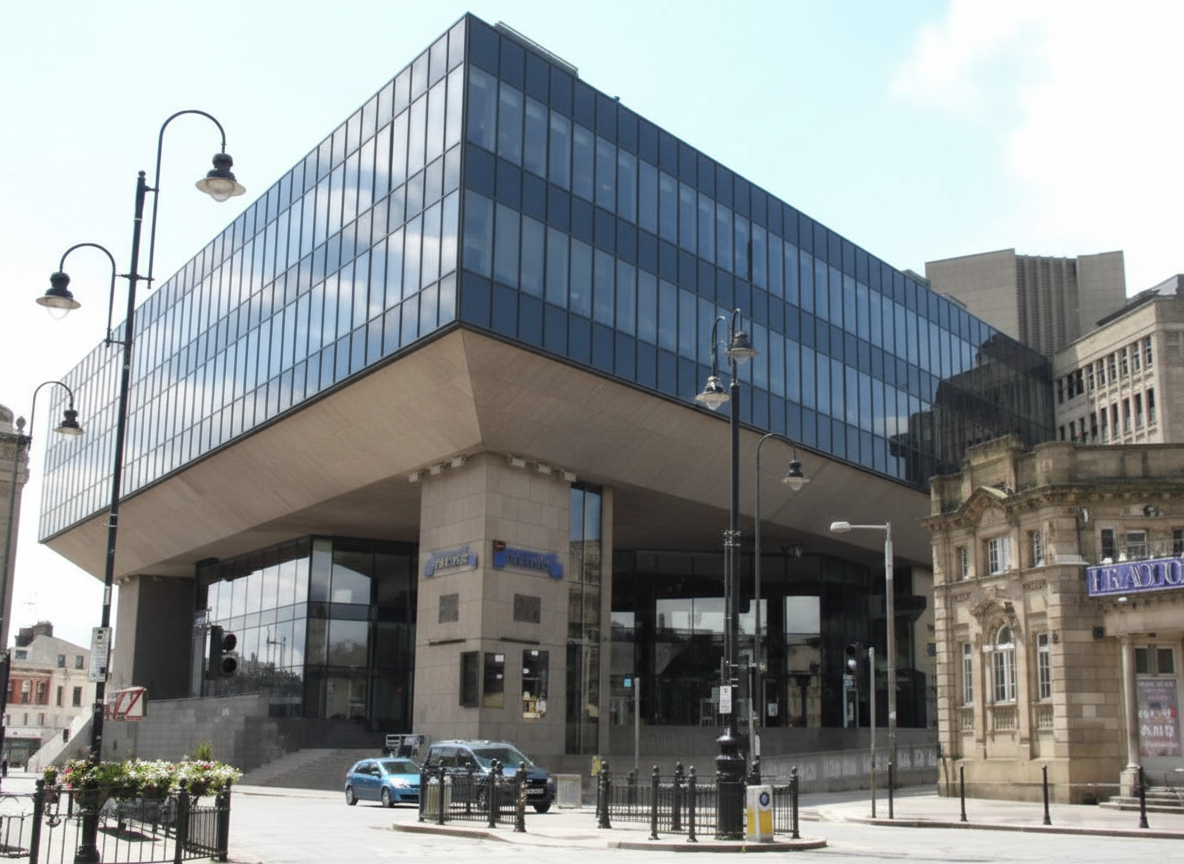
Now the 'HBOS/Lloyds', but previously the 'Halifax Building Society', which was the biggest in the world.

enhanced
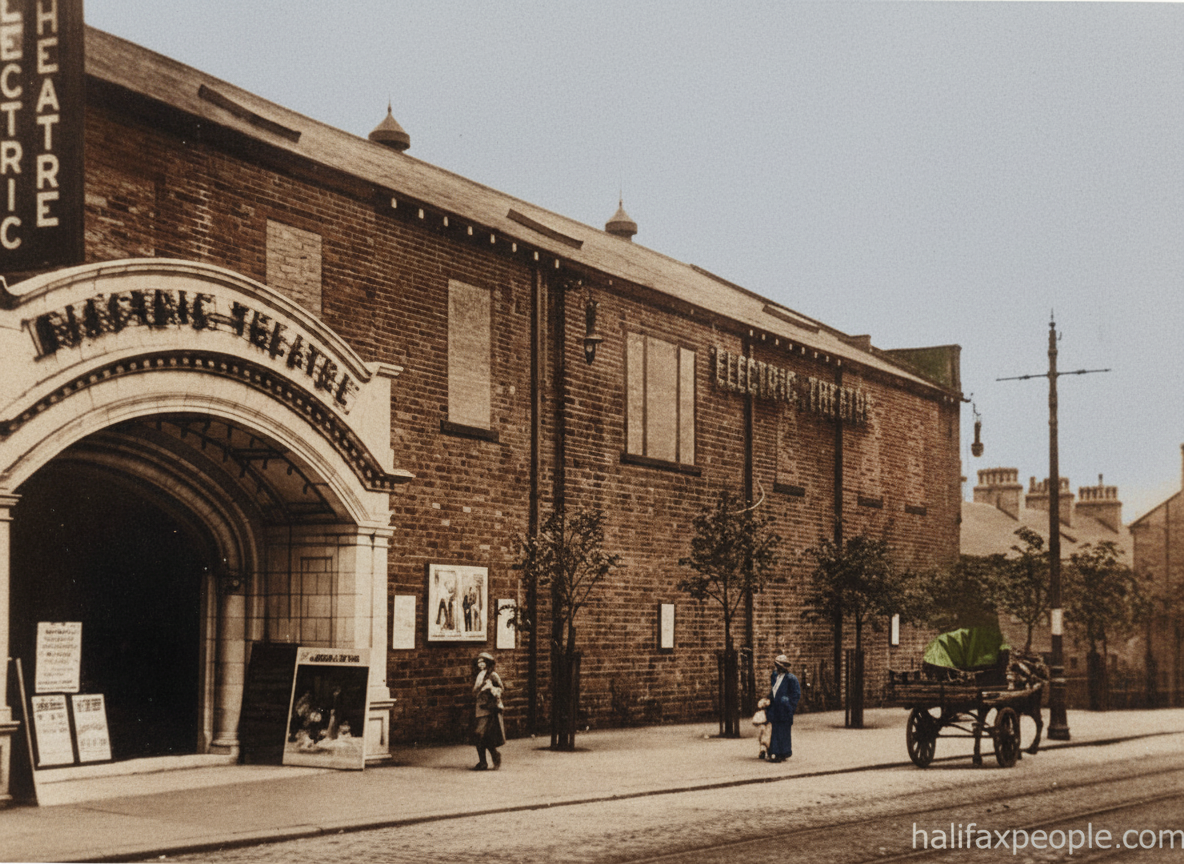
Electric Theatre is now a Bowling Alley and Snooker Hall (Electric Bowl)

enhanced
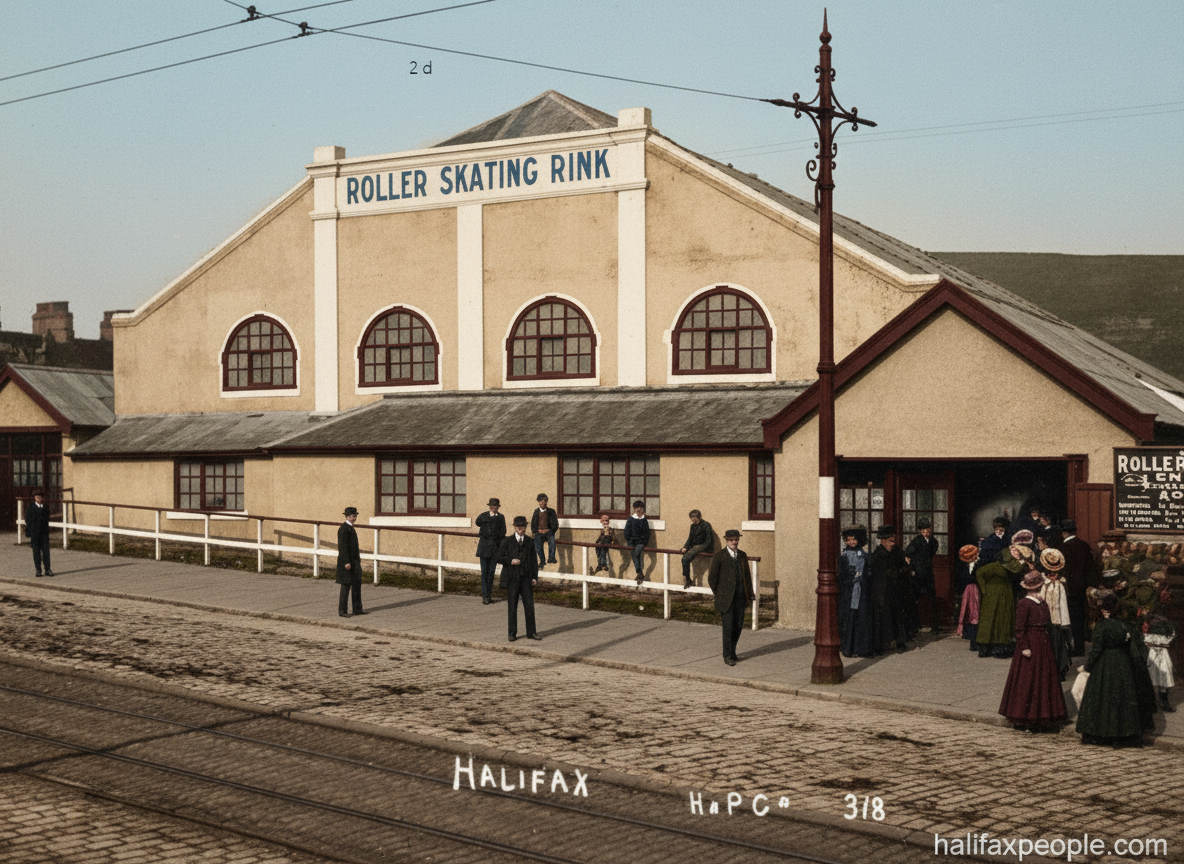
Electric Cinema, at one time was Halifax Riding School but converted to a cinema which opened on the 30th July 1910.The cinema closed on 29th September 1956 and became a snooker club and a bowling alley.


enhanced


This was Halifax Unemployment Exchange. Prior to March, 1928 the exchange was housed in a building in King Cross Street until this was built on Crown land for a cost of £12,000 and built in a style widely adopted for employment exchanges.


enhanced
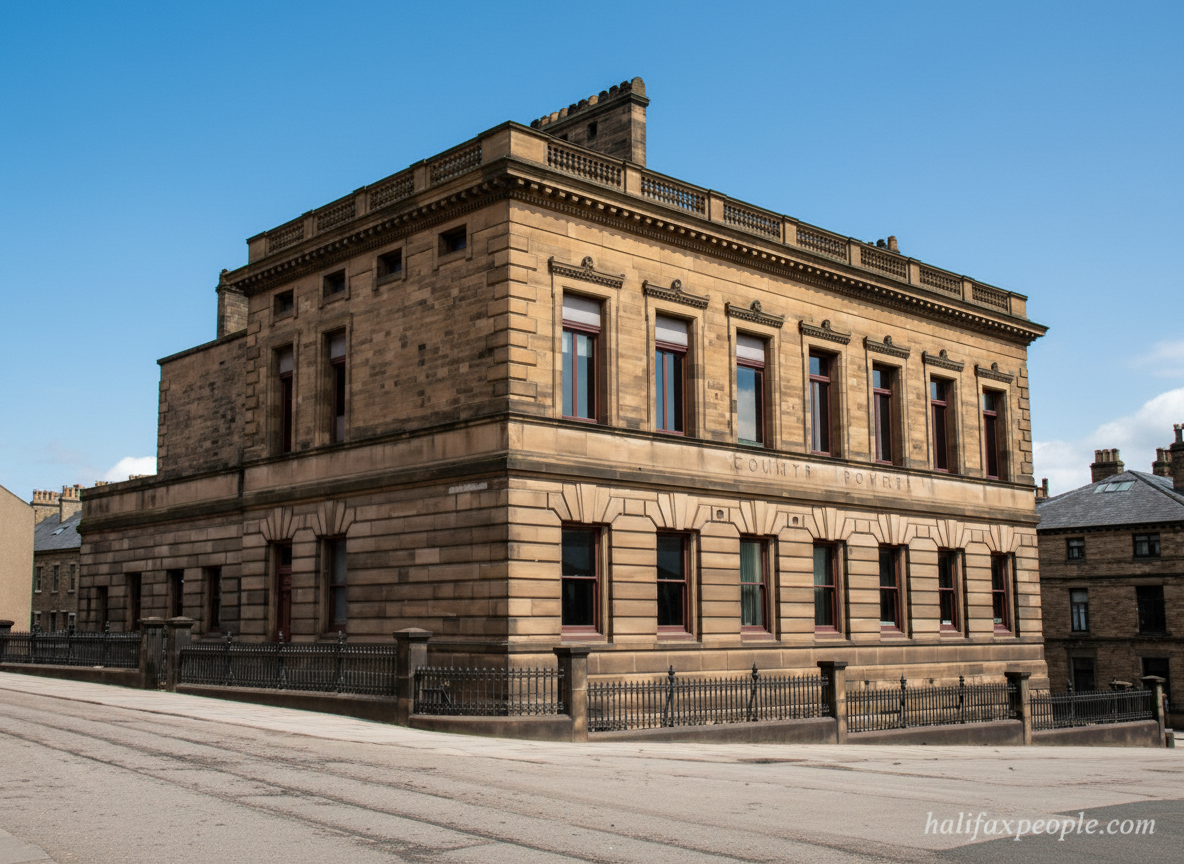
County Court due to be turned into a home for people with learning disabilities.


enhanced
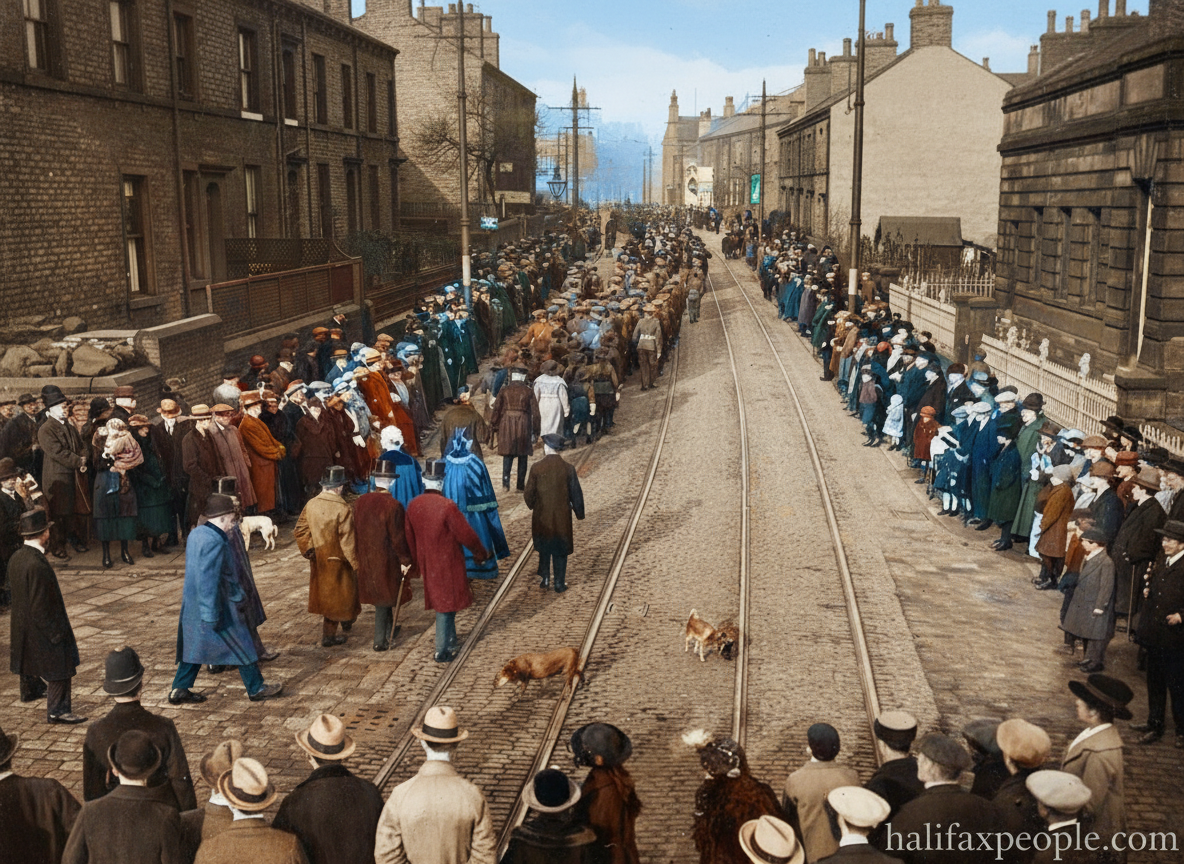
Procession for the unveiling of the war memorial at Belle View in 1922

enhanced
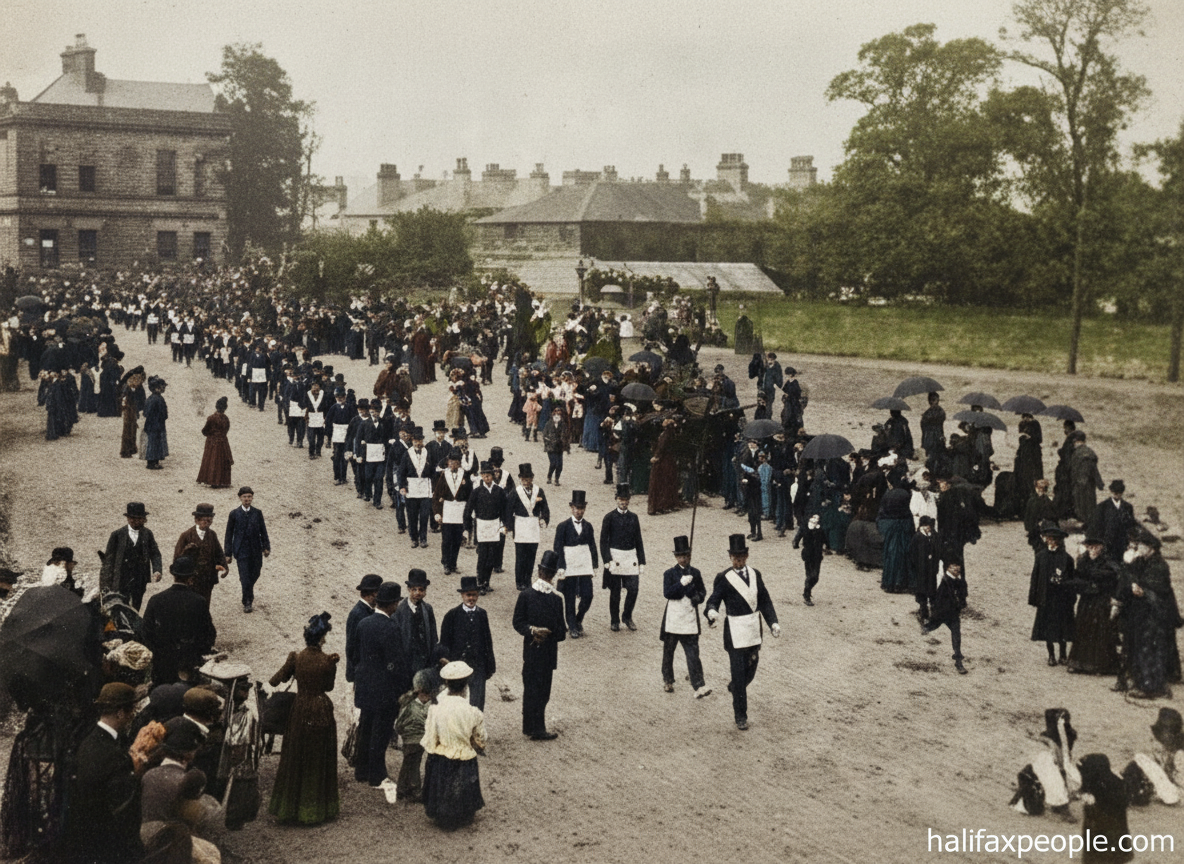
Freemasons parading to lay the foundation stone for the Halifax Royal Infirmary, June, 1893.
The location of the photo is Skircoat Road, Halifax with the Clare Hall Mansion in the background (right).
Photo by courtesy of Steve Gee

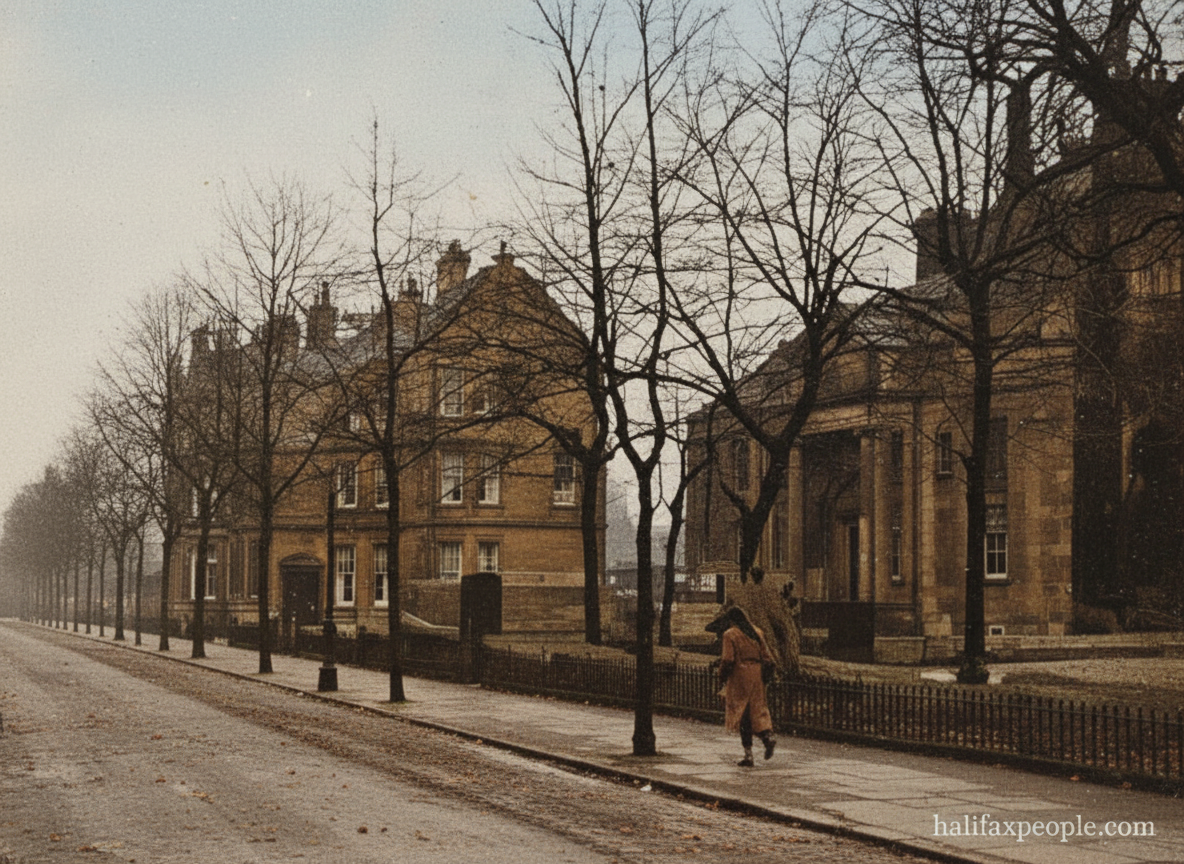
Halifax West Riding Court House at the corner of Huddersfield Road and Prescott Street. These were the headquarters of the West Morley Division of the West Riding Constabulary.
The building, which bears the date 1889, housed police offices, cells, two courts and the Magistrate's Clerk's office, and on the top side of the premises, facing into Prescott Street, was the residence of the Superintendent of Police. A previous court house existed in Harrison Road, being opened 30 years before this one.

enhanced
  Todays view |
 |
Read about Prescott Street and Harrison Road >>>>>>>>


enhanced


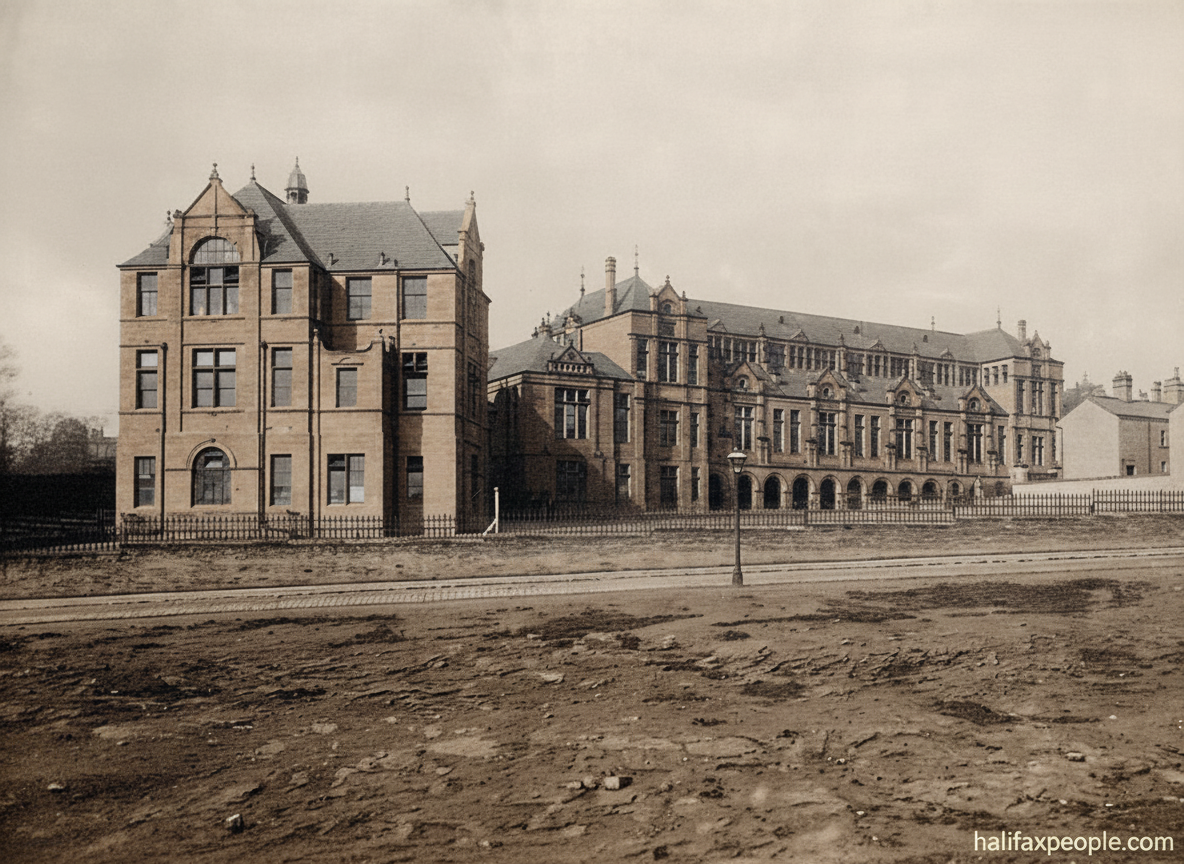
This became Clare Hall School and more recently transformed into living apartments.


enhanced


digitised
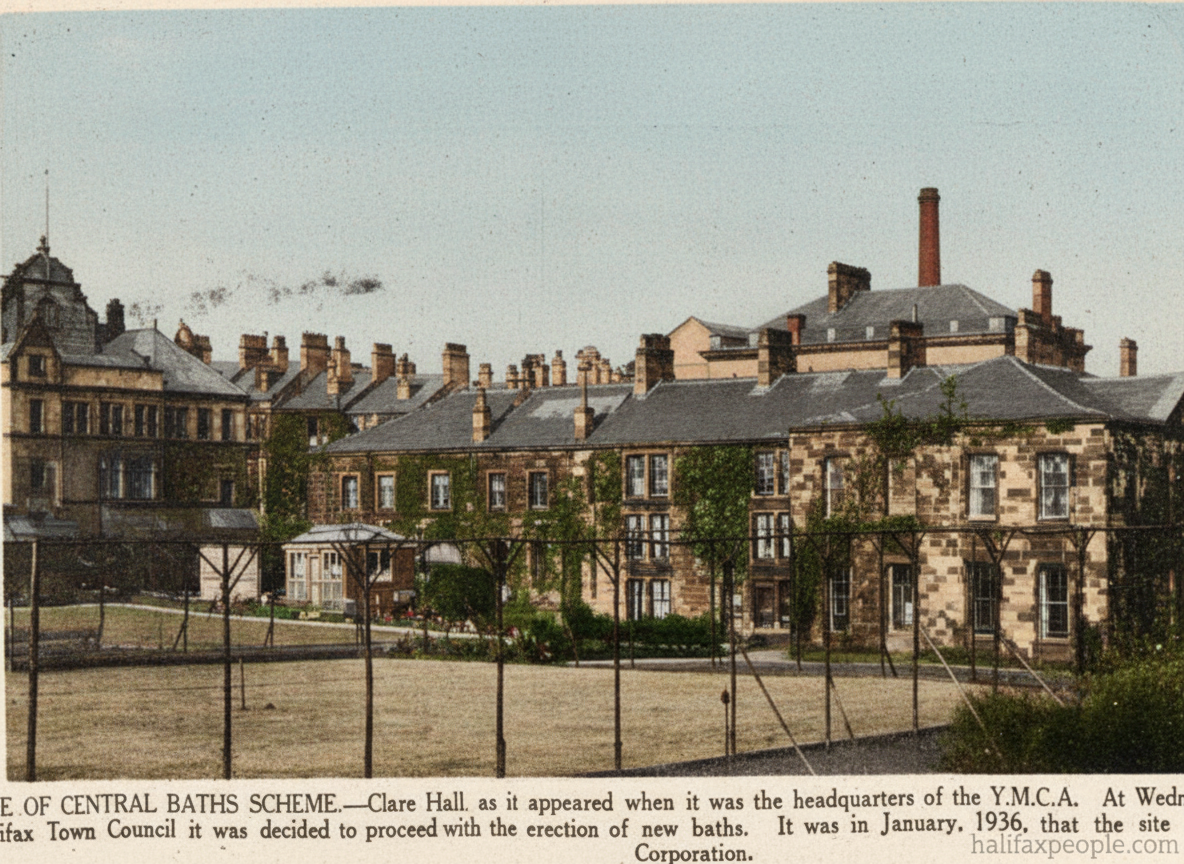
This was the original Clare Hall, home to Halifax Swimming baths, Direct Discounts and a petrol filling station.
The old Halifax West Riding Court House can be seen on the left and Ramsdens at the rear.

enhanced

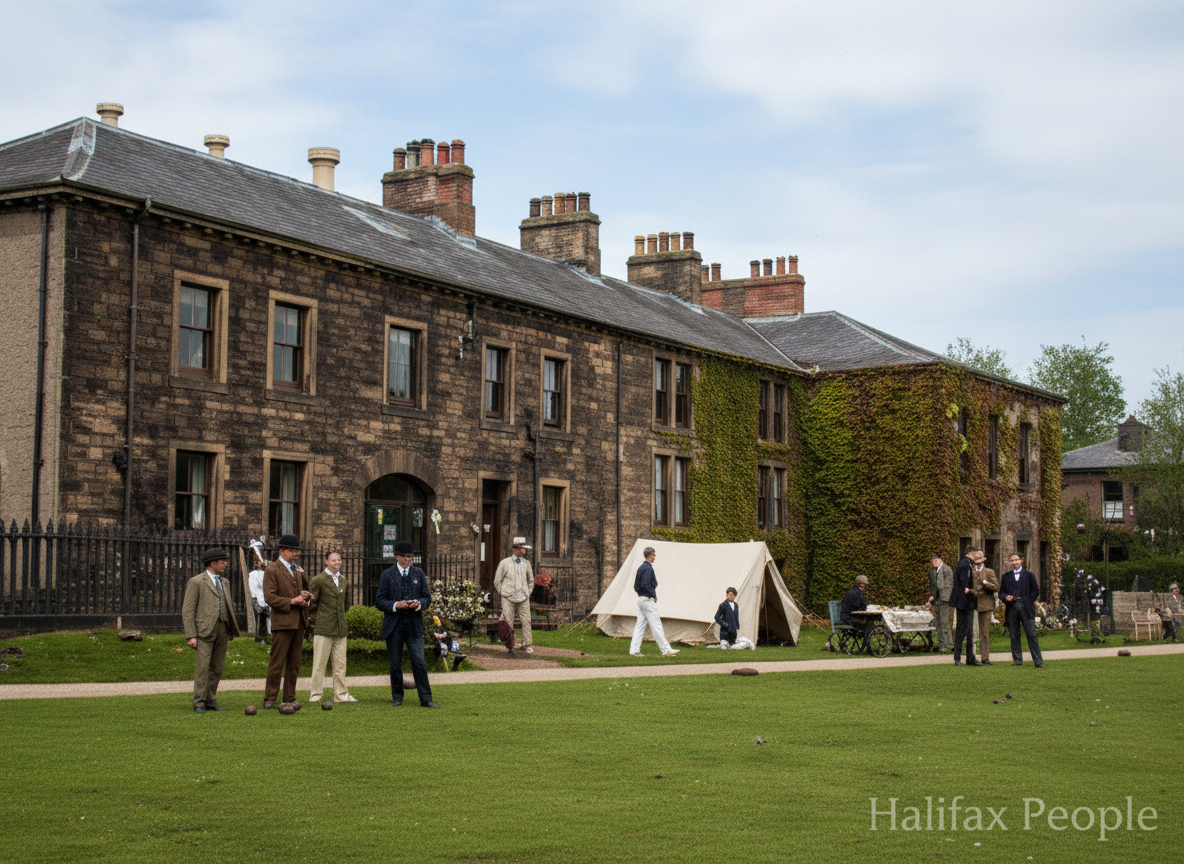
Clare Hall Bowling green enhanced

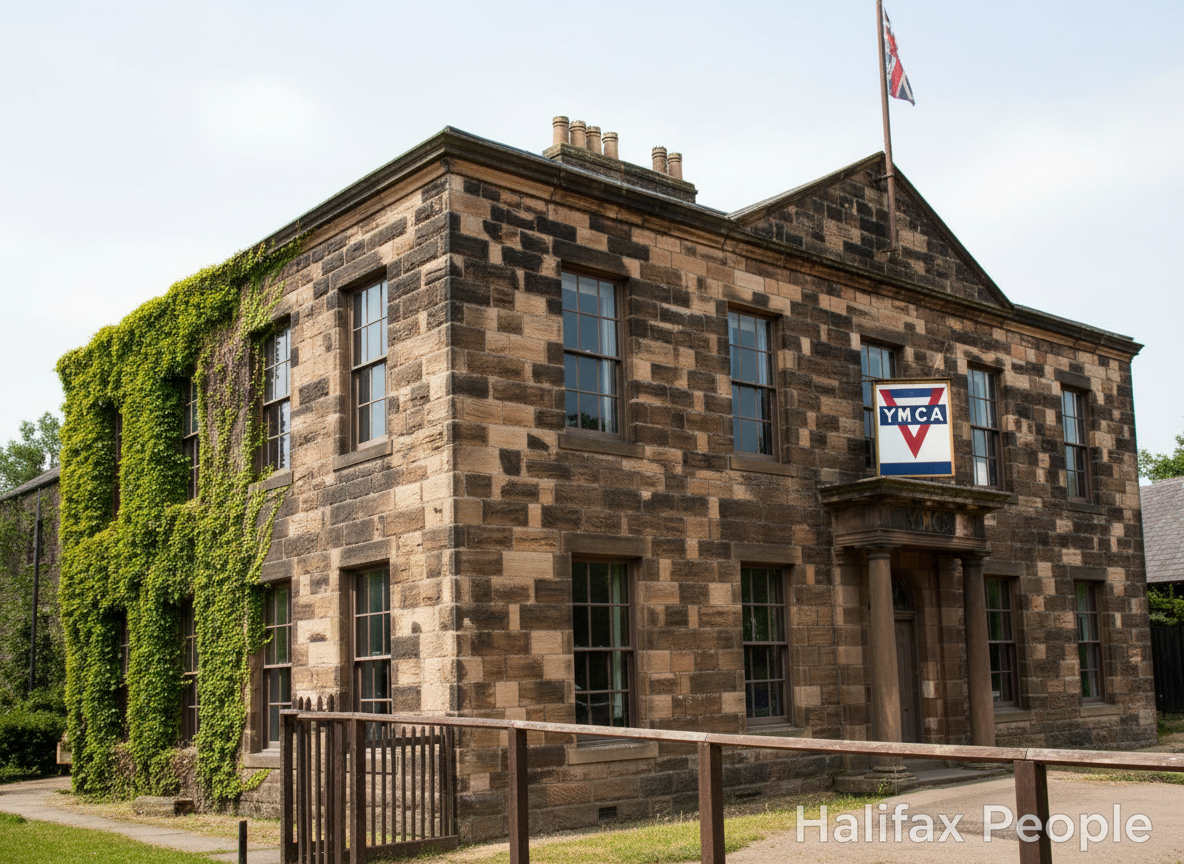
YMCA which faced onto Clare Road enhanced

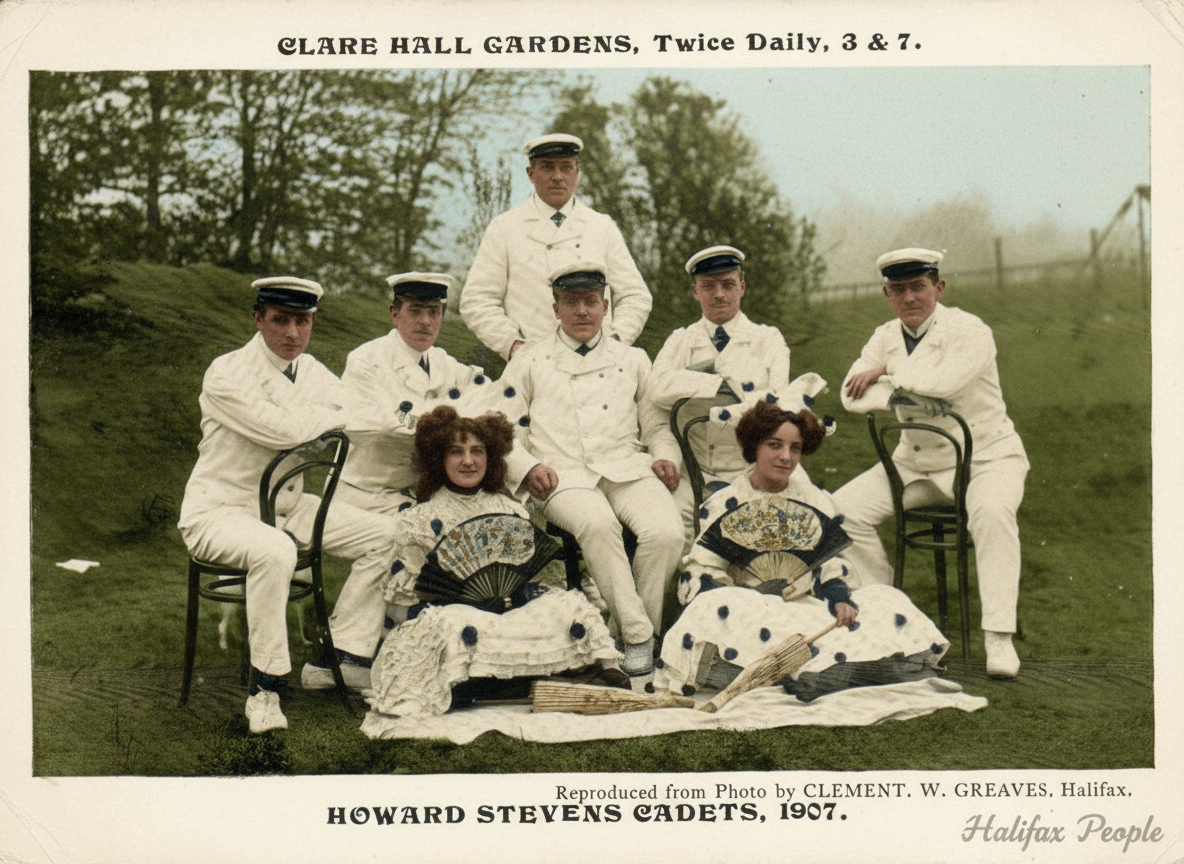
So here we are at Clare Hall. NO! Not the school but the rather posh residence on the other side of Huddersfield Road, after which the school was named.
The hall was originally called Calico Hall and several notable local families lived there from 1493. In the 18th century, Dr. John Prescott, a noted local surgeon, bought Calico Hall and passed it on through his family. When William, a member of the Prescott family, got into financial difficulties in 1776, his sister persuaded her husband, Robert Parker, to buy the house to “keep it in the family”.
Mr Parker spent a lot of money on the house adding a new front to the building. In due course the house went back into the Prescott family and Rev. Edward Prescott and his wife, Ann, moved into the hall. Around 1810, Mrs Prescott renamed the house Clare Hall as she felt Calico Hall sounded too businesslike.
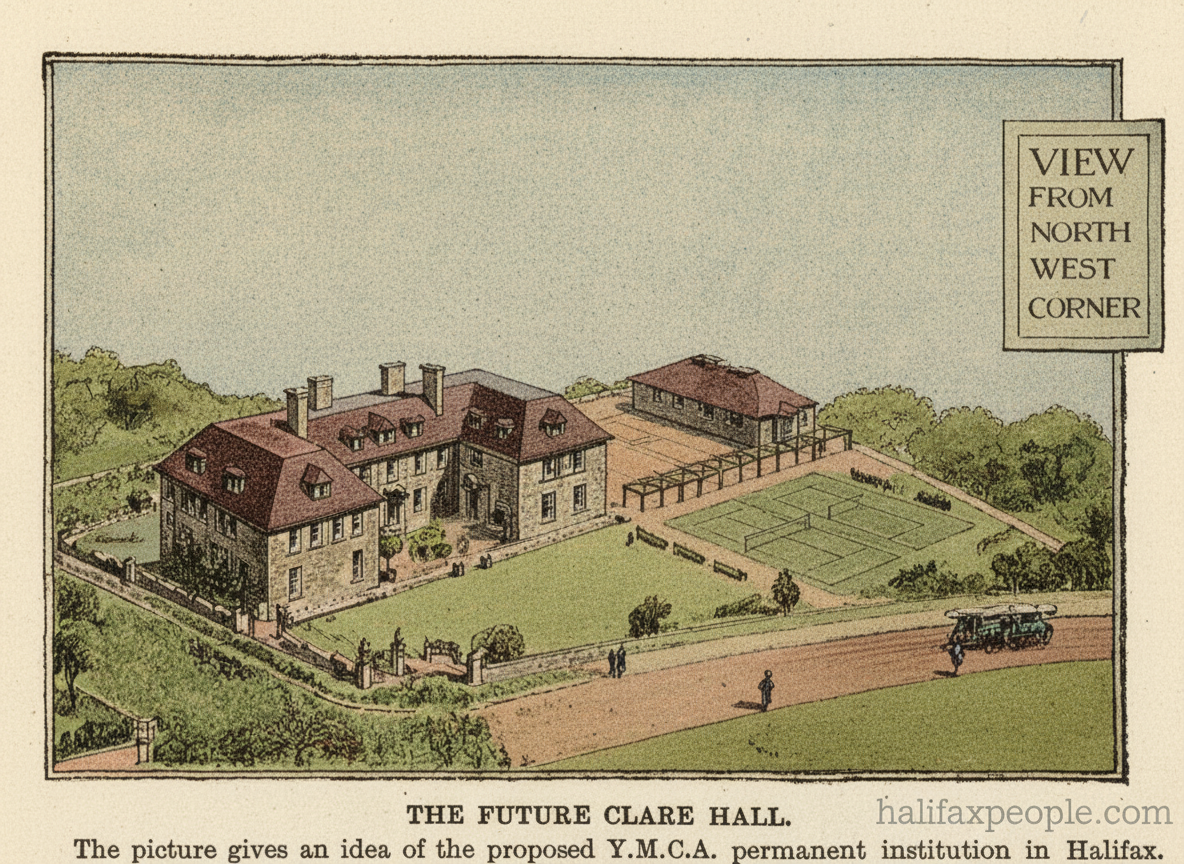
In 1918, J.H.Whitley, the Liberal M.P. for Halifax and later Speaker of the House of Commons, bought Clare Hall and donated it to the Halifax branch of the Y.M.C.A to use as their headquarters. The Y.M.C.A. remained at Clare Hall until 1936 and after they moved out, the Hall and surrounding land was bought by Halifax Corporation. Their plan was to knock down the hall and build a new municipal swimming pool and they went as far as having architect’s designs drawn up as seen in the two drawings here.
Unfortunately, Halifax Corporation were renowned for never getting on with outstanding work and, before the pool could be built, World War II intervened and the scheme was withdrawn. In 1959, almost fifteen years after the war ended, the Corporation again began planning a modern new municipal swimming pool and work began on the new building, in 1964. The Sports Minister, Dennis Howell, opened the new pool in April 1966 and the pool, with adaptations, as seen here, is still in use today.
Oh, by the way, Clare Hall School, across Huddersfield Road, was originally opened as the Halifax Board School in 1882 and became the Halifax Modern School in 1931. Clare Hall Secondary Modern School followed in the 1950s. That building is now residential apartments.
Tony Martin

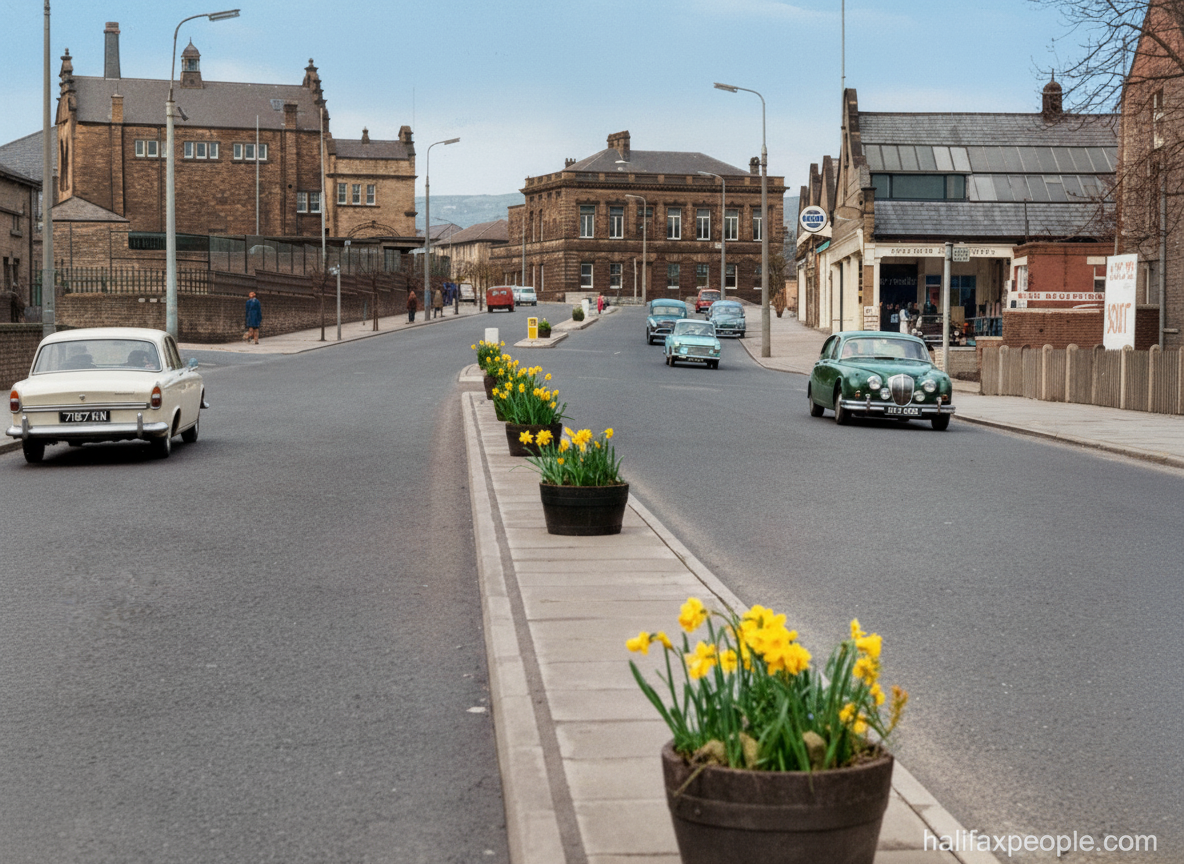
enhanced

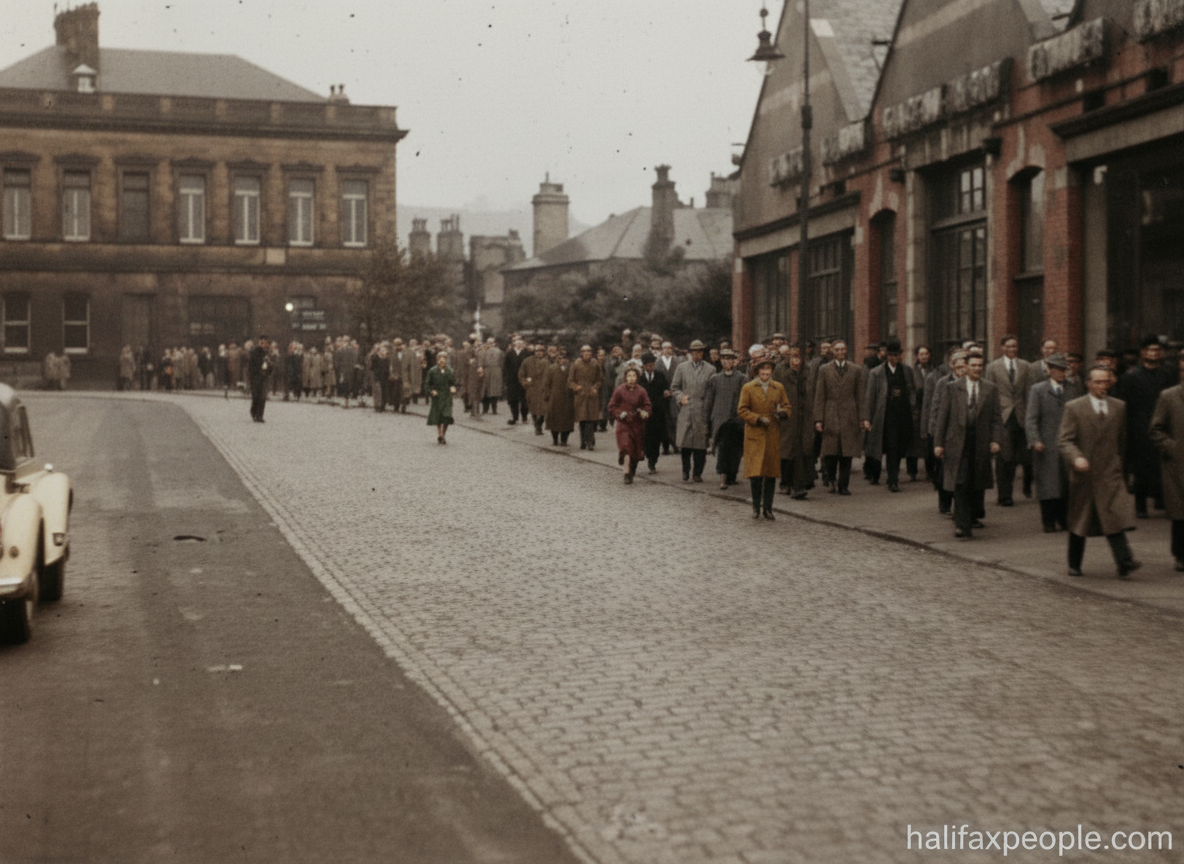
digitised

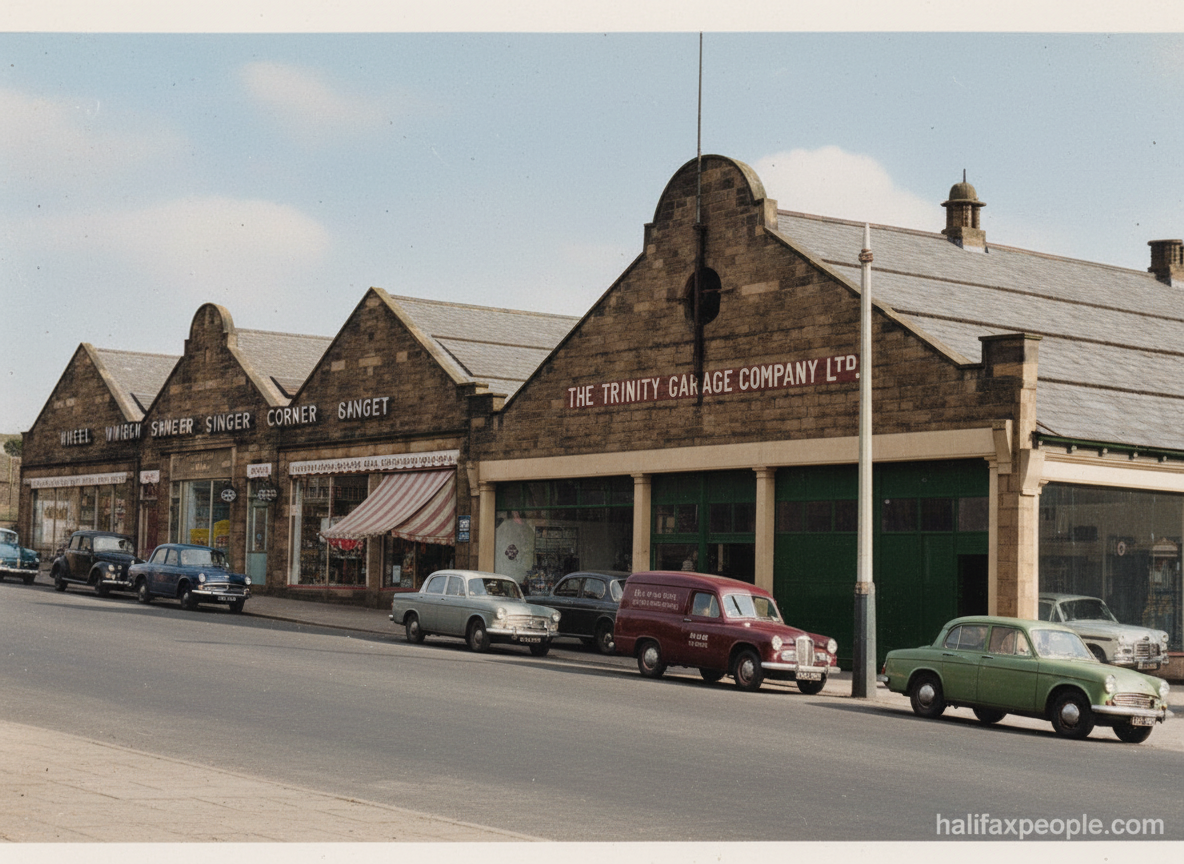
digitised

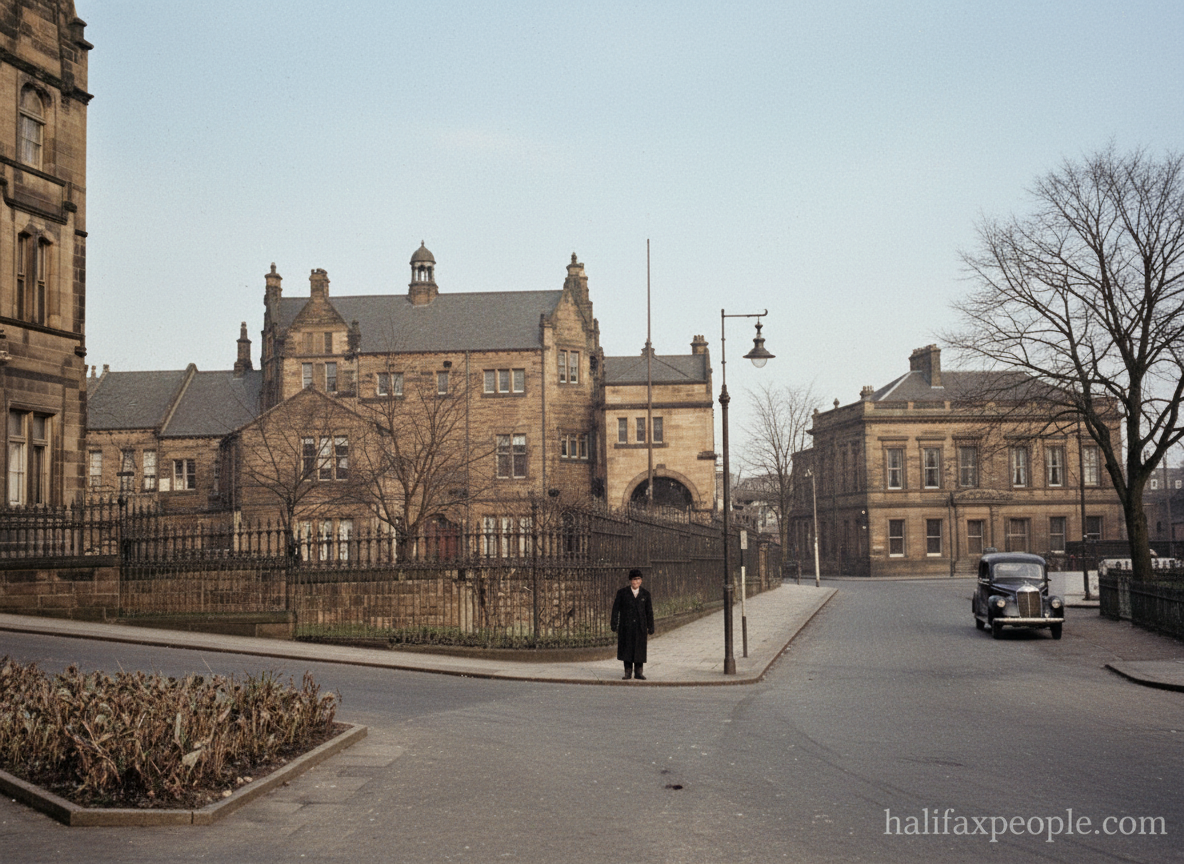
enhanced

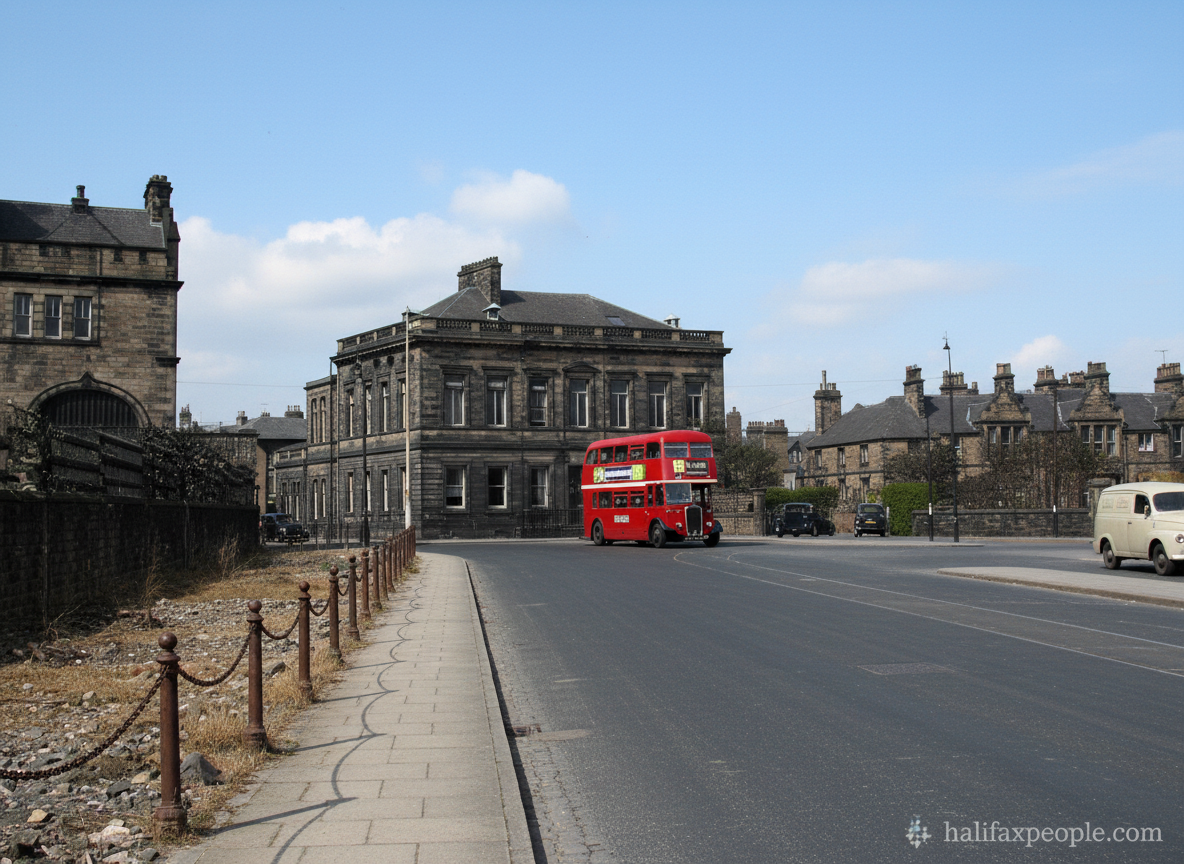

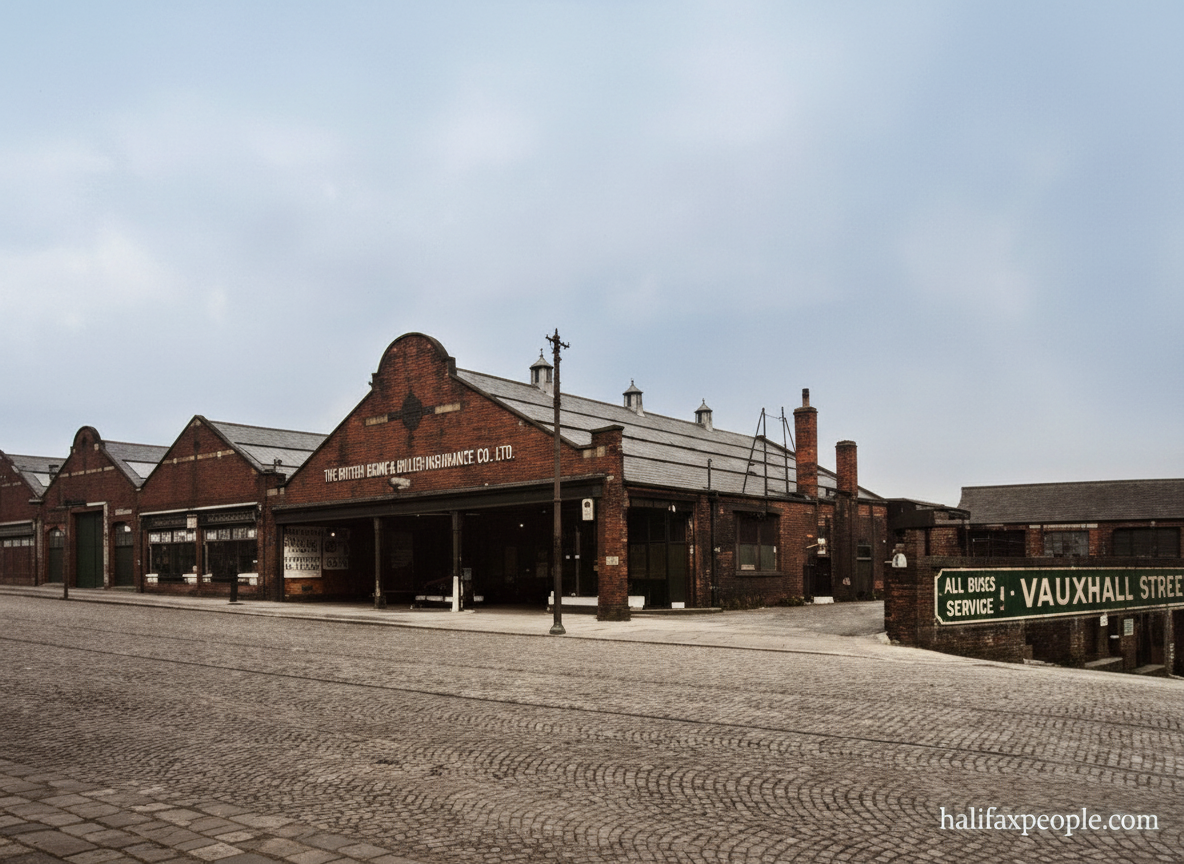
enhanced

enhanced

enhanced

enhanced
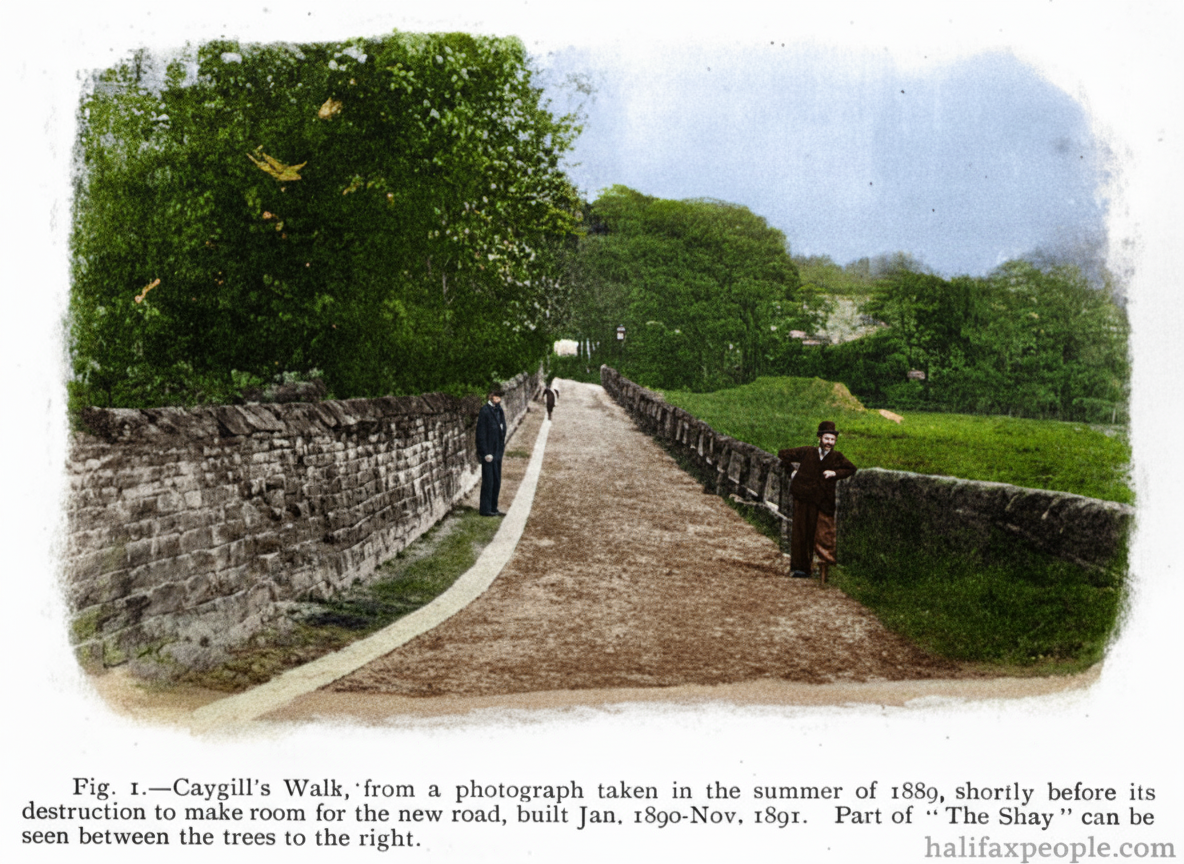
enhanced

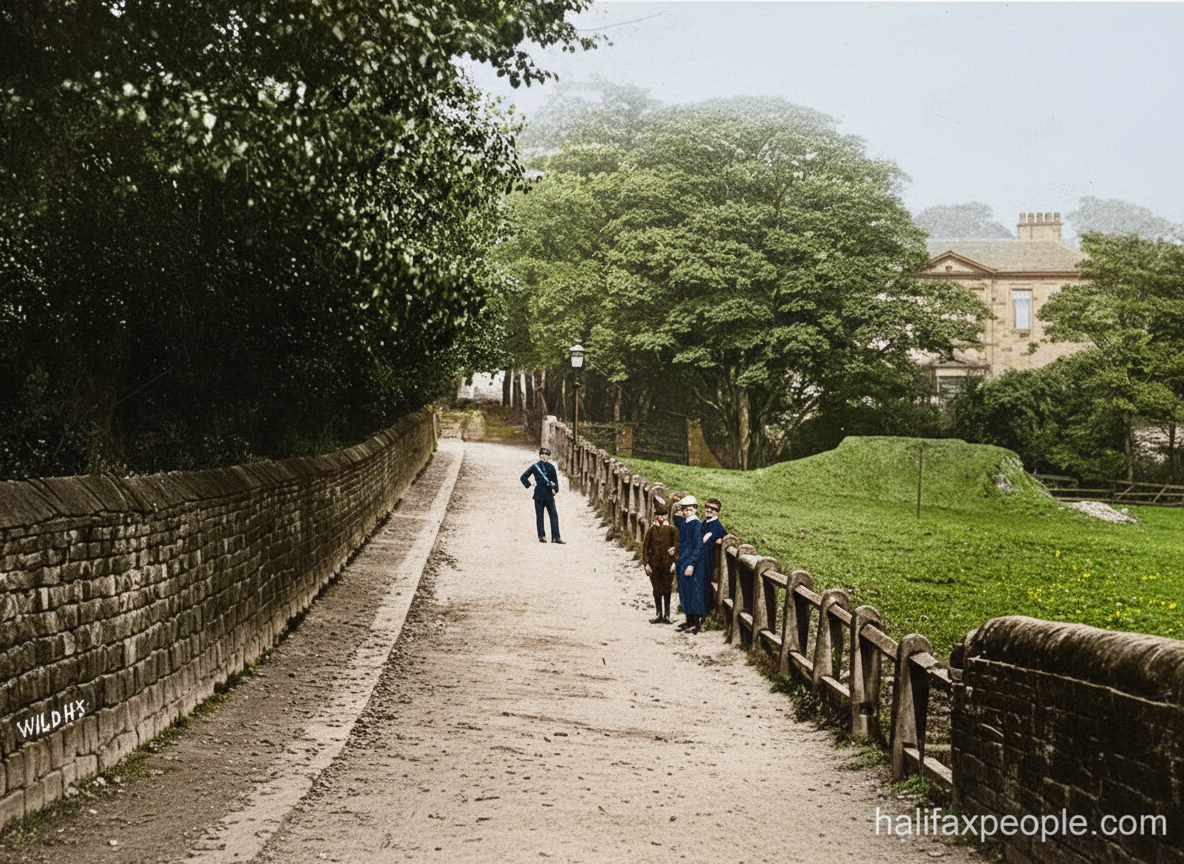
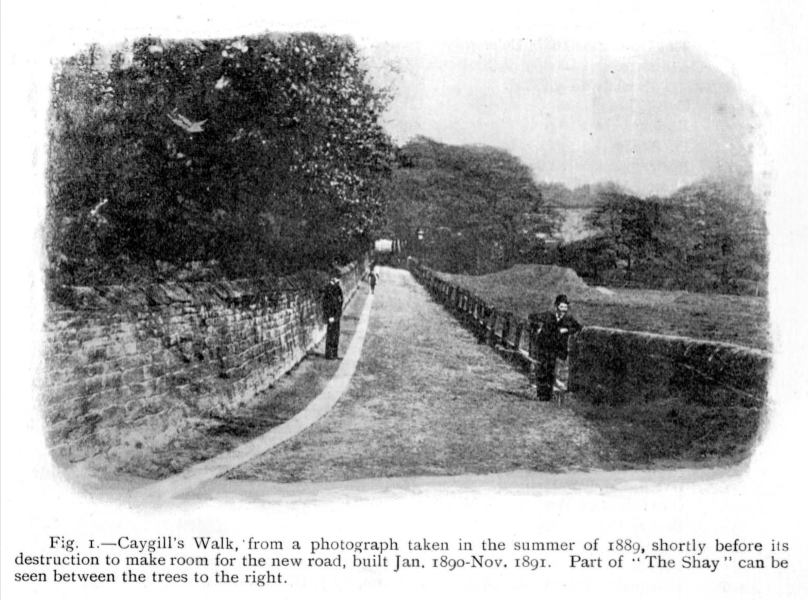
Caygills Walk was basically the ancient Huddersfield Road


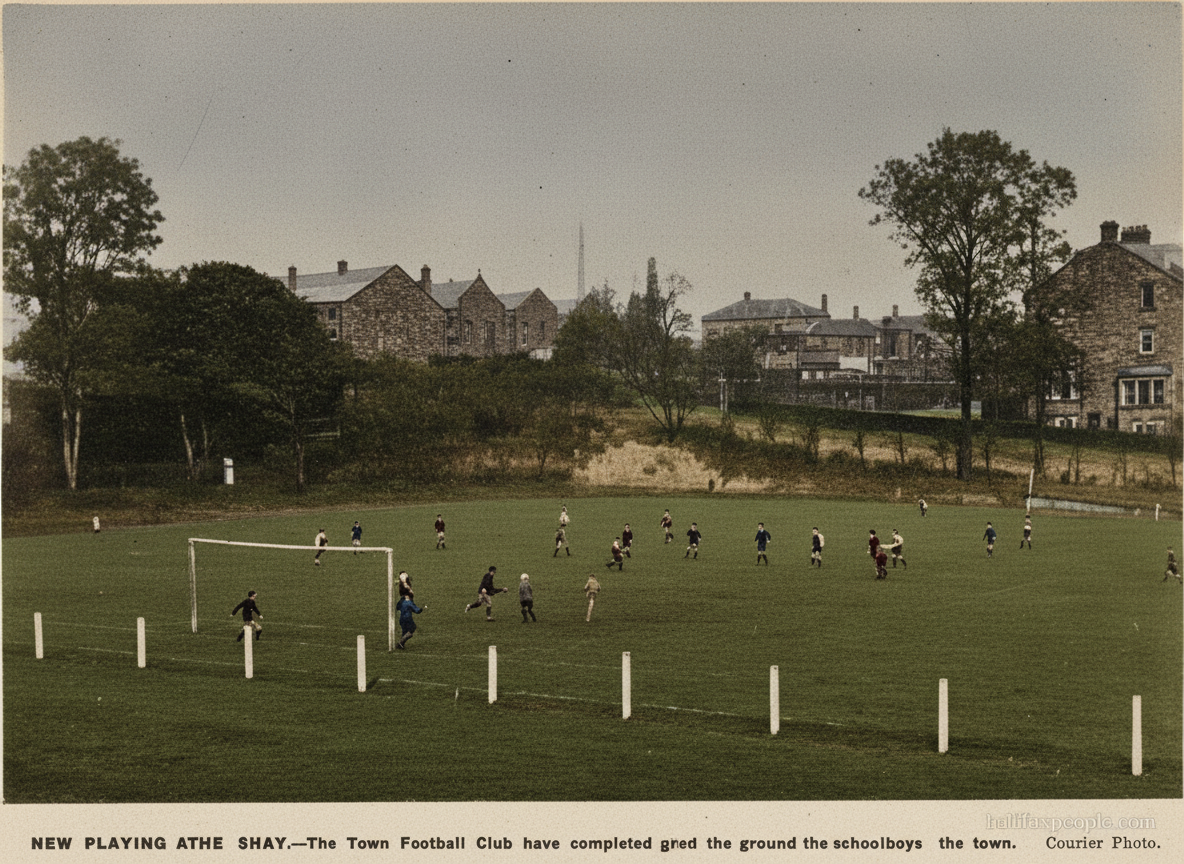
enhanced

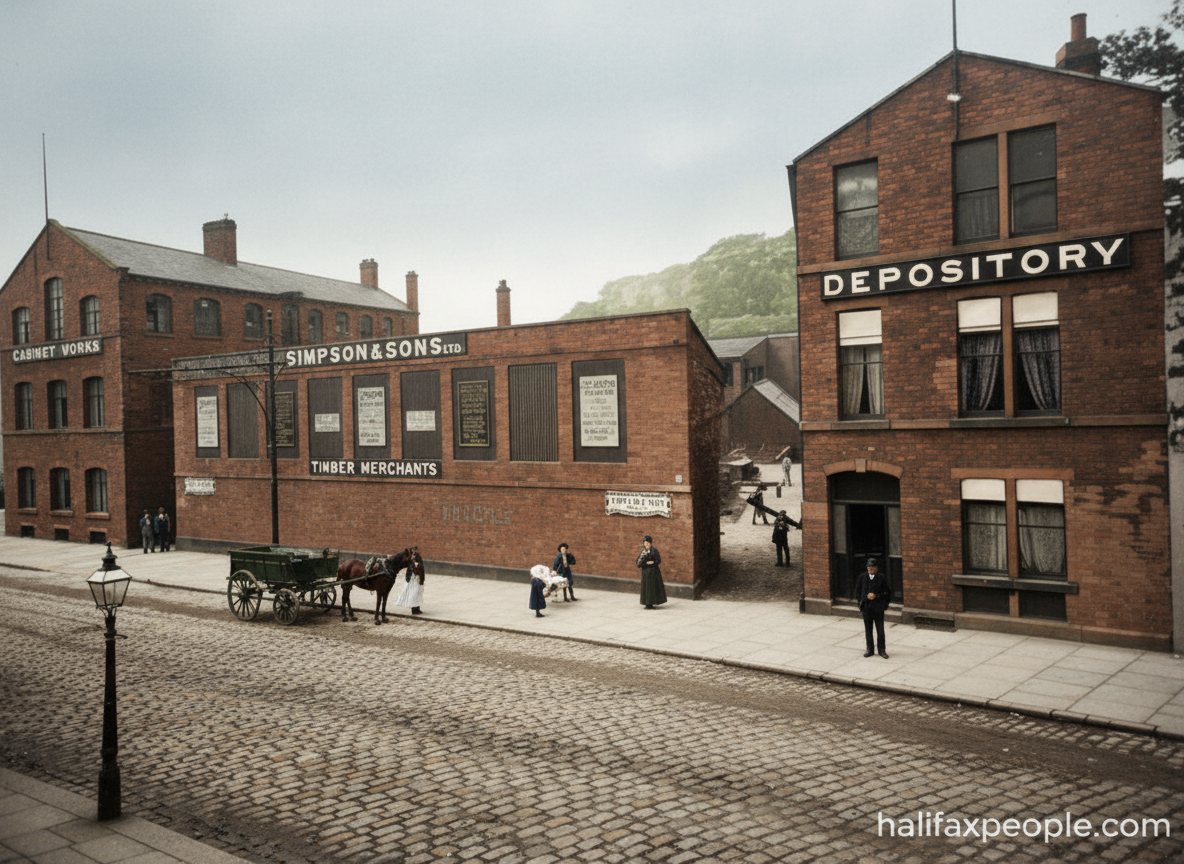
enhanced
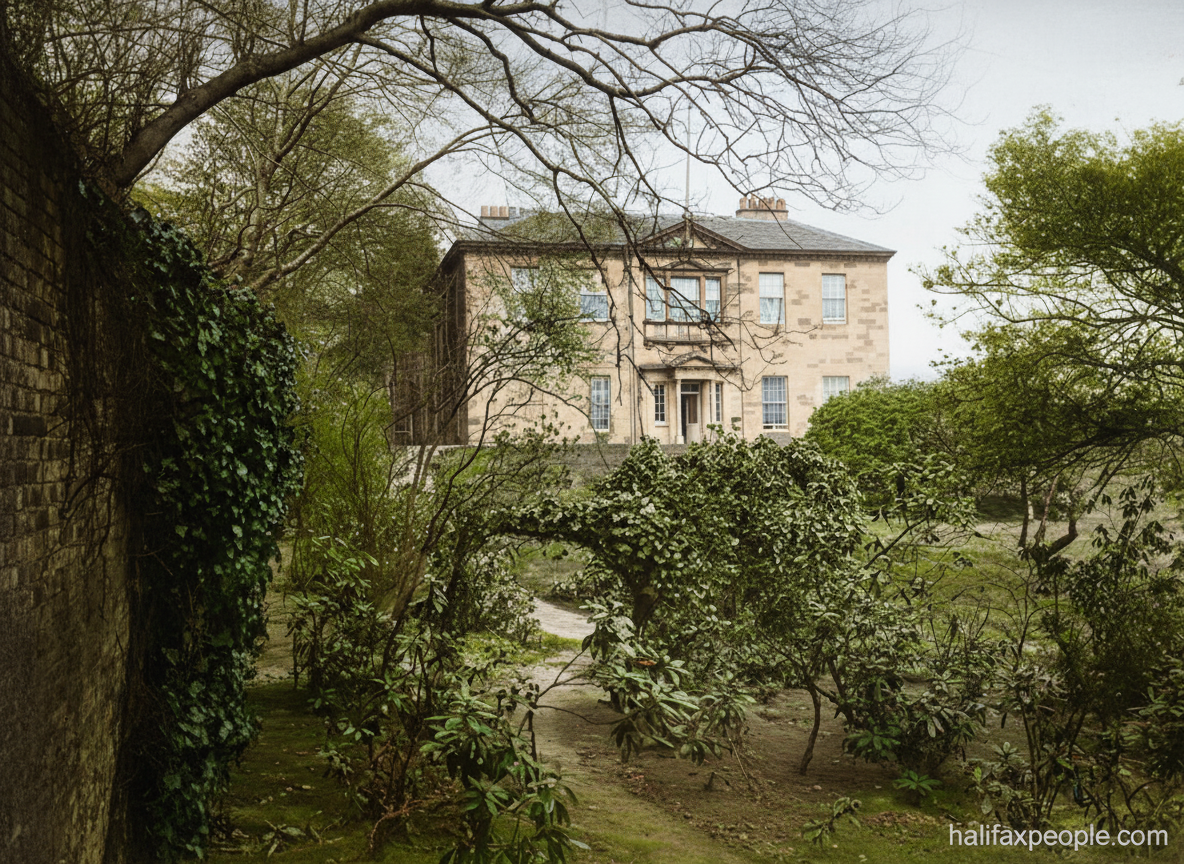
The very well known Simpsons of Halifax, whose business was on Silver Street for many years, established their cabinet furniture manufactory on the site of the former stabling and outhouse premises of The Shay Mansion. These premises were mostly demolished and a Mobil petrol station was developed. This was also demolished and the site is now occupied by the apartments seen in the now photo. However, there are still traces of the history of the site as The Shays ancillary buildings still survive around the west and north sections of the apartments car parking area.
David Glover.


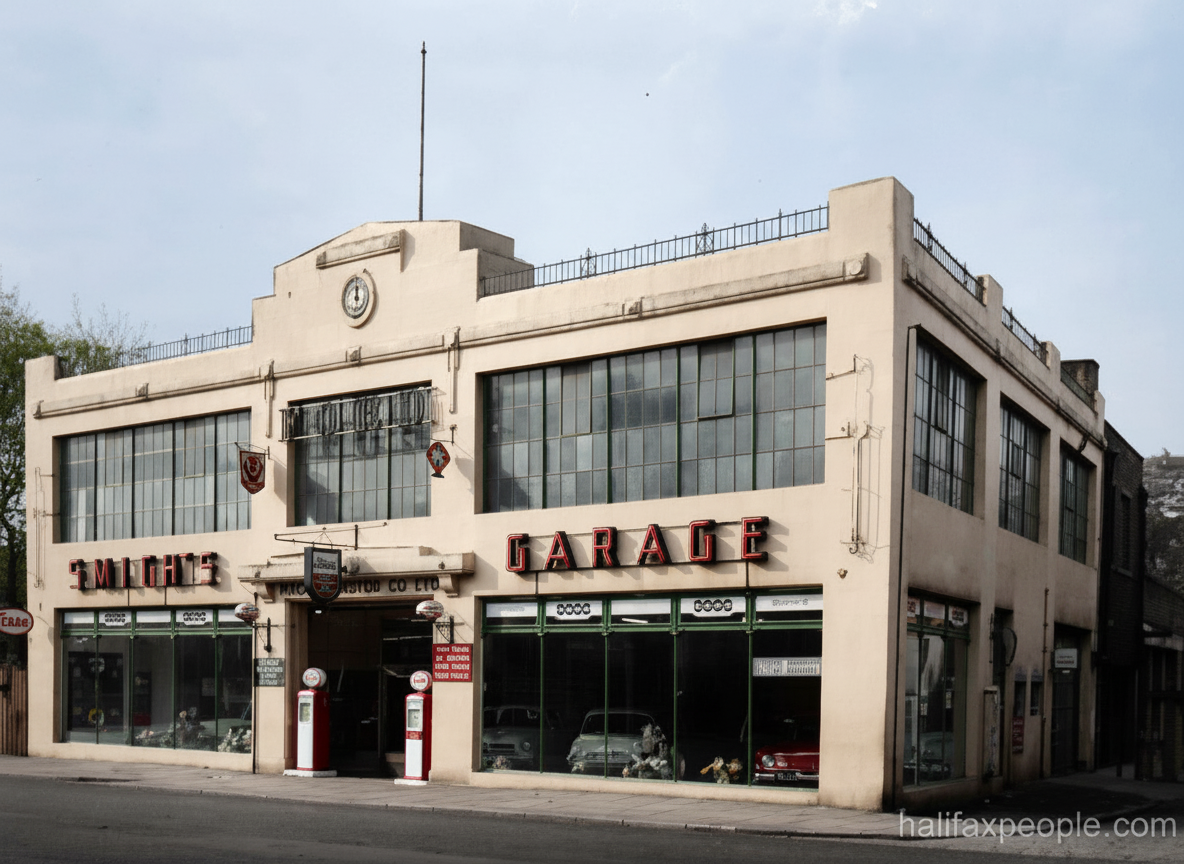
Smith's Ford Garage enhanced
A rarely known tunnel in Halifax is a tunnel that runs under Skircoat Road from the bottom of a cul-de-sac at Heath Lea to inside the Shay Stadium at the corner of the old Skircoat Stand/South Stand.
The first photo here shows the portal at the Shay end and the next photo show the portal at the bottom of Heath Lea.
The tunnel was single track and is the only part of an abortive Midland Railway from 1902. A goods yard had been proposed at what is now the bus depot but never materialised. The tunnel did serve a purpose during the Second World War acting as an air raid shelter. It was later used for another more sneaky purpose - free entry to the stadium for the football and speedway!!!
Jason Ward



enhanced
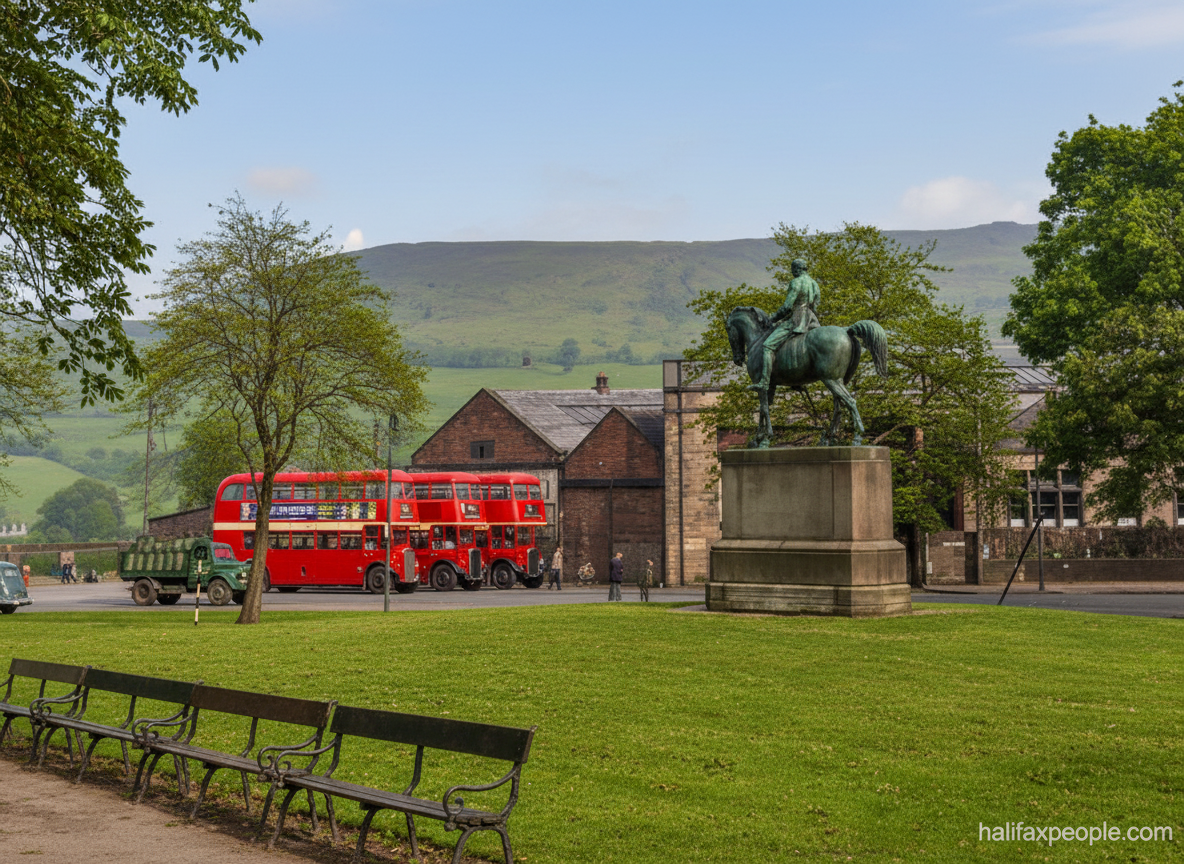
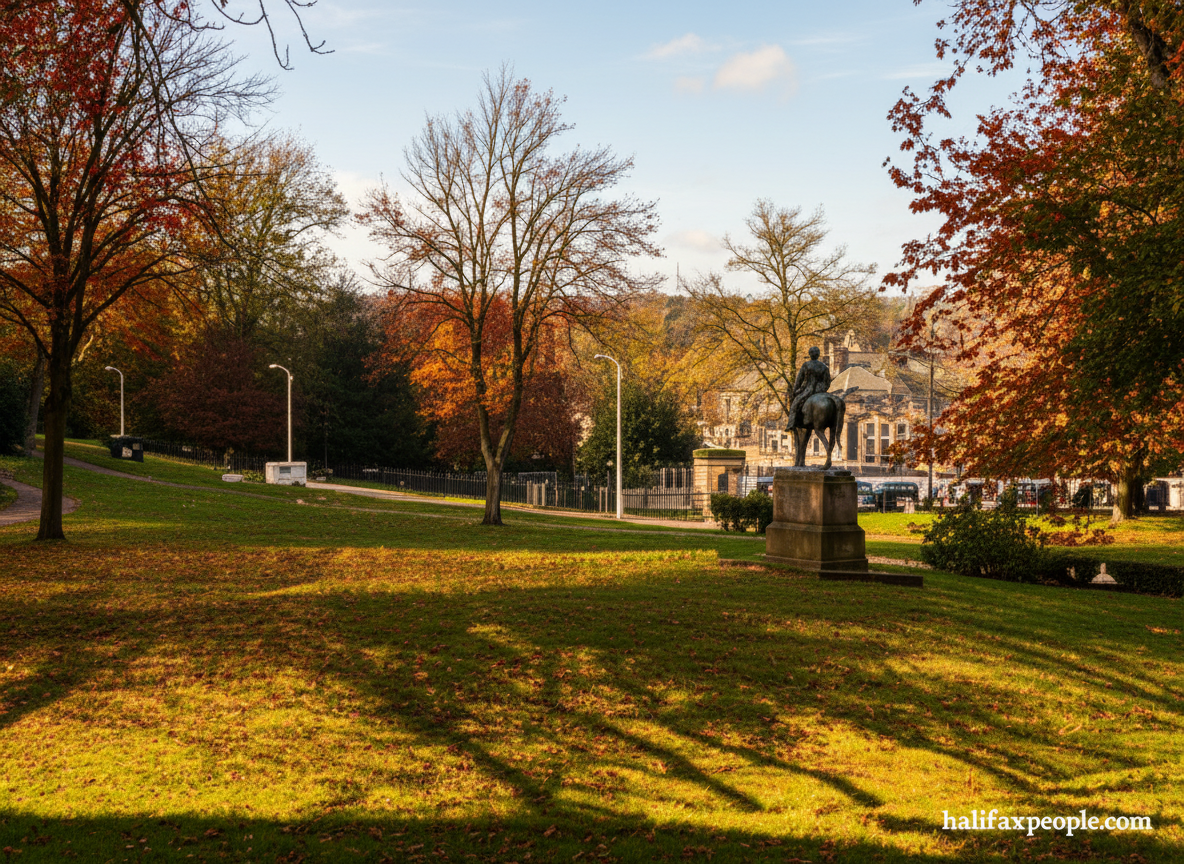
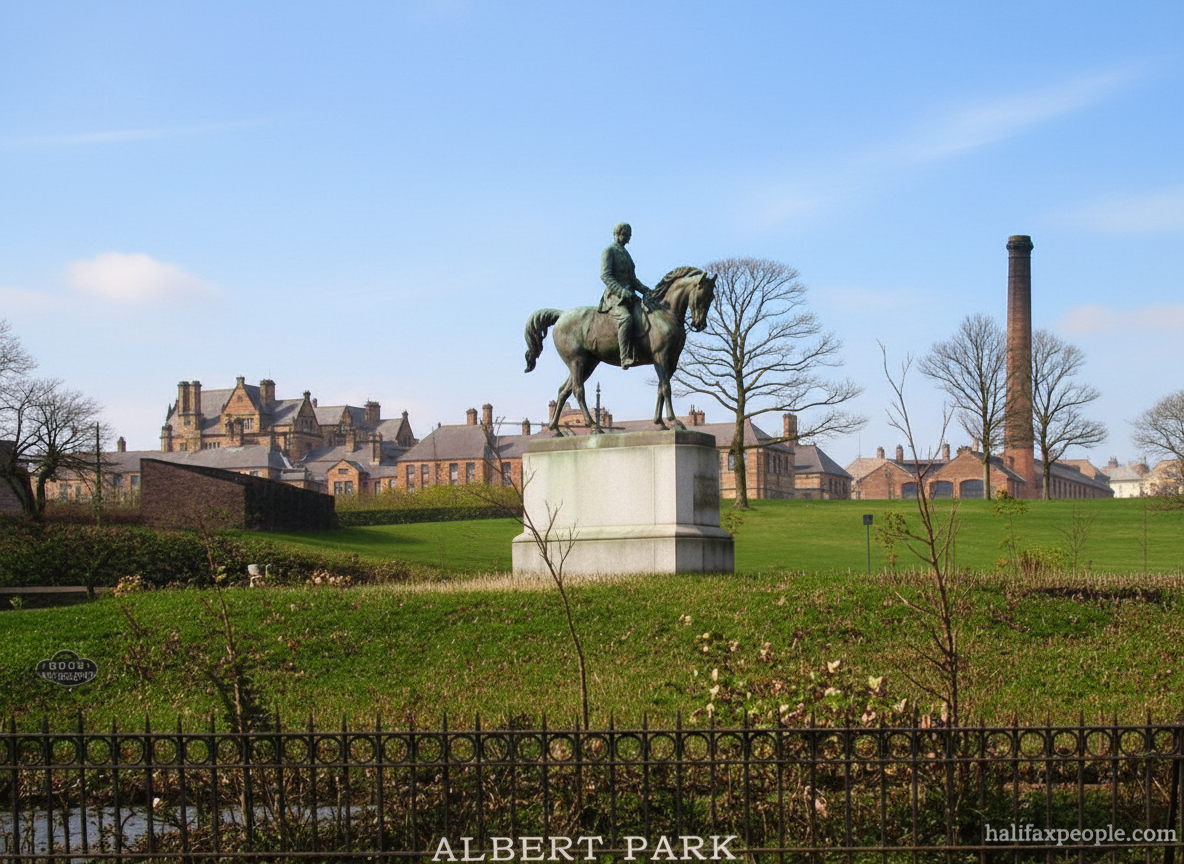
Prince Albert Memorial which now stands on Heath Road opposite the Bus Garage but once stood at the Horton Street/Southgate junction


enhanced

enhanced

enhanced


enhanced
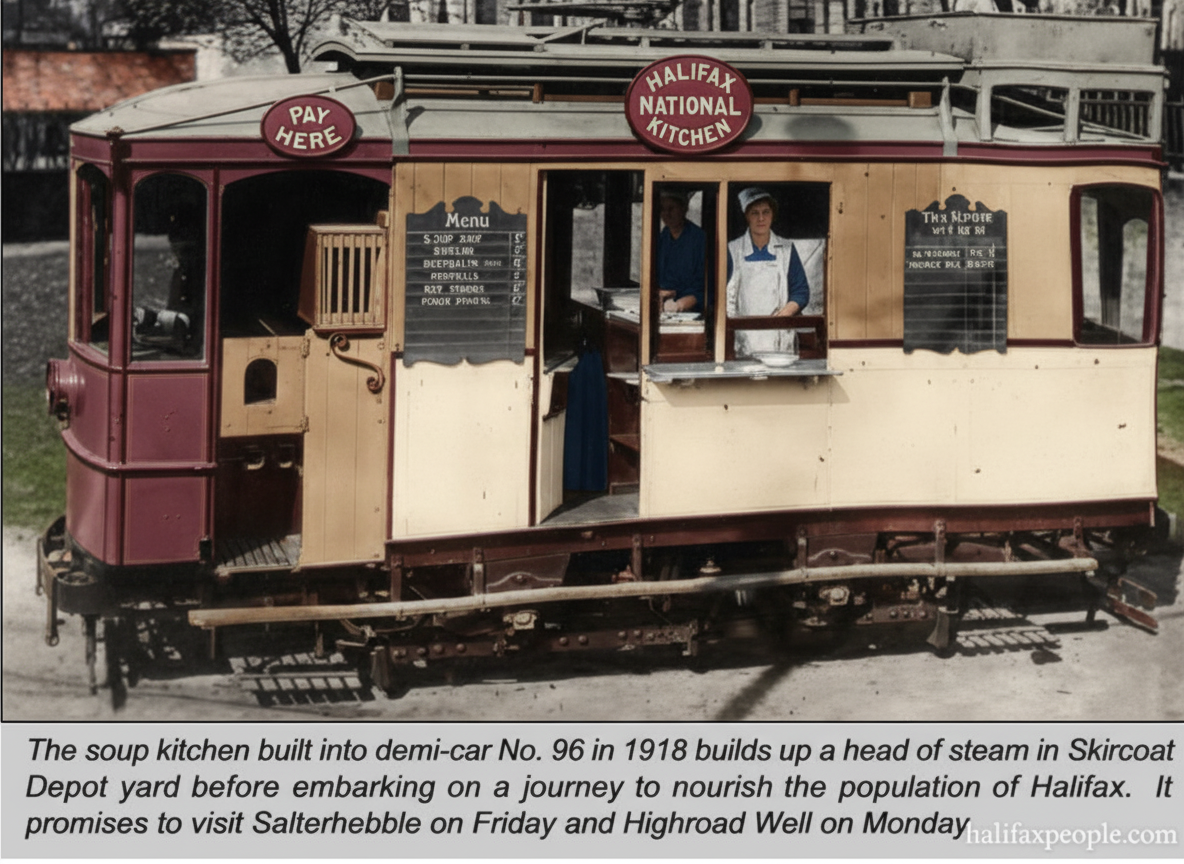
National Kitchens were introduced in World War I by the Prime Minister, David Lloyd-George. The government of the time felt that too much coal was being diverted from the war effort into cooking meals for millions of families (this was a time when most people still cooked and heated water in small ovens/boilers built in to their fireplaces so they needed a fire going all year long). So, they established National Kitchens so that people wouldn't need to light their fires every day to cook a meal.
The National Kitchen in many towns was a permanent building, something like a medium-sized restaurant, but here in Halifax we had a mobile kitchen as shown here. The destinations on the right-hand board are Salterhebble Hill and Highroad Well (presumably it visited other areas on other days).
The left-hand board shows the menu which includes half a pint of soup (1 penny); dumpling (1 penny); vegetable pie (4 pence); potatoes (1 penny); rice pudding (three ha'pence); ginger pudding (2 pence). So you could have everything on the menu for less than a shilling (5p in modern money).
Tony Martin

enhanced
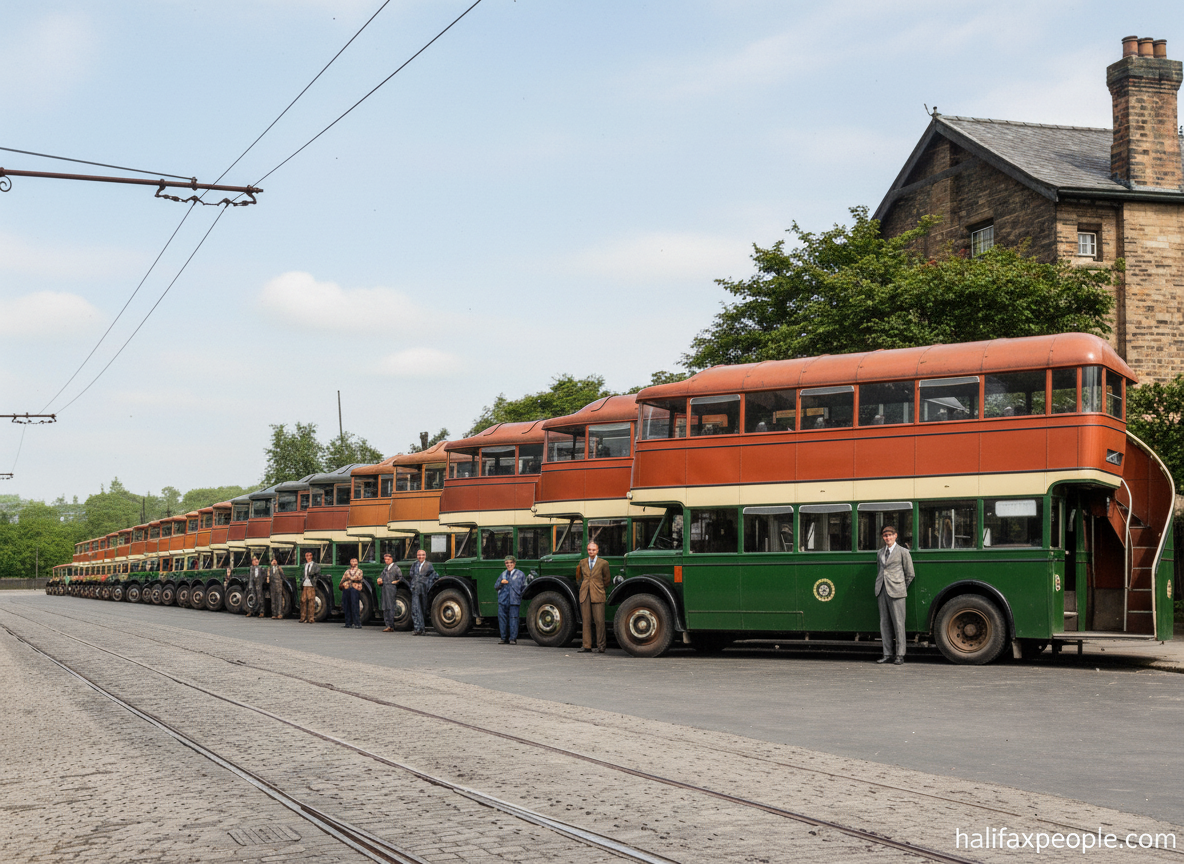
Delivery of a fleet of buses in 1931

enhanced
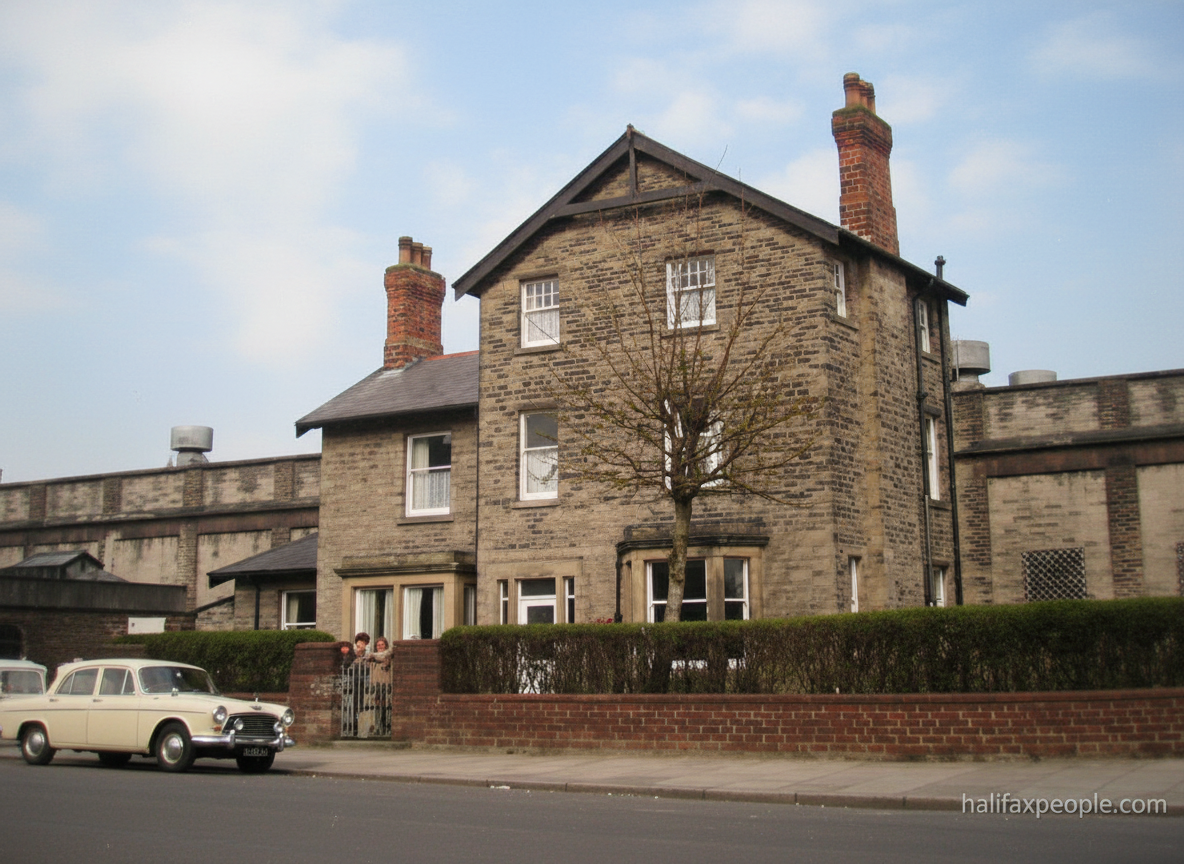
This was the house built specifically for the Skircoat Depot General Manager F.Spencer. It continued to be used domestically until March 1976 and then used for offices. The last tenant was Geoffrey Hilditch whose book this photo and information comes from. His wife and daughter can be seen at the gate. Sadly the building has become completely derelict and dangerous inside and has recently been re-boarded up after broken windows were allowing illegal access.
(c) Geoffrey Hilditch OBE
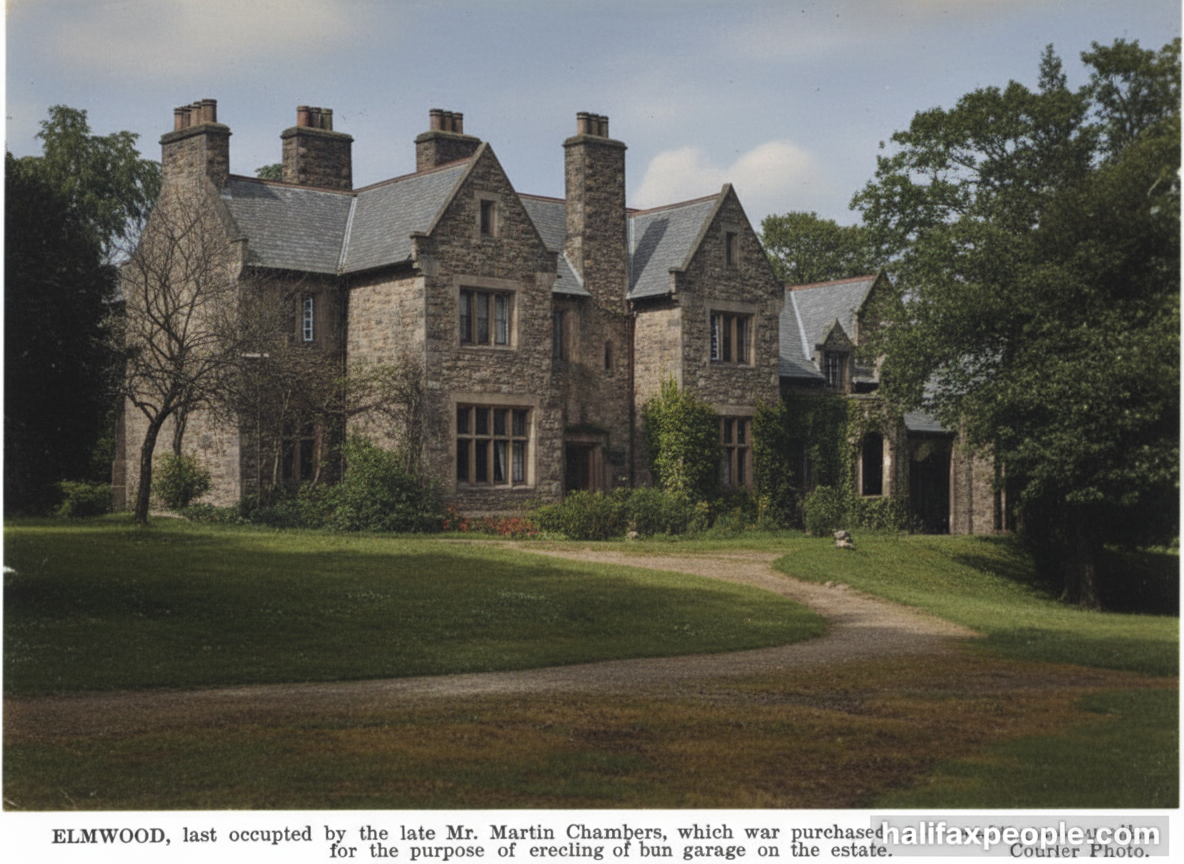
Also known as Shaw Hill House enhanced

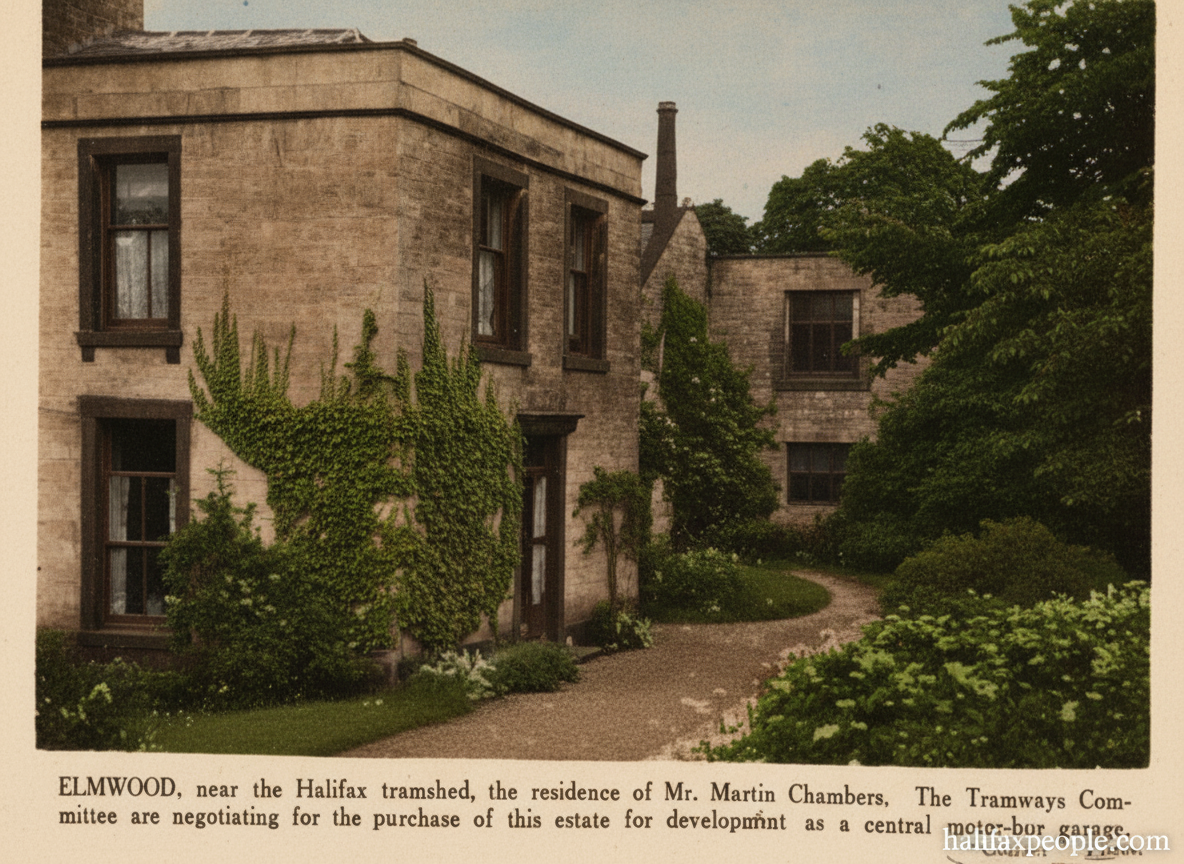
enhanced
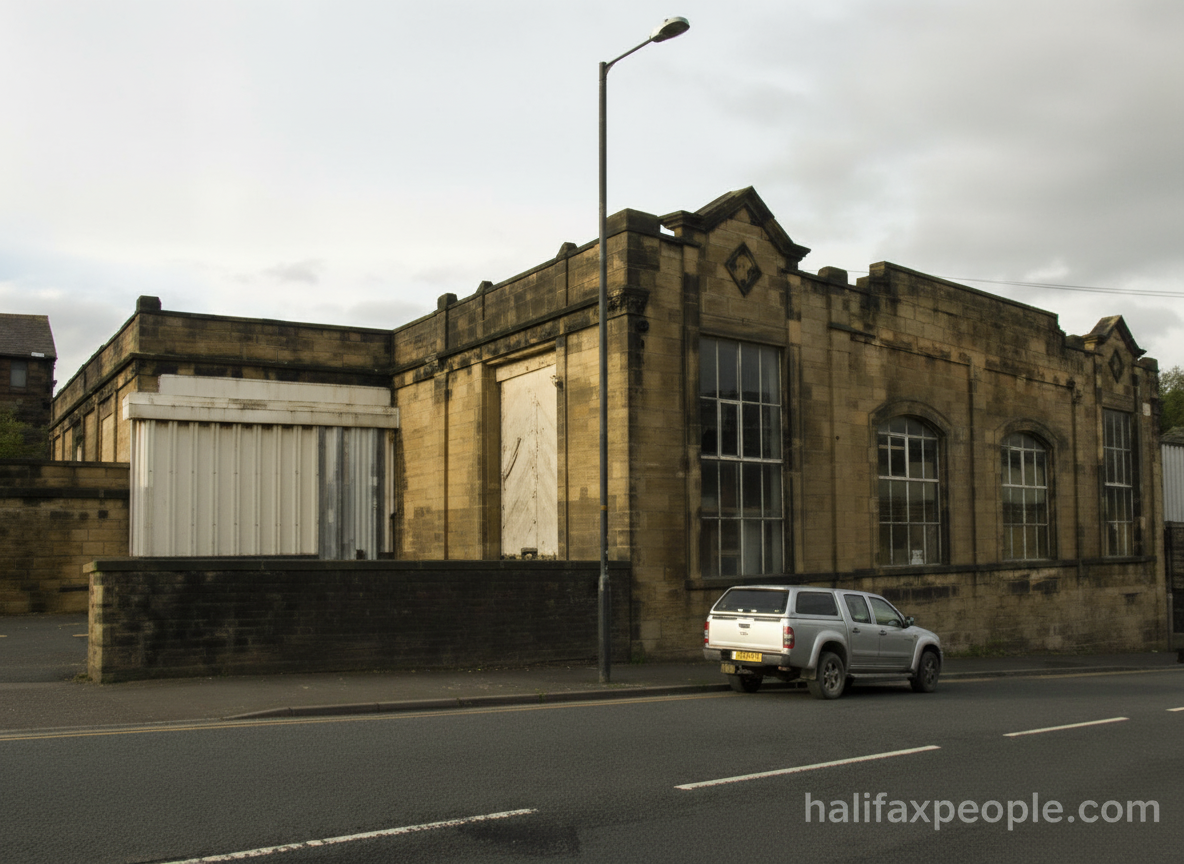
Halifax Tram Station enhanced


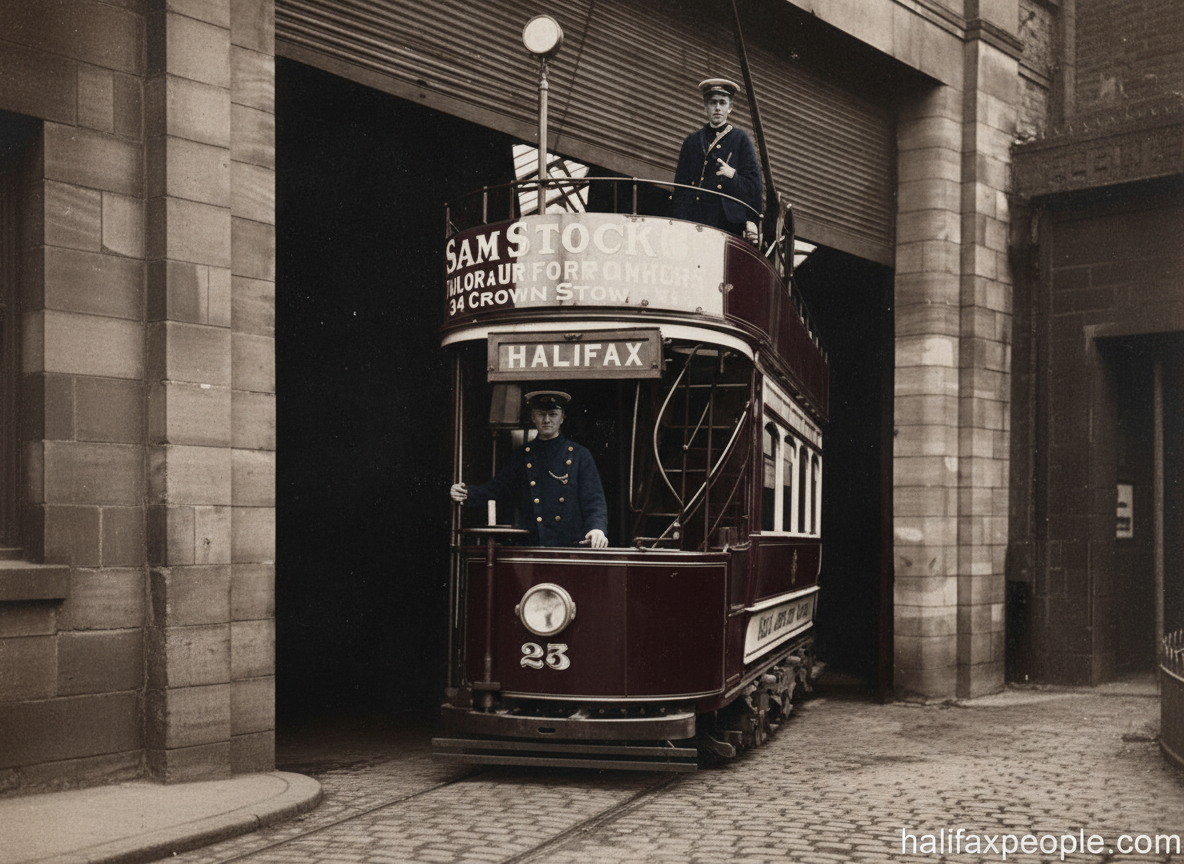
enhanced

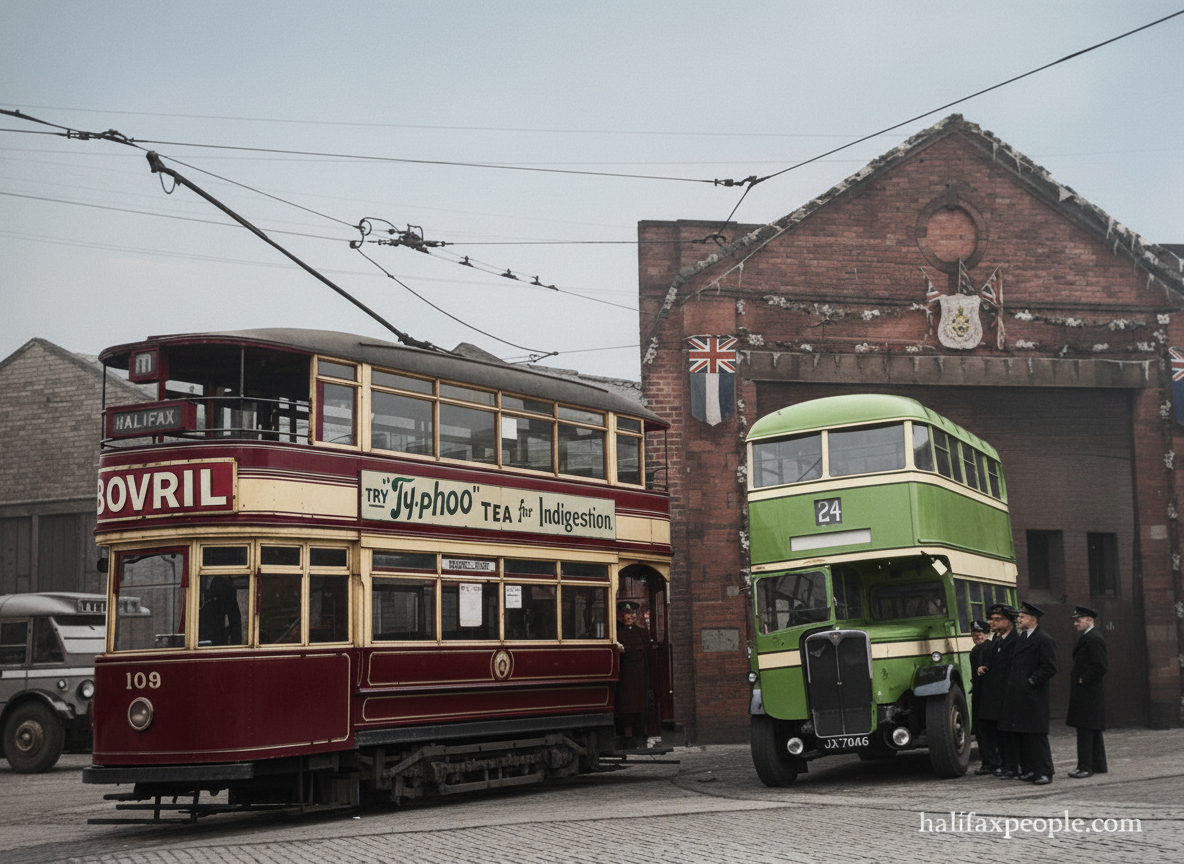
enhanced
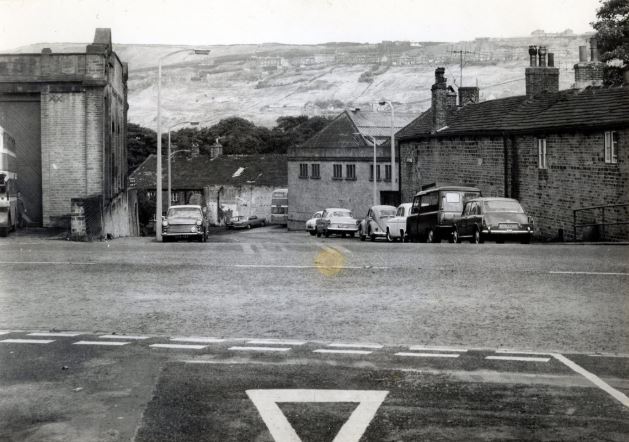
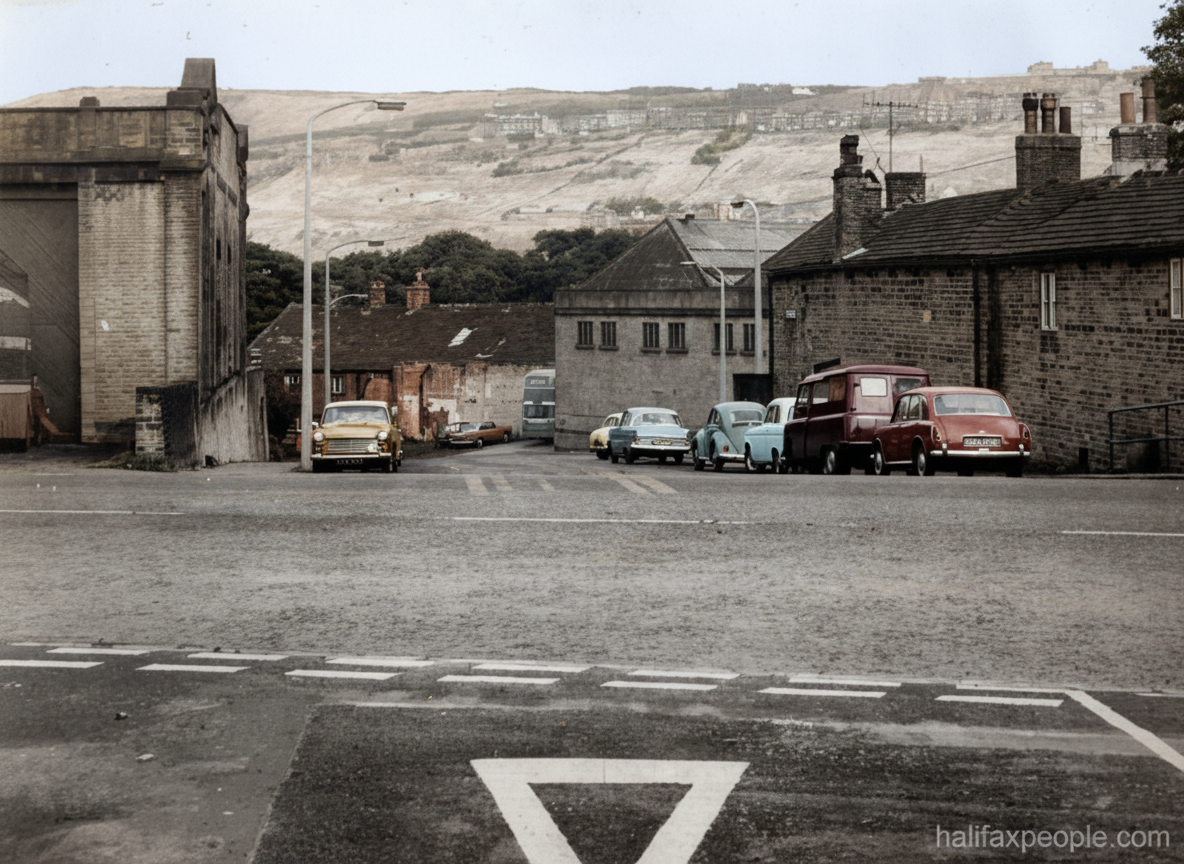
enhanced
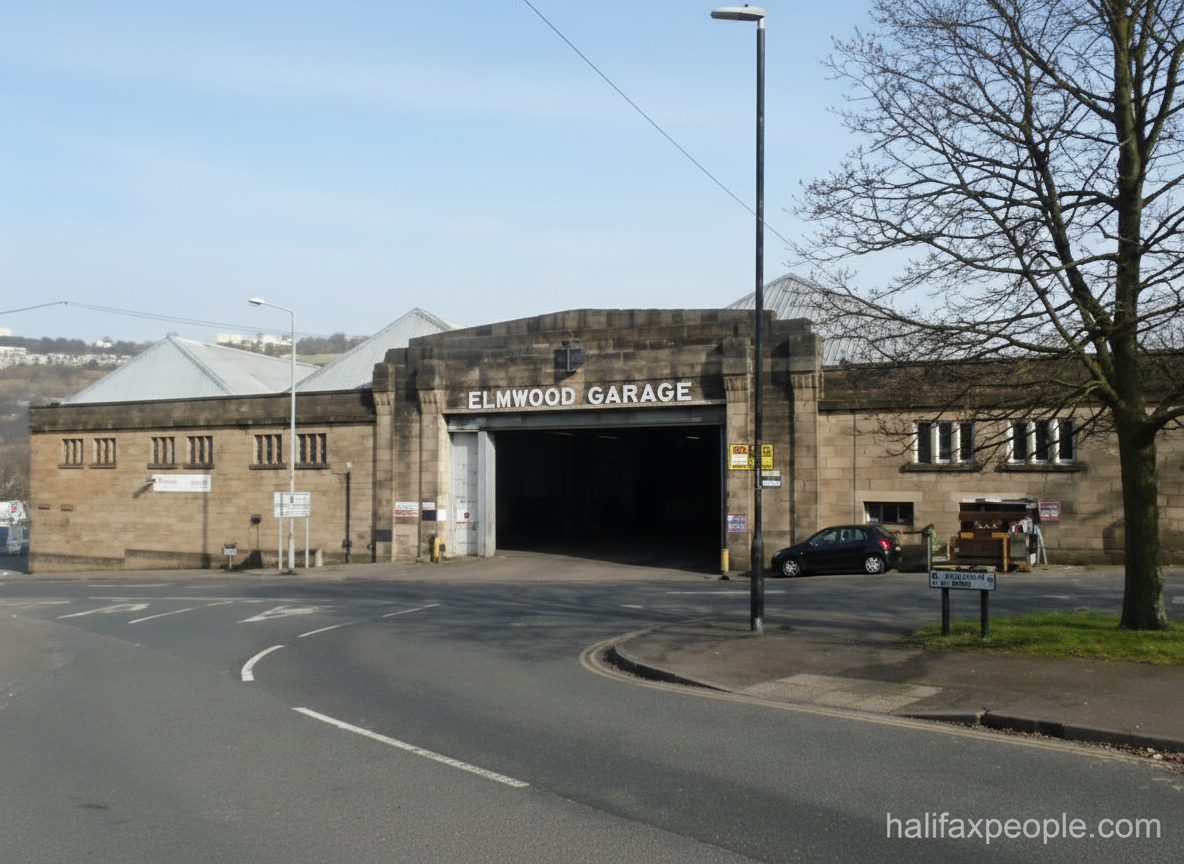
Elmwood Bus Garage enhanced

Halifax County Borough Control Sub - Area Control
Built in 1921 underneath what was the Tram depot but now Halifax Bus Garage it included a brick vaulted basement running under three of the depot bays and the external yard. The basement was roughly triangular in shape consisting of five parallel vaulted tunnels, each one slightly longer than its neighbour. The three longer tunnels (under the depot) had a stairway into the tram bays above. The two shorter tunnels under the yard were accessed by a single stairway at one side. There is a cross corridor linking the tunnels. Read more

enhanced
 |
  enhanced  |

enhanced


enhanced


Spring Hall - built in 1871 on land owned by the Holdsworth family, it has had many functions eg. intended purchase as a railway goods yard (never used), a hospital/convalescent home during WW1, a guest house for JH Whitleys' business associates, a sports facility. It was presented to the town in 1948 since which it has been a school sports ground, home for the Northern Ballet Theatre and the council register office.

Heath Lane

enhanced

enhanced
enhanced

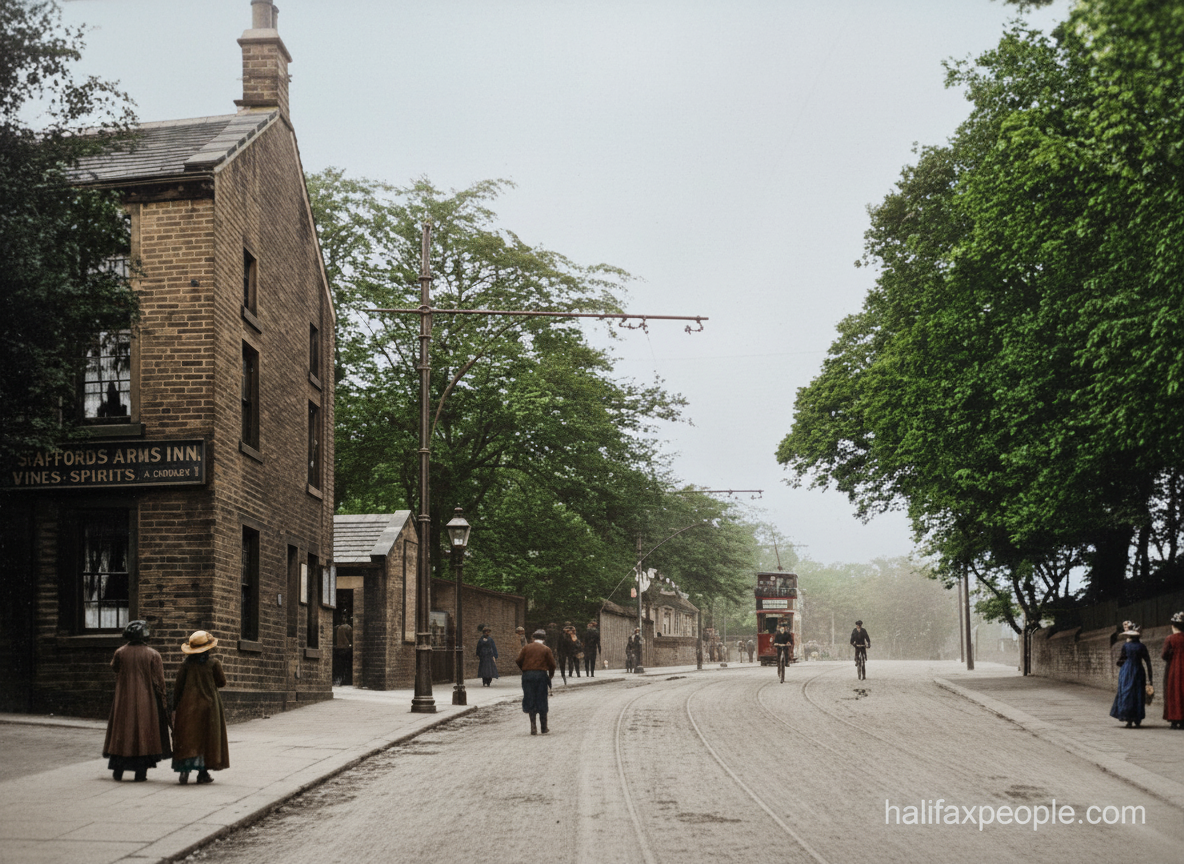
enhanced

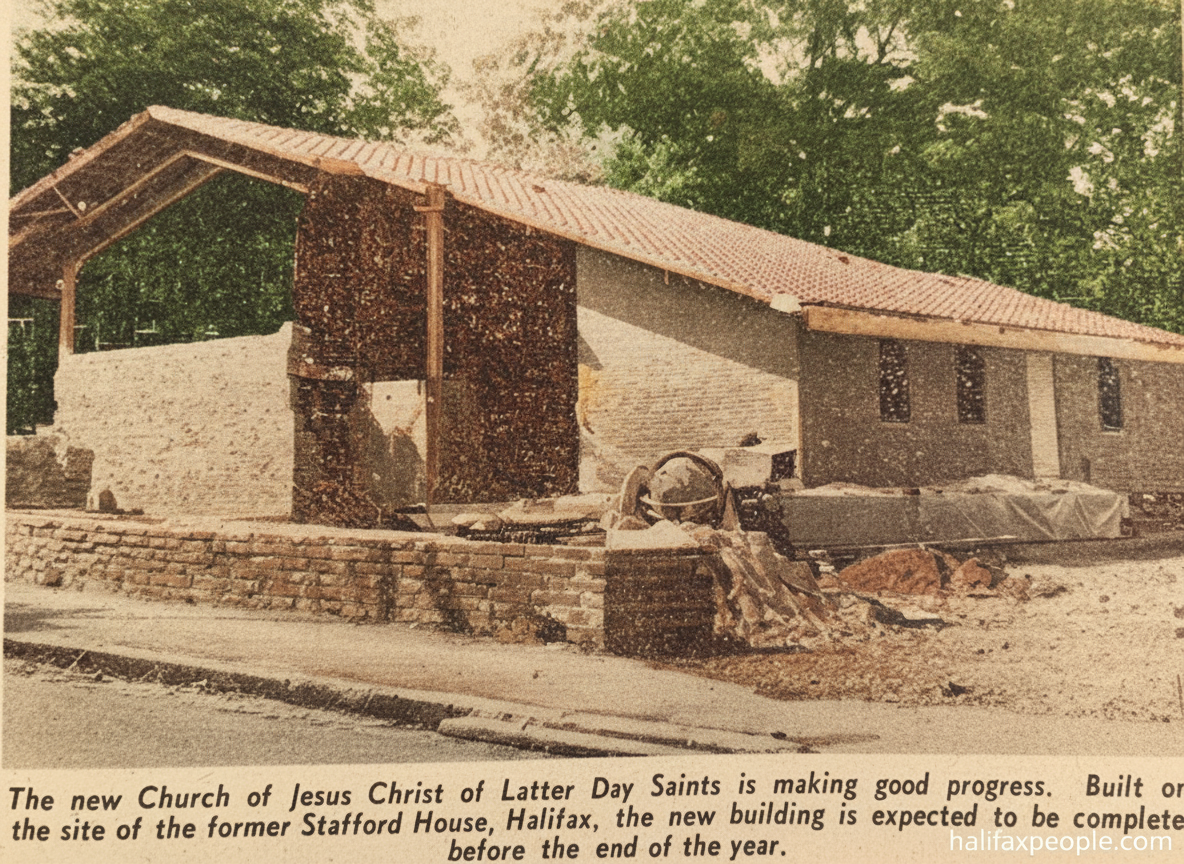
enhanced
Just around the corner from what was the 'Stafford Arms'.

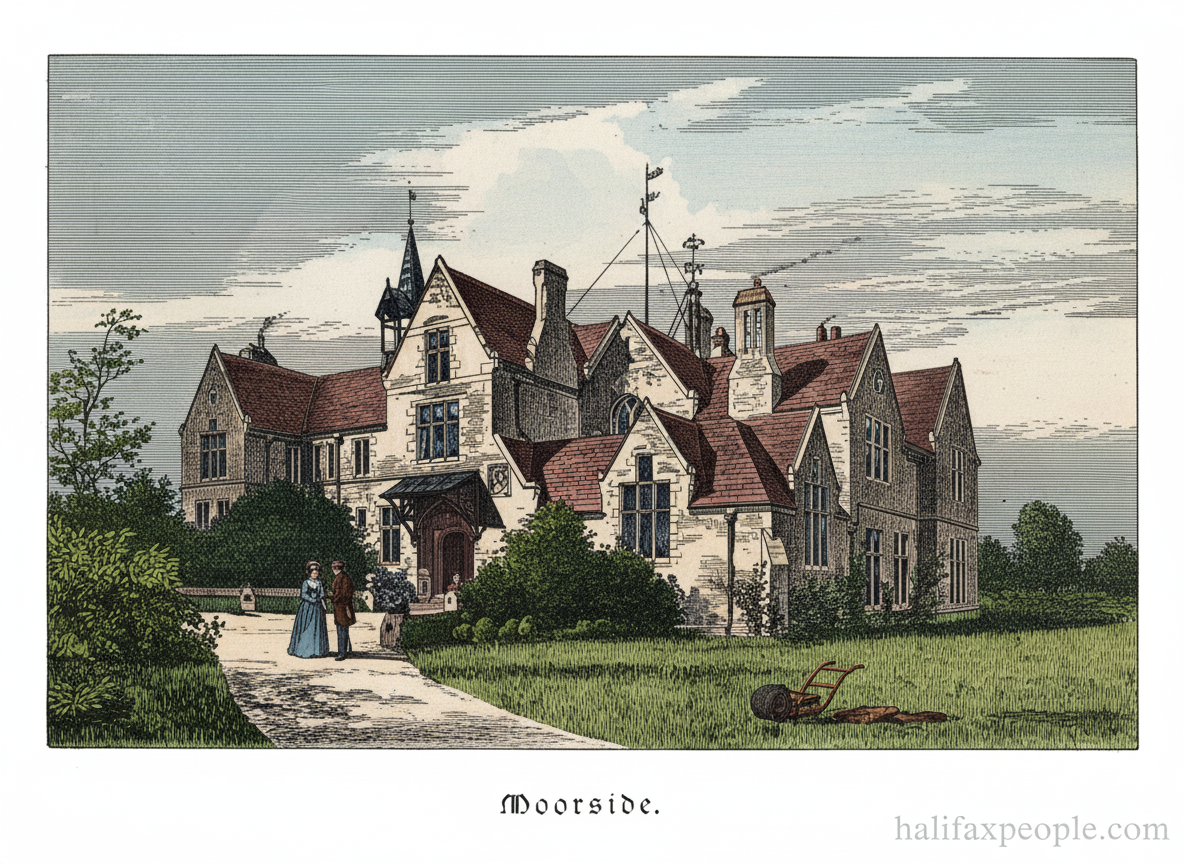
enhanced
 |
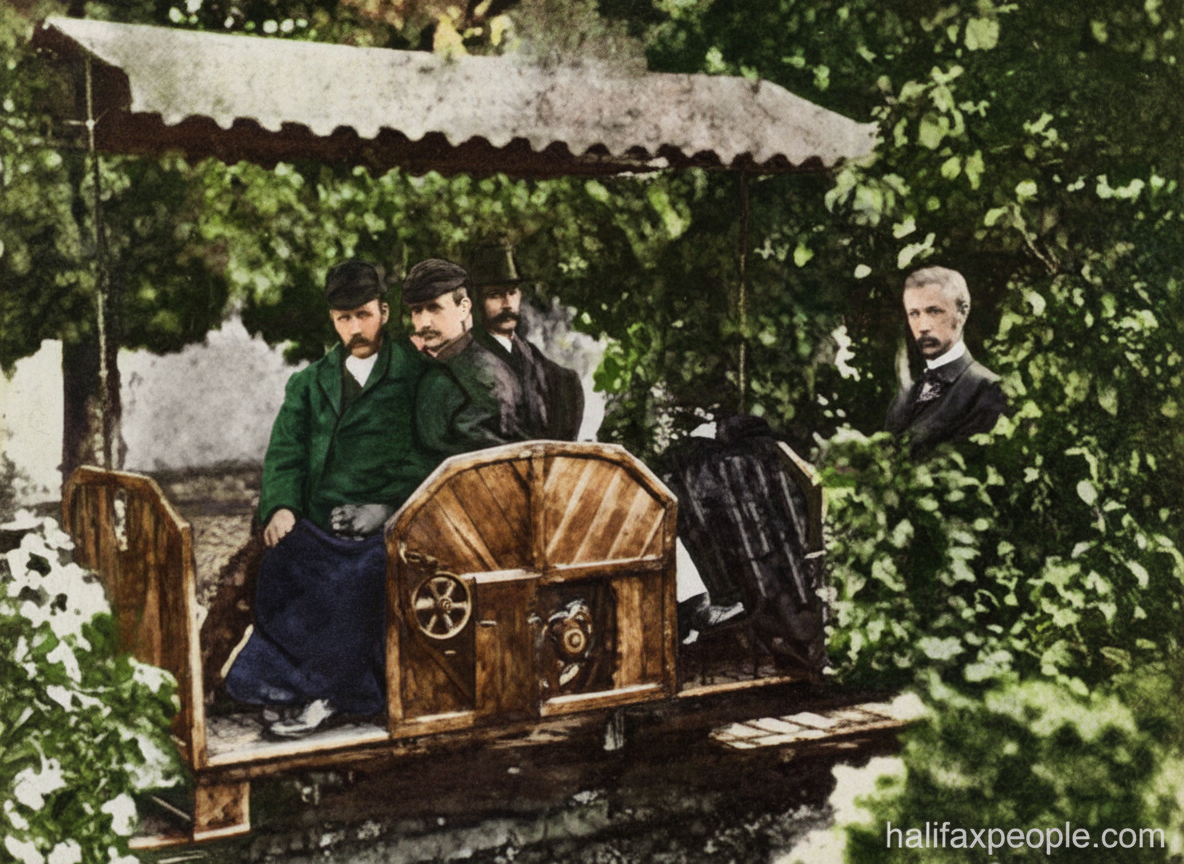 digitised |

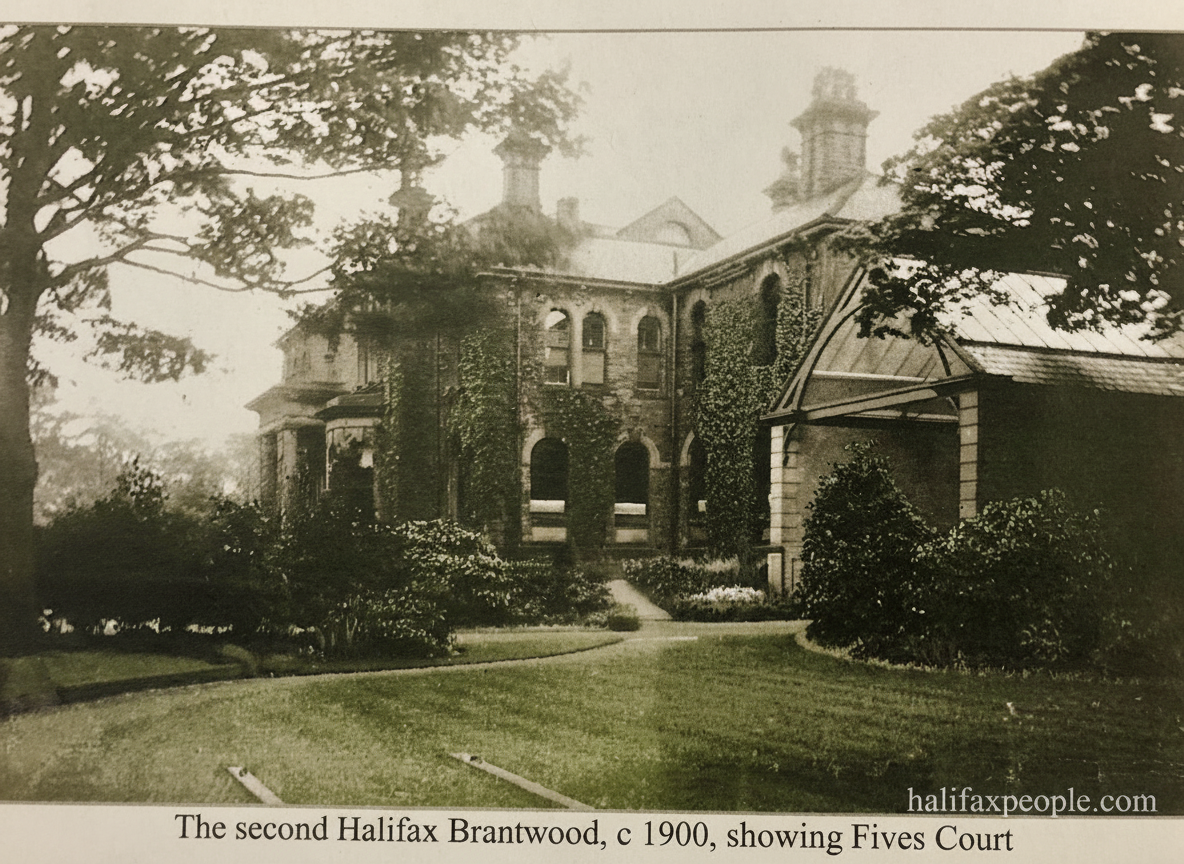
Brantwood, Stafford Road digitised
If you have any photos or articles you would like to add, please send to info@halifaxpeople.com
 |
 |
If you have enjoyed your visit to this website, please spread the word by clicking the 'like' and 'share' buttons below. Thank you
Are you wanting to find information on a specific Halifax subject? Search here

Page Sponsors ?
Victoria Theatre
Maggies
ATIK
Lloyds Banking
Surefix Motorists Centre
Electric Bowl
Café Passion
Mitula Apartments
Halifax Swimming Baths
Direct Discounts
Halifax Rugby
Halifax Football
Shay
Spring Hall
Desi Spice
La Tradizione