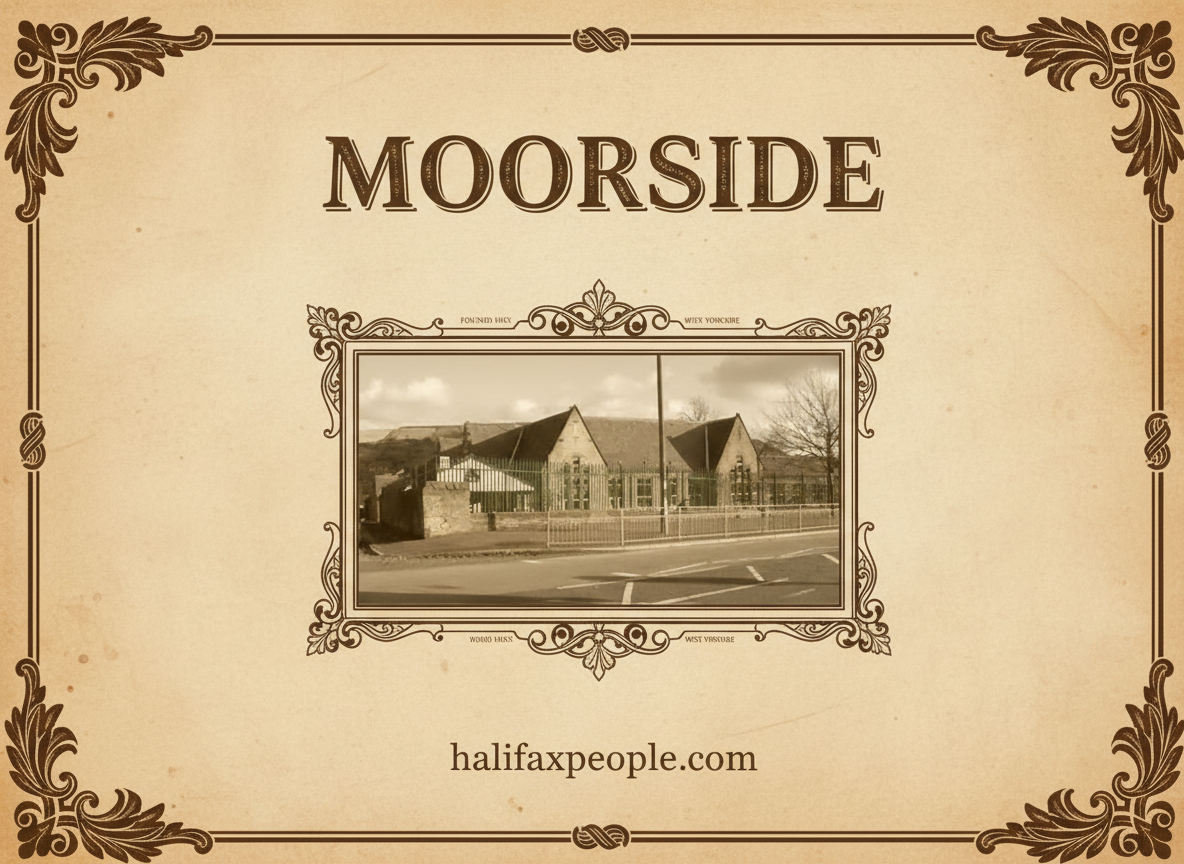
Moorside

WundaNumba 777-545 - What's behind your WundaNumba.com
Moorside, Halifax — From Open Moorland to a Thriving Industrial Community
Moorside lies north of Halifax, around the Ovenden and Illingworth area. Its name evokes the landscape that existed before rows of houses, mills and public buildings spread across the hillside. During the early 19th century, enclosure and industrial growth began to change this once more rural district, as land was divided for building and new housing developed to serve Halifax’s expanding workforce.
One important early institution was the school at Moorside, built in 1818 through public subscription to provide education for local children. It became known as Old Jerry’s School, after Jeremiah Stead, who rented it and ran a private school there for around 50 years. The demand for education was considerable: in 1820, the school reportedly had 68 teachers and 220 pupils, with further children unable to gain admission. Providence Chapel followed in 1837, reflecting the importance of nonconformist religion and community organisation in the growing neighbourhood.
Industrial expansion brought further change. New mills built during the 1830s encouraged housebuilding, and another period of growth followed the revival in trade around 1860. The eastern side of Moorside and the Bank Field area developed particularly during the 1880s. In the 20th century, further housing transformed the district, extending its built-up area far beyond the earlier settlement. Moorside School, local churches and community organisations became familiar features of everyday life.
Historic photographs collected by HalifaxPeople.com preserve glimpses of Moorside’s streets, school, garage and sporting life, alongside nearby Ovenden Park. They provide a valuable record of how a hillside community changed from open land and scattered buildings into part of northern Halifax.


If you have enjoyed your visit to this website, please spread the word by clicking the 'like' and 'share' buttons below. Thank you