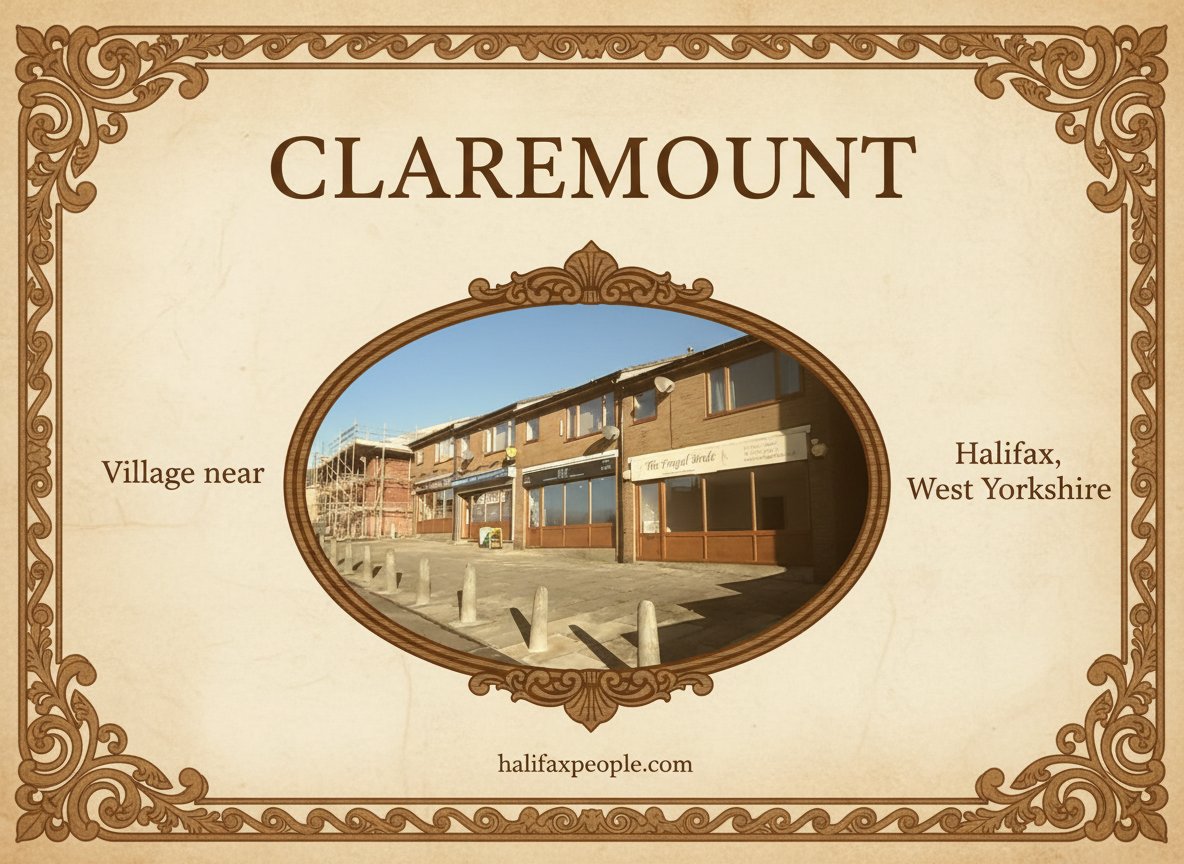
Claremount Blog

Claremount, Halifax — the story behind the photographs
Claremount lies to the north of Halifax, on the rising ground above the town centre and close to North Bridge and Dean Clough. Its development was closely connected with Halifax’s rapid industrial expansion during the nineteenth century, particularly the growth of the carpet industry. The area was originally known as Blackcar and Beaumont Town. In October 1864, a meeting chaired by Thomas Parker decided that Beaumont Town should be renamed Claremont. The spelling gradually became Claremount, the name used today.
Industry, housing and community life
Claremount developed as a residential neighbourhood for people working in Halifax’s expanding mills and workshops. The growth of nearby Dean Clough, where John Crossley & Sons established major carpet-manufacturing works, helped transform the surrounding hillside. Rows of terraced houses appeared alongside shops, pubs and community buildings, creating a densely populated district connected to the town by steep roads and public transport. The historic photographs of New Bank, Prospect Street and the surrounding streets capture a neighbourhood shaped by industrial employment and everyday working-class life.
Churches, schools and local landmarks
One of Claremount’s most significant landmarks was St Thomas’s Church, designed by Mallinson & Healey and built between 1857 and 1861. It was originally called St Thomas, Charlestown, before becoming associated with Claremount. The church served the growing population for more than a century and formally closed in 2019, with its parish subsequently merged back into the parish of Halifax. St Thomas’s Board School, recorded as opening in July 1875, and the district’s chapels and clubs also reflect the importance of education, religion and community organisations in local life.
Claremount’s social life included public houses and local institutions. The Claremount Co-operative Society opened a branch in May 1865, while the Claremount Tavern is recorded as opening in 1875 and closing in 1969. The Liberal and Conservative clubs provided further evidence of the neighbourhood’s developing civic and social networks. These details offer useful starting points for identifying buildings and businesses in old photographs, although individual addresses and dates should be checked against historical directories and contemporary records.
Demolition, redevelopment and the changing neighbourhood
Like many older industrial districts in Halifax, parts of Claremount were altered by twentieth-century road schemes and redevelopment. Historic photographs record the demolition of streets such as St Thomas Street and Prospect Street, while later road construction changed the landscape around North Bridge and the routes leading uphill through the district. These images preserve evidence of a closely built neighbourhood whose streets, shops and public houses once formed the backdrop to daily life.
Claremount’s history is more than a record of buildings that have disappeared. It tells the story of a hillside community created by industrial growth, sustained by local businesses and institutions, and reshaped by changing ideas about housing, transport and urban planning. The photographs help reconnect today’s landscape with the streets and people that once gave the district its character.


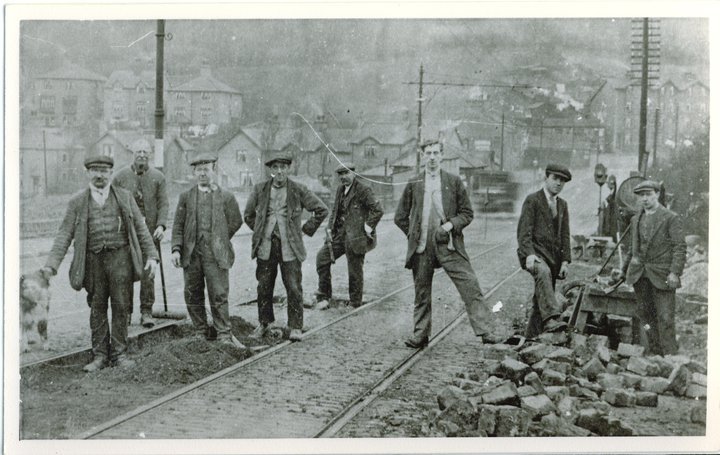


Fairview Terrace
 |
Return to Homepage from Claremount E-zine
If you have enjoyed your visit to this website, please spread the word by clicking the 'like' and 'share' buttons below. Thank you