Halifax Pubs Past and Present - A
Halifax Pubs Past and Present A
Alphabetical list of
Pubs 1A B C D E F G H I J K L M N O P Q R- Ro- S- Sn- T UV W XYZ
1885 The Pub (see Red Lion)

1904 @ Dean Clough - 36 Lee Bridge, Dean Clough
The pub at Lee Bridge was recorded as the Shears in 1822. The building was rebuilt in 1904 and became the Dean Clough Inn in 1987. Later known as the Olde Shears Inn, it was renamed 1904 @ Dean Clough around 2013. It reopened as the Hop Monkey Music Bar in December 2023, with live music and real ale.

Abbey - Abbey Lane, Newlands, Luddenden.
It was recorded in 1851 and rebuilt in 1873, although the rebuilding date is not certain. The inn was associated with the Halifax Brewing Company and later with Whitaker's brewery. It closed in 1911 following the Licensing Act of 1904. The building survives as a private house.

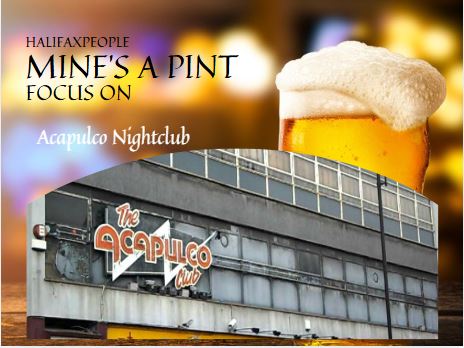
Acapulco - 3 Waterhouse Street, Halifax HX1 1XX Tel.01422 366505
The Acapulco opened in 1961, founded by Ted and Stephanie Turczak. It has operated under the same name at Waterhouse Street for more than six decades and is widely described as one of the UK's longest-running nightclubs. The venue became known locally as “the Acca”. A fire damaged the club on 13 September 2019, but it reopened the following day.
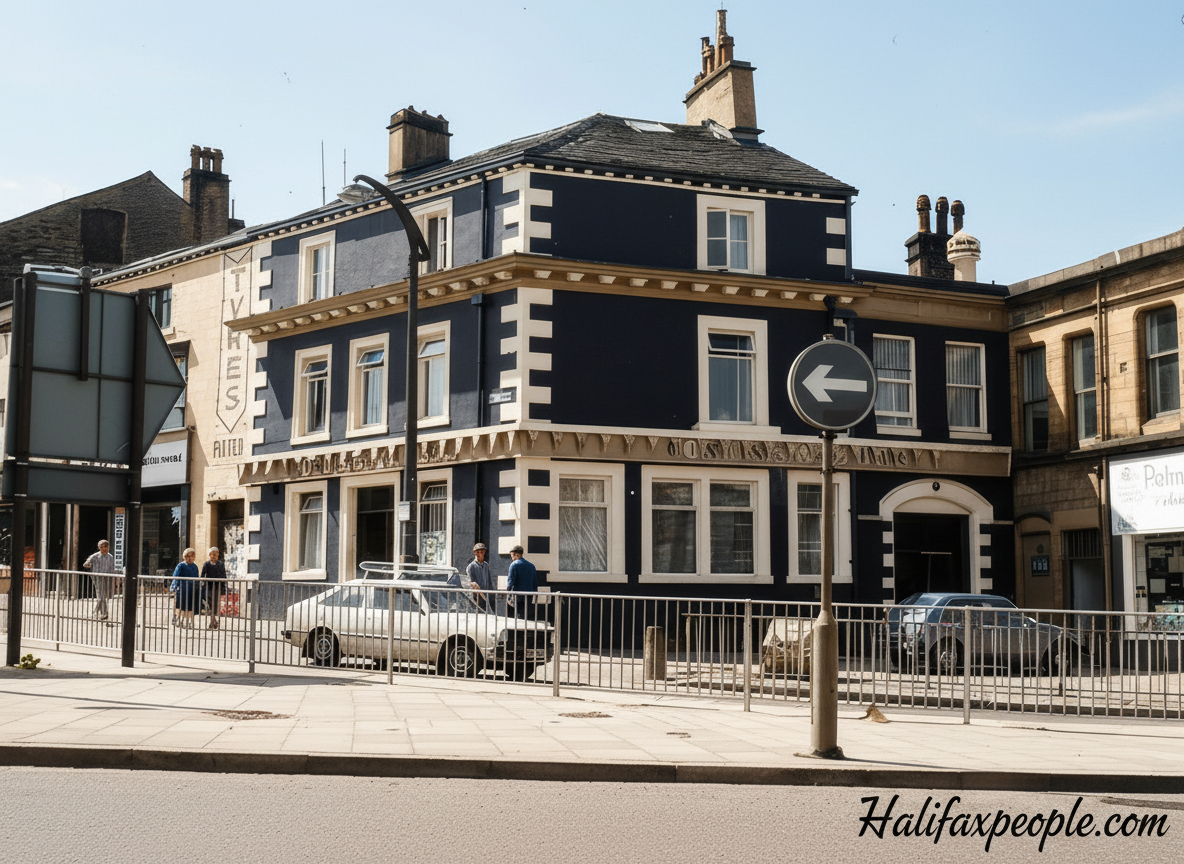
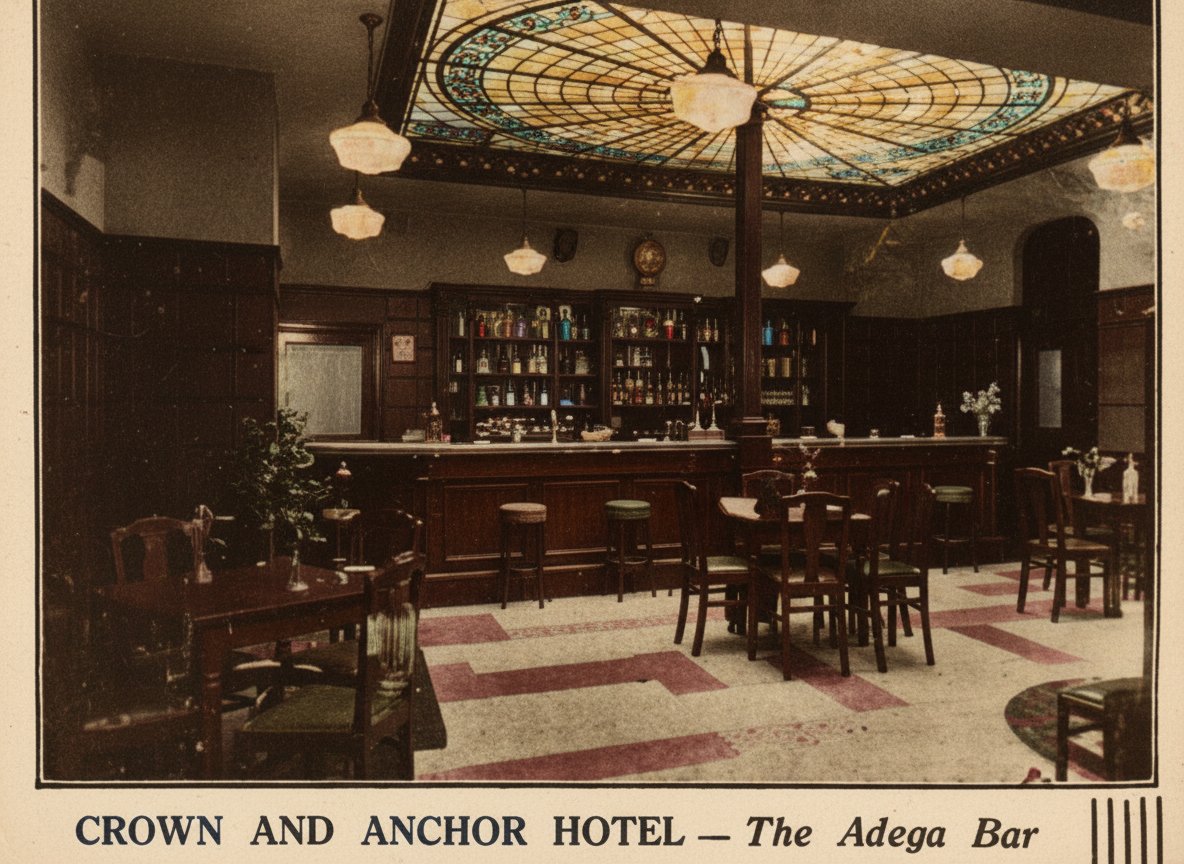
Adega Bar- Bull Green, Halifax
Former name of the Bull Green bar now listed in the directory as KoKo's. The premises were previously known as the Crown and Anchor and also traded under the names Bodega and Continental. See KoKo's for the main entry and history.

enhanced

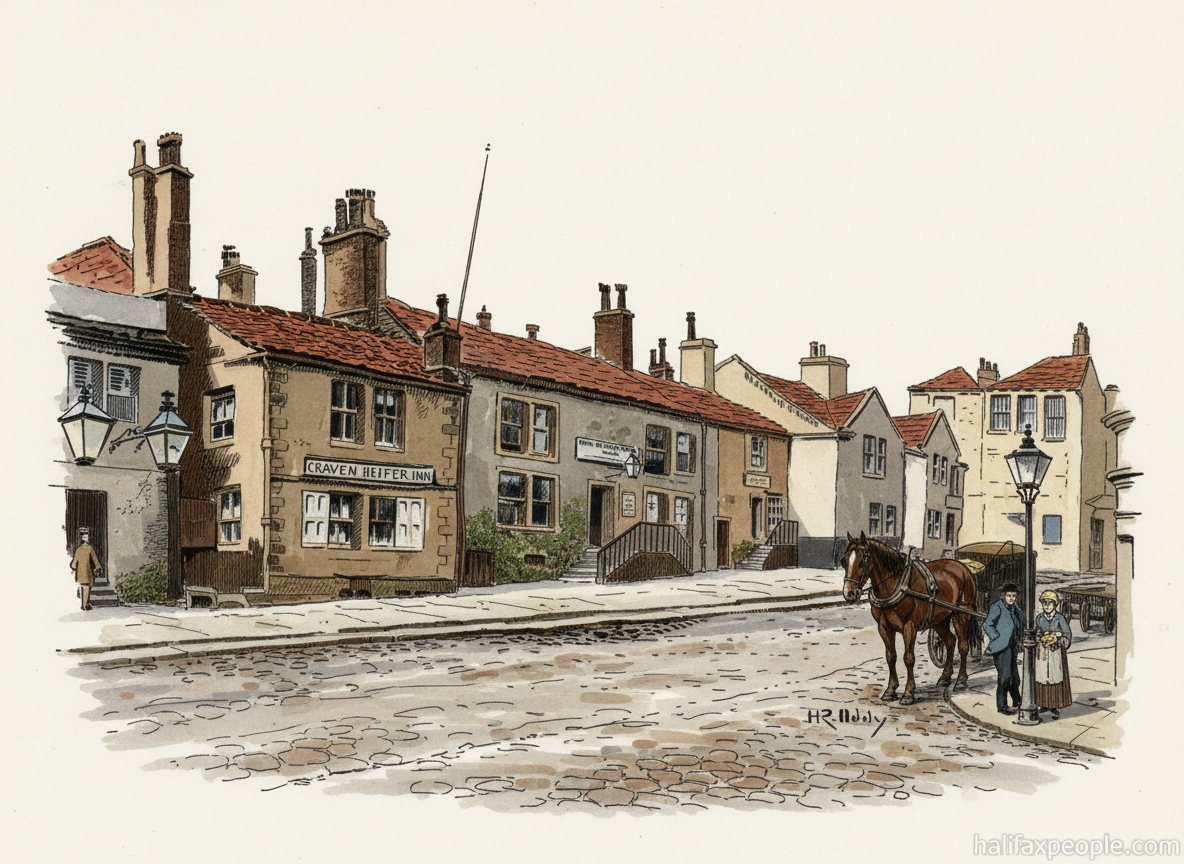
Admiral Nelson - 11 Cow Green, Halifax
The Lord Nelson was recorded as a pub by 1810, when John Brown was a licensee. Other recorded names include Admiral Nelson, Nelson's Arms and White Bear. Samuel Webster bought the pub from Elizabeth Hainsworth in September 1872. It closed on 24 January 1919, and the building was demolished in 1971 during redevelopment of Cow Green.
(Double gabled building on the right)

AEU Club - St.James's Street, Halifax
The AEU Club was a social club on St James Street, also known as the Dyers Club. It closed in 2003. The premises subsequently received planning consent for conversion into an actors' workshop.
Airborne - Green Lane, Sowood
The Airborne was built in 1969 by the Dyson family. Its name reflected the family's connections with the Parachute Regiment. For a period, the pub traded under the name Marston's before reverting to Airborne. It closed and was demolished in 2018, and housing was built on the site.

Albert Inn — Halifax
The next entry is the Albert Inn on Bridge Lane, Halifax. It was recorded in 1871, when Samuel Greenwood was the beerhouse keeper.
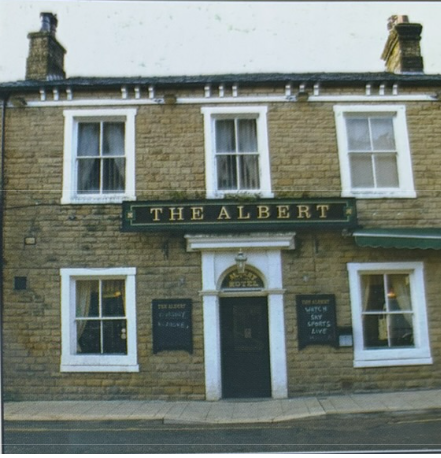
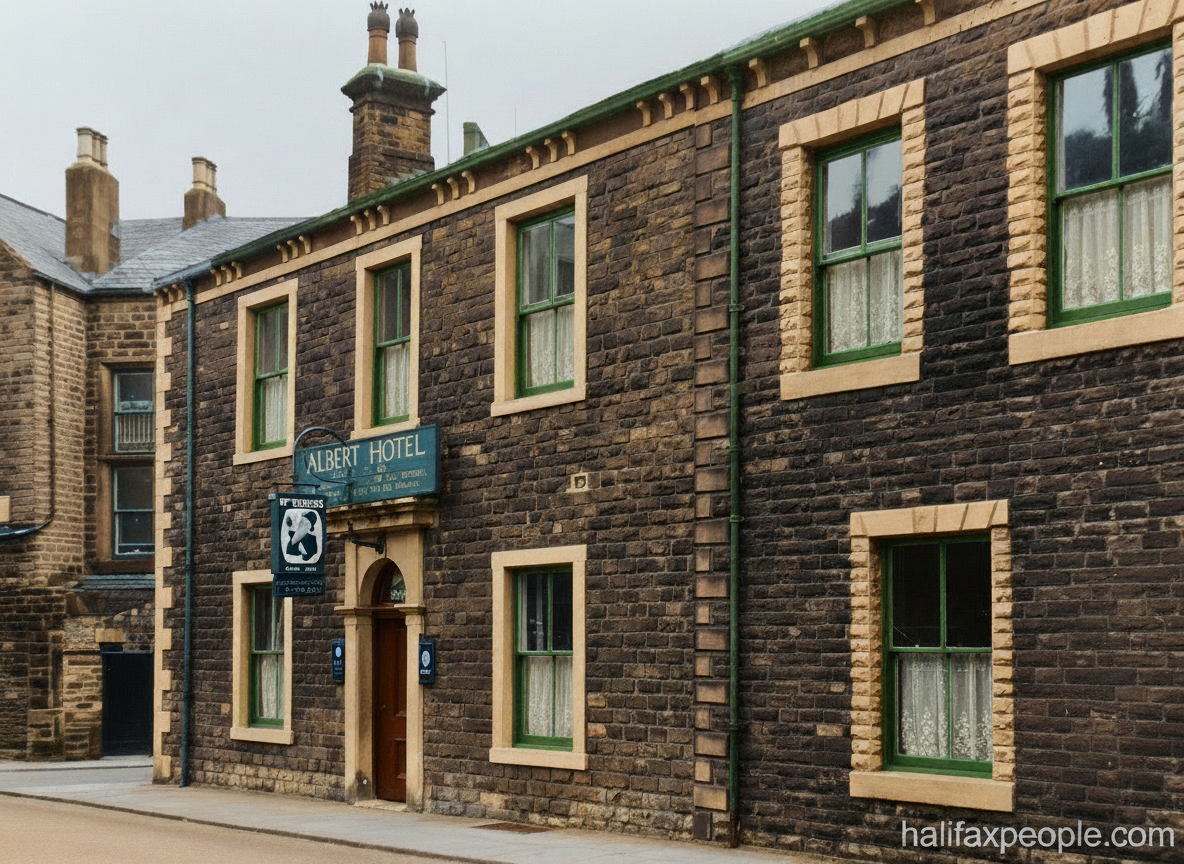
Albert - Hebden Bridge
Dating back to the mid-1800s, this building stands at the centre of Hebden Bridge’s growth from a small settlement into a thriving town. It takes its name from Prince Albert, and it also gave its name to the street on which it stands.
One interesting detail is that, despite the Victorian-era name, there was never a “Victoria Hotel” here. Instead, the name appears to have come from the way the building sits at the meeting point of Hope Street and what was once known as Victoria Street.
As late as 1850, the area around it was still largely open ground, known locally as The Croft. Over time, that space was built up and the Albert Street area became increasingly important, helping to link different parts of the town and supporting a growing commercial centre. For many years, the Albert was closely tied to local trade and working life.
The wider district was hit hard by redevelopment schemes in the 1960s, which altered much of the surrounding streetscape. Even so, the Albert Hotel remained—positioned between Bridge Gate and St George’s Square—and in more recent years it has begun to draw attention again as a surviving landmark of the older town.

enhanced
Albion - 20 Halifax Road, Lane Head, Brighouse HD6 2AD
The Albion Inn closed in 2007 and became the Success Chinese takeaway. In 1876, landlady Elizabeth Shackleton was assaulted by customer Frederick Rayner. Rayner was fined £5 plus costs for the assault and a further £5 for refusing to leave the pub when asked.
One of the Albion's later publicans was Albert “Alty” Farrar, who played first-class cricket for Yorkshire and rugby league for Rochdale Hornets.


enhanced
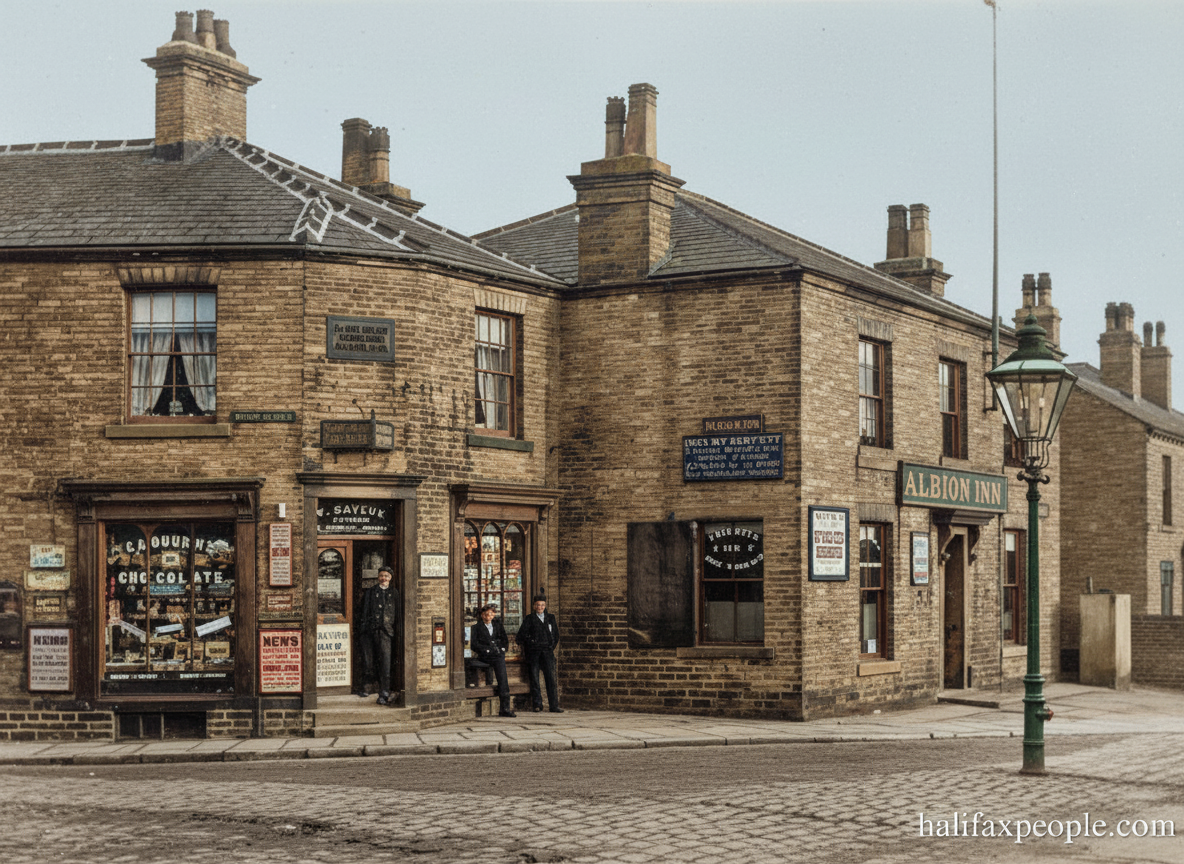
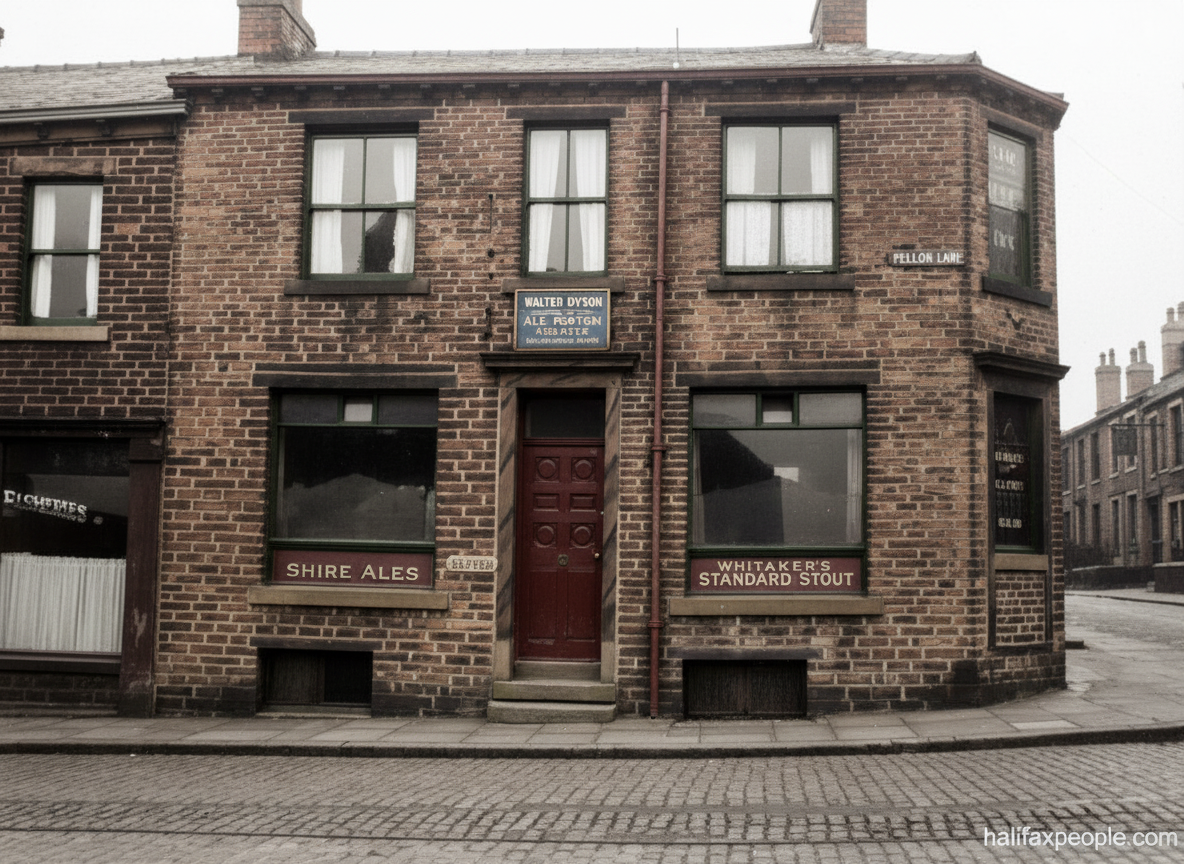
Albion Inn, Pellon Lane, near Crossley Terrace, Halifax.
Originally a beerhouse, it applied for and received a music and dancing licence in August 1868 under the Halifax Improvements Acts. It closed in October 1969.
The recorded licensees include Caleb Dearden in 1869 and 1894, Edgar A. Clarke and Sarah Jane Clarke in 1905, and numerous later landlords

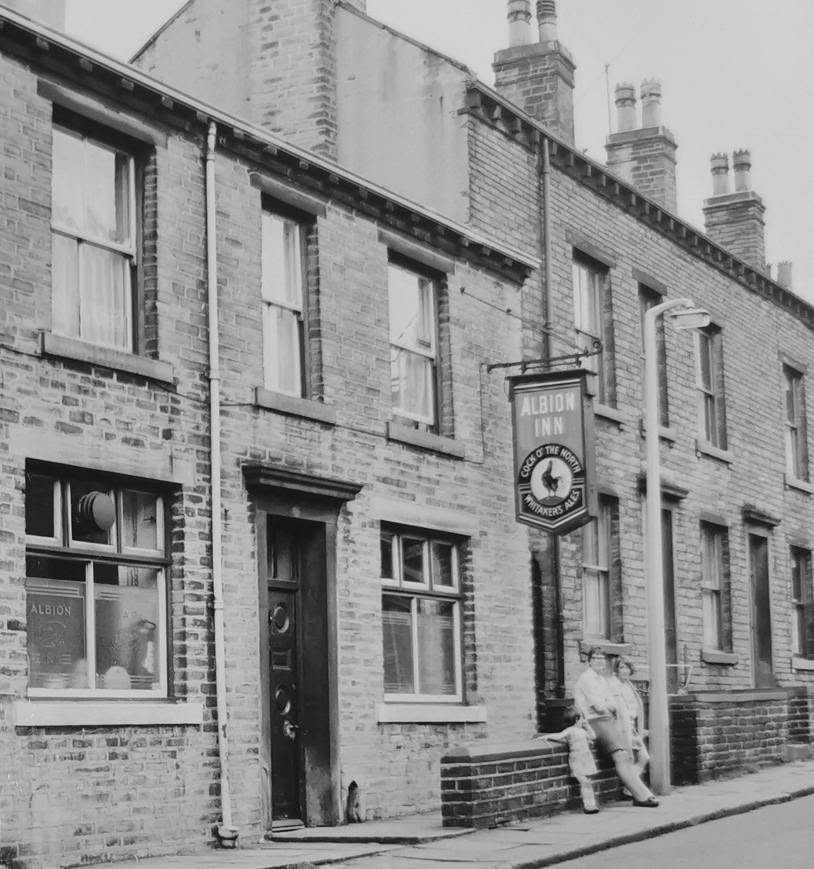

enhanced
Albion Inn- 25 Scarr Head Road, Norland
The Albion Inn stood at 25 Scarr Head Road, Norland. It may have opened around 1902, although local historical records also identify landlords at the address in 1881 and 1891, suggesting the pub’s earlier history needs care. It closed in 1950 and the building is now a private house.
The inn’s recorded landlords included Albert Haigh, Arthur William Dixon, Fred Normanton, Noah Taylor and Robert Branson Maiden. James Robert Berry, a well-known local billiards player, was landlord in the early 20th century; his son Thomas later helped in the business before being killed while serving with the Royal Field Artillery in 1917.
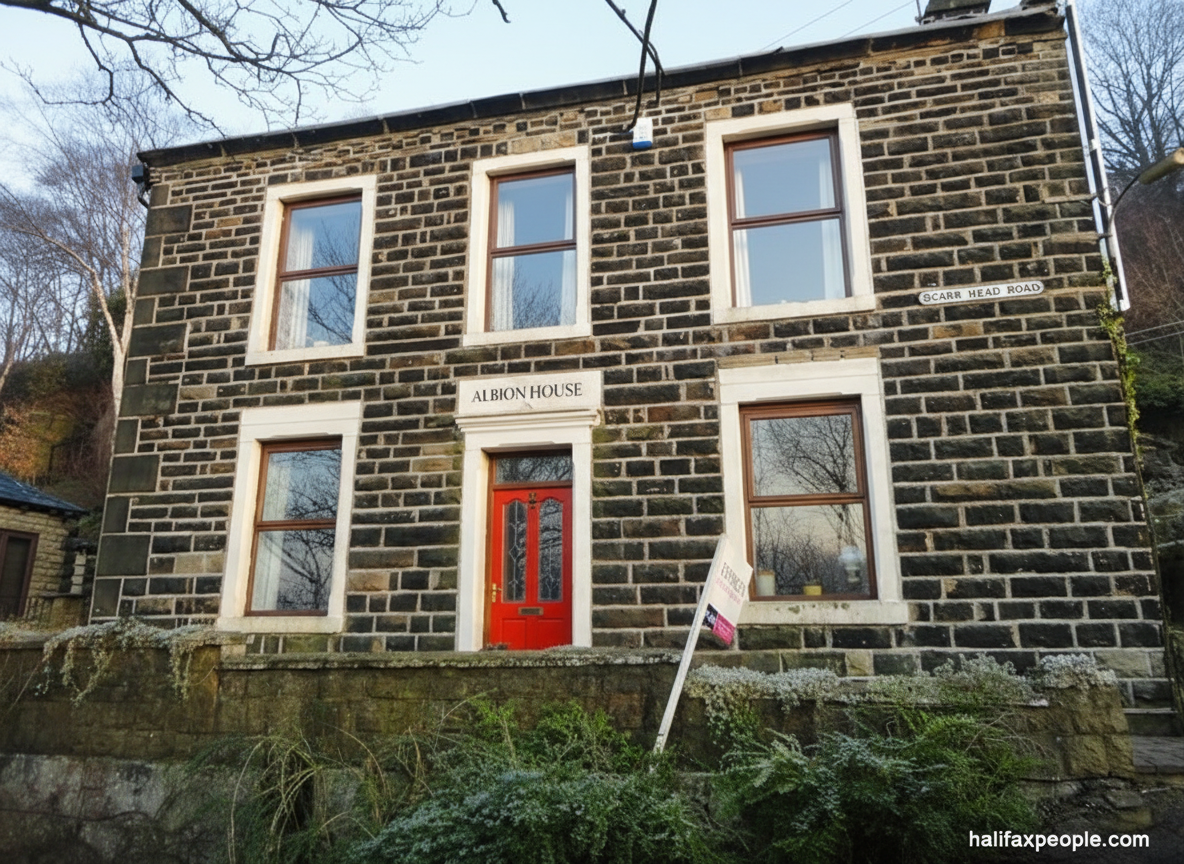
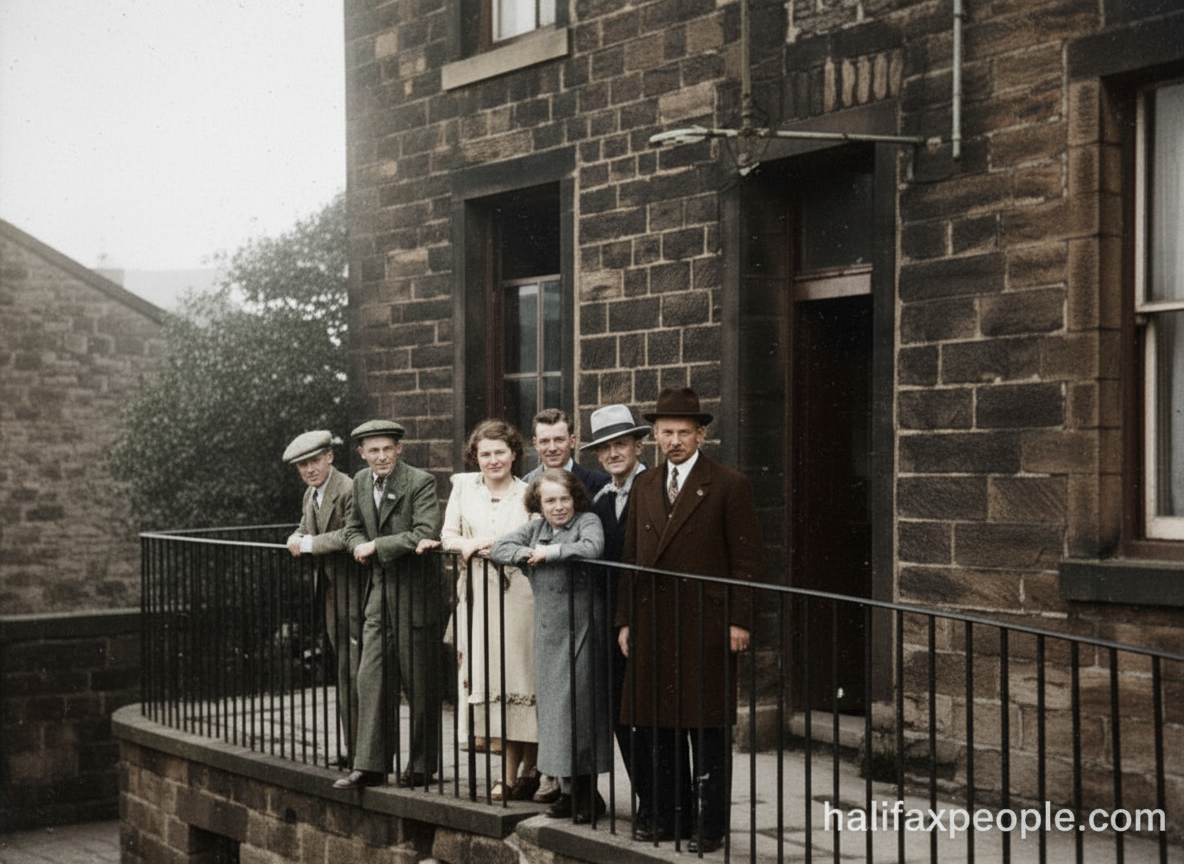
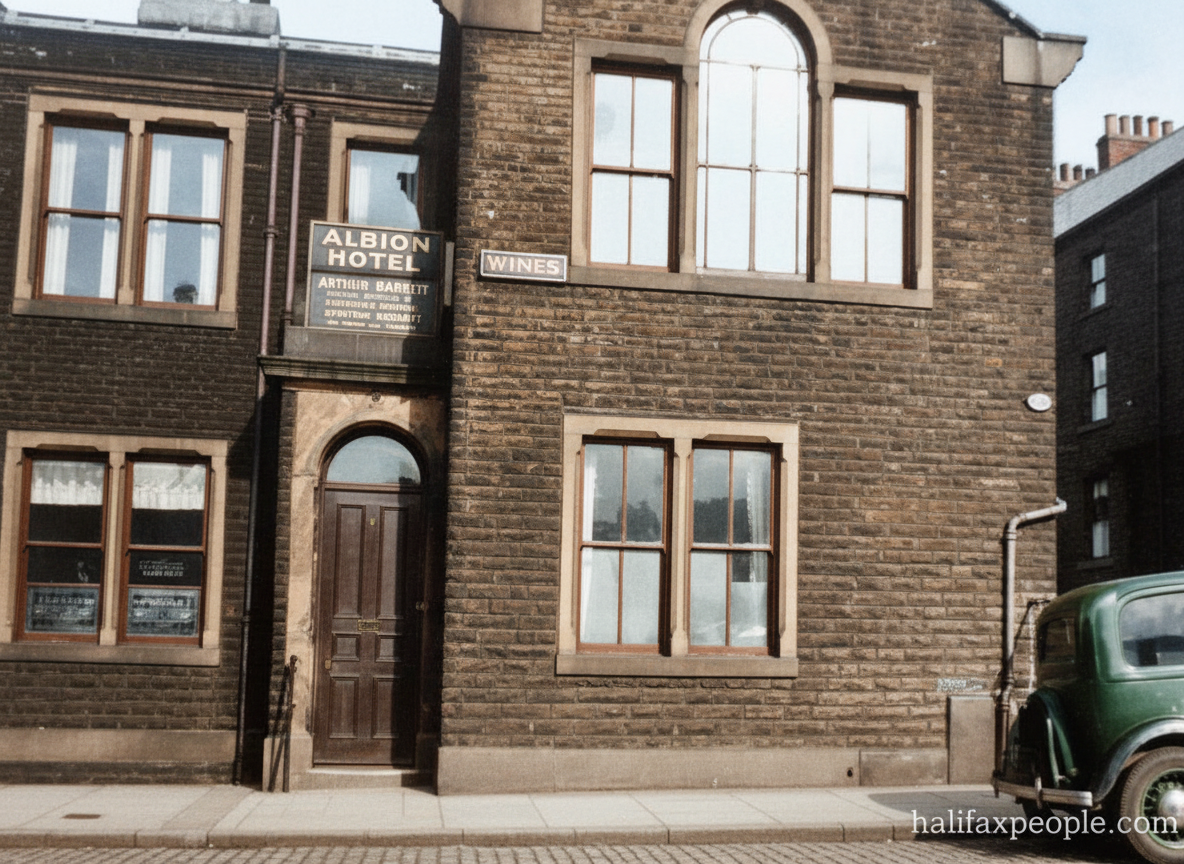
Albion Hotel - Horley Green Road, Horley Green
also recorded as 167 New Bank, opposite the Beacon Tavern near Godley Bridge in Claremount. It opened in 1861 and was a Whitaker’s pub by 1926. It closed in 1961.
Historical photographs and local descriptions place the Albion beside the route between New Bank, Claremount Road and Horley Green. It was remembered locally as the more upmarket of the two pubs facing each other across the road from the Beacon Tavern.

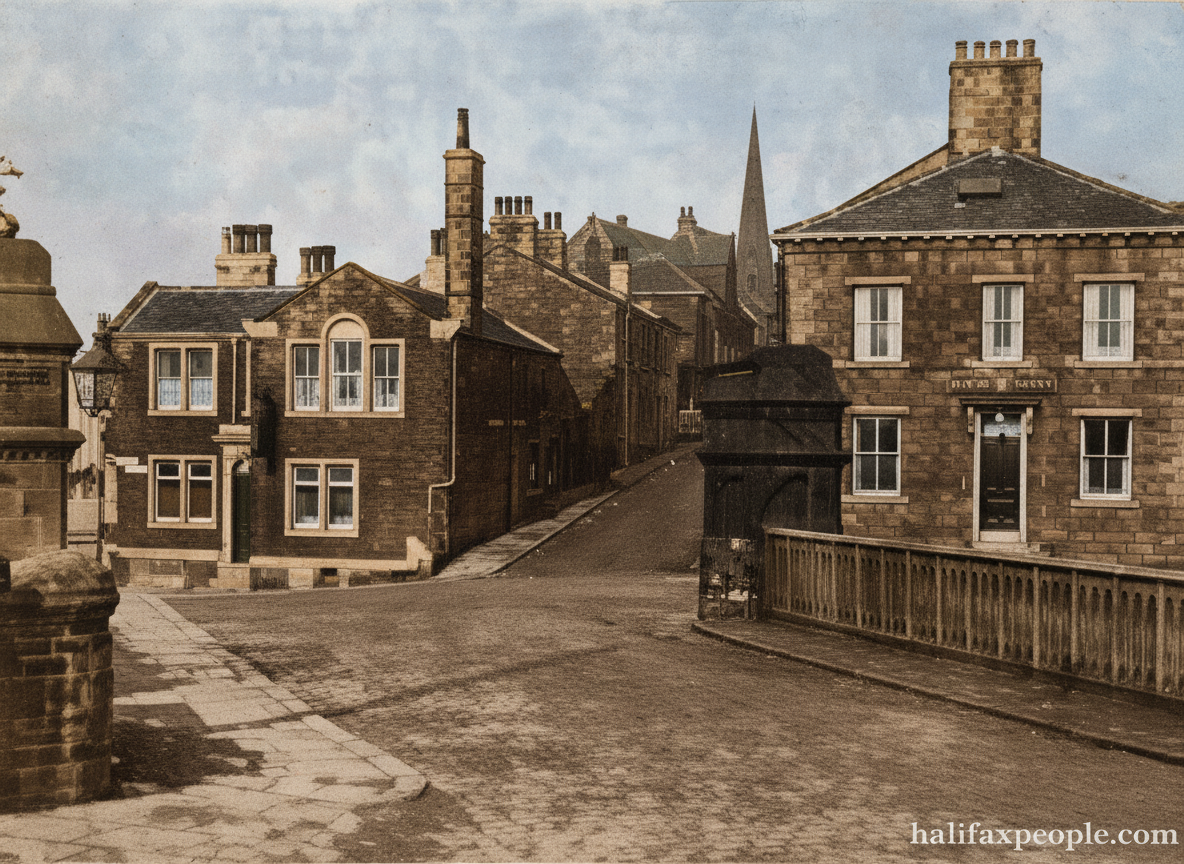
enhanced

enhanced
Alexandra - Sod House Green, Ovenden
It is recorded in local pub-history records as having closed in 1869.
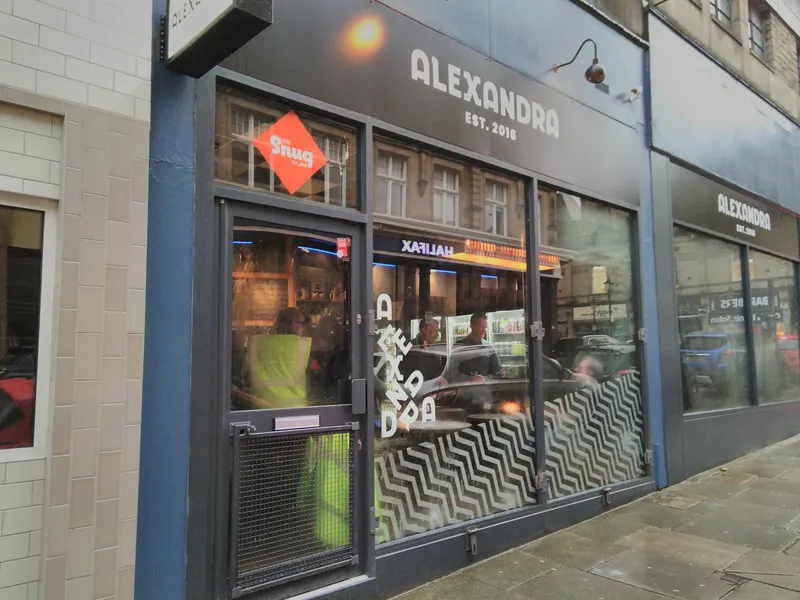
Alexandra Beer House - 17, Alexandra Street Halifax, HX1 1BS
The Alexandra Beer House was an independent beer bar and bottle shop at 17 Alexandra Street, Halifax. It opened in 2016, offering a wide selection of craft beers, including cask and keg ales, bottled beers and takeaway refills. It developed a reputation among local beer enthusiasts for its range and knowledgeable, friendly service.
The business was next door to The Lantern, a live-music venue that opened in November 2017. The two venues later became part of the wider Vocation & Co. redevelopment at 13–17 Alexandra Street. The Alexandra Beer House closed as a separate business in 2021; the combined Vocation venue opened in November 2022.
Alexandra Hall - 17 Alexandra Street, Halifax HX1 1BS
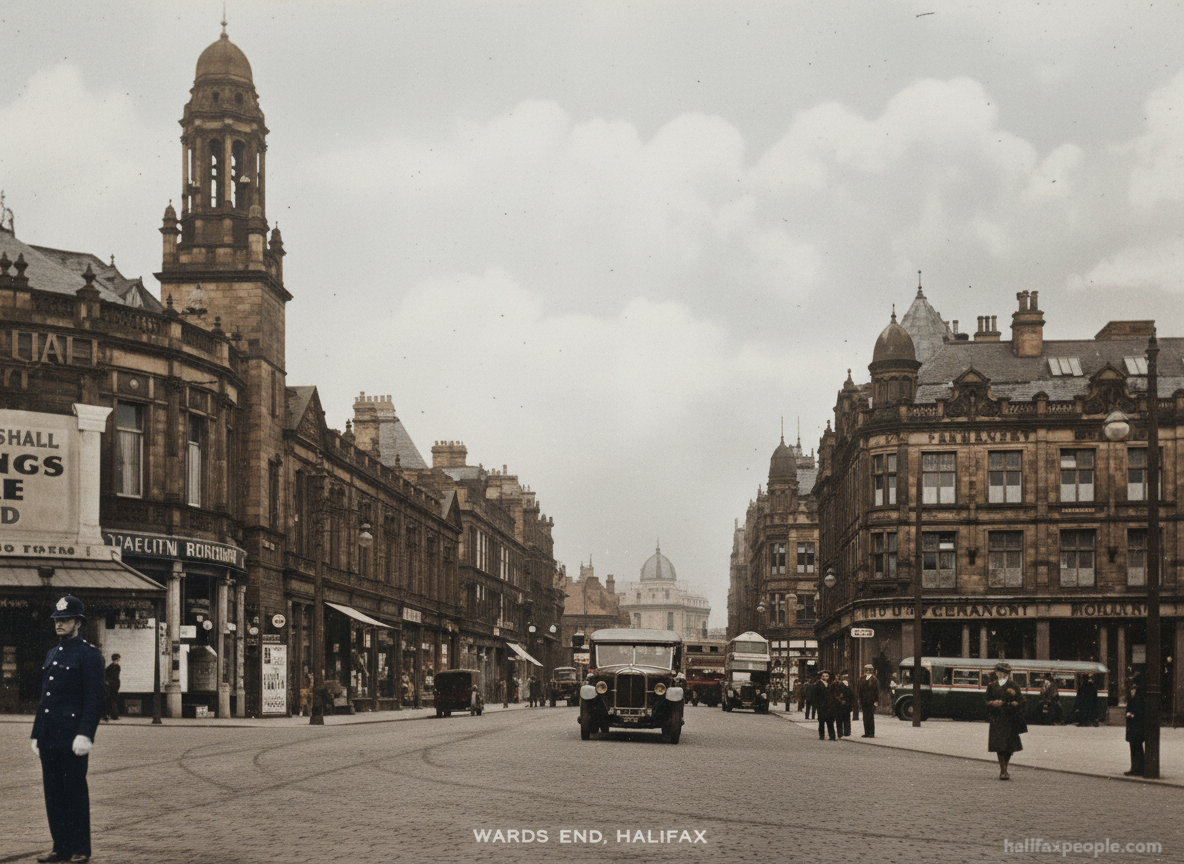
Alexandra Hall opened on 11 March 1931 as a 650-seat public hall and theatre, built for the Alexandra Hall and Café Company on land owned by the Halifax Building Society. Designed by local architects Clement Williams & Sons and built by Benjamin Whitehead Jackson, it became popularly known as “The Alex.”
The venue was notable for its theatrical technology: when it opened, it had what local historical records describe as Britain’s only domed cyclorama, along with an advanced coloured lighting system. Its first production was Adam, the Creator by the Brothers Čapek, performed by the Halifax Thespians. The building also housed the Alexandra Café and restaurant.
The Alex hosted plays, concerts, dances and meetings, but closed to the public in 1969. The building remained standing and, in March 2026, was reported as needing a new tenant, with refurbishment planned.

The building on the right was the Alexandra enhanced
Allan Fold - Warley Road, King Cross
The Allan Fold was built by Samuel Webster & Sons to designs by local architects Jackson & Fox, opening in 1939 on Warley Road, King Cross. It took its name from Allan Fold House, a 17th-century building that had previously occupied the site. Part of the old house survives in the retaining wall beside the former pub car park, including a dated stone marked 1654.
In 1983, the pub was renamed Second Best. It returned to the Allan Fold name in 1986 after a change of ownership. By 2011, it was trading as the Hills View Hotel. The building later became an Italian restaurant; it is currently listed by CAMRA as La Vedetta, with Hills View Hotel and Allan Fold recorded as previous names.


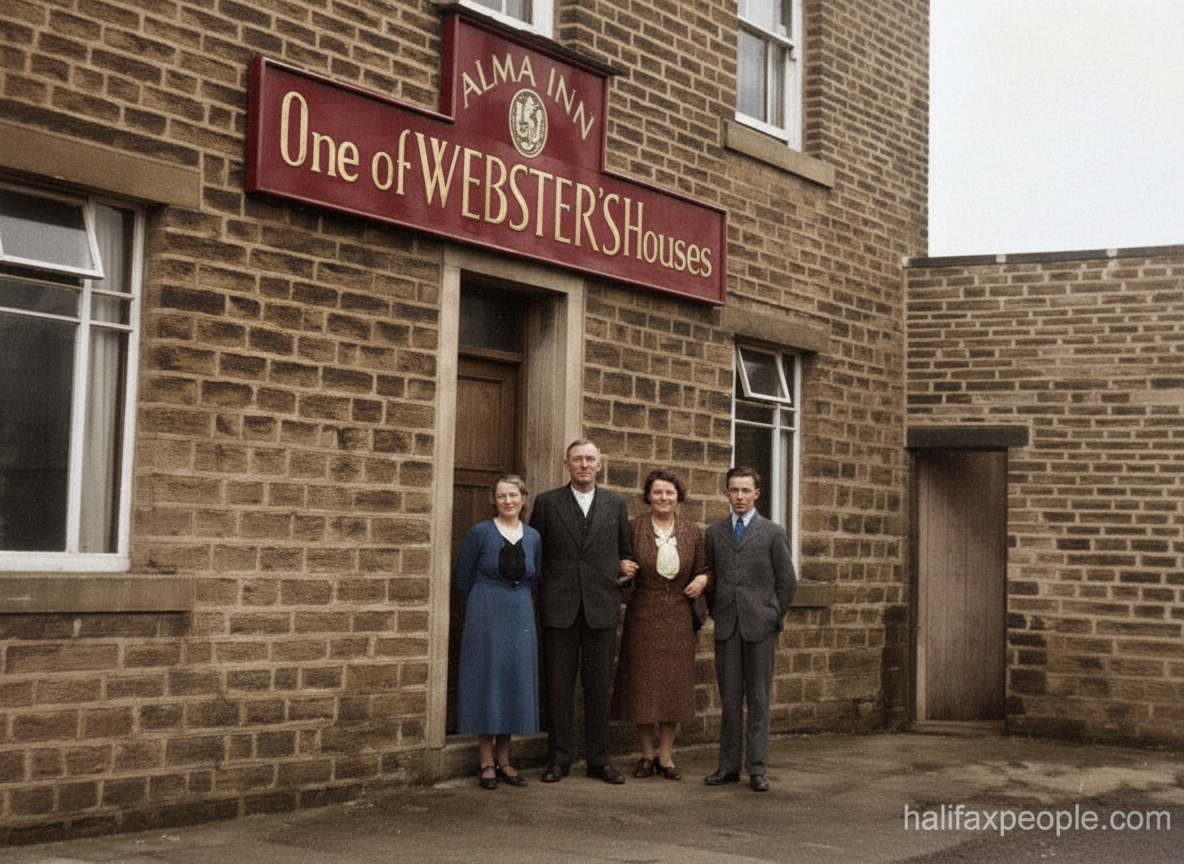
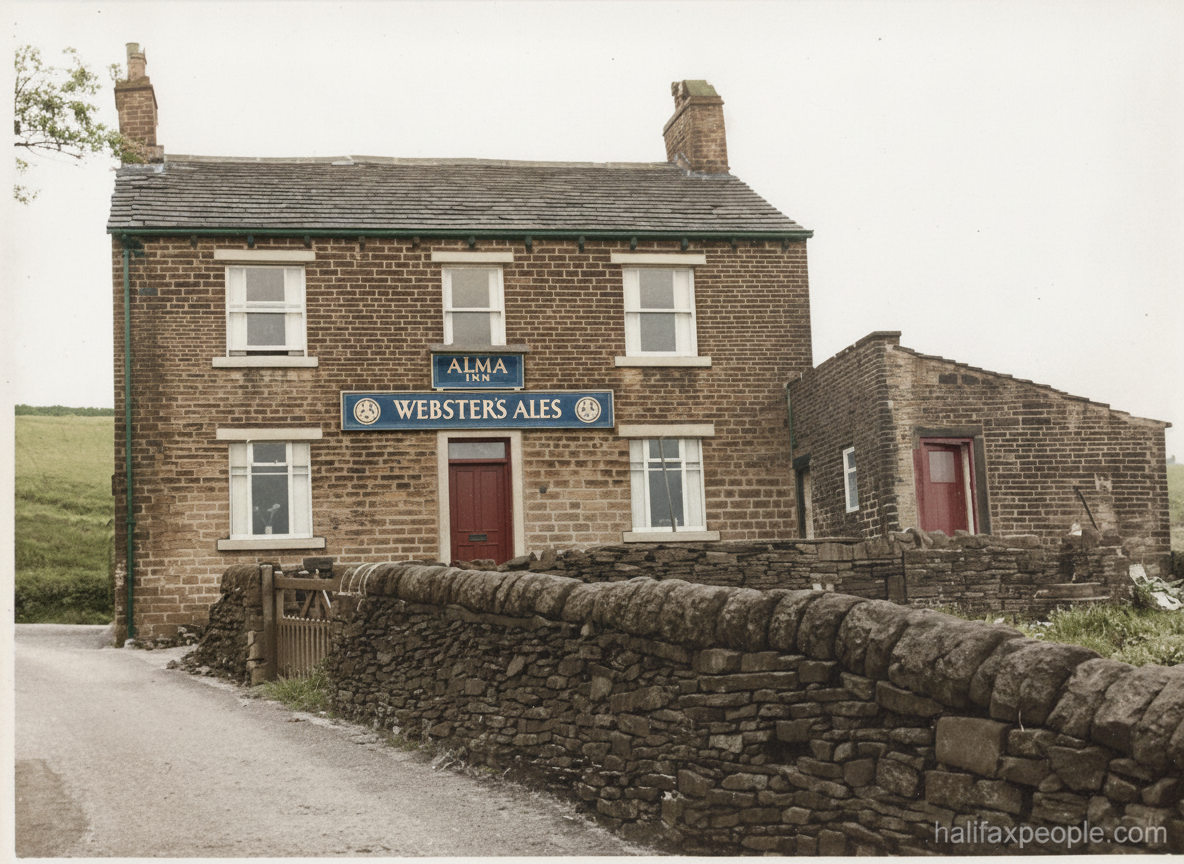
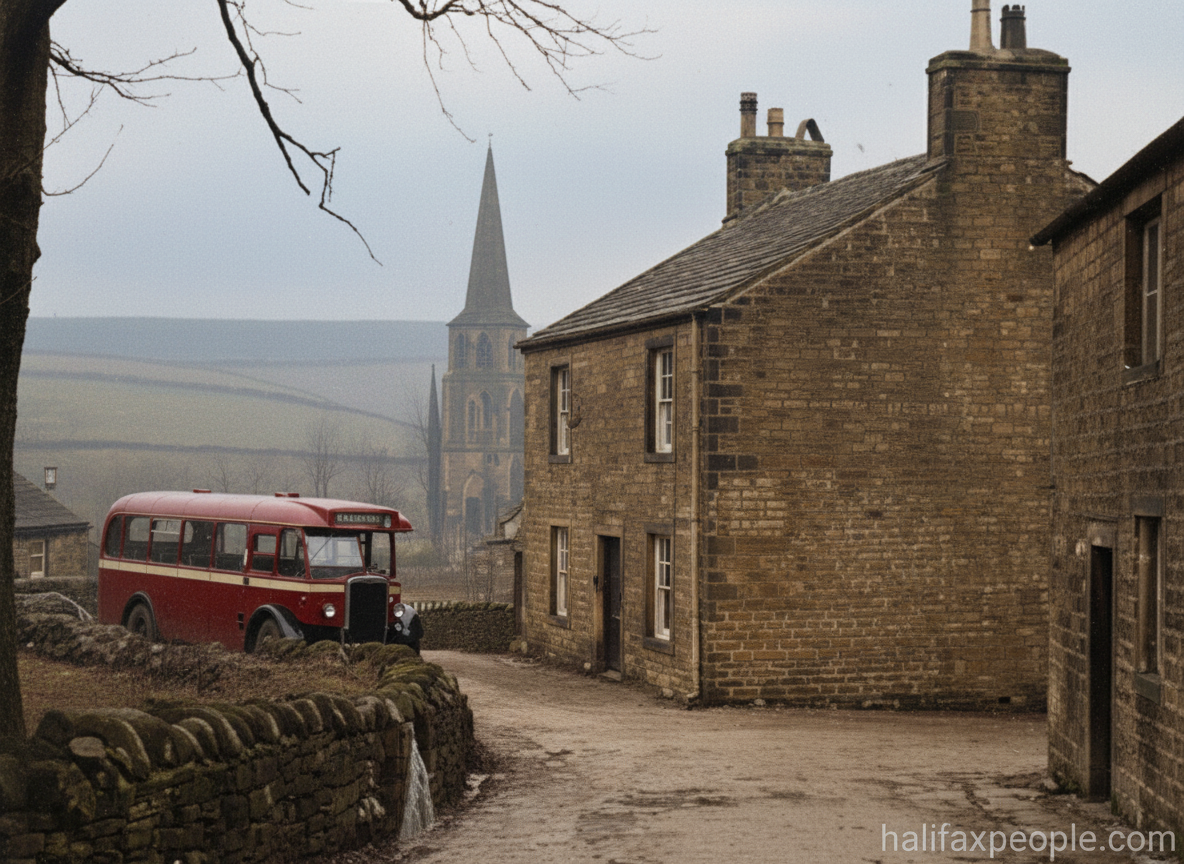
Alma - 4 Lane Ends, Cottonstones
Above the Ryburn Valley near Mill Bank. Its exact opening date has not been established, but the pub’s name carved into the chimney is thought to reflect the Battle of Alma in the Crimean War in 1854. This is a plausible explanation for the name, not a confirmed founding date.
Samuel Webster & Sons brewery bought the inn on 20 May 1931 for £800. Thomas Marshall became landlord in 1933, succeeding William Andrews. Marshall also kept poultry. The inventory recorded when he took over was valued at £41 14s and included spittoons and sawdust for the floors; the cellar held large quantities of fivepenny ale.
When Mr Drake and his aunt lived at the inn in 1932–33, the premises reportedly had no electricity, gas, mains water or drainage. Paraffin lamps provided the lighting, and the toilets were outside. In 1971, the inn was sold to James White, with modern amenities and hand pumps added. It continues as a country pub with restaurant and accommodation facilities.

enhanced
  enhanced |
 |

Alma - St James's Road, Halifax
The Alma was a public house on St James’s Road, Halifax, operating in the 1860s. In 1868, it was sold by auction, and James Wrigley is recorded as its innkeeper that year. By 20 August 1869, the pub had closed and had no tenant; a licence application by Herbert Smith was refused on that basis.
Anchor - Brighouse
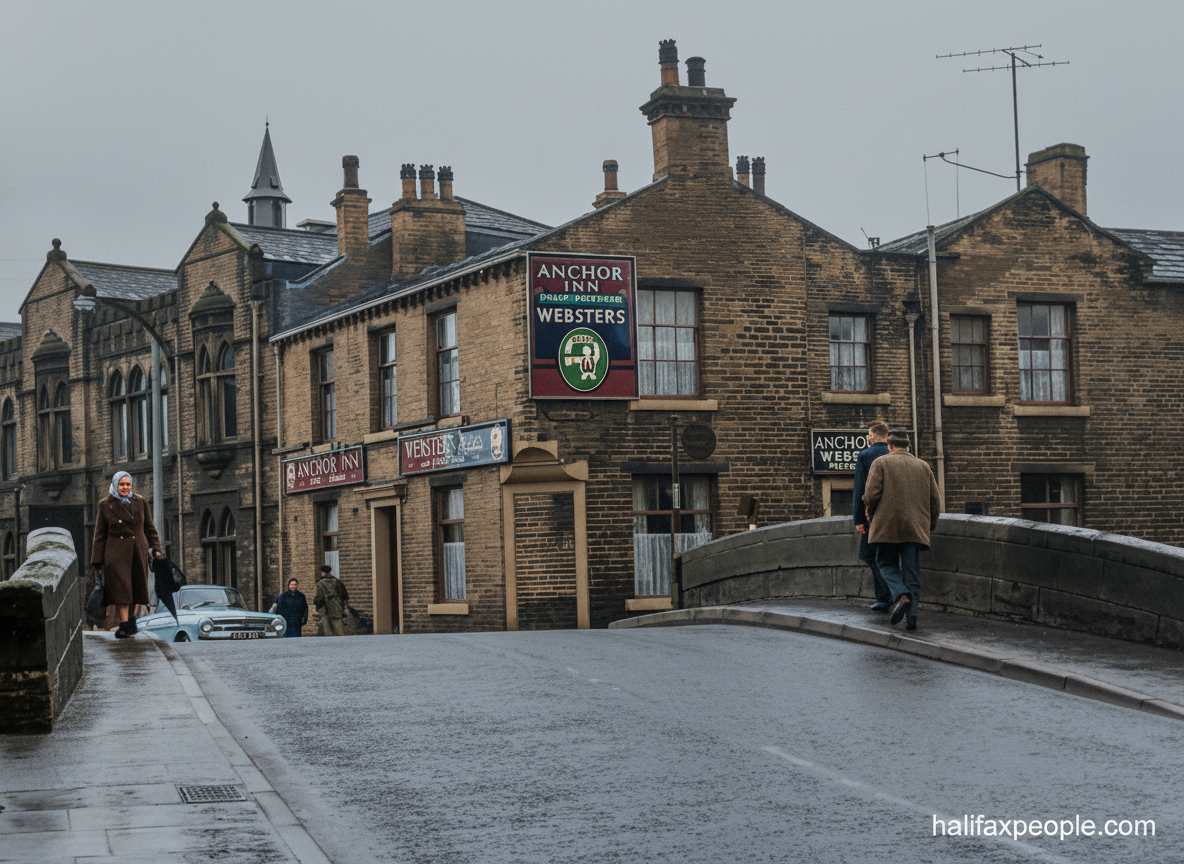
The Anchor was one of Brighouse’s oldest pubs, built around 1758 near Anchor Bridge to serve boatmen using the Calder and Hebble Navigation. In 1821, it was one of only four pubs recorded in Brighouse, alongside the Black Bull, Black Swan and Wellington. The original inn’s cellar survives beneath the later building.
The inn was rebuilt in 1859 and then reconstructed again as part of the Brighouse Assembly Rooms, which opened in 1906. In 1933, Samuel Webster & Sons bought the pub from Shibden Head Brewery. It was renamed The Bridge in 2000, and the historic Anchor name is now a cross-reference to that later identity.
In 1903, police objected to renewing the licences of the Anchor and two other local pubs because the landlords employed professional female musicians. The licence was renewed on conditions restricting female vocalists and the employment of female pianists under 21.

enhanced
Anchor - Mill Bank, Sowerby Bridge
The Anchor was a pub in the village of Mill Bank, in Soyland, near Sowerby Bridge. It later became the Millbank Inn, which closed in 2010.

Anchor - Todmorden
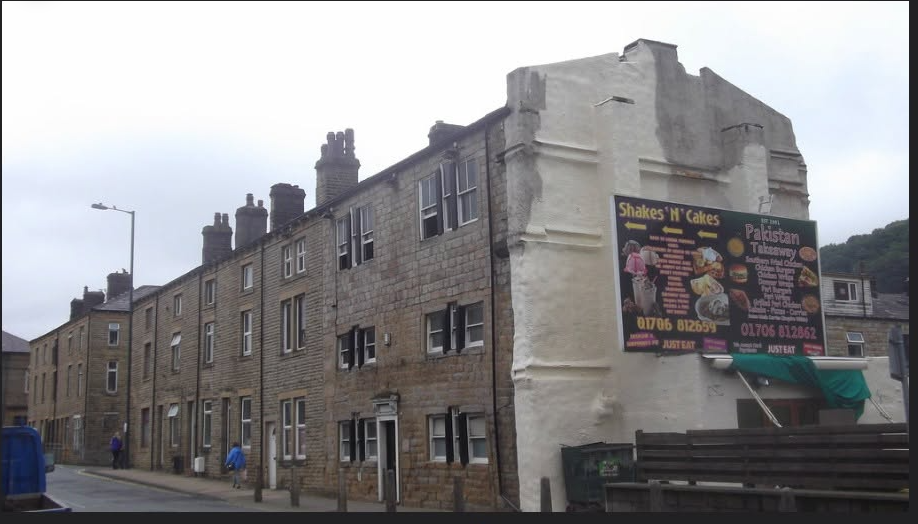
The Anchor in Todmorden was another name for the Rope & Anchor, at 80–86 Roomfield Lane, also recorded as 132 Halifax Road. The pub’s history reaches back to at least 1837, when John Gledhill was listed as landlord of the Anchor. Later records list John Marshall as landlord in 1845 and 1871.
The building is identified in Calderdale Council’s Todmorden Conservation Area appraisal as dating from the late 18th or early 19th century. It retains original sash windows, making it a surviving example of the town’s older roadside commercial buildings.
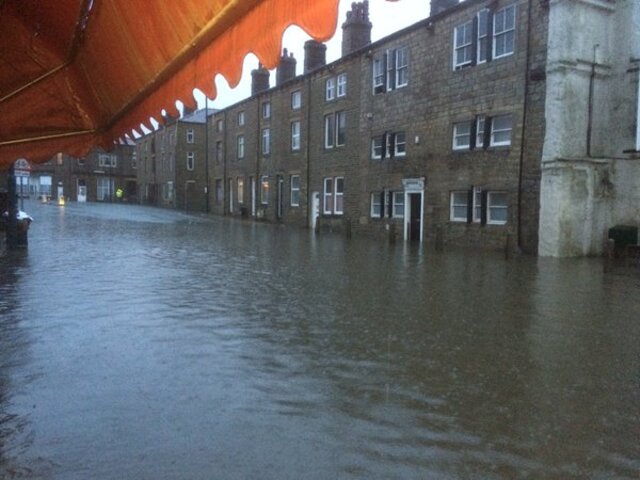
Anchor and Shuttle - Luddenden Foot
The Anchor and Shuttle stood beside the Rochdale Canal at Luddenden Foot, where canal boatmen could stop overnight while travelling through the Calder Valley. The area’s canal basin made it a natural stopping place for boat crews, and the Anchor and Shuttle was one of three local taverns remembered in connection with this trade, alongside the Woodman and the Weavers Arms.
The pub also had literary connections. Branwell Brontë, brother of Charlotte, Emily and Anne Brontë, was among those who visited the inn while working as stationmaster at Luddenden Foot. Local railwayman William Heaton later recalled meeting Branwell at the Anchor and Shuttle, describing his changing moods and fondness for a drink.
In May 1886, the Anchor and Shuttle was replaced by the Victoria Hotel, built on the same site.
Anchor Pit - 46 Anchor Place, Rastrick
The Anchor Pit opened in 1866 at 46 Anchor Place, Rastrick, beside the Calder and Hebble Navigation and the River Calder. It served the boatmen working on the waterways, providing stabling and other facilities for their horses and boats. Its location made it a practical stopping place for people involved in the area's canal traffic.
The pub’s name came from Anchor Pit, the nearby place where it stood. Its recorded landlords included Mrs Sykes in 1867, John Kilburn in 1882, John Newton and George Crowther in 1901, and Arnold Beevers in 1934. The Anchor Pit closed on 31 December 1937.
Where? Extreme end of Birds Royd Lane. Built in 1866 with stabling for the boatmen
Andersons Temperance Hotel - Horton Street, Halifax
Recorded at Horton Street, Halifax, in 1922. Unlike an ordinary public house, a temperance hotel catered to customers seeking accommodation or refreshments without alcohol. It was one of several temperance hotels and drinking establishments recorded in the Horton Street area, close to Halifax railway station.
The surviving local-history record gives little further detail about the hotel’s proprietor, exact street number, opening date or closure. It is also listed among the wider group of Horton Street temperance hotels, alongside the Victoria, Trevelyan, Waverley and Richard’s establishments.
Angel - 2 Cornmarket
The Angel was an old Halifax inn that began trading in 1738, when a property known as Broadstones became the Angel. It stood at 2 Corn Market, in the town centre, and was already an established meeting place by the mid-18th century. In 1747, John Metcalfe is recorded as having stayed there.
The inn also hosted the Harmony Masonic Lodge, established there in 1789. In 1794, the lodge moved to the Bacchus in Halifax. The Angel closed in 1793, after William Walker bought the property and began redeveloping the site. The inn sign may have been transferred to the Angel at Lee Bridge, but the historical source describes this as uncertain.
Angel Inn - 7 Lee Bridge, Lee Mount
The Angel Inn stood at 7 Lee Bridge, Lee Mount, and is believed to have opened in 1823. It was later owned by Samuel Webster & Sons, with the brewery recorded as its owner by 1874. The pub remained open for more than a century before closing in January 1967.
The inn’s name has an unusual possible origin. When the earlier Angel at 2 Cornmarket, Halifax, closed in 1793, its sign may have been sold and reused at the Lee Bridge inn. This link is recorded as a possibility, rather than a proven transfer.
Recorded landlords included Hannah Crossley in 1822, John Roper in 1837 and 1845, Sarah Butler in 1850–51, and Walter Appleyard in the 1860s and 1870s. Later licensees included Ada Thompson, Carrie Gertrude Tasker and Jack Clarke.
Angel - Parkinson Lane, Halifax
Unfortunately, the available entry gives no confirmed street number, opening date, landlord history or closure date, so there is not enough evidence yet to write a fuller history responsibly.
Calderdale Companion
It should remain distinct from the Angel at Lee Bridge, Lee Mount, which opened around 1823 and closed in January 1967, and from the much earlier Angel at Cornmarket, which closed in 1793. The historical records list these as separate establishments.
Angel - Heptonstall
The Angel is listed in local historical records as a former public house in Heptonstall, but the available entry gives no confirmed address, opening or closing date, or account of its history.
Arden Road Social Club - Arden Road, King Cross HX1 3AG Tel 01422 362349
Arden Road Social Club is a members’ social club with a bar, function room and facilities including snooker tables. It is also an established live-music venue, hosting gigs and community events.
The club has played an important role in Halifax’s independent music scene. Local promoters The Doghouse have used it as their base since 2005, bringing touring and independent acts to Halifax for hundreds of performances. The club also serves real ale and hosts events including quizzes and charity activities.

Apollo's - George's Square, Halifax
Fact - aka Cats Bar aka Dobbies

Armada - 122 Hanson Lane, Halifax
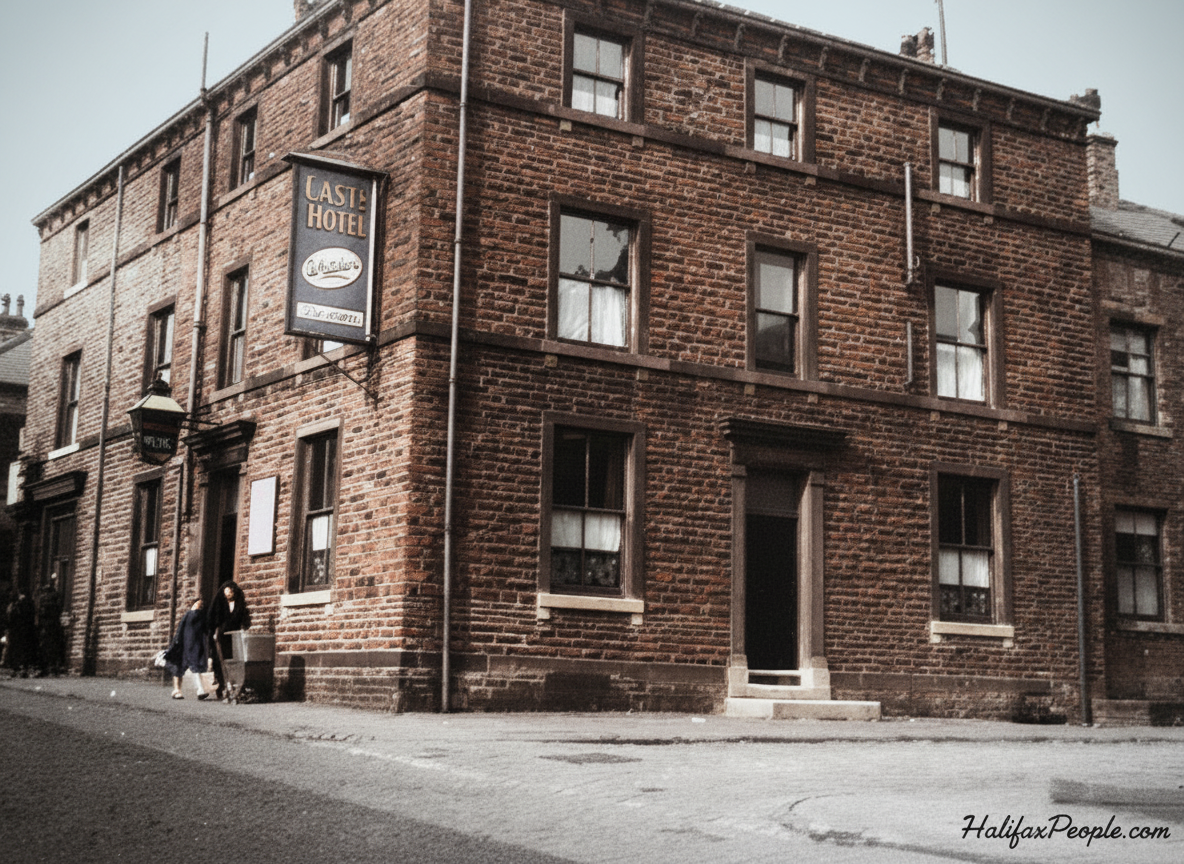
The pub was originally known as the Castle Hotel. It later traded as the Armada before being renamed the Buccaneer. The sequence is recorded in Malcolm Bull’s Calderdale Companion, which places the Armada name in the 1980s.
A contribution to HalifaxPeople’s pub directory from a former owner adds a useful detail: the contributor says their mother bought the Armada from Whitbread brewery in 1983, changed its name to the Buccaneer, and sold it in 1985. This gives a more precise timeline for that name change, though it remains a personal recollection rather than a dated licensing record.
The Castle Hotel also appears in the Brewery History Society’s records of pubs purchased from Brear & Brown’s estate in May 1917.

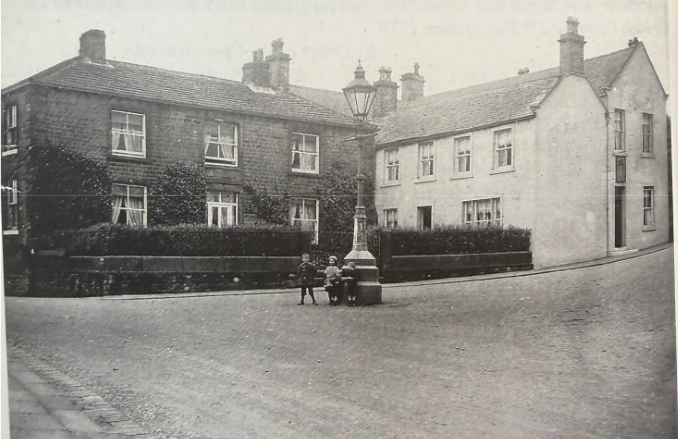
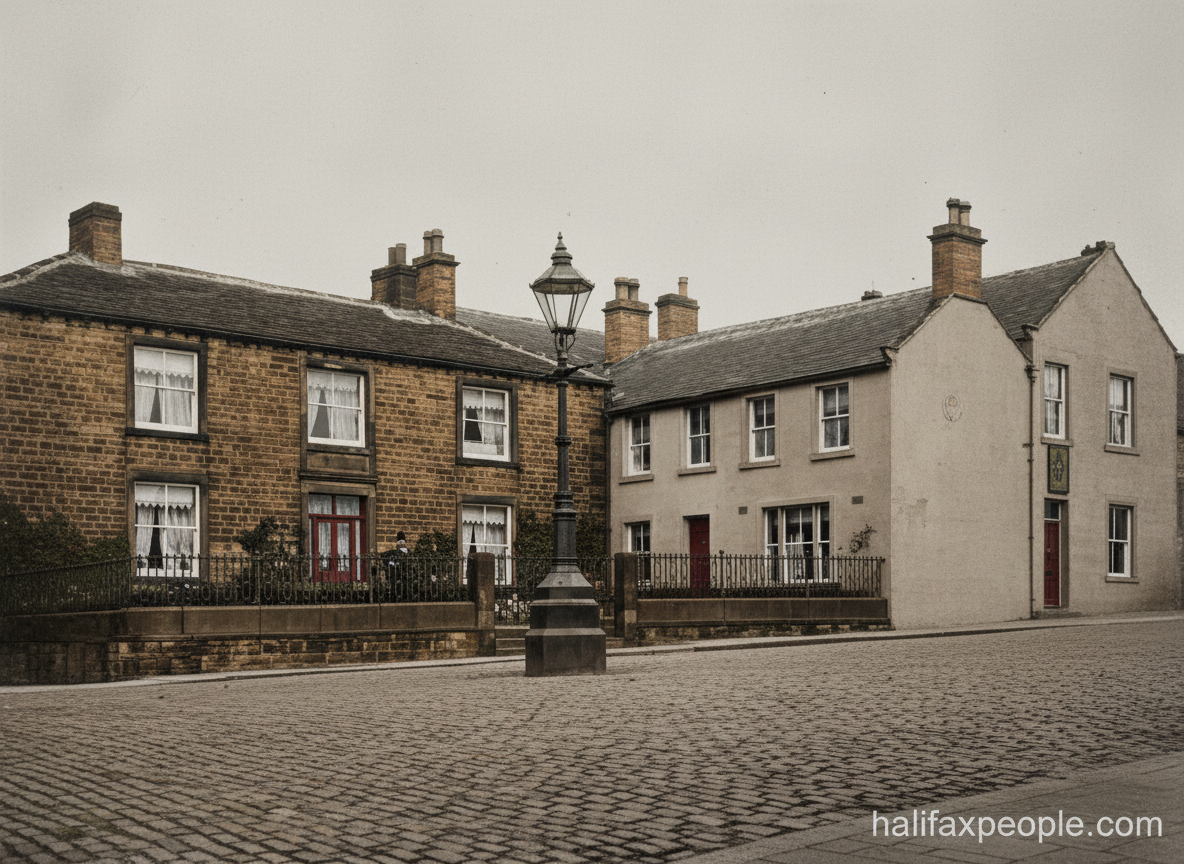
Armitage Arms - Towngate, Clifton Common
The Armytage Arms was more than just a place for a pint — it sat right in the middle of village life, and for years it helped shape how Clifton spent its leisure time.
As well as whatever went on indoors, the pub became closely tied to local sport. In the 1860s, Charles Ramsden established a bowling green and later helped create a private subscription bowling club. As interest grew, the facilities were improved and altered again towards the end of the century, and a cricket pitch was also laid out in a nearby field.
Ramsden himself was known as an energetic and committed farmer, with a particular enthusiasm for horses and breeding. By 1880 he had expanded his holdings by taking on additional land at Green Farm, bringing his combined acreage to a substantial size for the area.
The village celebrations for Queen Victoria’s Golden Jubilee in 1887 were especially memorable, with houses and streets dressed for the occasion and Kirklees Park opened as part of the festivities. The Armytage Arms played a prominent role. A field offered by George Ramsden at the top of Clifton Common became the site of a major bonfire — built on a huge scale with timber, pitch pine, old railway sleepers, and large quantities of Clifton coal. The evening programme even included a dramatic display of rockets.
Charles Ramsden became one of Clifton’s best-known figures. He died in August 1893 at the age of 60 and was buried at St John’s Church. He left behind his widow, several sons, and daughters. The pub continued under family care, with responsibilities shared between his widow and children, while the younger generation carried on the farming side.
By the early 1900s, the Armytage Arms still held an important practical role in the community. It was used regularly as a meeting point for the distribution of miners’ wages — a reminder that, in industrial Yorkshire, the local inn often doubled as an unofficial office, noticeboard, and gathering place all at once.

enhanced

Ash Tree - 75 Wharfe Street, Sowerby Bridge
The Ash Tree, a substantial stone building dating from the late 18th century. It was originally known as the Wharf, and local historical records name Mr Beverley as its landlord in 1872. The premises later became the Wharf Hotel before adopting the Ash Tree name in 1983.
The building is three storeys high, with five bays and a stone-slate roof. Its architectural features include a 19th-century entrance framed by columns and pilasters, and projecting bay windows. It was Grade II listed in 1988. After its pub days, it became the Java restaurant and subsequently the Village Asian and Indonesian restaurant in 2010. It is now recorded as a house used as a restaurant. Named after the large ash tree that stands just outside it.
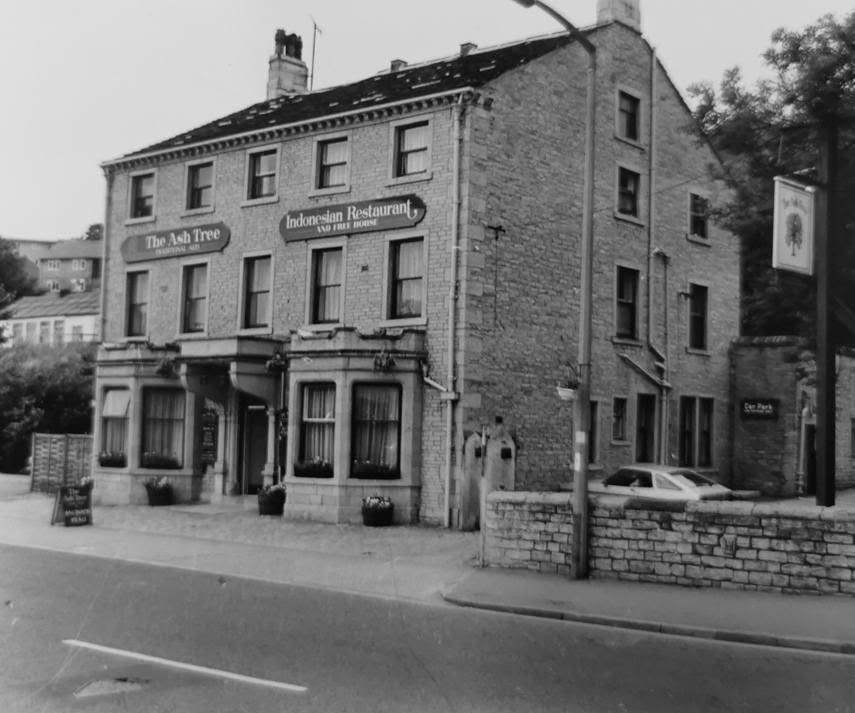

Ash Tree — Sload, Warley
The Ash Tree was a public house at Sload, Warley. The earliest landlord I could verify was William Henry Brearley in 1881.
Ashgrove Inn - Southowram, Brighouse
Possibly the Casa. One documented reference dates to 21 April 1853, when the body of Thomas Holgate was taken to the inn.
Atlantic Studios — Square Road, Halifax
Atlantic Studios was a music studio and bar in Halifax associated with the Turczak brothers, who were also known for running the Acapulco nightclub. The venue combined music production with a bar and became part of Halifax’s local nightlife and music scene. Linked Atlantic Studios with the name Hughes Corporation.
The studio was active in the 1990s. In October 1995, the Halifax mayor visited the Pulse FM breakfast show at Atlantic Studios, and a newspaper report that November described owner Chez Turczak and presenters broadcasting the Nic and Deb Breakfast Show live from Halifax between 6 am and 10 am. This confirms that the premises were also used for local radio broadcasting.

Atlas Mill Brewery - Brighouse
In 2006. It was a small independent brewery that later operated the Tipp Inn, its brewery tap. Brewery directories record Atlas Mill Brewery Ltd as trading from 2007 to 2009, so the business appears to have had a short life.
The brewery was connected with the Black Swan in Brighouse, which had closed temporarily around 2001 before being acquired by Atlas Mill Brewery and reopened as Millers Bar.

Alphabetical list of
Pubs 1A B C D E F G H I J K L M N O P Q R- Ro- S- Sn- T UV W XYZ
Explore More:
🔹 Halifax Pubs B →
🔹 Malt Shovel, Ann Street — Full story →
Have A Great Story About This Topic?
Do you have a great story about this? Share it!
What Other Visitors Have Said
Click below to see contributions from other visitors to this page...
Mr Keith Churchyard Not rated yet
My mother bought the pub then Known as the Armada from Whitbread brewery in 1983.
She changed the name to The Buccaneer . she sold the pub in 1985. …
If you have enjoyed your visit to this website, please spread the word by clicking the 'like' and 'share' buttons below. Thank you
A huge 'Thank You' to 'Malcolm Bull's Calderdale Companion' for his permission to use many of the old prints you see on these pages.
I am also aware that some of the pictures I have acquired belong to Steve Gee who has very kindly agreed to allow for your pleasure, so please buy his excellent books for a much more detailed source of information on Halifax Pubs and Halifax Pubs 2
Some of the photographs you see may belong to you. If you do own any photographs you see on this website, I will gladly remove them or credit your name to them.
📚 Steve Gee's Halifax Pubs books — available on Amazo
Would you like to add to-
- Events on our 'What's On' page
- Promotions etc. through our 'advertisers' or Pubs Ezine page
- Pub details, corrections, photos and facts by emailing info@halifaxpeople.com

Alphabetical list of
Pubs 1A B C D E F G H I J K L M N O P Q R- Ro- S- Sn- T UV W XYZ

Visit Halifax Breweries