Southgate
Southgate, Halifax: Inns, Markets and the Making of a Pedestrian Street
Southgate runs through the heart of Halifax, linking Corn Market with Ward’s End. Today, it is a pedestrianised shopping street, but its history is tied to the town’s markets, old coaching inns and the redevelopment of the Victorian town centre.
A market at the heart of the street
In 1790, Halifax’s New Market was built on land at Southgate owned by Sir Watts Horton. It replaced the town’s older, more scattered market stalls and brought trading into a more organised setting. The market included rows of shops and covered spaces where goods could be sold.
The New Market remained in use until the Victorian period, when Halifax Corporation acquired the site in 1853. Work on the present Borough Market began in 1891, and the new market opened in 1896. Its grand stone façades and ornate iron-and-glass roof made it a landmark of the town centre.
The market buildings also contained an unusual feature: homes above the shops. Residents could live directly over their businesses, with balconies overlooking the market or the surrounding streets. These elevated walkways and balconies have become known as Halifax’s “streets in the sky”.
Inns that disappeared
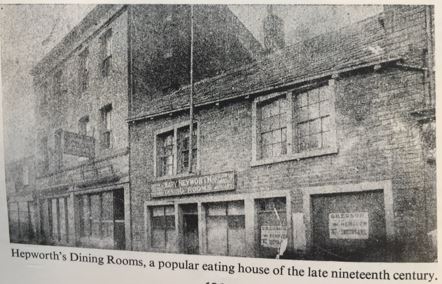
Southgate was also lined with public houses and shops. One of its notable inns was the Greyhound, which stood near the entrance to what became Albion Street. It was demolished in 1892 to make way for the new Borough Market buildings. Local historical accounts identify the site with the café now known as Merry England.
The White Horse Inn was another familiar landmark. An earlier building was demolished and replaced by a new White Horse on the same site in the early twentieth century. The name survived even as the street around it changed.
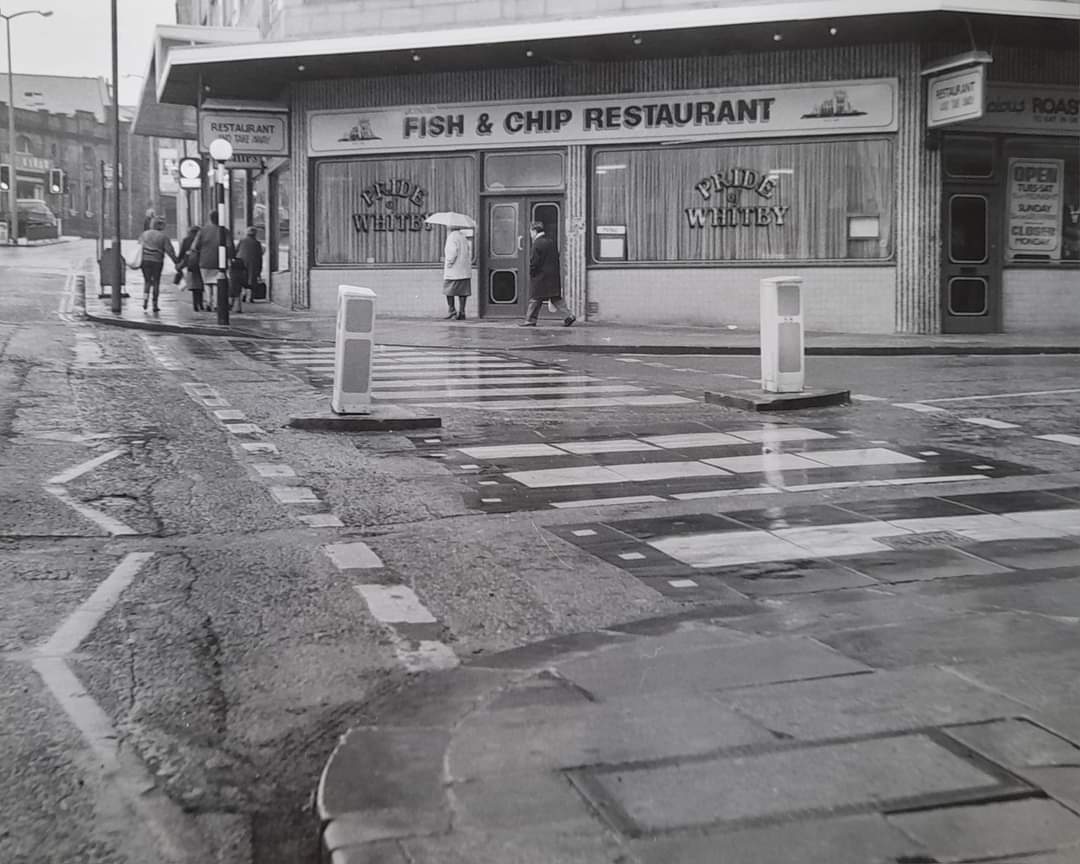
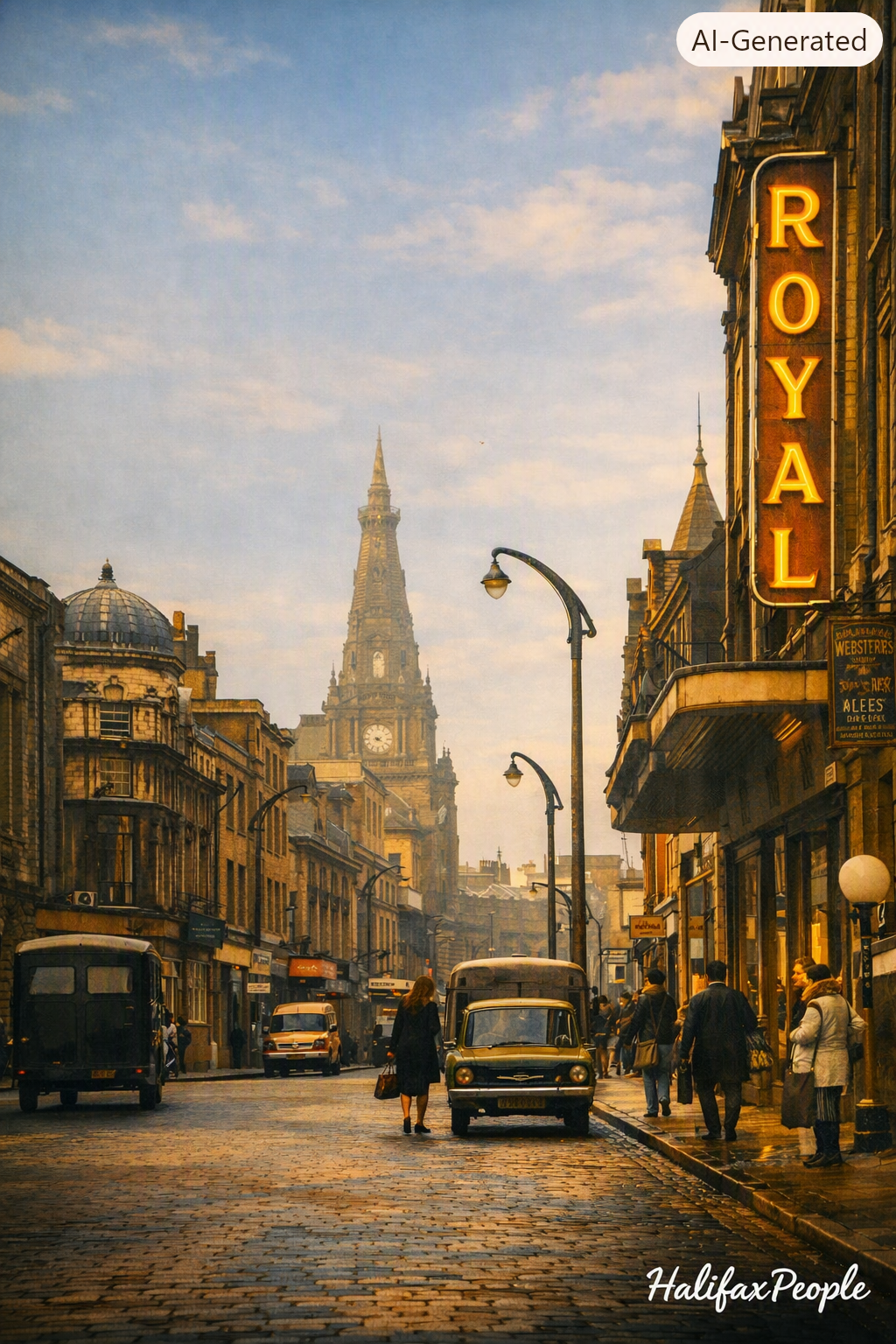
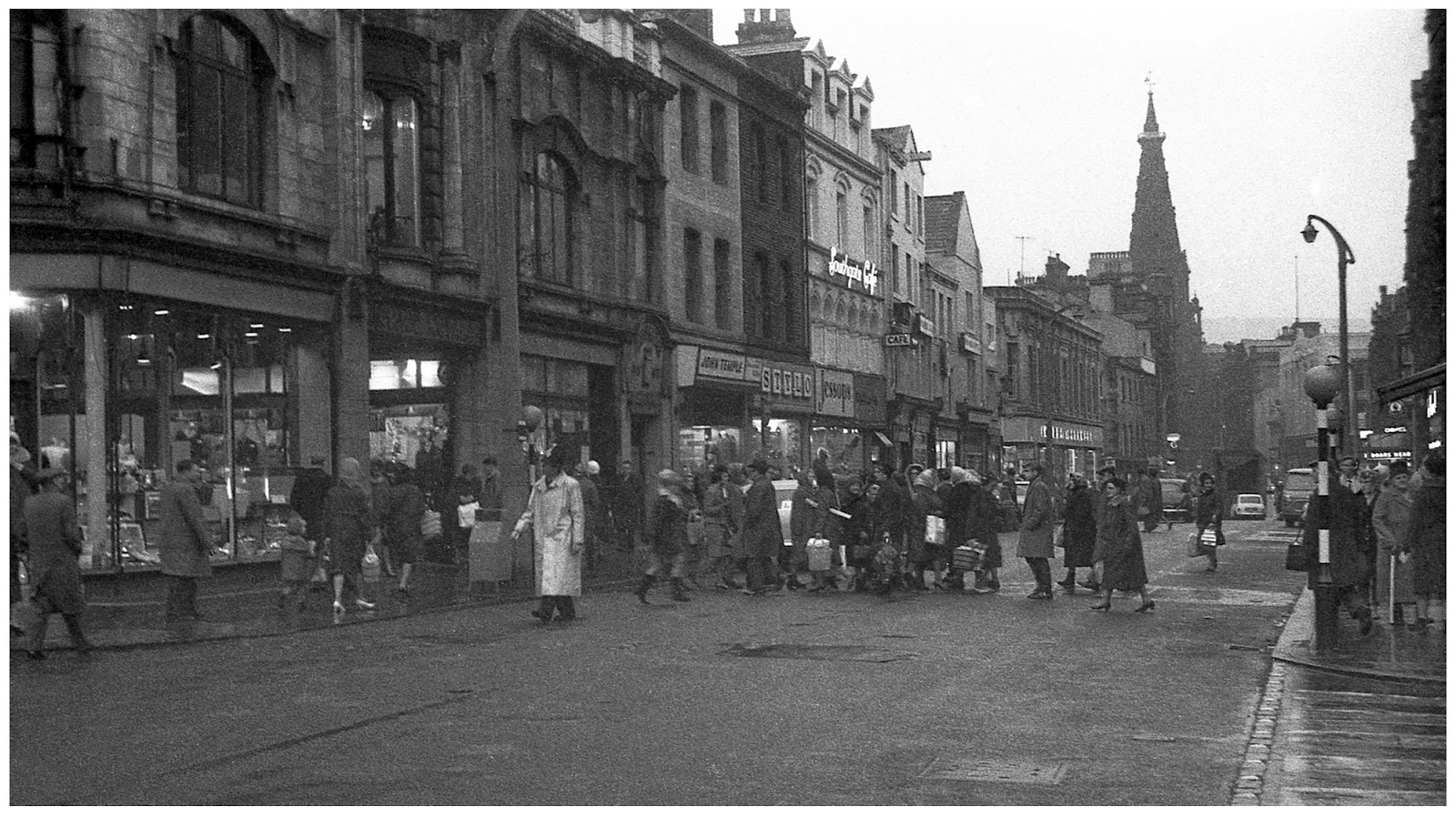
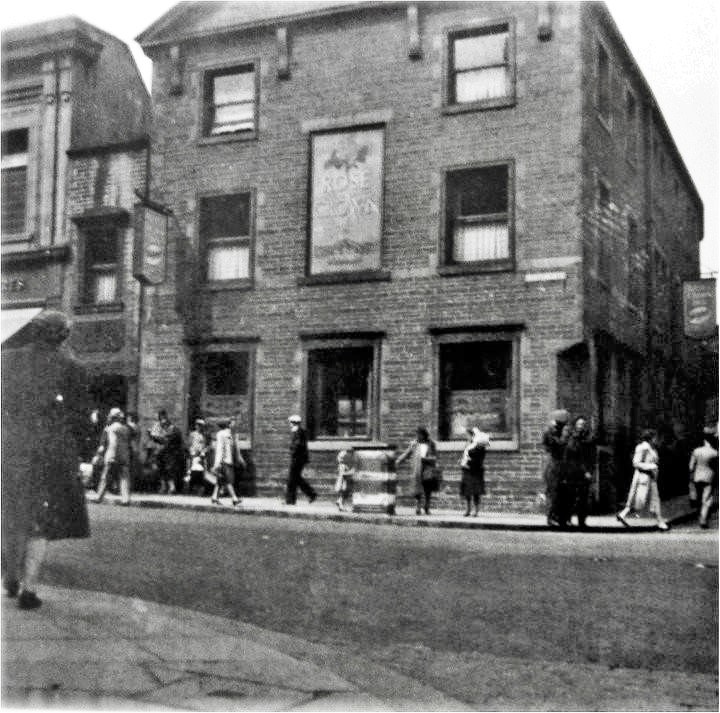
Old photographs preserve views of Southgate before these transformations, showing closely packed shopfronts, public houses and tradespeople’s premises that would be difficult to recognise from the modern street.
From traffic route to pedestrian street
Southgate remained a road for traffic until 1973, when it was pedestrianised and raised to pavement level. This change made it easier for people to walk between the shops and the market, and helped establish Southgate as a shopping and meeting place in the town centre.
Southgate’s story is therefore one of continuity and change: the market remains central to its identity, while the inns and older shopfronts remind us of a time when trade, travel and everyday life occupied the same narrow streets.






enhanced


Photograph of Southgate and Ward's End, Halifax in 1892. On the left is the top of Albion Street and beyond is Westgate. The premises between are those of George Watson, plumber; Lewis Bagot Waite, hairdresser (and as usual umbrella repairer); the White Horse Inn (Joshua Sutcliffe licensee). Next is the side of a newer building numbered in Westgate and occupied by George Walker, plumber.
Beyond Westgate is Ward's End which accommodated Oswald Hanson, dentist; the top of Shakespeare Street; Wilson and Beverley, musical instrument dealers; the Shakespeare Hotel (Edwin Weston); the Theatre Royale, and William Hutchinson, cigar manufacturer. Numbering in Ward's End continued to the right past Holly House, then the Eye, Ear and Throat Hospital and taking in three surgeons, an undertaker and a solicitor (!) before returning past Ward's Hall down the other side and back to Southgate.
(From the Evening Courier Sat April 15th 1978)
Note: The Greyhound Hotel became part of the new market buildings and is now the 'Merry England' café, The White Horse was rebuilt on the corner of the street and is still there and the Shakespeare hotel moved around the far corner to the left but is now an Italian restaurant.

On the left beyond the greyhound Inn, the White Lion, the Theatre Royal (with pair of lamps on the footway), next what was known as Hutchinson's Warehouse, to the Royal Oak Hotel. which is the far low building with a jutting lamp.
painting by G.W Rushworth


Southgate looking north before 1890. Immediate right is entrance to Westgate. Just beyond this is the White Horse Inn. Then came a barbers and then an umbrella hospital Albion street, then the Greyhound Inn which was demolished in 1892 to make way for the Borough Market.



 |
 enhanced |



Cornmarket, Halifax: A street shaped by the market
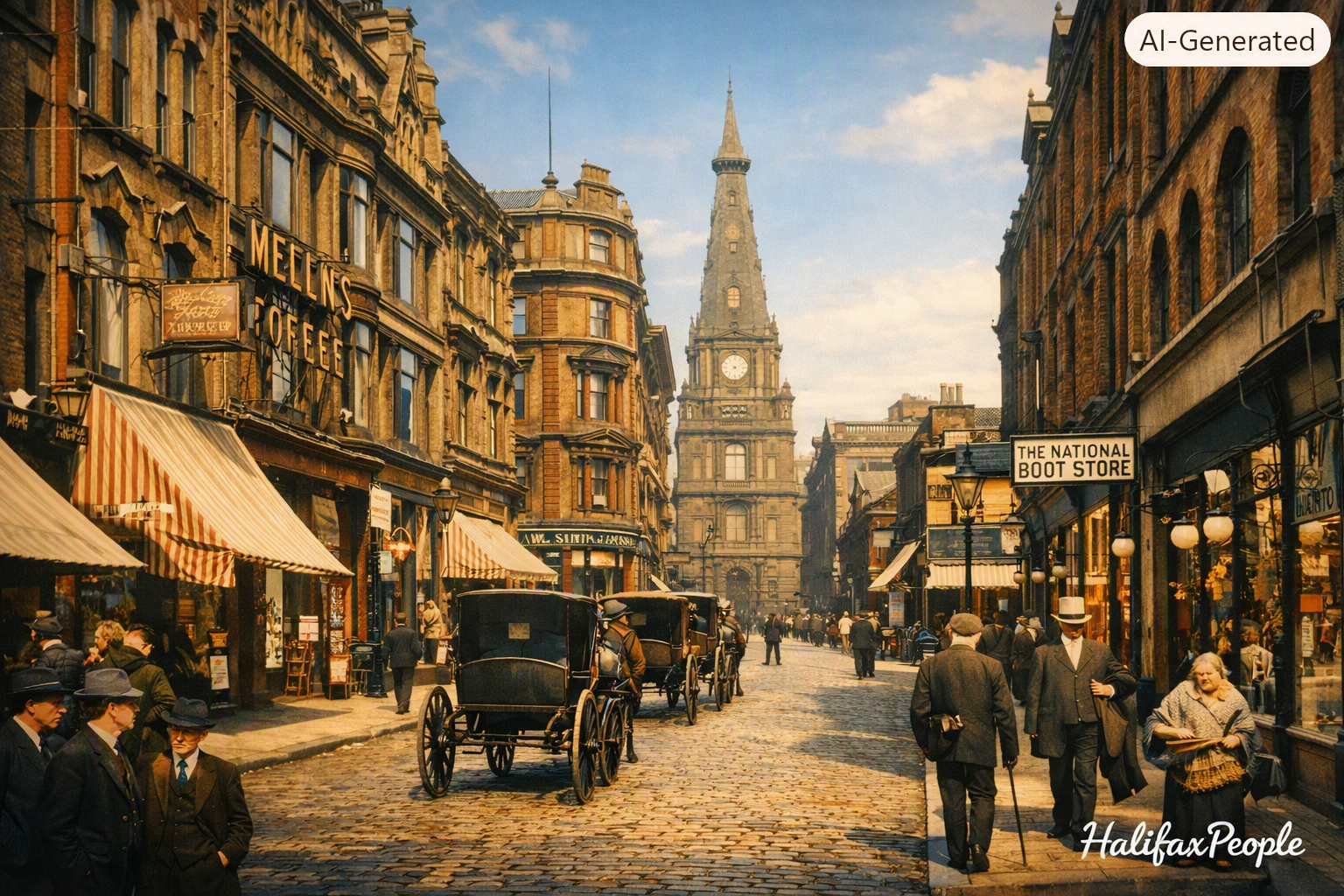
Cornmarket’s name is a clue to its original purpose. In eighteenth-century Halifax, this was part of the town’s busy market area, where corn, cheese, salt and other goods were traded. It sat within a wider network of market spaces that included Old Market and Market Street — long before Halifax had its grand Victorian Borough Market.
One of the biggest changes came in 1790, when a new market was built on Southgate. The red-brick Georgian building became known as the New Market. Before then, market stalls had been spread across Old Market, Cornmarket and Market Street. In 1810, legislation helped concentrate trading in the designated market rather than allowing it to continue freely in other streets.
But Cornmarket remained a place of shops and small businesses. Records gathered by local historian Malcolm Bull list traders and occupants there across generations. One particularly striking detail is Whiteley’s Hat Shop, recorded as established in 1746 — a reminder that specialist retail businesses could become part of a street’s identity for centuries. Photographs from around 1890 and 1900 show the shop among Cornmarket’s older commercial buildings.
The street also appears in a historic view of Old Market and Corn Market in 1886, drawn by Halifax artist Joseph Rideal Smith. His detailed scenes of old Halifax became popular enough for him to be known as “Old Halifax”. The image offers a glimpse of a town centre before later redevelopment changed many of its familiar shopfronts.
Cornmarket’s story is therefore less about one dramatic event than about the everyday business of a market town: trading, specialist shops and the gradual reshaping of the town centre around changing market arrangements.


 |
 |


enhanced

 |
 |


enhanced


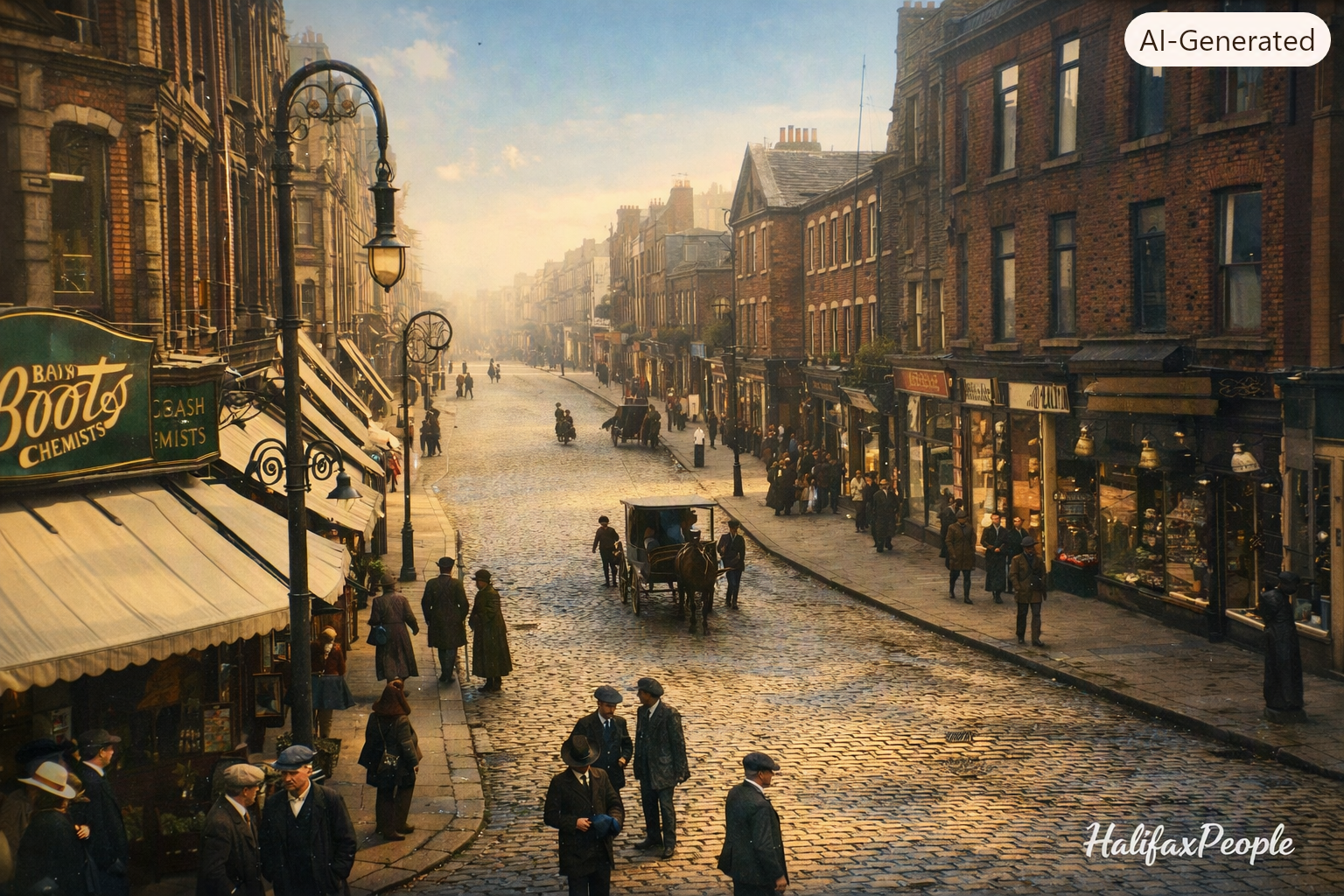
The first illuminated clock, seen above, was erected in August, 1846 by Mr Alfred Wilson, Hatter in Corn Market and became a prominent place of note, to arrange to meet at. It was first lighted on the 14th August, the day on which the Rejoicings for the Repeal of the Corn Laws took place in Halifax.


If you have enjoyed your visit to this website, please spread the word by clicking the 'like' and 'share' buttons below. Thank you