Halifax People

Halifax People

"Ah, my dear friends! Harry Facks here once again, and what a pleasure it is to introduce you to the remarkable characters who have shaped our beloved Halifax through the ages.
From the bold Anne Lister of Shibden Hall to the notorious Cragg Vale Coiners, our town has been home to some of history's most fascinating personalities. Each character you'll meet here has left an indelible mark on Halifax's story - some through their innovations, others through their infamous deeds, and many through their outstanding contributions to our community.
As someone who has had the privilege of observing Halifax's social tapestry through time, I can assure you that the tales of these individuals are nothing short of extraordinary. Whether they were industrialists who built our mighty mills, writers who captured our essence in words, or everyday heroes who shaped our community, each has a story worth telling.
Join me as we step back in time to meet these remarkable Halifax folk. Simply choose a personality below, and I shall be delighted to share their fascinating tale with you!"
 The story of a very significant family at the start of Halifax's carpet industry. |


 Big Daddy (Shirley Crabtree)1930-1997 A popular wrestler, against one of his more regular opponents and sometimes tag team partner(Giant Haystacks). |

 (born 17 May 1950, Halifax, England) is an English singer-songwriter and author. She is an Ivor Novello Award winner. |

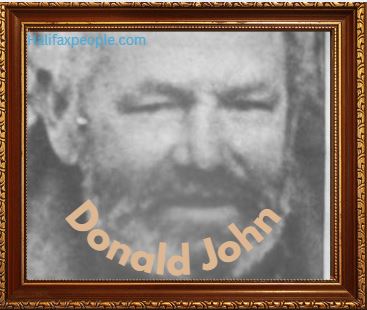 Donald John A famous face in Halifax, Donald John was in the navy but allegedly turned to 'a man of the road' after he returned to find his wife had betrayed him. He is described by many as a pleasant man who enjoyed a drink. |
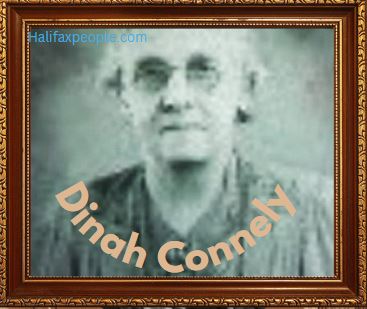
 Tabitha Bagnold Tabitha Bagnold may have been one of the best-known businesswoman in Halifax in her time, being the Postmistress for the town two centuries ago, a job she still held at the introduction of Uniform Penny Post in May 1840. |
 Miriam Lightowler The first Lady Mayor of Halifax |
 Wilfred Pickles Radio and TV Celebrity |

 Herbert Akroyd Stuart - inventor of a diesel engine |

 Henry Edwards -Conservative MP |
 Micheal Holroyd Smith, prolific inventor |
 Wallace Bentley - mechanical engineer/inventor |
 Lizzie Humphries - Traveller |
 John Lister - Owner of Shibden Hall and Historian |
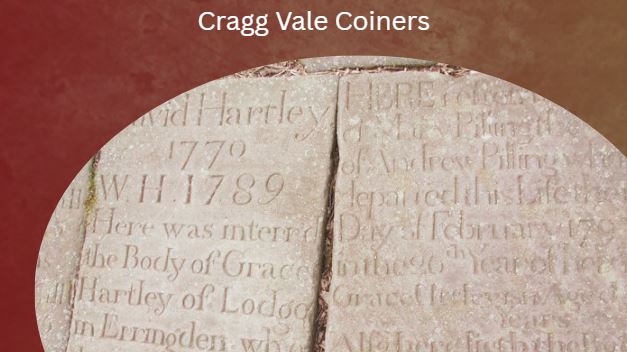
 David Moffatt - Cockleshell Hero |
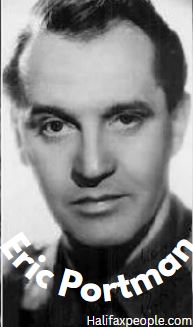 Eric Portman - Actor |
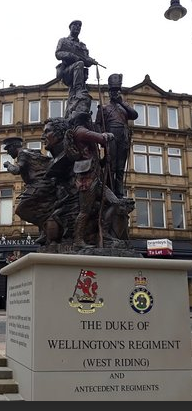 Havercake Lads - Dukes |
 Job Haigh - The Remarkable Story of Job Haigh |
Halifax Characters
Halifax People who have made their names in the outside world deserve their praise but not everybody gets the same opportunities in life and here are a few real local Halifax Character's, most of which shared struggles in life but are remembered just as well.
Henry Briggs (1561–1631)
Henry Briggs was a leading English mathematician who helped make calculation faster and more reliable. He is best known for improving logarithms and promoting the “base‑10” system that became standard in science and engineering. Briggs worked with other pioneers of the early scientific revolution and published tables that allowed astronomers, navigators, and surveyors to do complex maths with far less effort. His work supported everything from mapping to astronomy at a time when accurate numbers could change what people believed about the world.
-
Dr John Tillotson (1630–1694)
John Tillotson rose from Yorkshire roots to become Archbishop of Canterbury, the senior figure in the Church of England. Known for a calm, practical approach, he tried to reduce religious conflict in a tense period after the Civil War and Restoration. Tillotson was valued as a preacher and writer who argued for reason, moderation, and tolerance. His influence helped shape a more measured public style of Anglican leadership. Even critics acknowledged his ability to communicate clearly and to steady institutions during political and religious uncertainty.
-
Jesse Ramsden (1735–1800)
Jesse Ramsden was a world‑class instrument maker whose precision tools transformed science and navigation. Working in Halifax and later London, he built telescopes, microscopes, sextants, and other devices used by leading explorers and astronomers. Ramsden’s most important contribution was improving accuracy and repeatability in measurement, which made maps, surveys, and astronomical observations far more dependable. His instruments supported major voyages and scientific work across Europe. In an age when tiny errors could mean huge mistakes, Ramsden’s craftsmanship helped set new standards.
-
John Crossley (1727–1813)
John Crossley helped build the industrial foundations of Calderdale through manufacturing and enterprise. Starting from modest beginnings, he developed a business that grew into a major employer and a key part of the region’s economic story. Crossley’s work contributed to the rise of large‑scale production and the growth of towns shaped by mills, trade, and transport links. The legacy is not only commercial: the expansion of industry changed local life, creating new jobs, skills, and communities—along with the challenges that came with rapid industrial change.
-
John Fielden (1784–1849)
John Fielden was a powerful voice for working people during the Industrial Revolution. A successful manufacturer and MP, he used his position to campaign for shorter working hours and fairer treatment in factories. Fielden played a key role in the Ten Hours Act, which limited the working day for women and young people and became a landmark in labour reform. He was known for plain speaking and persistence, arguing that economic progress should not come at the cost of health and dignity. His legacy sits at the heart of social reform history.
-
Susan Sutherland (1819–1905)
Susan Sutherland was a celebrated singer, often called the “Yorkshire Queen of Song.” She gained national attention through competitions and performances, showing that talent from the region could reach major audiences. Her career included touring and high‑profile appearances, and she became a symbol of local pride for many people in Calderdale and beyond. In an era when professional opportunities for women were more limited, her success stood out. Sutherland’s story reflects the strong musical culture of the North and the public appetite for live performance.
-
William Milner (1803–1850)
William Milner is credited as a pioneer of low‑priced publishing, helping make books affordable for ordinary people. By producing cheap editions and large print runs, he widened access to reading at a time when literacy was growing fast. Milner’s work supported education and self‑improvement, allowing more families to own books rather than rely only on libraries or shared copies. Although less famous than some publishers, his impact was practical and lasting: he helped turn reading from a privilege into something closer to a mass habit.
-
John Henry Whitley (1866–1935)
John Henry Whitley was a prominent British politician and Speaker of the House of Commons, known for fairness and steady leadership. He represented Halifax as an MP and later became a key figure in parliamentary life during a period of major social and political change. Whitley also supported civic and cultural institutions, including involvement with the BBC in its early years. His career reflects public service at both local and national levels—balancing constituency work with the demands of guiding debate and procedure in Parliament.
-
John Cockcroft (1897–1967)
John Cockcroft was a pioneering physicist who helped open the door to the atomic age. He is best known for the first successful splitting of the atom using an artificially accelerated particle beam, a breakthrough that proved nuclear reactions could be triggered in the laboratory. His work laid foundations for both nuclear energy and later weapons research, although he also supported peaceful scientific applications. Cockcroft went on to lead major research institutions and was awarded the Nobel Prize in Physics. His achievements made him one of Britain’s most influential 20th‑century scientists.
-
Sir Ernest Hall (1930– )
Sir Ernest Hall built a reputation as a businessman and philanthropist with strong roots in the Calderdale area. He was involved in textiles and industry and became known for backing local enterprise and community causes, combining commercial leadership with civic-minded giving. Beyond business, he supported cultural and educational initiatives and helped strengthen regional institutions. His career reflects a practical Northern tradition: build something that lasts, employ people locally, and put money back into the community. He received national honours for his contribution, and his name remains closely linked with local industry and philanthropy.
-
Geoffrey Wilkinson (1921–1996)
Geoffrey Wilkinson was a Nobel Prize–winning chemist whose work transformed modern inorganic chemistry. He helped develop “sandwich compounds,” including ferrocene, which changed how scientists understood bonding in metal-based molecules. These discoveries opened up new areas of research and had wide knock-on effects in catalysis and industrial chemistry. Wilkinson worked internationally, including in the United States, and became known for combining deep theory with experimental skill. His achievements earned him the Nobel Prize in Chemistry and placed him among the most important chemists of the 20th century.
-
Ted Hughes (1930–1998)
Ted Hughes became one of Britain’s most important poets, known for powerful language, stark imagery, and a deep connection to nature. Born in Mytholmroyd, he drew on the landscapes of the Calder Valley throughout his writing. His poems often explore survival, instinct, and the raw forces of the natural world, with an intensity that made his voice instantly recognisable. Hughes wrote for adults and children, produced major translations, and served as Poet Laureate. His influence on modern poetry is huge, and his work continues to be widely studied and performed.
-
WILLIAM BRAMWELL BOOTH (1856–1929) — Halifax-born leader of The Salvation Army
William Bramwell Booth was born in Halifax, Yorkshire, and went on to become one of the most influential church-and-charity leaders of his era. He was the first Chief of Staff of The Salvation Army (1881–1912) and later became its second General (1912–1929), succeeding his father, William Booth, the movement’s founder.
Known to his family as “Willie”, Bramwell’s early life wasn’t easy. He dealt with poor health and slight hearing loss, and when he attended the City of London School he was bullied. But despite those obstacles—and despite a fear of public speaking—he became a key organiser and administrator from a young age, helping his father’s early mission work and the cheap food kitchens that supported people in desperate need.
A famous moment in Salvation Army history also involves Bramwell directly. In 1878, when William Booth described the group as a “volunteer army,” Bramwell reportedly pushed back: “Volunteer? I’m no volunteer, I’m a regular!” The word “volunteer” was crossed out and replaced with “salvation”—and the name The Salvation Army was born.
Bramwell later led the organisation through the difficult years of World War I, trying to keep an international movement steady during a time of intense national pressure. His leadership wasn’t without controversy—there were accusations of harsh discipline and nepotism—but his impact on the growth and structure of the Salvation Army is undeniable.
-
H.P.Jackson - Brighouse carver
-
 |
If you have enjoyed your visit to this website, please spread the word by clicking the 'like' and 'share' buttons below. Thank you