Southowram History 18 -
Brookfoot Village

When Brookfoot Was Thriving
A Look Back at a Lost Community
By Harry Facks
If you drive through Brookfoot today, you might never guess it was once a lively little community, buzzing with its own spirit. These days, the name usually pops up in the news for another accident at the bottom of that notorious hill—but Brookfoot’s past is anything but quiet.

A Landscape of Water and Industry
Picture this: it’s 1910. The River Calder and the canal meet at a spot where they almost merge—an area folks once called “The Island.” In the winter, the flat valley floor is a wild mix of water and shadow, the scene set by the town’s two watercourses and the dark outlines of old mill buildings.
At the heart of it all stood the mill—originally Camms’s cotton mill—looming over Brookfoot until the late 1800s. But for many, the real memory is the sweet smell drifting from Turner and Wainwright’s toffee factory. Even though Turnwright’s shut its doors in the 1930s, the building still stands as a monument to Brookfoot’s industrious days.

A Community of Its Own
Brookfoot wasn’t just about work. It had its own school, St Peter’s Mission Church for spiritual needs, and a handful of classic pubs.
The Woodman Inn was declared redundant in 1938 and finally closed on 11 April 1940. It had stood on Elland Road, close to St Peter's Mission Church, and was a familiar meeting place for the Brookfoot community.
The old Neptune Inn at the bottom of Southowram Bank served both sailors and locals. The Red Rooster—known in earlier days as “The Wharf Inn”—was a haunt for canal men with a thirst to quench.

This picture shows the Woodman pub on Elland Road and St.Peters church

enhanced
Canal Life and Busy Wharves
The Calder and Hebble Navigation opened up this part of the Calder Valley to industrial trade. Construction began in 1759, and by 1764 the canal was open as far as Brighouse. It provided an important transport route for coal, stone, building materials and manufactured goods, helping places such as Brookfoot develop as industrial and trading centres.

Fading into Memory
Time moves on. The crowds and schoolyard laughter have faded, and many of Brookfoot’s old buildings have vanished. But if you stand by the canal and listen, you might still catch an echo of those busy days—a barge’s horn, the chatter from the mill, or the clink of glasses in a long-lost pub.
Brookfoot may have changed, but its story is woven into the fabric of Calderdale. Next time you pass through, give a nod to the ghosts of The Island and remember the days when Brookfoot was truly thriving.

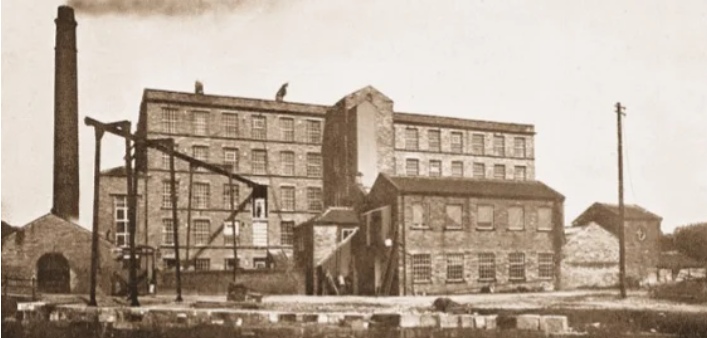
Camm's Cotton Mill – Brookfoot's Early Industrial Years
Before Brookfoot became famous for its toffee factory, its large mill was an important cotton-spinning and doubling concern. The mill was built around 1865 and was associated with the Camm family, trading as Camm Brothers Spinners and Cotton Doublers. By 1882 the works employed more than 400 people. The business was not without difficulties. In August 1867, William and Alfred Camm were prosecuted under the Factory Acts on 21 counts relating to employees working beyond the permitted evening hours. They were fined a total of £63. In September 1882, approximately 400 workers went on strike rather than accept a proposed ten per cent reduction in wages. The Camm partnership was dissolved in October 1883, when members of the family retired. The mill subsequently became the home of Turner and Wainwright's toffee manufacturing business.
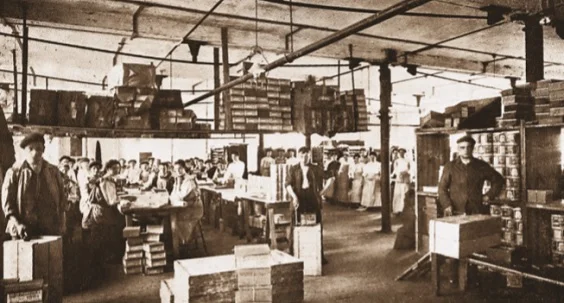
Turners packing department
Turner and Wainwright – Brighouse's Famous Toffee
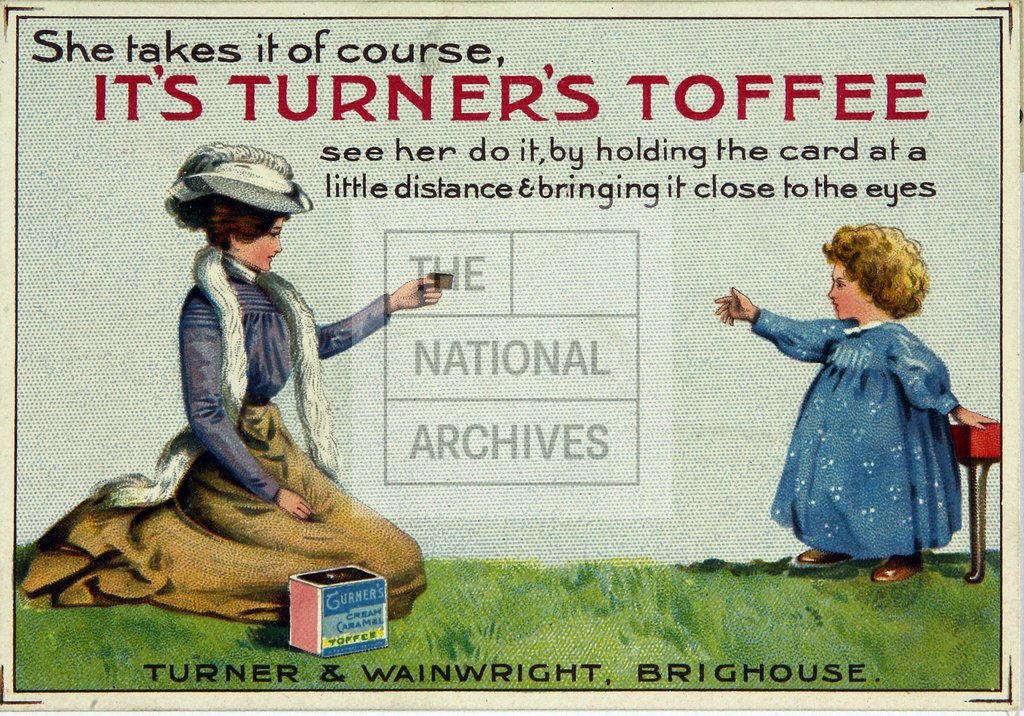
The story of Turner and Wainwright began in the late 1880s, when John Henry Turner and his wife Mary Ann Stone started making toffee at home. Mary Ann's homemade sweets became popular with family, friends and neighbours, and John Henry gradually developed a small business selling them locally. In 1896 he joined forces with George Wainwright, another former Halifax Co-operative employee, and they decided to concentrate on toffee production full-time.
The business first expanded into larger premises in River Street, Birds Royd, Brighouse. By 1908 further growth required an even bigger factory, and the partners moved into the empty five-storey Camm cotton mill at Brookfoot. The works became known for the Turnwright's brand and employed many local people, particularly women in the packing department.
During the First World War, slabs of Turnwright's toffee were included in comfort parcels sent from Brighouse to soldiers serving in France. It was a small but welcome luxury for men away from home. The business later encountered serious difficulties as customers moved their orders elsewhere. A final attempt to rescue the company was made under the name Turner and Wainwright (1933) Ltd, but production eventually ended. The factory's story remains one of the best examples of Brookfoot's contribution to Brighouse's industrial and commercial history.


Dr B. E. J. Edwards – The Brookfoot Village Doctor
One of the more unusual characters associated with Brookfoot was Dr Bogdan Edward Jastrzebski, who later became known professionally as Dr B. E. J. Edwards. Born in 1860 to a Polish immigrant family in Halifax, he qualified in medicine at Edinburgh University in 1884. After working at Halifax Infirmary, he established a medical practice at 138 Elland Road, Brookfoot, where he also lived with his young family.
Brookfoot was then a busy community with its own school, chapel, Co-operative shop and several public houses. Dr Edwards became an important figure in local public health and in 1895 was appointed Medical Officer of Health for Southowram, which then included Brookfoot. By 1901 he had moved his practice to larger premises in Bradford Road and later became Medical Officer for Brighouse, Clifton and Hartshead.
During the First World War he helped establish military hospitals at Longroyde in Brighouse and Boothroyd in Rastrick. In recognition of his wartime work he was awarded the MBE in 1920. He died in 1923. His career provides a fascinating link between Brookfoot's former village community and the wider medical history of the district.


enhanced


enhanced
St Peter's School and Mission Church
Brookfoot's school opened in 1878, providing education for children living in this growing industrial community. The village later gained its own place of worship when St Peter's Mission Church opened in 1895. It was established as part of the parish of St Anne's in the Grove at Southowram and stood beside the road leading from Elland Road towards Brookfoot Mill.
The church served the local community for more than sixty years. As attendance declined, it closed in 1959 and the building was subsequently sold. The old photographs showing the church beside the Woodman Inn and the mill behind it are particularly valuable because they capture three important parts of Brookfoot life together: religion, social life and employment.


Elland Road heading towards Elland on the right
Brookfoot Wharf – An Inland Port for Southowram Stone
Brookfoot was once an important inland port for the stone industry of Southowram. Stone quarried on the hillside was brought down to the canal wharf, where it was washed, cut and dressed before being loaded onto barges. The stone was then transported along the Calder and Hebble Navigation towards the Humber and onward to markets throughout the country and overseas. Destinations included Goole, Liverpool and Manchester, from where shipments could be sent further afield.
The wharf was a busy industrial workplace in its own right. Stone masons prepared the blocks, workers loaded the barges and the canal provided a convenient means of moving heavy materials that would have been difficult and expensive to transport by road. Southowram stone became highly regarded, and was used for paving in distant towns and cities. The streets of Hamburg were even paved with stone from this district.
The coming of the railway and the later growth of road transport gradually changed the economics of the trade. Stone was increasingly moved by other means, and the canal wharves lost much of their former importance. Brookfoot's old wharf is therefore a reminder that this quiet stretch of the Calder was once connected to a much wider trading network.


Return to Southowram History 17 - Brookfoot Bottom
Continue to - Cromwell Bottom
If you have enjoyed your visit to this website, please spread the word by clicking the 'like' and 'share' buttons below. Thank you