Historic Barkisland is split into the following sections:-
Barkisland from Greetland
Barkisland from Stainland
Barkisland village
Barkisland towards Krumlin
Barkisland towards Ripponden
View a 1905 Barkisland map here
Barkisland from Greetland

  enhanced |
 |

Graham Jagger
 |
  |
  enhanced |
 |
Barkisland from Stainland
 enhanced |
  |
  enhanced |
 |



Stocks at 76 Stainland Road, Barkisland, Halifax, West Yorkshire. Stocks, probably 18th century. 2 dressed stone uprights with slots in the sides for stone slab, lower keeper and wooden upper with metal strap pinion. This form of public humiliation was used to restrain and expose people convicted of misdemeanours; they would be locked into the stocks and would then be subject to the insults and missiles of passing folk.

Village stocks


Barkisland Endowed School


On October 13, three hundred and 75 years ago, a London spinster named Sarah Gledhill — formerly of Barkisland Hall — left £200 in trust to pay a village schoolmaster for teaching the children of the Barkisland poor. They could learn to read, write and be taught subjects like English, with religious instruction "in consonance with the doctrines of the Church of England."
Children were well trained in handwriting and spelling, though much time was devoted to religious matters. In 1861 it was decided the school should be reopened as a public elementary school, open to all village children between six and sixteen. Attendance was compulsory on Sundays, and there was a charge of twopence per week per child.
The new endowed school opened on April 15, 1868, built in fourteenth-century style and designed by Halifax architects. It stands only a short distance from the church.
Barkisland Church — St Mary the Virgin

Built around 1852 to serve a growing number of Barkisland residents who had previously faced the difficult walk up and down Ripponden Bank to St Bartholomew's at Ripponden. After a subscription list was opened, the foundation stone was laid by William Baxter on July 14, 1852. The church was consecrated on May 2, 1854, by Bishop Longley of Ripon.
A Gothic structure accommodating 300 worshippers, it contains beautiful stained glass windows in memory of former parishioners. The register dates from 1854, and the first vicar was the Rev. W. Tatlock.
Barkisland towards Krumlin
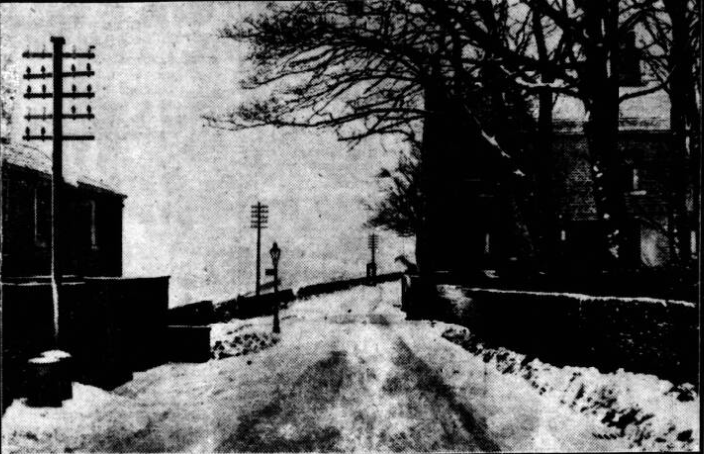
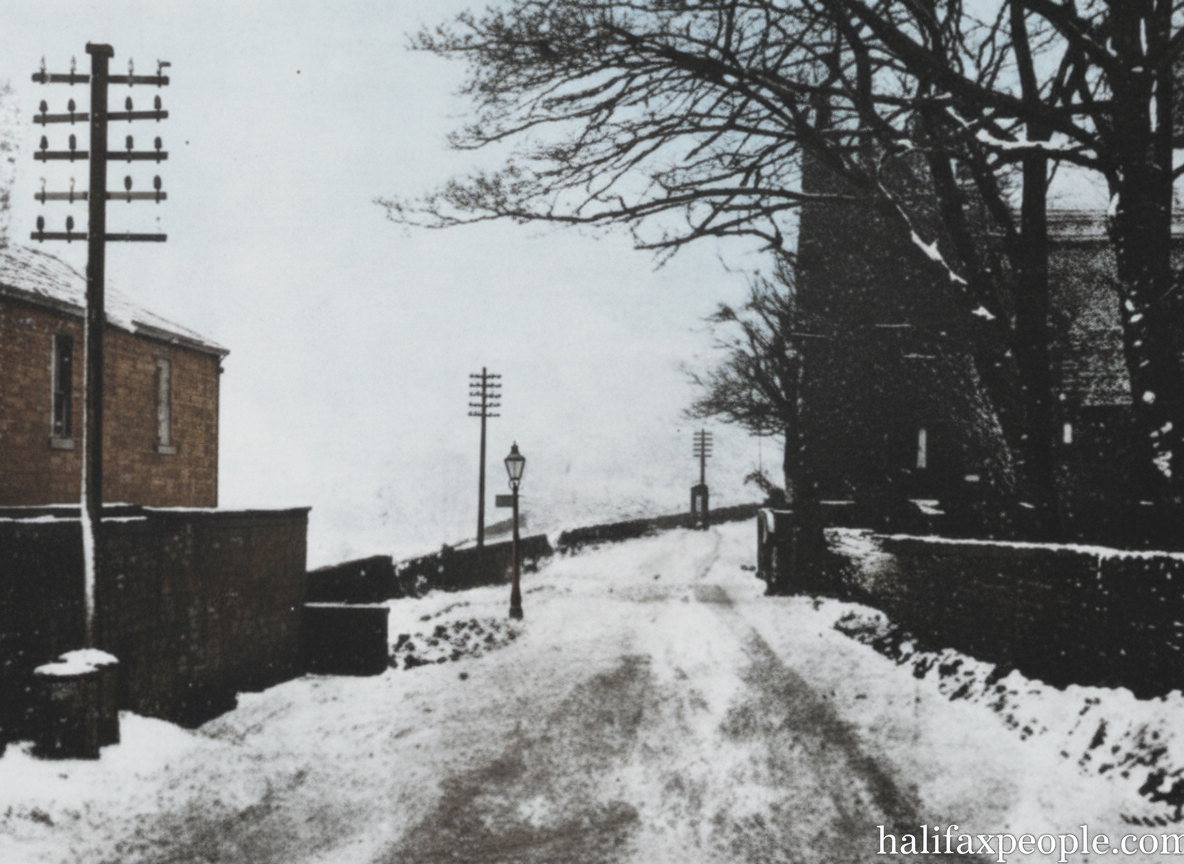
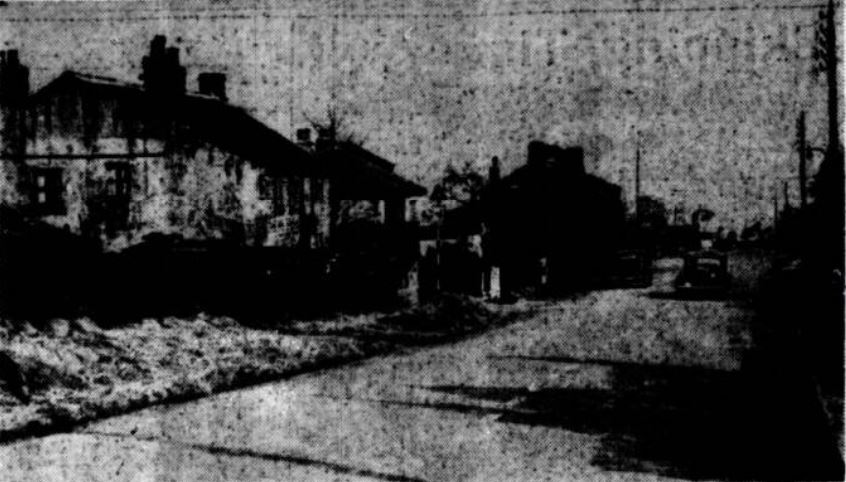
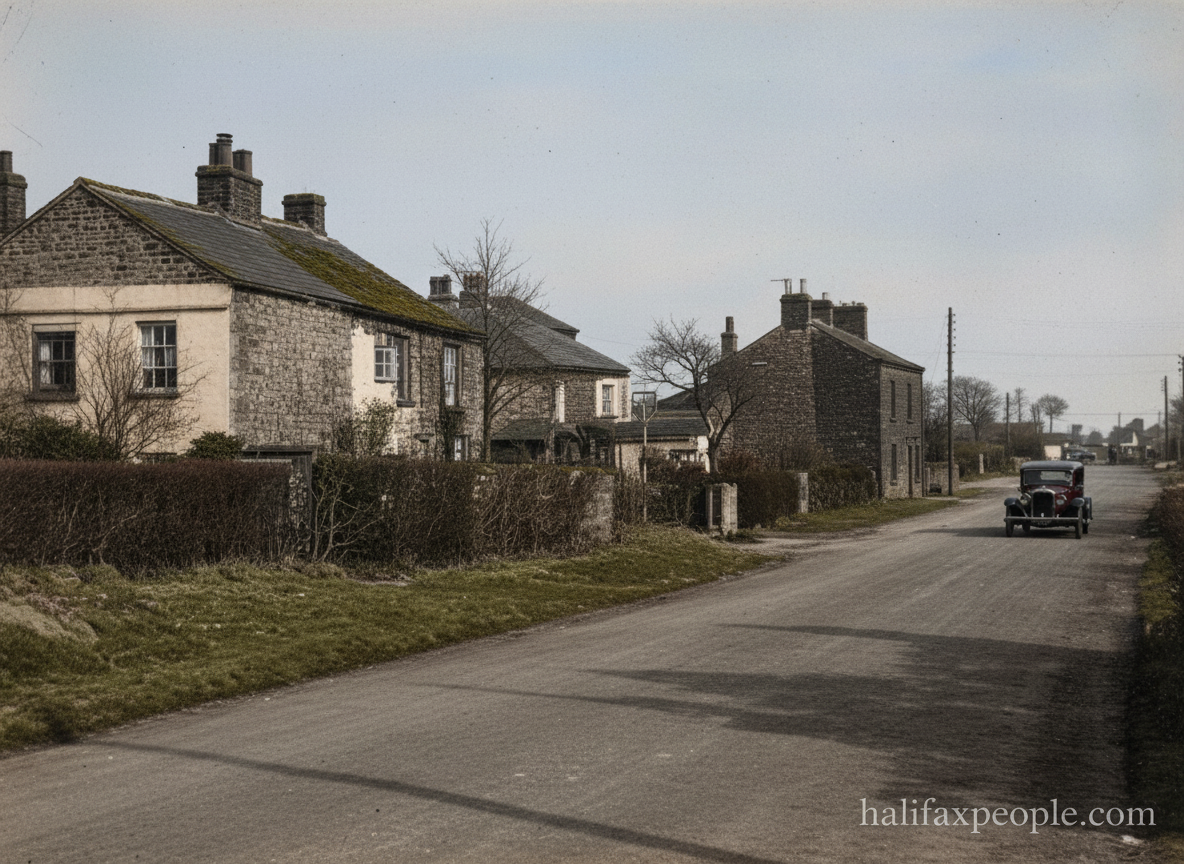
The last hamlet before the wilds of upper Scammonden, Krumlin sits at nine hundred feet — typical of the high upland villages of Calderdale. This photograph, taken after a heavy snowfall, shows the lane through the village with its telegraph poles and gas lamp.
enhanced

In the middle of August in 1970 around 25,000 people attended a folk, blues and jazz festival on the edge of Barkisland for the weekend with some of the biggest names of the era including Pink Floyd, The Move, The Who, The Kinks, Fairport Convention, Elton John, Manfred Mann and Georgie Fame. But, the good old British weather had a big say in the events to come.

Krumlin Methodist Church
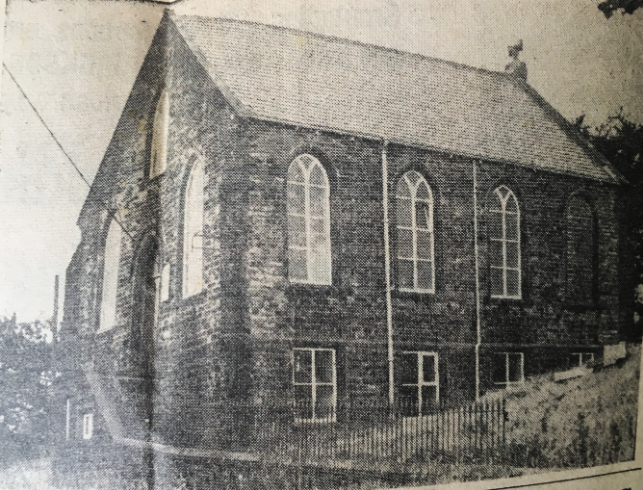
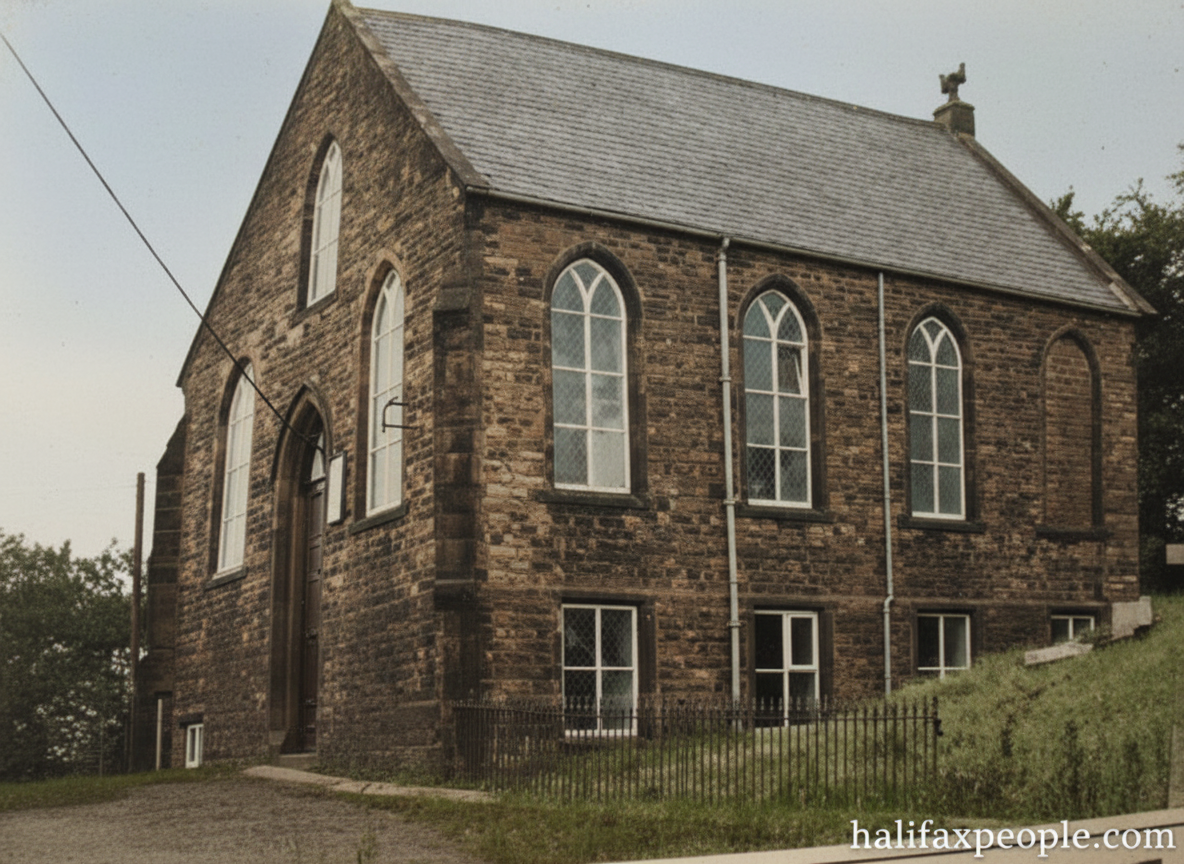
Built to serve a flourishing hilltop community, Krumlin Methodist Church celebrated its centenary in October. By the time this photograph was taken, the congregation had dwindled to just a few members — a far cry from the scores of worshippers who once filled its pews. Before the chapel was built, services were held in a storeroom at Krumlin Mill.
enhanced
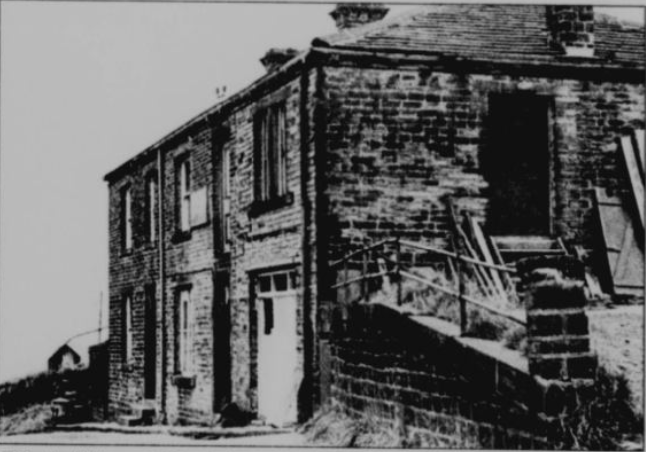
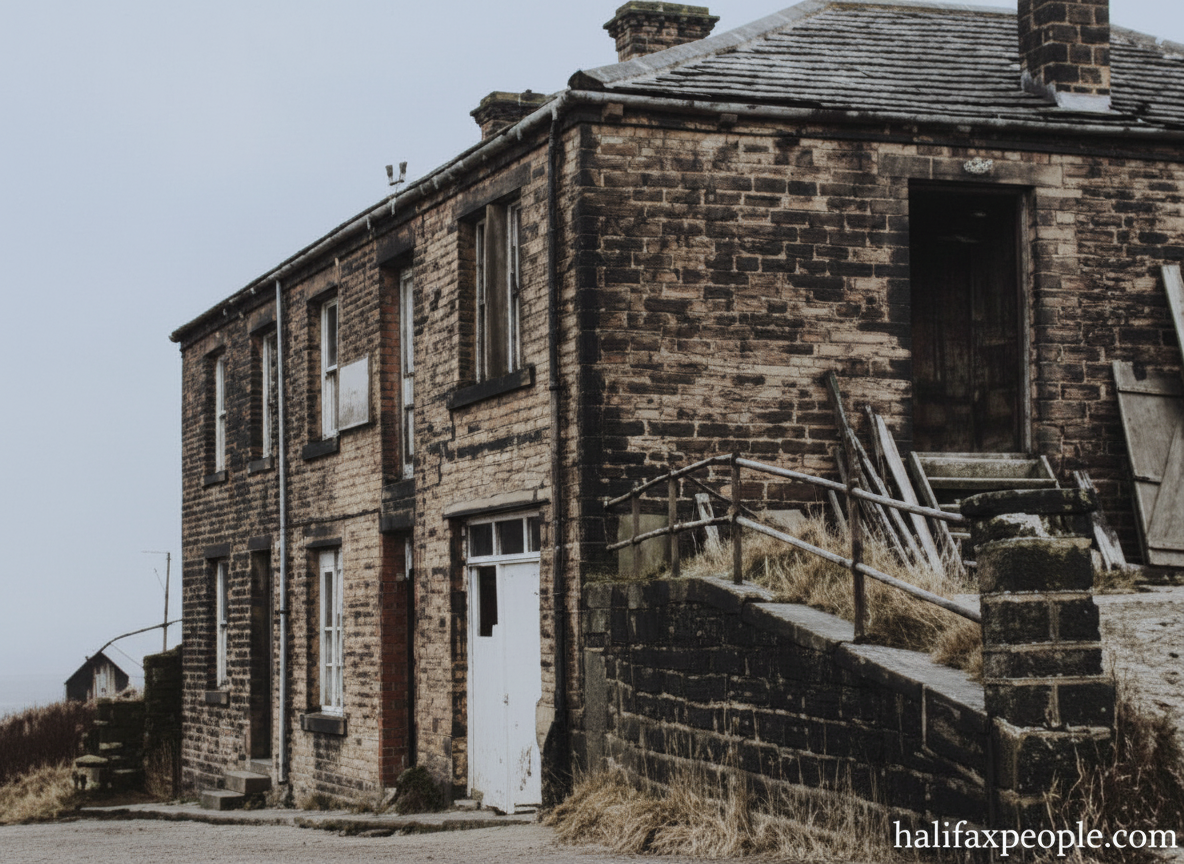
Barkisland Industrial Society Store, Steele Lane, Krumlin
Opened on November 5, 1866, this was the Barkisland Industrial Society store — the village co-op. It served the community for almost a century before finally closing in 1965, when the building became a builder's warehouse.
enhanced
Binn Royd, Moor End Lane (also known as Benroyde, Binn Royd, Binroyd)

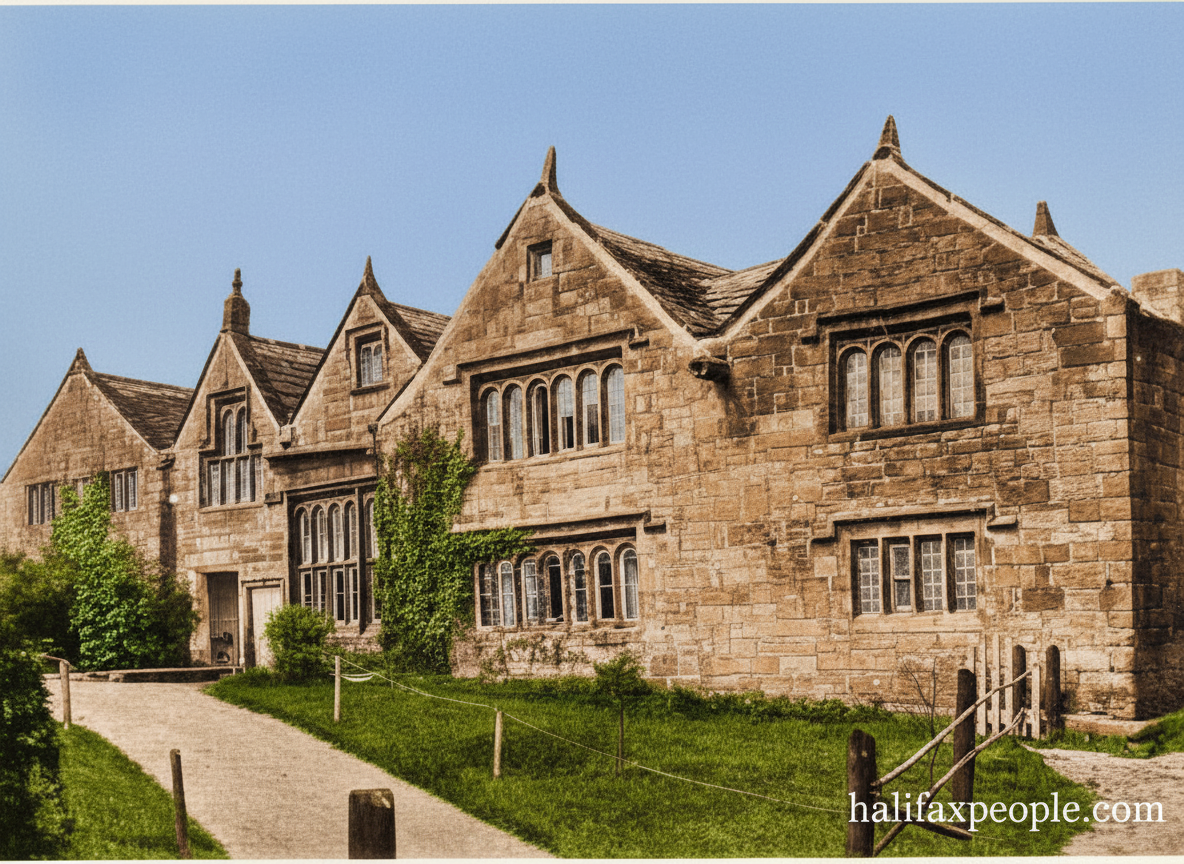
A timber-framed hall house, cased in stone in the 16th century by the Briggs family. Famous for its fine plasterwork installed by Michael Wainhouse in 1670 — some panels now in Bankfield Museum. In 1712 it was sold to Richard Sterne, uncle of novelist Laurence Sterne. Rebuilt in 1914, reducing five bays to two.
Now two dwellings: Binn Royd Farm and Binn Royd Cottage. enhanced
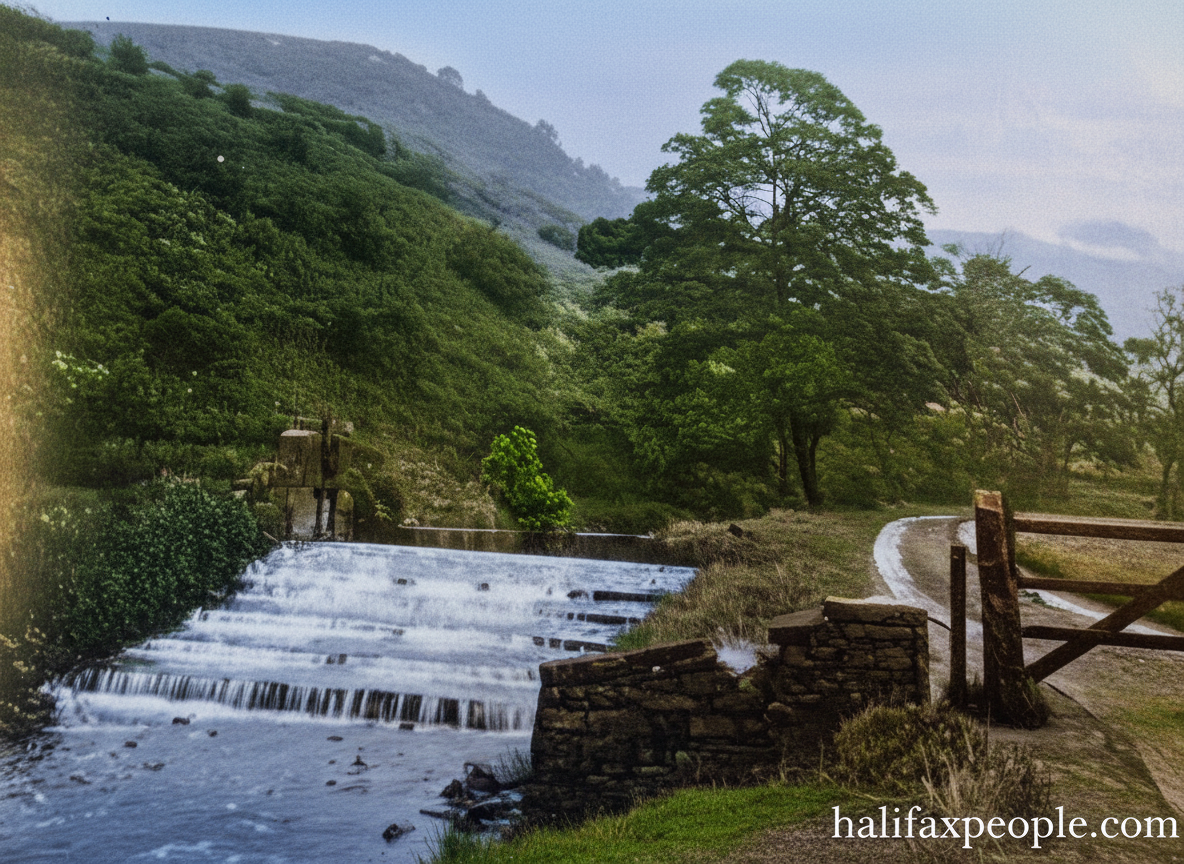
The Falls, Blackburn Valley
A tranquil corner of Barkisland captured in the 1920s. The stepped falls of Blackburn Valley were a popular spot for local walkers, the wooded hillside rising steeply behind.

enhanced
Ringstone Edge
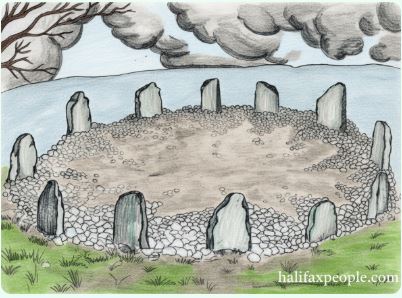
An ancient circle of monoliths from the Megalithic period, so significant that the moor itself was named after it — Ringstone Edge Moor. Today only scattered remains survive, a shadow of what once stood on this exposed hilltop above Barkisland.
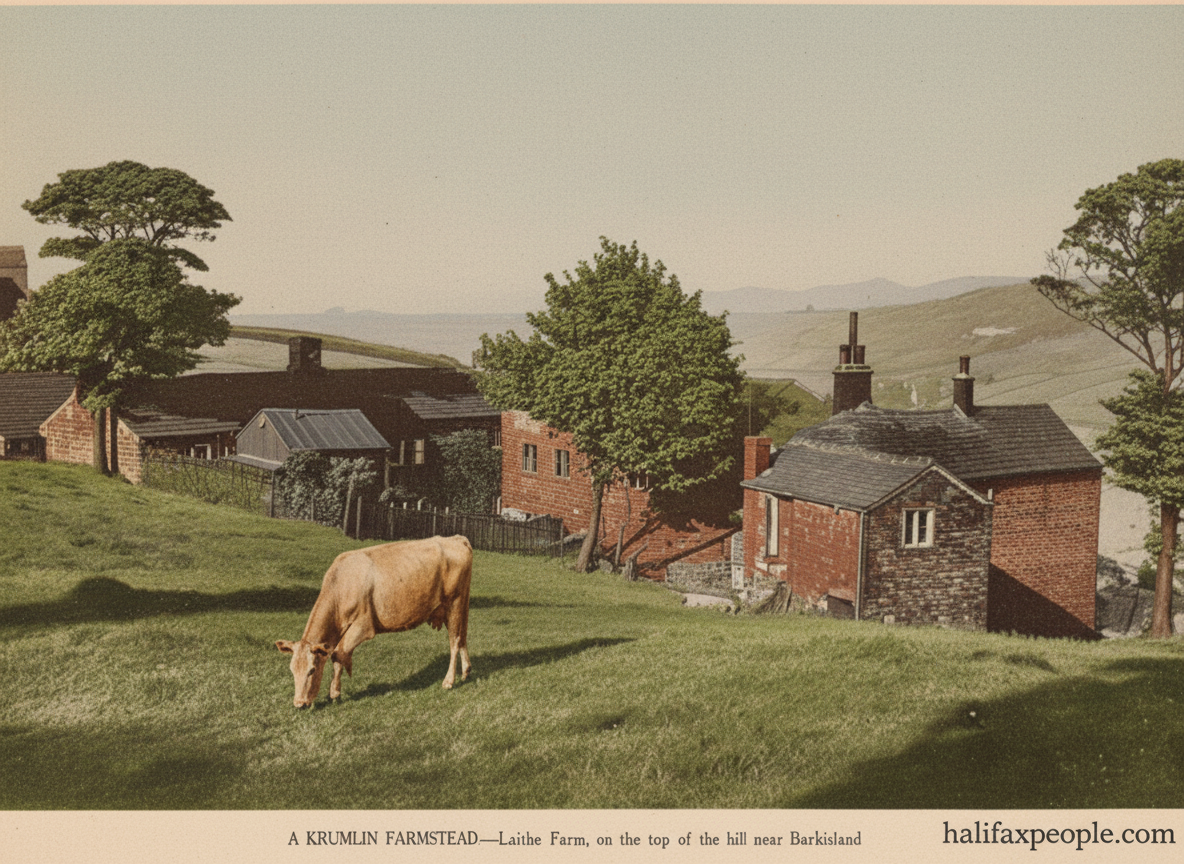
Laithe Farm
A classic Calderdale farmstead on the hilltop above Barkisland — stone buildings, dry-stone walls, and a single cow grazing in the foreground. A timeless scene that would have been familiar to generations of Krumlin families.

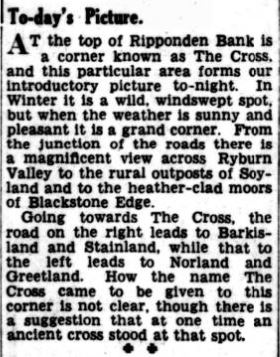
Barkisland towards Ripponden

enhanced
 |
 |
The Fleece Inn



If you have enjoyed your visit to this website, please spread the word by clicking the 'like' and 'share' buttons below. Thank you
Are you wanting to find information on a specific Halifax subject? Search here